

Existing law vests the Department of Food and Agriculture with general supervision of the weights and measures and weighing and measuring devices sold or used in the state, including devices used to measure electricity sold as a motor vehicle fuel. Existing law authorizes the Secretary of Food and Agriculture to adopt regulations to carry out the provisions of state law governing weights and measures, and requires the secretary to establish, by regulation, tolerances and specifications and other technical requirements for commercial weighing and measuring, as specified. Existing law authorizes the secretary, and each sealer acting under the supervision and direction of the secretary, to enforce provisions of state law governing weights and measures, as specified. Existing law requires the sealer of a county to inspect and test weighing and measuring devices, as specified, that are used or sold in the county. Existing law requires the secretary to adopt regulations governing the inspection frequency of all commercially used weights, measures, and weighing and measuring apparatus in the state and requires each county sealer to perform those inspections as may be required by the secretary. Existing law makes a violation of the provisions of state law governing weights and measures a crime. This bill would require the secretary to adopt regulations governing the inspection frequency of electric vehicle fueling systems used for commercial purposes, as specified, and would require a sealer to inspect those systems in accordance with specified requirements. The bill would require a sealer to submit data and information relating those inspections on a monthly basis, as prescribed by the secretary, to the Division of Measurement Standards and would require the division, no less than biannually, to provide the State Energy Resources Conservation and Development Commission with that information and data. Existing law requires the secretary to provide rules and regulations for the submission for approval of types or designs of weights, measures, or weighing, measuring, or counting instruments or devices, used for commercial purposes, and to issue certificates of approval of those types or designs as the secretary finds meet the requirements of state law, as specified. Existing law prohibits a person from maintaining, installing, adjusting, reconditioning, or servicing a commercial weighing or measuring device for compensation unless the person registers with the secretary as a service agency. Existing law authorizes a weighing or measuring device to be placed in service only by a sealer or a service agency. This bill would exempt electric vehicle fueling systems used for commercial purposes meeting type approval requirements that are factory tested and certified for metrological requirements by a factory registered service agency from, among other things, the requirement to be placed in service in the field by a service agency or sealer. The bill would require a metrologically relevant repair of those systems to be performed by a registered service agency or service agent, and would authorize a repair that is not metrologically relevant to be performed by any person competent to perform the repair, as specified. The bill would require the operator, or the operator's designee, of such a system to report the installation of the system with a county sealer by submitting a placed in service report to the county sealer and to register the system with the county sealer, as specified. Because a violation of that requirement would be a crime, the bill would impose a state-mandated local program. The bill would require, by July 1, 2028, the secretary, in consultation with the State Energy Resources Conservation and Development Commission, to update the regulations regarding electric vehicle fueling systems to conform to the requirements of the bill. To the extent that the bill would expand the duties of county sealers, the bill would impose a state-mandated local program. The California Constitution requires the state to reimburse local agencies and school districts for certain costs mandated by the state. Statutory provisions establish procedures for making that reimbursement. This bill would provide that no reimbursement is required by this act for specified reasons.
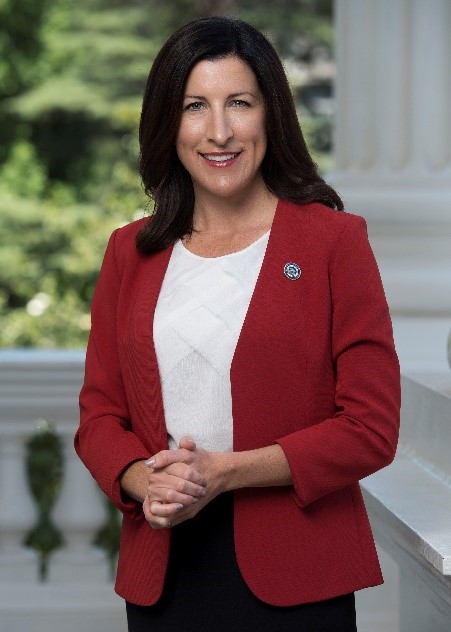
Asm. Cottie Petrie-Norris
Sponsored bills
Existing law generally punishes the willful disobedience of a court order as contempt of court by imprisonment in a county jail for a term not exceeding 6 months, a fine not exceeding $1,000, or both that imprisonment and fine. Existing law makes the willful and knowing violation of specified protective orders or stay-away court orders punishable by imprisonment in a county jail for not more than one year, by a fine of not more than $1,000, or by both that imprisonment and fine for a first offense, and makes a 2nd or subsequent conviction for a violation of these specified protective orders or stay-away court orders occurring within 7 years of a prior conviction and involving an act of violence or credible threat of violence punishable as either a misdemeanor or a felony. If a violation of specified protective orders or stay-away court orders results in a physical injury, the individual is required to be in a county jail for at least 48 hours, whether a fine or imprisonment is imposed, or the sentence suspended. This bill would make a willful and knowing violation of specified criminal protective orders or stay-away orders punishable as either a misdemeanor or a felony if the subject of the criminal protective order was charged with, or convicted of, a felony for the conduct upon which the criminal protective order was based. The bill would make a second or subsequent conviction for a violation of specified protective orders or stay-away orders a felony. If a violation of specified protective orders or stay-away orders alleges a physical injury, the bill would require the court to consider the violation of the protective order or stay-away order and alleged injury when considering the seriousness of the offense charged and the protection of the public for purposes of setting, reducing, or denying bail. By increasing the punishment for a crime, this bill would impose a state-mandated local program. The California Constitution requires the state to reimburse local agencies and school districts for certain costs mandated by the state. Statutory provisions establish procedures for making that reimbursement. This bill would provide that no reimbursement is required by this act for a specified reason.
Existing law defines, for certain school-related purposes, "ultraprocessed food" as any food or beverage that contains a specified substance and either high amounts of saturated fat, sodium, or added sugar or a nonnutritive sweetener or other substance, as specified. Existing law requires the department to adopt regulations, on or before June 1, 2028, to define "ultraprocessed foods of concern" and "restricted school foods," as specified, and requires the department, when defining ultraprocessed foods of concern and restricted school foods, to consider specified factors, including, among others, whether the substance or group of substances are banned or restricted in other state, federal, or international jurisdictions due to concerns about adverse health consequences. This bill would require the department, no later than June 1, 2029, to accredit certification agents that can certify food products as "Non-Ultraprocessed Certified." The bill would prohibit an accredited certification agent from certifying a food product as "Non-Ultraprocessed Certified" if it is an ultraprocessed food, ultraprocessed food of concern, or a restricted school food, as defined. The bill would require the department to create a specified standardized "Non-Ultraprocessed Certified" seal. The bill would authorize a food product to bear the seal only if the product has been certified by an accredited certification agent. The bill would require an accredited certification agent to, among other things, register with the department and provide specified information to the department for each food product certified by the accredited certification agent. The bill would require any registration information submitted by an accredited certification agent to the department to be made available to the public for inspection and copying. This bill would require an accredited certification agent to immediately make specified records available to the department for inspection, as specified, and would authorize the department to audit the accredited certification agent's certification procedures and records at any time. The bill would require any records of the accredited certification agent not otherwise required to be disclosed to be kept confidential by the department. The bill would require the department to maintain a public internet webpage that lists all of the products currently certified as "Non-Ultraprocessed Certified" as reported by the accredited certification agent. This bill would make it unlawful for a person to certify products as "Non-Ultraprocessed Certified" unless duly registered as an accredited certification agent, for a person to willfully make a false statement or representation or knowingly fail to disclose a fact required to be disclosed in registration as an accredited certification agent, for a person to willfully make a false statement or representation or knowingly fail to disclose a fact required to be disclosed to an accredited certification agent, and for a person to use the "Non-Ultraprocessed Certified" seal on a product that does not meet the above-described provisions. The bill would authorize the department, among others, to enjoin a person who engages, has engaged, or proposes to engage in the misuse of the "Non-Ultraprocessed Certified" seal. This bill would create the Public Health Food and Nutrition Education Fund for the purposes of supporting the implementation of the "Non-Ultraprocessed Certified" label requirements and educating the public and stakeholders about the label requirements, food products, and nutrition. The bill would authorize the department to establish fees for the registration and renewal of accredited certification agents and certification of food at levels not exceeding the reasonable costs of administering and enforcing these provisions. The bill would require the fees to be deposited in the Public Health Food and Nutrition Education Fund. Upon appropriation by the Legislature, the bill would make moneys in the Public Health Food and Nutrition Education Fund available to the department for expenditure. Existing law, the California Retail Food Code (Code) , establishes uniform health and sanitation standards for, and provides for regulation by the State Department of Public Health of, retail food facilities, as defined, and requires local enforcement agencies to enforce these provisions. Existing law provides that a violation of the code is punishable as a misdemeanor or a fine. Existing law defines a grocery store as a store primarily engaged in the retail sale of canned food, dry goods, fresh fruits and vegetables, and fresh meats, fish, and poultry and any area that is not separately owned within the store where food is prepared and served, including a bakery, deli, and meat and seafood counter. This bill, upon the creation of the "Non-Ultraprocessed Certified" seal described above, would require a grocery store with gross annual store sales of more than $10,000,000 to make clearly identifiable, as defined, at least 3 or more "Non-Ultraprocessed Certified" items if the grocery store offers for sale more than 25 certified items. The bill would authorize the Attorney General, county counsel, city attorney, or city prosecutor, as specified, to enjoin a grocery store that fails to meet these requirements. The bill would exempt a violation of these provisions from criminal liability under the California Retail Food Code. The bill would repeal these provisions on January 1, 2040. By imposing a higher level of service on local enforcement agencies required to enforce these provisions, this bill would impose a state-mandated local program. The California Constitution requires the state to reimburse local agencies and school districts for certain costs mandated by the state. Statutory provisions establish procedures for making that reimbursement. This bill would provide that, if the Commission on State Mandates determines that the bill contains costs mandated by the state, reimbursement for those costs shall be made pursuant to the statutory provisions noted above. Existing constitutional provisions require that a statute that limits the right of access to the meetings of public bodies or the writings of public officials and agencies be adopted with findings demonstrating the interest protected by the limitation and the need for protecting that interest. This bill would make legislative findings to that effect.
Existing law establishes the California Community Colleges, administered by the Board of Governors of the California Community Colleges, as one of the segments of public postsecondary education in the state. Existing law requires the board to appoint a chief executive officer, known as the Chancellor of the California Community Colleges. Existing law establishes community college districts throughout the state, under the administration of community college district governing boards, and authorizes these districts to provide instruction at the community college campuses they operate. This bill, upon appropriation, would require the chancellor's office to implement the Future of Creative Industries Pilot Program, commencing on or before July 1, 2028, and to select up to 10 community colleges to participate in the pilot program, as specified. The bill would require the chancellor's office, on or before January 1, 2032, to submit a report to the Legislature evaluating the effectiveness of the pilot program, as provided. The bill would repeal this pilot program on January 1, 2033.
Existing law establishes the Department of Forestry and Fire Protection and establishes various programs for the prevention and reduction of wildfires. This bill, which would be operative until January 1, 2033, and upon appropriation by the Legislature, would establish the Fire Innovation Unit within the department to serve as the department's innovation arm for wildfire technology research, coordination, procurement, and deployment for technologies that, among other things, improve ecosystem and landscape scale resilience. The bill would require the unit to consist of the Office of Wildfire Technology Research and Development, the Innovation, Outreach and Coordination Program, and the Rapid Acquisition and Deployment Program, as provided. The bill would authorize the unit to establish and administer a program to fund early-stage, mature, or dual-use technology projects that enhance wildfire prevention, preparedness, mitigation, and response through grants, contracts, or both. The bill would also authorize the unit to (1) administer or monitor pilot, prototype, or demonstration projects to evaluate, mature, and validate wildfire-related technologies, (2) collaborate with public and private educational and research institutions on wildfire technology and innovation, (3) establish testbeds to test or evaluate emerging technologies, (4) provide technical assistance to local, state, federal, and international fire agencies to facilitate deployment of wildfire-related technologies, (5) maintain a publicly accessible resource to provide visibility into these wildfire-related technologies, and (6) provide opportunities for participation in demonstrations, pilot programs, and field testing, as provided. This bill would require the department to submit an annual report to the Governor and the appropriate fiscal and policy committees of the Legislature summarizing certain information related to the unit, including, among other things, the technologies and projects evaluated, tested, or deployed.
Existing law vests the Public Utilities Commission with regulatory authority over public utilities, including electrical corporations. Existing law authorizes the commission to fix the rates and charges for every public utility and requires that those rates and charges be just and reasonable. This bill, the California Technology Innovation and Ratepayer Protection Act, would require the commission, on or before January 1, 2028, to establish new tariffs or update existing electric rules for the interconnection of participating customer facilities and the provision of retail electric service, transmission, distribution, and generation services to participating customers, as specified. The bill would require the commission, as part of establishing and updating electric rules, to, at a minimum, evaluate the risks and benefits of the tariffs to nonparticipating customers, ensure that the tariffs prevent the creation of stranded costs for, or cost shifts to, nonparticipating customers, and, for unbundled customers, ensure that charges generally included in the generation component of the unbundled customer's consolidated bill are assessed as a separate line item on their bill. The bill would require, as part of a new or existing proceeding, the commission to establish a tariff for the interconnection of a participating customer seeking to receive retail electric service at the transmission level that meets certain requirements, as specified. The bill would authorize a participating customer to participate in a new demand response program authorized by the commission, as specified. The bill would authorize an electrical corporation to submit an exceptional case filing to approve a contract between the electrical corporation and a data center seeking interconnection at the transmission level for those facilities that seek to obtain retail electric service after January 1, 2027, but before the commission has approved the tariff, as specified. Under existing law, a violation of the Public Utilities Act or any order, decision, rule, direction, demand, or requirement of the commission is a crime. Because the above provisions would be a part of the act, and a violation of a commission action implementing this bill's requirements would be a crime, the bill would impose a state-mandated local program. The California Constitution requires the state to reimburse local agencies and school districts for certain costs mandated by the state. Statutory provisions establish procedures for making that reimbursement. This bill would provide that no reimbursement is required by this act for a specified reason.
(1) The Elder California Pipeline Safety Act of 1981 requires the State Fire Marshal to adopt regulations relating to intrastate pipelines used for the transportation of hazardous liquid substances or highly volatile liquid substances. The act requires these regulations to comply with federal law, which defines hazardous liquid to include, among others, petroleum, petroleum products, and ethanol or other nonpetroleum fuel. Federal law also defines highly volatile liquid substances to mean a hazardous liquid that will form a vapor cloud when released, as provided. The act governs various issues related to intrastate pipelines, including, among others, pipeline design and construction, pipeline testing, land use restrictions within pipeline easements, reporting and document retention requirements on pipeline operators, pipeline inspections, emergency protocols, and enforcement. This bill would enact the Hydrogen Pipeline Safety Act, a regulatory program, similar to the Elder California Pipeline Safety Act, governing pipelines dedicated to transporting hydrogen, to be administered by the State Fire Marshal, as specified. The bill would require the State Fire Marshal to adopt regulations governing various issues related to the operation and safety of hydrogen pipelines, including those listed above. The Elder California Pipeline Safety Act authorizes the State Fire Marshal to assess and collect an annual fee from each operator of a pipeline regulated by the act for the purposes of carrying out the act, as provided, and requires those annual fees to be deposited into the Pipeline Operations Account within the California Hazardous Liquid Pipeline Safety Fund. The act requires specified civil penalties provided for by the act to be deposited into the Local Training Account in the fund. Moneys in the accounts are available, upon appropriation by the Legislature, to the State Fire Marshal for specified purposes. This bill would similarly authorize the State Fire Marshal to assess and collect an annual fee from each hydrogen pipeline operator for the purposes of carrying out the bill. The bill would require those annual fees to be deposited into the Pipeline Operations Account and specified civil penalties provided for by the bill into the Local Training Account. The bill would make the moneys in the accounts available, upon appropriation by the Legislature, to the State Fire Marshal for specified purposes relating to these pipeline regulatory programs. The bill would rename the California Hazardous Liquid Pipeline Safety Fund the California Pipeline Safety Fund. The Elder California Pipeline Safety Act requires that a person who willfully and knowingly violates the act or a regulation issued pursuant to the act be subject to a fine of not more than $25,000, imprisonment, or both, as provided. The act requires a person who willfully and knowingly defaces, damages, removes, or destroys any hazardous liquid pipeline sign or right-of-way marker required by law to be subject to a fine of not more than $5,000, imprisonment, or both, as provided. This bill would require the same penalties described above to be imposed on a person who willfully and knowingly violates a provision of the bill or a regulation issued pursuant to the bill or defaces, damages, removes, or destroys any hydrogen pipeline sign or right-of-way marker required by law. By creating new crimes, the bill would impose a state-mandated local program. The bill would require the Public Utilities Commission to submit to the Legislature a report with recommendations for the appropriate regulatory framework and division of jurisdictional responsibility applicable to certain pipelines carrying blends of hydrogen, as specified. (2) The California Constitution requires the state to reimburse local agencies and school districts for certain costs mandated by the state. Statutory provisions establish procedures for making that reimbursement. This bill would provide that no reimbursement is required by this act for a specified reason.
(1) Existing law establishes the State Energy Resources Conservation and Development Commission (Energy Commission) and requires the Energy Commission to nominate, and the Governor to appoint, an attorney admitted to the practice of law to serve as a public advisor to the Energy Commission, as specified. This bill would eliminate the requirement that the public advisor be an attorney. (2) Existing law provides for the establishment of an Independent System Operator, referred to as the ISO, as an incorporated nonprofit public benefit corporation. The ISO is required to ensure efficient use and reliable operation of the transmission grid consistent with achieving certain planning and operating criteria. Existing law establishes the Electricity Oversight Board to, among other duties, oversee the Independent System Operator and the Power Exchange. This bill would abolish the Electricity Oversight Board and would make various conforming changes. (3) Existing law establishes a Power Exchange as a nonprofit public benefit corporation to provide an efficient competitive auction, open on a nondiscriminatory basis to all suppliers of electricity, that meets the loads of all of its customers at efficient prices. This bill would abolish the Power Exchange and would make various conforming changes. (4) Existing law, the Energy Conservation Assistance Act of 1979, requires the Energy Commission to provide grants and loans to local governments and public institutions to maximize energy use savings, expand installation of energy storage systems, and expand the availability of electric vehicle charging infrastructure. Existing law creates various continuously appropriated accounts for purposes of the act. Existing law repeals the act on January 1, 2028. This bill would, instead, repeal the Energy Conservation Assistance Act of 1979 on January 1, 2038. By extending the operation of those continuously appropriated accounts, the bill would make an appropriation. (5) Existing law requires the Energy Commission, on or before March 1, to annually publish on its internet website and report to the budget and relevant policy committees of the Legislature specific information about specified clean energy programs, including the Equitable Building Decarbonization Program. This bill would expand that reporting requirement to also include additional information about the Equitable Building Decarbonization Program, including its progress, status, budget, and impacts, as provided. (6) Existing law requires the PUC to continue the Family Electric Rate Assistance program (FERA) to provide a discount to residential customers of the state's 3 largest electrical corporations consisting of households with total household annual gross income levels between 200% and 250% of the federal poverty guideline level. Existing law requires the PUC, on or before March 1 of each year, to require the state's 3 largest electrical corporations to report on their efforts to enroll customers in the FERA program and requires the PUC to review those reports on or before June 1 of each year. This bill would, instead, require the PUC, on or before May 1 of each year, to require the state's 3 largest electrical corporations to report on their efforts to enroll customers in the FERA program and require the PUC to review those reports on or before December 1 of each year. (7) Existing law defines an "electrical cooperative" to mean any private corporation or association organized for the purposes of transmitting or distributing electricity exclusively to its stockholders or members at cost. Existing law specifies that every electrical cooperative is subject to the Public Utilities Act, except as specified. This bill would exempt an electrical cooperative from any provision of the Public Utilities Act that becomes effective after January 1, 2027, that does not expressly provide that it applies to an electrical cooperative. (8) Under existing law, a violation of the Public Utilities Act, or of an order, decision, rule, direction, demand, or requirement of the PUC, is a crime. Because certain provisions of this bill would be part of the act, and a violation of a PUC action implementing its requirements would be a crime, the bill would impose a state-mandated local program. The California Constitution requires the state to reimburse local agencies and school districts for certain costs mandated by the state. Statutory provisions establish procedures for making that reimbursement. This bill would provide that no reimbursement is required by this act for a specified reason.
Maddy summaryThis bill designates September 2026 as Childhood Cancer Awareness Month. It directly affects state agencies and organizations by encouraging them to recognize this specific month for awareness activities. The measure does not change laws or allocate funding but serves as a formal commemorative resolution.
Under existing law, the Department of the California Highway Patrol is responsible for enforcement of all laws regulating the operation of vehicles and use of the highways, as specified. Existing law gives the Commissioner of the California Highway Patrol full responsibility and primary jurisdiction for the administration and enforcement of the laws, and for the investigation of traffic accidents, on all toll highways and state highways constructed as freeways, except as specified. Existing law requires the department to provide to, among others, police departments, coroners, and sheriffs, forms for accident reports that include sufficient detail regarding the cause of the traffic accident, the conditions at the time of the accident, and the persons and vehicles involved in the accident. Existing law requires the driver of a vehicle, except a driver of a common carrier vehicle, to report an accident resulting in injuries or death to a person to the department or the local police department within 24 hours after the accident. Existing law requires a coroner or medical examiner to report a death of a person that was the result of a traffic accident by the 10th day of the calendar month following the accident. Existing law requires each police department, if they received a report and were responsible for investigating the accident, to forward a copy of the report to the department by the 5th day of the month that follows the month that they received the report. This bill would repeal the requirement that the department provide the above-described forms and would instead require the department, by January 1, 2030, to develop minimum requirements for electronic submission of crash investigation reports, as specified. The bill would require a coroner or medical examiner to submit the above-described report electronically. The bill would also eliminate the requirement that a law enforcement agency forward reports in compliance with the above-described timeline and would instead require the agency to electronically submit the reports to the department, as specified. The bill would make an electronic copy of a crash investigation report available to the requestor at no cost. By increasing the duties on local law enforcement, the bill would impose a state-mandated local program. This bill would make other conforming changes. The California Constitution requires the state to reimburse local agencies and school districts for certain costs mandated by the state. Statutory provisions establish procedures for making that reimbursement. This bill would provide that, if the Commission on State Mandates determines that the bill contains costs mandated by the state, reimbursement for those costs shall be made pursuant to the statutory provisions noted above.