

Existing law vests the Public Utilities Commission with regulatory authority over public utilities, including electrical corporations, while local publicly owned electric utilities are under the direction of their governing boards. This bill would, until January 1, 2030, exempt a portable solar generation device, as defined, from all interconnection requirements imposed by state law, the commission, electrical corporation rules, or local publicly owned electric utility rules, as specified. The bill would, until January 1, 2030, prohibit an electrical corporation or a local publicly owned electric utility from requiring a customer using a portable solar generation device to take specified actions, including, among other things, paying any fee or charge related to the device or the electricity the device feeds into a building's electrical system. The bill would, until January 1, 2030, authorize an electrical corporation or a local publicly owned electric utility to require a customer using a portable solar generation device to notify the electrical corporation or local publicly owned electric utility, using a simple online registration form, of the address, make, model, and size of the portable solar generation device, as provided. Beginning January 1, 2030, the bill would prohibit the sale of a portable photovoltaic energy generation device that is designed to be connected to and disconnected from a building's electrical system through a receptacle and does not meet the definition of a portable solar generation device, as specified. Under existing law, a violation of any order, decision, rule, direction, demand, or requirement of the commission is a crime. Because a violation of a commission action implementing the bill's requirements would be a crime, the bill would impose a state-mandated local program. Additionally, by imposing new duties on local publicly owned electric utilities, the bill would impose a state-mandated local program. The California Constitution requires the state to reimburse local agencies and school districts for certain costs mandated by the state. Statutory provisions establish procedures for making that reimbursement. This bill would provide that no reimbursement is required by this act for specified reasons.
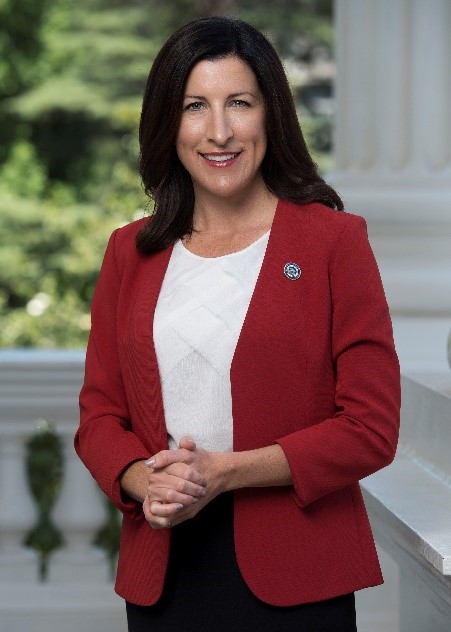
Asm. Cottie Petrie-Norris
Sponsored bills
Existing law authorizes an unmarried person who is under 18 years of age to marry upon obtaining a court order granting permission and the written consent of at least one of the parents or the guardian of each underage party to the marriage, as specified. Existing law requires the court, if it considers it necessary, as part of the court order granting permission to marry, to require the parties to the prospective marriage of a minor to participate in premarital counseling, as specified. Existing law provides that 2 unmarried, unrelated adults who have chosen to share one another's lives in an intimate and committed relationship of mutual caring may establish a domestic partnership by filing a declaration with the Secretary of State, if certain requirements are met. Existing law provides that a person under 18 years of age who, together with the person with whom the person proposes to establish a domestic partnership, meets the requirements for a domestic partnership other than the requirement of being at least 18 years of age, is capable of consenting to and establishing a domestic partnership upon obtaining a court order granting permission to the underage person or persons to establish a domestic partnership. Under existing law, registered domestic partners have the same rights, protections, and benefits as spouses. This bill would repeal the authorization for a person under 18 years of age to be issued a marriage license or to establish a domestic partnership, thereby prohibiting a person under 18 years of age from being issued a marriage license or from establishing a domestic partnership. The bill would make conforming changes. Existing law requires the State Registrar to create a document, no later than March 1, 2020, concerning marriage certificates in which one or both of the parties were minors at the time of solemnization of the marriage. Existing law requires the State Registrar to update that document annually, as specified. Existing law requires the local registrar to submit specified information for the purposes of that report. This bill would repeal those provisions.
The California Endangered Species Act prohibits the take of an endangered, threatened, or candidate species, except as specified. Under the act, the Department of Fish and Wildlife may authorize the take of listed species by certain entities through permits or memorandums of understanding for specified purposes. The act allows take of an endangered, threatened, or candidate species by permit if, among other things, the impact of the authorized take is minimized and fully mitigated. This bill would also allow the department to authorize by permit the take of a species proposed for listing, as defined, if specified conditions are met. The bill would provide that if a species proposed for listing becomes listed as an endangered, threatened, or candidate species, further authorization or approval shall not be required for a take of that species, if specified conditions are met, including that the species proposed for listing was included as a covered species in a permit previously issued by the department for incidental take and that the incidental take is caused by a renewable electrical generation facility. The bill would require the department to, on or before January 31, 2033, compile and post a summary table on its internet website with specified information for calendar years 2027 to 2032, inclusive.
Existing law requires a person or business that conducts business in California and that seeks to sell specified products or services, to take reasonable steps, as specified, to ensure that the purchaser is of legal age at the time of purchase or delivery, including, but not limited to, verifying the age of the purchaser. That law specifies that a person or business that violates these provisions is subject to a civil penalty not exceeding $7,500 for each violation. This bill would add nitrous oxide, as provided, to the above-referenced list of specified products or services. The bill would prohibit an online seller from allowing a purchaser to use a gift card or store credit for specified products or services that are illegal to sell to a minor. The bill would increase the amount of the civil penalty that may be imposed upon a person or business that violates these provisions to $7,500 for each violation, and would also authorize a court to exercise its discretion to increase the civil penalty imposed upon a business if it had annual gross revenues in excess of $25,000,000 in the preceding calendar year, to an amount not exceeding $250,000 per violation if it finds that doing so is necessary to deter future violations. The bill would specify that a public prosecutor that brings an action for violation of these provisions may also seek injunctive relief and attorney's fees and costs.
Executive Order No. N-12-23 requires specified state agencies, in collaboration with other state agencies and their workforce, to draft a report to the Governor examining the most significant, potentially beneficial use cases for deployment of generative artificial intelligence (GenAI) tools by the state. The executive order requires the report to explain the potential risks to individuals, communities, and government and state government workers, and requires the report to be regularly assessed and updated in consultation with, among others, the state government workforce or organizations that represent state government employees, as specified. Chapter 928 of the Statutes of 2024, the Generative Artificial Intelligence Accountability Act, requires specified state agencies to update the report, as needed, to respond to significant developments and to consult with specified parties, including organizations that represent state exclusive employee representatives. The act also requires state agencies to consider procurement and enterprise use opportunities for GenAI to improve efficiency, effectiveness, accessibility, and equity of government operations, as specified. This bill would require certain state and local public employers to provide written notice to a recognized employee organization at least 45 days before taking an action to develop, purchase, or require the use of GenAI to perform a service that is within the scope of work of the job classification represented by the recognized employee organization.
This measure would urge the President of the United States and Congress of the United States to immediately restore full and consistent funding and staffing for the National Park Service.
Maddy summaryCalifornia Assembly Resolution 140 designates August 2026 as Children's Get Offline and Get Outdoors Month to promote awareness of the benefits of screen-free play for child development. The resolution cites research linking excessive social media use and reduced free play time to increased rates of anxiety, depression, and other behavioral issues among teenagers. It encourages families and communities to support unstructured outdoor activities and highlights ongoing federal efforts to protect children's mental health through technology guardrails.
Maddy summaryCalifornia Assembly Resolution 137 formally recognizes the Diwali festival scheduled for November 8, 2026, and encourages state residents to participate in the celebration. The resolution highlights the cultural significance of the holiday for Indian Americans and South Asian communities, noting its themes of unity, joy, and the triumph of light over darkness. It also acknowledges that California previously designated Diwali as an official state holiday in 2025. This measure serves as a commemorative statement rather than a law with new regulatory or financial provisions.
The California FAIR Plan Association is a joint reinsurance association in which all insurers licensed to write basic property insurance participate to administer a program for the equitable apportionment of basic property insurance for persons who are unable to obtain that coverage through normal channels. Existing law requires the Insurance Commissioner to approve the association's plan of operation and authorizes the commissioner to examine the association's books, records, files, papers, and documents that relate to its operation. Existing law authorizes the commissioner to impose civil penalties for various violations of the Insurance Code. This bill would require the association to take corrective actions, as specified by the commissioner or their designee, to rectify violations of applicable statutes, regulations, accounting principles, the plan of operation, or other legally binding applicable rules identified in a report of examination or other operational report. The bill would subject the association to a penalty of not more than $20,000 for failing to take the specified corrective action within a timeframe agreed upon by the commissioner or their designee. The bill would set other civil penalty amounts for violations of provisions relative to the association as not to exceed $10,000 for each act in violation or not to exceed $20,000 if the act was willful, and would require the commissioner to impose those penalties, as specified. The bill would also authorize the commissioner to require the association to both adjust the policy limits available under programs underwritten by the association and make additional coverage offerings available for fair rental value coverage under the association's renters' property insurance program. This bill would incorporate additional changes to Section 10095 of the Insurance Code proposed by AB 69 to be operative only if this bill and AB 69 are enacted and this bill is enacted last.
This measure would declare the Legislature's opposition to any federal executive action that restricts, burdens, or interferes with California's vote by mail system and would call upon the United States Congress to reject any federal legislation that would restrict or eliminate vote by mail options and to protect the constitutional authority of states to administer their own elections.