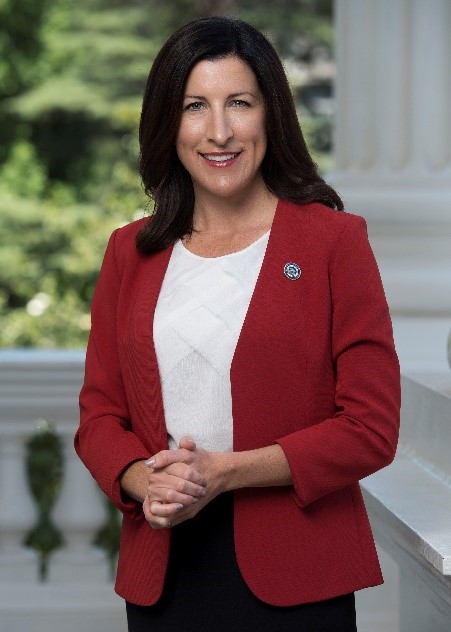
Photo of Cottie Petrie-Norris
D California Assembly · District 73 On the 2026 ballot

Asm. Cottie Petrie-Norris

Compare
Total votes
17,959
all sessions
Attendance
94%
885 missed
Near the chamber average
With party
98%
of cast votes
Near the chamber average
Bipartisan score
1%
crosses aisle rarely
Near the chamber average
Sponsored
1,605
bills & resolutions
Near the chamber average
Committees
10
assignments
1,605 bills and resolutions

Sponsored bills

Total
1,605
Primary
169
Co-sponsor
1,436
This page
1,605
matching current filters
Primary AB 514
Failed · California Assembly · Lead sponsor
Water: emergency water supplies.

Existing law, the Urban Water Management Planning Act, requires every public and private urban water supplier that directly or indirectly provides water for municipal purposes to prepare and adopt an urban water management plan. The act requires an urban water management plan to include a water shortage contingency plan, as provided. This bill would declare that it is the established policy of the state to encourage, but not mandate, the development of emergency water supplies by both local and regional water suppliers, as defined, and to support their use during times of drought or unplanned service or supply disruption, as provided.

Failed Feb 2, 2026 0 co-sponsors
Co-sponsor AB 551
Failed · California Assembly · Co-sponsor
Reproductive Health Emergency Preparedness Program.

Existing law establishes the Department of Health Care Access and Information to oversee and administer various health programs. The California Constitution prohibits the state from denying or interfering with an individual's reproductive freedom in their most intimate decisions. Existing law establishes the California Reproductive Health Equity Program within the department to ensure abortion and contraception services are affordable for and accessible to all patients and to provide financial support for safety net providers of these services. This bill would, upon appropriation by the Legislature or the availability of funds from private sources, establish the Reproductive Health Emergency Preparedness Program (RHEPP) for the purpose of expanding and improving access to reproductive and sexual health care in emergency departments across California. The bill would require the department to award the grants and administer the RHEPP in collaboration with California-based organizations to serve as the technical assistance provider. The bill would require the department to establish minimum standards, funding schedules, and procedures for awarding grants and would specify the qualifications for the collaborating organizations. The bill would limit the permissible uses of grant funds under the program, as specified. The bill would repeal these provisions on January 1, 2030.

Failed Feb 2, 2026 1 co-sponsor
Primary AB 270
Failed · California Assembly · Lead sponsor
Department of Forestry and Fire Protection: autonomous firefighting pilot project.

Existing law requires the Department of Forestry and Fire Protection, in accordance with a plan approved by the State Board of Forestry and Fire Protection, to, among other things, provide fire prevention and firefighting implements and apparatus and organize fire crews and patrols, as provided. This bill would require the Department of Forestry and Fire Protection to establish a pilot project to assess whether a firefighting helicopter equipped with autonomous aerial suppression technology can be transitioned into operational use in the State of California. The bill would also require the department to invite local, state, tribal, and federal fire agencies to participate in those familiarization and training activities. The bill would require the department to convene, within 60 days of completion of the pilot project, or January 1, 2029, whichever comes first, leading fire professionals in California to assess the performance of the pilot project and, if the pilot project meets its objectives, determine how to incorporate autonomous aerial suppression technology into existing state wildfire mitigation efforts. The bill would require an operator of autonomous aerial suppression technology that is part of the pilot project and that is required to submit reports to local or federal agencies about autonomous aerial suppression technology to also provide those reports to the department and the Legislature, as provided. The bill would include related legislative findings.

Failed Feb 2, 2026 0 co-sponsors
Co-sponsor AB 1468
Failed · California Assembly · Co-sponsor
Ethnic studies: content standards, curriculum frameworks, instructional materials, and compliance monitoring.

Existing law requires the State Board of Education to adopt statewide academically rigorous content standards in the core curriculum areas of reading, writing, mathematics, history/social science, and science, as specified. Existing law requires the Instructional Quality Commission to, among other things, recommend curriculum frameworks to the state board and develop criteria for evaluating instructional materials. This bill would require the state board to, on or before January 1, 2028, develop and adopt academically rigorous content standards for ethnic studies instruction in high school. The bill would require the commission, on or before January 1, 2028, to review and recommend to the state board curriculum frameworks and instructional materials for ethnic studies instruction in high school, as specified. The bill would require the state board to provide the commission with evaluation criteria to use in providing its review and recommendations. The bill would state the intent of the Legislature to enact subsequent legislation to establish an advisory committee with a majority of the advisory committee's members being experts in African American studies, Asian American and Pacific Islander studies, Native American studies, and Latino and Chicanx studies, to provide input to the state board on proposed content standards and to the commission on proposed curriculum frameworks and instructional materials for ethnic studies instruction in high school. Existing law requires a pupil to complete designated coursework while in grades 9 to 12, inclusive, in order to receive a diploma of graduation from high school. These graduation requirements include, commencing for pupils graduating in the 2029–30 school year, the completion of a one-semester course in ethnic studies meeting specified requirements. Under existing law, the requirement to complete an ethnic studies course may be fulfilled by the completion of, among others, a course based on the model curriculum developed by the Instructional Quality Commission, an ethnic studies course taught as part of a course that has been approved as meeting the A–G requirements of the University of California and the California State University, or a locally developed ethnic studies course approved by the governing board of a school district or the governing body of a charter school. Existing law requires the curriculum, instruction, and instructional materials for these ethnic studies courses to meet specified requirements, including that they not reflect or promote any bias, bigotry, or discrimination against any person or group of persons on the basis of certain characteristics. Existing law makes these provisions relating to ethnic studies courses operative only upon an appropriation of funds by the Legislature for purposes of these provisions. This bill would require the curriculum, instruction, and instructional materials for any high school ethnic studies course, including ethnic studies courses meeting high school graduation requirements, to meet the above-described requirements, and would require the curriculum, instruction, and instructional materials for all high school ethnic studies courses to additionally, among other things, foster multicultural respect and understanding and focus on the domestic experience and stories of historically marginalized peoples in American society. To the extent that the bill would impose new duties on local educational agencies, the bill would impose a state-mandated local program. The bill would require a school district, county office of education, or charter school to provide, on or before June 30, 2026, the State Department of Education with a copy of all curricula, instruction, and instructional materials in ethnic studies that schools offer or plan to offer to pupils in any of grades 9 to 12, inclusive, and the adoption calendar for curricula, instruction, and instructional materials in ethnic studies proposed for adoption by the governing board or body of the local educational agency for instruction to these pupils. The bill would require a local educational agency that does not have an ethnic studies course in place for its pupils in any of grades 9 to 12, inclusive, on or before June 30, 2026, to provide the department with a copy of all curricula, instruction, and instructional materials in ethnic studies that its schools seek to adopt at least 60 days before being first presented at a public meeting of the governing board or body of the local educational agency for instruction to these pupils. The bill would require the department to post the information received pursuant to these requirements on its internet website. To the extent that the bill would impose new duties on local educational agencies, it would impose a state-mandated local program. The bill would require the department to monitor compliance with the requirements of this bill as part of its annual compliance monitoring of state and federal programs and to provide a report to the relevant policy and fiscal committees of the Legislature summarizing the data collected through compliance monitoring, as specified. The California Constitution requires the state to reimburse local agencies and school districts for certain costs mandated by the state. Statutory provisions establish procedures for making that reimbursement. This bill would provide that, if the Commission on State Mandates determines that the bill contains costs mandated by the state, reimbursement for those costs shall be made pursuant to the statutory provisions noted above.


Failed Feb 2, 2026 1 co-sponsor
Primary AB 854
Failed · California Assembly · Lead sponsor
California Environmental Quality Act: exemptions.

The California Environmental Quality Act (CEQA) requires a lead agency, as defined, to prepare, or cause to be prepared, and certify the completion of an environmental impact report on a project that the lead agency proposes to carry out or approve that may have a significant effect on the environment or to adopt a negative declaration if it finds that the project will not have that effect. CEQA also requires a lead agency to prepare a mitigated negative declaration for a project that may have a significant effect on the environment if revisions in the project would avoid or mitigate that effect and there is no substantial evidence that the project, as revised, would have a significant effect on the environment. This bill would exempt from CEQA projects that consist of the inspection, maintenance, repair, restoration, reconditioning, reconductoring with advanced conductors, replacement, or removal of a transmission wire or cable used to conduct electricity or other piece of equipment that is directly attached to the wire or cable and that meet certain requirements. If a lead agency determines that a project is exempt from CEQA pursuant to the above provision, the bill would require the lead agency to file a notice of exemption with the Office of Land Use and Climate Innovation and the county clerk in each county in which the project is located, as provided. By increasing the duties of a lead agency, the bill would impose a state-mandated local program. The California Constitution requires the state to reimburse local agencies and school districts for certain costs mandated by the state. Statutory provisions establish procedures for making that reimbursement. This bill would provide that no reimbursement is required by this act for a specified reason.

Failed Feb 2, 2026 0 co-sponsors
Primary AB 275
Failed · California Assembly · Lead sponsor
Office of Emergency Services: wildfire aerial response program.

Existing law, the California Emergency Services Act, establishes the Office of Emergency Services in the office of the Governor, with specified powers and duties relative to coordinating emergency services. Existing law requires the Office of Emergency Services to enter into a joint powers agreement with the Department of Forestry and Fire Protection to develop and administer a comprehensive wildfire mitigation program, as specified. This bill would require the Office of Emergency Services, in consultation with the Department of Forestry and Fire Protection, to establish, on or before December 31, 2026, a working group to evaluate and develop recommendations for implementing a wildfire aerial response program to provide year-round, 24 hours per day, 7 days per week, rapid aerial suppression capabilities. The bill would require the working group to consider specified elements to ensure effective statewide aerial wildfire suppression and to develop recommendations, including whether the program should be implemented as a pilot program, a full-scale statewide initiative, or if implementation is not recommended based on feasibility findings. The bill would require the Director of Emergency Services, in consultation with the department, to appoint members to the working group who are familiar with wildfire aviation response programs, as provided. The bill would require the working group to report its findings and implementation recommendations to the Assembly Committee on Emergency Management and the Senate Committee on Governmental Organization on or before December 31, 2027, as provided.

Failed Feb 2, 2026 0 co-sponsors
Primary AB 915
Vetoed · California Assembly · Lead sponsor
Dam safety: state supervision: exceptions.

Existing law regulates the construction and operation of dams and exempts certain structures for these purposes. Existing law exempts certain wastewater treatment and storage ponds constructed as part of a wastewater control facility, as provided, from the requirements for state regulation and supervision of the safety of dams. This bill would additionally exempt from the requirements for state regulation and supervision of the safety of dams certain water storage facilities, structures, and activities associated with an energy storage system facility located in the County of Kern, as specified, that uses compressed air technology and meets certain criteria, including, among other things, a maximum water pool height of 25 feet or less from the final engineered grade, a maximum storage capacity of 1,500 acre-feet or less, and supervision of the design and construction by a registered civil engineer. This bill would make legislative findings and declarations as to the necessity of a special statute for the County of Kern.

Vetoed Jan 22, 2026 0 co-sponsors
Primary AB 963
Vetoed · California Assembly · Lead sponsor
Public works: prevailing wages: access to records.

Existing law requires that, except as specified, not less than the general prevailing rate of per diem wages be paid to workers employed on public works and imposes misdemeanor penalties for a willful violation of this requirement. Existing law defines "public works," for the purposes of regulating public works contracts, as, among other things, construction, alteration, demolition, installation, or repair work done under contract and paid for, in whole or in part, out of public funds. Existing law requires the Labor Commissioner to investigate allegations that a contractor or subcontractor violated the law regulating public works projects, including the payment of prevailing wages. Existing law requires each contractor and subcontractor on a public works project to keep accurate payroll records, showing the name, address, social security number, work classification, straight time and overtime hours worked each day and week, and the actual per diem wages paid to each journeyman, apprentice, worker, or other employee employed by the contractor or subcontractor in connection with the public work. Existing law requires any copy of records made available for inspection as copies and furnished upon request to the public or any public agency to be marked or obliterated to prevent disclosure of an individual's name, address, and social security number but specifies that any copy of records made available to a Taft-Hartley trust fund for the purposes of allocating contributions to participants be marked or obliterated only to prevent disclosure of an individual's full social security number, as specified. This bill would require an owner or developer, as defined, undertaking any work, subject to the prevailing wage requirements, to make specified records available upon request to the Division of Labor Standards Enforcement, to multiemployer Taft-Hartley trust funds, and to joint labor-management committees, as specified. The bill would set forth timelines for the owner or developer to comply with a request for records and for a fund or committee to submit a complaint to the division in case of an owner's or developer's failure to comply. Under the latter circumstance, the bill would require the division to submit to the owner or developer a new written request for records, as specified. Under the bill, if the owner or developer fails to comply with the request from the division, they would be subject to penalties, to be deposited into the State Public Works Enforcement Fund, as specified. If a request for records is made, the bill would require that the request be made within 3 years of the completion of the work. The bill would require the Director of Industrial Relations to adopt rules governing the release of these records, as specified.

Vetoed Jan 22, 2026 0 co-sponsors
Co-sponsor HR 75
Passed · California Assembly · Co-sponsor
Relative to National Human Trafficking Awareness Month.

Maddy summaryThis bill establishes January as National Human Trafficking Awareness Month in California to raise public awareness about human trafficking. The resolution recognizes the severity of human trafficking as a felony crime and highlights statistics showing its prevalence across the country and specific challenges with identifying male victims and labor trafficking cases. It aims to educate the public and encourage reporting and support for victims during this designated month.

Passed Jan 20, 2026 1 co-sponsor
Primary AB 366
Signed into law · California Assembly · Lead sponsor
Ignition interlock devices.

Existing law, commencing January 1, 2019, made various changes to the law governing ignition interlock devices (IID) , including, among other things, requiring a person who has been convicted of driving a motor vehicle under the influence of an alcoholic beverage, as specified, to install for a specified period of time as ordered by the court, an IID on the vehicle they operate, provided however that installation of an IID is discretionary for a first offender, as specified; authorizing a person convicted of driving a motor vehicle under the influence, if all other requirements are satisfied, including the installation of an IID, to apply for a restricted driver's license without completing a period of license suspension or revocation; and requiring ignition interlock device manufacturers to be in compliance with specified provisions relating to payment for the costs of an ignition interlock device. Existing law makes these changes operative until January 1, 2026. On January 1, 2026, existing law, as it relates to these provisions, is generally reinstated to read as it read prior to January 1, 2019. Existing law makes it a crime to violate certain provisions relating to IIDs and motor vehicles equipped with IIDs. This bill would extend the operation of these provisions until January 1, 2033, and would instead reinstate the law to how it read prior to January 1, 2019, on January 1, 2033. By extending the application of a crime, the bill would impose a state-mandated local program. The California Constitution requires the state to reimburse local agencies and school districts for certain costs mandated by the state. Statutory provisions establish procedures for making that reimbursement. This bill would provide that no reimbursement is required by this act for a specified reason.

Signed into law Oct 13, 2025 0 co-sponsors
Showing 211 to 220 of 1,605 bills
Previous 1 … 21 22 23 … 161 Next