

Existing sales and use tax laws impose a tax on retailers measured by the gross receipts from the sale of tangible personal property sold at retail in this state, or on the storage, use, or other consumption in this state of tangible personal property purchased from a retailer for storage, use, or other consumption in this state. Those laws provide various exemptions from those taxes. This bill, on and after January 1, 2020, and before January 1, 2024, would exempt from those taxes the gross receipts from the sale in this state of, and the storage, use, or other consumption in this state of, retail hydrogen vehicle fuel, as defined. The bill would make findings specifying the goals, purposes, and objectives of this tax exemption and would detail the performance indicators for the Legislature to use when measuring whether the exemption meets these goals, purposes, and objectives. The Bradley-Burns Uniform Local Sales and Use Tax Law authorizes counties and cities to impose local sales and use taxes in conformity with the Sales and Use Tax Law, and existing laws authorize districts, as specified, to impose transactions and use taxes in accordance with the Transactions and Use Tax Law, which generally conforms to the Sales and Use Tax Law. Amendments to the Sales and Use Tax Law are automatically incorporated into the local tax laws. Existing law requires the state to reimburse counties and cities for revenue losses caused by the enactment of sales and use tax exemptions. This bill would provide that, notwithstanding Section 2230 of the Revenue and Taxation Code, no appropriation is made and the state shall not reimburse any local agencies for sales and use tax revenues lost by them pursuant to this bill. This bill would take effect immediately as a tax levy.
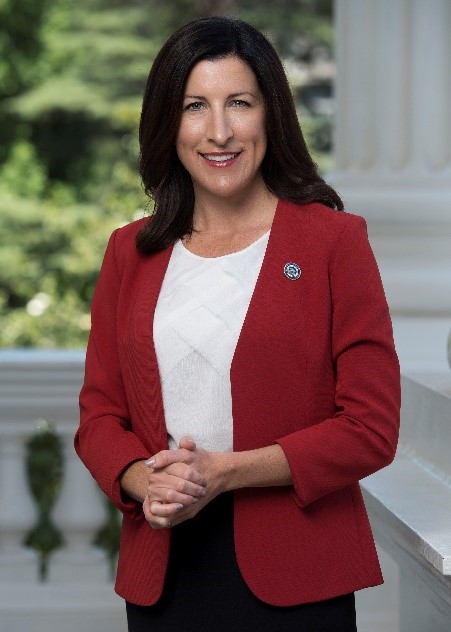
Asm. Cottie Petrie-Norris
Sponsored bills
Existing law establishes the Capital Access Loan Program for Small Businesses, which is administered by the California Pollution Control Financing Authority, to assist qualifying small businesses in financing the costs of complying with environmental mandates and the remediation of contamination on their properties. Under the program, the authority may enter into contracts with participating financial institutions and is required to establish a loss reserve account with participating financial institutions. Existing law authorizes a participating financial institution that experiences a default on a qualified loan enrolled in the Capital Access Loan Program to obtain reimbursement from the authority by submitting a claim for reimbursement for a specified amount of the loss covered by that loan, subject to certain procedures. Existing law also establishes other capital access loan programs that are administered by the authority, including the California Americans with Disabilities Small Business Capital Access Loan Program and the California Seismic Safety Capital Access Loan Program. Under the Small Business Financial Assistance Act of 2013, the California Infrastructure and Economic Development Bank, within the Governor's Office of Business and Economic Development, administers specific programs relating to small business, either administered directly by the bank or under contract with small business financial development corporations. Existing law establishes within the bank the California Small Business Finance Center and authorizes the center to administer programs to assist businesses seeking new capital resources under the Small Business Financial Assistance Act of 2013, and establishes other related provisions. The act establishes the program manager as the manager of the California Small Business Finance Center, and requires each small business financial development corporation formed pursuant to the act to submit specified information to the program manager related to their activities. Existing law requires the program manager, no later than January 1 of each year, to prepare and submit to the Governor and the Legislature a report for the preceding fiscal year ending June 30 containing the financial product activity of each small business financial development corporation formed. Existing law establishes the Small Business Expansion Fund in the State Treasury, and continuously appropriates specified moneys into the fund for purposes related to the Small Business Financial Assistance Act of 2013. This bill would create the Loan Loss Reserve Account in the California Small Business Expansion Fund to be under the administrative and management control of the California Small Business Finance Center within the bank, and would continuously appropriate all moneys deposited into the account to the center for purposes of the Small Business Financial Assistance Act of 2013. By establishing a continuously appropriated fund, this bill would make an appropriation. The bill would require that the account be established and maintained by the bank for the benefit of qualified financial companies or financial institutions participating as a lender in the loan loss reserve program or another program authorized pursuant to Small Business Financial Assistance Act of 2013. The bill would authorize the program to hold funds in the loan loss reserve account in a financial institution or company that establishes a trust fund, as specified. The bill would prescribe a process for the transfer of specified moneys held by the California Pollution Control Financing Authority to the Capital Access Reserve Fund. The bill would require the bank to create holding accounts and loss reserve accounts and would prescribe the purposes for which they may be used. The bill would provide that the state or the bank are not liable or obligated in any way beyond the money that is allocated and deposited into the Loan Loss Reserve Account or the trust fund account, as specified. The bill would create the California Loan Loss Reserve Program for Small Business, a loan loss reserve and credit enhancement program, within the Small Business Financial Assistance Act of 2013. The bill would provide for the transfer of the loss reserve loan portfolio of the California Capital Access Loan Program, administered by the California Pollution Control Financing Authority, to the California Small Business Finance Center for purposes of the California Loan Loss Reserve Program for Small Business, pursuant to a specified process. The bill would authorize the bank to contract with a qualified financial company or financial institution to participate as a lender in the program, and would state a specified priority for loans to be enrolled. The bill would require the bank to develop directives and requirements to implement the program. The bill would provide for the maintenance of regulations adopted by the California Pollution Control Financing Authority in connection with the management and control of loan loss reserve funds, as specified. The bill would prescribe a process pursuant to which a financial company or institution participating as a lender may withdraw from the program. The bill would also provide for the transfer of the collateral support loan portfolio of the California Capital Access Loan Program, administered by the California Pollution Control Financing Authority, to the bank pursuant to a specified process. The bill would make conforming and technical changes. The bill would modify the requirements of the annual report described above by requiring the program manager to include in its annual report the financial product activity of each financial institution or company that participates in the loan loss reserve program specified information, and would require the program manager, for one year following the creation of the loan loss reserve program, to prepare and submit to the Governor and the Legislature a semi-annual progress report relating to the transfer of the loan loss reserve program from the California Pollution Control Financing Authority to the California Small Business Finance Center at the bank. This bill would declare that it is to take effect immediately as an urgency statute.
This measure would name the public street, circle, and plaza at 914 and 915 Capitol Mall in the City of Sacramento as the Willie L. Brown, Jr. Circle and Plaza. The measure would request the Department of General Services to determine the cost of erecting the appropriate signage commemorating this special designation and, upon receiving donations from nonstate sources, to cover that cost to erect that signage.
Existing law requires the Attorney General to establish and maintain an online database known as the Prohibited Armed Persons File, sometimes referred to as the Armed Prohibited Persons System, to cross-reference persons who have ownership or possession of a firearm on or after January 1, 1996, and who, subsequent to the date of that ownership or possession of a firearm, fall within a class of persons who are prohibited from owning or possessing a firearm. The Budget Act of 2019 appropriated $3,000,000 to the Counties of Alameda, San Diego, Santa Cruz, and Ventura to support local law enforcement activities related to seizing weapons and ammunition from persons who are prohibited from possessing them through a Gun Violence Reduction Pilot Program. This bill would require the Counties of Alameda, San Diego, Santa Cruz, and Ventura on or before 15 months after receiving these funds appropriated in the Budget Act of 2019, to submit a report to the Department of Justice and to the Legislature containing specified information relating to the efficacy of their programs.
The Personal Income Tax Law, in modified conformity with federal income tax law, excludes from the gross income of a beneficiary of, or contributor to, a qualified tuition program, which includes a Golden State Scholarshare College Savings Trust, distributions or earnings under that program, as specified. This bill, for taxable years beginning on or after January 1, 2020, and before January 1, 2025, would allow under that law a deduction against gross income in the amount equal to the monetary contribution made by a qualified taxpayer, as defined, to the California qualified tuition program established pursuant to the Golden State Scholarshare Trust Act not to exceed either $5,000 or $10,000, as provided. The bill would require, with exceptions, in the case of any distribution in excess of qualified higher education expenses, as defined, the aggregate amount of the deduction allowed that reduced the qualified taxpayer's gross income in any taxable year to be added to the gross income of the qualified taxpayer in the taxable year of the distribution, as provided. The bill would require the Scholarshare Investment Board to report to the Legislature, on an annual basis, specified data related to this deduction and Scholarshare accounts and would require the Franchise Tax Board to provide certain information to the Scholarshare Investment Board upon request. This bill would take effect immediately as a tax levy.
The California Constitution generally limits ad valorem taxes on real property to 1% of the full cash value of that property. For purposes of this limitation, "full cash value" is defined as the assessor's valuation of real property as shown on the 1975–76 tax bill under "full cash value" or, thereafter, the appraised value of that real property when purchased, newly constructed, or a change in ownership has occurred. Existing law defines "newly constructed" and "new construction" to mean any addition to real property since the last lien date and any alteration of land or of any improvement since the last lien date that constitutes a major rehabilitation thereof or that converts the property to a different use. Existing law, where real property has been damaged or destroyed by misfortune or calamity, excludes from the definition of "newly constructed" and "new construction" any timely reconstruction of the real property, or portion thereof, where the property after reconstruction is substantially equivalent to the property prior to damage or destruction. This bill would define the term "substantially equivalent" for purposes of the provisions described above to mean the size of the improvement after reconstruction does not exceed 120% of the size of the improvement prior to damage or destruction or the full cash value of the improvement after reconstruction does not exceed 120% of the full cash value of the improvement prior to damage or destruction. The bill would apply this definition to real property damaged or destroyed by misfortune or calamity on or after January 1, 2017. By imposing new duties upon local government officials, this bill would impose a state-mandated local program. This bill would make legislative findings and declarations regarding the public purpose served by the bill. The California Constitution requires the state to reimburse local agencies and school districts for certain costs mandated by the state. Statutory provisions establish procedures for making that reimbursement. This bill would provide that, if the Commission on State Mandates determines that the bill contains costs mandated by the state, reimbursement for those costs shall be made pursuant to the statutory provisions noted above. Existing law requires the state to reimburse local agencies annually for certain property tax revenues lost as a result of any exemption or classification of property for purposes of ad valorem property taxation. This bill would provide that, notwithstanding those provisions, no appropriation is made and the state shall not reimburse local agencies for property tax revenues lost by them pursuant to the bill.
(1) Existing law requires the last 2 full weeks in April and in September to be known as "high school voter education weeks," during which time persons authorized by the county elections official are allowed to register to vote pupils and school personnel on high school campuses. This bill would instead make January and September "high school voter education months." (2) Existing law requires the Instructional Quality Commission to ensure voter education information is included in the American government and civics curriculum at the high school level, as specified. This bill would require the Secretary of State, in coordination with the Superintendent of Public Instruction, to develop educational programming to provide designated voter education information to pupils in grade 12 in high schools maintained by a school district, county office of education, or charter school. The bill would require county elections officials to customize the educational programming to include information specific to that county's election system. The bill would require a school district, county office of education, or charter school to implement the educational programming during a presentation or assembly at the high school campus. The bill would require a school district, county office of education, or charter school to offer pupils the opportunity to register or preregister to vote during the presentation or assembly at the high school campus. The bill would specify methods through which the registration or preregistration could be accomplished. To the extent the bill would create new duties for county elections officials, school districts, county offices of education, and charter schools, it would constitute a state-mandated local program. (3) The California Constitution requires the state to reimburse local agencies and school districts for certain costs mandated by the state. Statutory provisions establish procedures for making that reimbursement. This bill would provide that, if the Commission on State Mandates determines that the bill contains costs mandated by the state, reimbursement for those costs shall be made pursuant to the statutory provisions noted above.
Existing law requires the State Department of Health Care Services to license and regulate alcoholism or drug abuse recovery or treatment facilities serving adults. Existing law authorizes the department to certify qualified alcoholism or drug abuse recovery or treatment programs, as prescribed. Under existing law, the department regulates the quality of these programs, taking into consideration the significance of community-based programs to alcohol and other drug abuse recovery and the need to encourage opportunities for low-income and special needs populations to receive alcohol and other drug abuse recovery or treatment services. This bill would, beginning January 1, 2021, require an outpatient alcoholism or drug abuse recovery or treatment program that provides those services to the public and is not otherwise licensed under existing law to be licensed by the department, except as specified. The bill would require the department to develop regulations to establish program licensure standards and would integrate existing quality assurance provisions into the licensure requirements. The bill would require the department to charge a fee that does not exceed the reasonable regulatory costs of administering the licensing program and issuing a license under these provisions. The bill would prohibit the practice or operation of an outpatient alcoholism or drug abuse recovery or treatment program without obtaining a current valid license and would impose specified penalties for violations of that prohibition. Existing law requires the department to implement the Medi-Cal 2020 demonstration project, including the Drug Medi-Cal organized delivery system (DMC-ODS) that provides alcohol and drug use services to eligible persons and authorizes the department to enter into a Drug Medi-Cal Treatment Program contract with a county for the provision of those services within a county service area. This bill would deem a county DMC-ODS to be in compliance with the bill's licensure requirements and would exempt a Drug Medi-Cal Treatment Program contractor from those licensure requirements until January 1, 2023, or the date that the county becomes a DMC-ODS, whichever is earlier. This bill would incorporate additional changes to Section 11831.7 of the Health and Safety Code proposed by AB 919 to be operative only if this bill and AB 919 are enacted and this bill is enacted last.
This measure would recognize September 2020 as Sickle Cell Disease Awareness Month and encourage the Legislature to appropriate funds for research, treatment, and monitoring of sickle cell disease, and for related education and outreach.