

Relative to Korean American Day.
This measure would proclaim January 13, 2020, as Korean American Day.
Signed into law Feb 11, 2020
1 co-sponsor
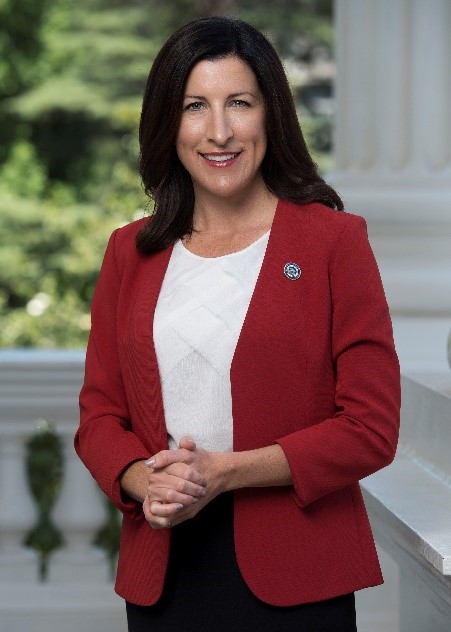
This measure would proclaim January 13, 2020, as Korean American Day.
This measure would honor the late Reverend Dr. Martin Luther King, Jr. and commemorate Dr. Martin Luther King, Jr. Day.
Existing law establishes within the Department of Industrial Relations the Division of Labor Standards Enforcement under the direction of the Labor Commissioner. Existing law authorizes the Labor Commissioner, the commissioner's deputies, and the commissioner's agents to, among other things, issue subpoenas for the purpose of carrying out the laws that the Division of Labor Standards Enforcement is responsible for enforcing. This bill would make nonsubstantive changes to the provision authorizing the commissioner, the commissioner's deputies, and the commissioner's agents to issue subpoenas and engage in other enforcement activities.
Existing law establishes the Code of Civil Procedure, which is divided into four parts. This bill would make a technical, nonsubstantive change to that provision.
Existing law establishes the Active Transportation Program in the Department of Transportation for the purpose of encouraging increased use of active modes of transportation, such as biking and walking. Existing law requires specified funds for the program to be appropriated to the department in the annual Budget Act and allocated to eligible projects by the California Transportation Commission. Existing law requires the commission to award 50% of available funds to projects statewide, 10% of available funds to projects in small urban and rural regions, and the remaining 40% of available funds to projects by metropolitan planning organizations (MPO) , with the funds available for distribution by each MPO based on its relative population. Existing law requires the commission to develop guidelines and procedures, including project selection criteria, for the program in consultation with various agencies and interested parties. To ensure that the MPOs have sufficient discretion to develop regional guidelines, existing law authorizes the commission to adopt separate guidelines for the state and the MPOs with regard to project selection criteria. Existing law requires the commission to initially adopt a 2-year program of projects for the program, with subsequent 4-year programs thereafter. This bill would require the department, instead of the commission, to award funds to projects in the statewide and small urban and rural region distribution categories and to adopt a program of projects for those distribution categories. The bill would require that 75% of available funds be awarded to MPO's in urban areas with populations greater than 200,000, in proportion to their relative share of the population, 15% to small urban and rural regions with populations of 200,000 or less, competitively awarded by the department to projects in those regions, and 10% to projects competitively awarded by the department, in consultation with the commission, on a statewide basis. With respect to the funds made available to MPOs, the bill would require the commission to allocate those funds to each MPO as a lump sum for award to projects selected by the applicable MPO. The bill would authorize MPO's to adopt their own guidelines, or use part or all of the guidelines developed by the commission. The bill would also authorize specified county transportation commissions to create their own set of guidelines that govern the funding distribution for their jurisdiction and would require those guidelines to be accepted and incorporated into the MPO guidelines. To the extent the bill imposes additional duties on an MPO, the bill would impose a state-mandated local program. The California Constitution requires the state to reimburse local agencies and school districts for certain costs mandated by the state. Statutory provisions establish procedures for making that reimbursement. This bill would provide that, if the Commission on State Mandates determines that the bill contains costs mandated by the state, reimbursement for those costs shall be made pursuant to the statutory provisions noted above.
The Economic Revitalization Act establishes the Governor's Office of Business and Economic Development, also known as GO-Biz, to serve as the Governor's lead entity for economic strategy and the marketing of California on issues relating to business development, private sector investment, and economic growth. The office, among others, makes recommendations to the Governor and the Legislature regarding policies, programs, and actions to advance statewide economic goals. This bill would require the economic development activities of this state to be guided by the policies, priorities, and actions identified in the California Economic Development Strategic Action Plan, which would, among other things, set a comprehensive agenda and framework for the purposes of supporting regional economic priorities, increasing the state's overall national and international competitiveness, and resulting in inclusive economic growth. This bill would require GO-Biz to facilitate the development of the action plan through a public engagement process that includes local and regional stakeholders, and to post the first action plan on its internet website on or before January 10, 2021. The bill would require, by July 1, 2020, GO-Biz to prepare or cause to be prepared an economic status report before the development of the action plan that would include, among other things, an evaluation of California's national and international competitiveness, as specified. This bill would require the action plan to be reviewed biennially and revised every 5 years in accordance with certain requirements. Existing law creates the California Economic Development Fund in the State Treasury for the purpose of receiving federal, state, local, and private economic development funds, which, upon appropriation by the Legislature, may be expended by GO-Biz to provide matching funds for loans or grants to public and private entities and for other economic development purposes. The bill would authorize GO-Biz to accept nonstate moneys for the purposes of preparing, developing, and updating the economic status report and the action plan. The bill would require the deposit of any amounts received by GO-Biz into the Economic Action Plan Account, which this bill would establish in the California Economic Development Fund. This bill would make those amounts available to the office for those purposes upon appropriation by the Legislature.
Existing law, the Veterinary Medicine Practice Act, provides for the licensure and regulation of veterinary medicine by the Veterinary Medical Board in the Department of Consumer Affairs. Existing law authorizes the Veterinary Medical Board to deny, revoke, or suspend a license or registration or assess a fine for a violation of specified acts, including the employment of anyone but a veterinarian licensed in this state to demonstrate the use of biologics in the treatment of animals. A violation of the act is a crime. Existing law prohibits a person from engaging in the production of animal blood and blood component products, as defined, for retail sale and distribution except in a commercial blood bank for animals licensed by the Secretary of Food and Agriculture and requires the secretary to license commercial blood banks for animals that meet specified requirements. Existing law exempts licensed private veterinarians who collect blood or blood products solely for use in their own practice from these provisions regulating and licensing commercial blood banks for animals and biologics. Existing law defines animal, for the purposes of these provisions, as any domesticated fowl or nonhuman mammal and any wild fowl, bird, or mammal that is reduced to captivity. A violation of these provisions is a crime. This bill, not withstanding any law, commencing January 1, 2022, would prohibit a person from engaging in the production of canine blood and blood component products or biologics for retail sale and distribution unless that person is licensed as a canine blood bank by the Secretary of Food and Agriculture, among other specified requirements, including the requirement that the operations are performed under the direct supervision of a licensed veterinarian or board-certified specialist. The bill would prohibit a canine blood bank from paying a person for canine blood or blood component products and would require a canine blood bank to keep specified records. By expanding the scope of existing crimes, this bill would impose a state-mandated local program. The California Constitution requires the state to reimburse local agencies and school districts for certain costs mandated by the state. Statutory provisions establish procedures for making that reimbursement. This bill would provide that no reimbursement is required by this act for a specified reason.
The California Constitution provides that the civil service includes every officer and employee in the state except as otherwise provided in the Constitution, and existing statutory law, the State Civil Service Act, prescribes a comprehensive civil service personnel system for the state. The Reduced Worktime Act, within the State Civil Service Act, establishes that it is the policy of the state that state employers, to the extent feasible, make reduced worktime available to employees who are unable, or who do not desire, to work standard working hours on a full-time basis. This bill would require an appointing power for a full-time position to allow for reduced worktime, including, but not limited to, job sharing by two or more employees for a position, in accordance with the Reduced Worktime Act. The bill would require that an applicant, when applying for a position, have the option to indicate the applicant's interest in a reduced worktime arrangement. The bill would require the appointing power to consider an applicant who indicates such an interest in a manner similar to other applicants.
The Personal Income Tax Law allows a credit against the net tax imposed by that law to residents for net income taxes paid to another state on income derived from sources within that state. This bill, for taxable years beginning on or after January 1, 2020, and before January 1, 2025, would provide that the determination of whether taxes paid to another state are net income taxes shall be determined by reference to the actual method used, as defined, to calculate the taxes paid by the taxpayer and without regard to other methods allowed by the other state. The bill would require the Franchise Tax Board to provide the Legislature with a biannual report regarding the credit, as provided. This bill would take effect immediately as a tax levy.