

Existing law makes the State Department of Health Care Services the sole authority in state government to license adult alcoholism or drug abuse recovery or treatment facilities and prohibits a person, firm, corporation, or other specified entity from operating that type of facility without a valid license. Existing law also prohibits specified persons, programs, or entities from giving or receiving remuneration or anything of value for the referral of a person who is seeking alcoholism or drug abuse recovery and treatment services. Existing law authorizes the department to investigate allegations of violations of that prohibition and to impose sanctions for a violation, including assessing a penalty upon, or suspending or revoking the license or certification of, a facility. This bill would prohibit an operator of a licensed alcoholism or drug abuse recovery or treatment facility, a certified alcohol or other drug program, a recovery residence, or a third party that provides any form of advertising or marketing services to any of those entities, from engaging in various acts, including making a false or misleading statement about the entity's products, goods, services, or geographical locations. The bill would also prohibit a picture, description, staff information, or the location of an entity from being included on an internet website along with false contact information that surreptitiously directs the reader to a business that does not have a contract with the entity. The bill would authorize the department to investigate allegations of a violation of these provisions and, upon finding a violation, to impose the sanctions available pursuant to existing law, as specified.
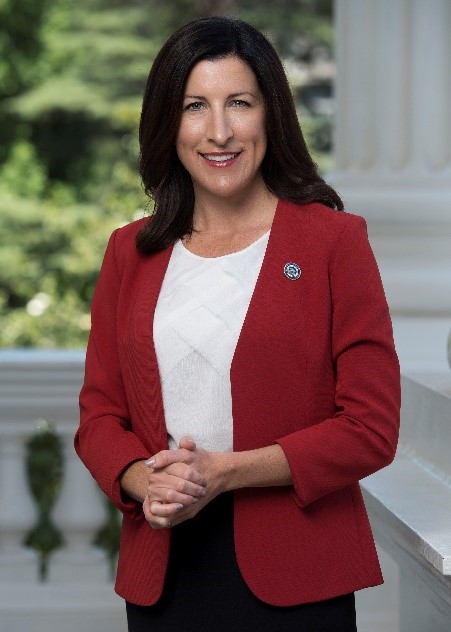
Asm. Cottie Petrie-Norris
Sponsored bills
This measure would urge specified state departments and the Attorney General to use their authority to ensure that health care service plans and health insurers subject to their authority comply with the federal Paul Wellstone and Pete Domenici Mental Health Parity and Addiction Equity Act of 2008.
Existing federal law establishes the Program of All-Inclusive Care for the Elderly (PACE) , which provides specified services for older individuals at a PACE center, defined, in part, as a facility that includes a primary care clinic, so that they may continue living in the community. Federal law authorizes states to implement the PACE program as a Medicaid state option. Existing state law establishes the California Program of All-Inclusive Care for the Elderly (PACE program) , to provide community-based, risk-based, and capitated long-term care services as optional services under the state's Medi-Cal State Plan, as specified. Existing law authorizes the State Department of Health Care Services to enter into contracts with various entities for the purpose of implementing the PACE program and fully implementing the single state agency responsibilities assumed by the department pursuant to those contracts, as specified. Existing law establishes the State Department of Public Health and sets forth its powers and duties, including, but not limited to, duties relating to the licensing and regulation of various entities, including primary care clinics, adult day health care centers, and home health agencies. This bill would exempt from licensure by the State Department of Public Health a primary care clinic, an adult day health care center, or a home health agency, that is approved by the State Department of Health Care Services to operate exclusively as part of a PACE organization or that provides services to individuals who are being assessed for eligibility to enroll in the PACE program for not more than 60 calendar days after an individual submits an application for enrollment. The bill would instead subject those entities to oversight and regulation by the State Department of Health Care Services. The bill would require those entities to comply with the operating standards described in their respective provisions, except as modified by the State Department of Health Care Services, to meet the needs of PACE participants or those individuals being assessed. The bill would require those entities to apply for licensure with the State Department of Public Health if they provide services to any other individuals, as specified. The bill would repeal related provisions as part of conforming changes. The bill would condition the transfer of powers between the 2 departments on the Director of Health Care Services determining, and communicating that determination in writing to the State Department of Public Health, that operating standards compliance programs have been established. The bill would require those PACE organizations to cooperate with the State Department of Health Care Services by providing the department with requested records or information or with access to inspect physical locations. The bill would authorize the department to refuse to enter into, or to terminate, a contract with a noncompliant or noncooperative PACE organization, or to require that PACE organization to submit a corrective action plan to bring it into compliance, as specified. The bill would authorize the department to enter into contracts, or to amend existing contracts, on a bid or negotiated basis, to implement these provisions, and would authorize the department to implement, interpret, or make specific these provisions by means of letters, bulletins, or other similar instructions, without taking regulatory action. The bill would require the department to implement these provisions no later than January 1, 2021, but only to the extent any necessary federal approvals are obtained and federal financial participation is available. The bill would require the department to establish an administrative fee to be paid by each of those PACE organizations, as specified, in an amount necessary to pay for reasonable costs of implementing and administering these provisions. The bill would create a special fund, the PACE Oversight Fund of the State Department of Health Care Services, for the deposit of the fees, to be expended upon appropriation by the Legislature. This bill would incorporate additional changes to Section 1206 of the Health and Safety Code proposed by AB 1037 to be operative only if this bill and AB 1037 are enacted and this bill is enacted last.
Existing law establishes the policy of the Legislature to ensure equal access to specific information about the many local regulating and advisory boards, commissions, and committees and to ensure equal opportunity to be informed of vacancies on those boards. Existing law requires each legislative body of a local agency to prepare an appointments list of all regular and ongoing boards, commissions, and committees that are appointed by the legislative body of the local agency. This bill, on and after January 1, 2030, would require, with respect to a city with a population of 50,000 or more, that the city not appoint members of nonsalaried, nonelected boards or commissions consisting of 5 or more members such that individuals of the same gender identity comprise more than 60% of the board or commission's membership. The bill would also prohibit a board or commission with 4 or fewer nonelected and nonsalaried members from being comprised exclusively of people with the same gender identity. The bill would define "gender identity" for purposes of the bill, and would exclude from its provisions a board or commission that has as its primary purpose addressing issues of relevance to a particular gender identity. By imposing new requirements on cities, the bill would impose a state-mandated local program. This bill would include findings that the changes proposed by this bill address a matter of statewide concern rather than a municipal affair and, therefore, apply to all cities, including charter cities. The California Constitution requires the state to reimburse local agencies and school districts for certain costs mandated by the state. Statutory provisions establish procedures for making that reimbursement. This bill would provide that, if the Commission on State Mandates determines that the bill contains costs mandated by the state, reimbursement for those costs shall be made pursuant to the statutory provisions noted above.
Existing law authorizes the Director of General Services, with the consent of the State Department of Developmental Services, to let to a nonprofit corporation, for a period not to exceed 55 years, up to 5 acres of real property located within the grounds of the Fairview State Hospital, which is also known as the Fairview Developmental Center, for specified purposes and subject to certain conditions. Existing law requires each state agency to make a review of all proprietary state lands over which it has jurisdiction, except as specified, on or before December 31 of each year to determine what, if any, land is in excess of its foreseeable needs and report thereon in writing to the Department of General Services. Existing law requires the department to determine whether the excess land is needed by any other state agency and authorizes the department to transfer the excess land to a state agency, as specified. This bill would require, if land within the grounds of the Fairview Developmental Center is reported as excess and the department determines that the land is needed by more than one state agency, that the department conduct a public hearing and receive public input regarding the use of the land before transferring it to any state agency. This bill would make nonsubstantive changes to this provision.
Existing law provides for the licensure and regulation of adult alcoholism or drug abuse recovery or treatment facilities by the State Department of Health Care Services and authorizes the department to enforce those provisions. Existing law prohibits specified persons, programs, or entities, such as an alcoholism or drug abuse treatment facility or a person employed by, or working for, an alcohol or other drug program, from giving or receiving anything of value for the referral of a person who is seeking alcoholism or drug abuse recovery and treatment services. Existing law authorizes the department to investigate allegations of violations of those provisions, and authorizes the department to assess various penalties upon a person, program, or entity that is found in violation of those provisions. This bill would require laboratories or certified outpatient treatment programs that lease, manage, or own housing that is offered to individuals using the laboratory or outpatient treatment services to maintain separate housing contracts stating that payment for the housing is the patient's responsibility and does not depend on insurance benefits. The bill would require alcoholism or drug abuse recovery or treatment facilities to only offer discounted postdischarge housing and specified transportation services under certain conditions, including that the patient enters into a repayment plan for any subsidized rent. The bill would provide that violations of those provisions are punishable by the sanctions described above. This bill would require the department to establish an enforcement program focused on the duties to enforce these provisions, and would require staff of the enforcement program to provide the department with analytical support, general oversight and monitoring, and legal guidance regarding those provisions. This bill would incorporate additional changes to Sections 11831.6 and 11831.7 of the Health and Safety Code proposed by AB 920 to be operative only if this bill and AB 920 are enacted and this bill is enacted last.
The Medical Practice Act provides for the licensure and regulation of the practice of medicine. The act makes it unprofessional conduct for a licensee to prescribe, dispense, or furnish dangerous drugs without an appropriate prior examination and a medical indication. This bill would specify that an appropriate prior examination does not require a synchronous interaction between the patient and the licensee and can be achieved through the use of telehealth, as specified, provided that the licensee complies with the appropriate standard of care. This bill would declare that it is to take effect immediately as an urgency statute.
Existing law establishes the Board of State and Community Corrections. Existing law charges the board with providing the statewide leadership, coordination, and technical assistance to promote effective state and local efforts and partnerships in California's adult and juvenile criminal justice system, including addressing gang problems. The existing Budget Act of 2019 establishes the California Violence Intervention and Prevention Grant Program, administered by the Board of State and Community Corrections, to award competitive grants for the purpose of violence intervention and prevention. The Budget Act of 2019 limits the amount of each grant to a maximum of $500,000. This bill would codify the establishment of the California Violence Intervention and Prevention Grant Program and the authority and duties of the board in administering the program, including the selection criteria for grants and reporting requirements to the Legislature. The bill would increase the maximum grant amount to $1,500,000. This bill would repeal this program on January 1, 2025.
Under existing law, a person who purchases or receives a firearm, attempts to purchase or receive a firearm, or owns or possesses a firearm knowing that the person is prohibited from doing so by a temporary restraining order, an injunction, or a protective order, as specified, is guilty of a crime. This bill would expand the scope of this crime to a person who is prohibited from purchasing or possessing a firearm in any jurisdiction by a valid order issued by an out-of-state jurisdiction that is similar or equivalent to a temporary restraining order, injunction, or protective order issued in this state, and which includes a prohibition from owning or possessing a firearm. The bill would require the Attorney General to undertake the actions necessary to implement this provision to the extent the Legislature appropriates funds for this purpose. Because this bill would expand the scope of an existing crime, it would impose a state-mandated local program. The California Constitution requires the state to reimburse local agencies and school districts for certain costs mandated by the state. Statutory provisions establish procedures for making that reimbursement. This bill would provide that no reimbursement is required by this act for a specified reason.
Existing law provides procedures for the circulation of referendum petitions in municipal elections and requires, among other things, that each section of the referendum petition contain the text of the ordinance or the portion of the ordinance that is the subject of the referendum. This bill would permit each section of the referendum petition to contain an impartial summary of the referendum instead of the text of the ordinance or the portion of the ordinance that is the subject of the referendum. The summary would be drafted by the proponents of the referendum, filed with the local elections official, and approved by the city attorney, as specified. By creating new duties for local elections officials and city attorneys, this bill would impose a state-mandated local program. The California Constitution requires the state to reimburse local agencies and school districts for certain costs mandated by the state. Statutory provisions establish procedures for making that reimbursement. This bill would provide that, if the Commission on State Mandates determines that the bill contains costs mandated by the state, reimbursement for those costs shall be made pursuant to the statutory provisions noted above.