

Existing law establishes the California Community Colleges, the California State University, and the University of California as the 3 segments of public postsecondary education in this state. The missions and functions of these segments are set forth in the Donahoe Higher Education Act. The Student Voter Registration Act of 2003 requires the Secretary of State to annually provide every high school and University of California campus, and authorizes the Secretary of State to annually provide every community college and California State University campus, with voter registration forms, as specified. The act also requires the California State University and the California Community Colleges to implement a process and the infrastructure to allow a person who enrolls online at the institution to submit an affidavit of voter registration electronically on the internet website of the Secretary of State. The act encourages the University of California to comply with this provision. This bill would establish the Student Civic and Voter Empowerment Program to be conducted by the Secretary of State, in partnership with the California Community Colleges, the California State University, and the University of California. The bill would require each campus of the California Community Colleges and the California State University, and request each campus of the University of California, (1) to distribute, in consultation with the Secretary of State, campuswide emails to all students with specified voting- and election-related dates and information, and to include specified dates on all print and online academic calendars, (2) to post on social media reminders to students of specified voter-related dates and information, and (3) to designate one person per campus as the Civic and Voter Empowerment Coordinator with specified responsibilities, including developing a Civic and Voter Empowerment Action Plan. The bill would require the Secretary of State to evaluate the program each year, and to report to the Legislature the results of the evaluation on or before January 1, 2021, and annually thereafter. The bill would require the Secretary of State to develop a Students Vote Project to implement these requirements. By imposing additional duties on community college districts, the bill would impose a state-mandated local program. The California Constitution requires the state to reimburse local agencies and school districts for certain costs mandated by the state. Statutory provisions establish procedures for making that reimbursement. This bill would provide that, if the Commission on State Mandates determines that the bill contains costs mandated by the state, reimbursement for those costs shall be made pursuant to the statutory provisions noted above.
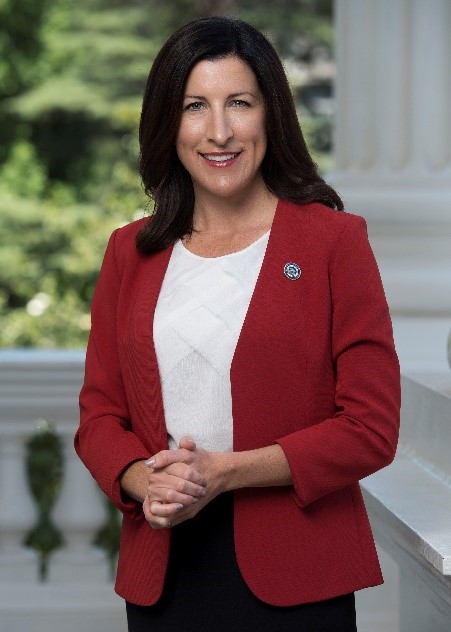
Asm. Cottie Petrie-Norris
Sponsored bills
Existing law requires the Secretary of State to annually provide every high school, community college, and California State University and University of California campus with voter registration forms. Existing law also expresses the intent of the Legislature that every eligible high school and college student receive a meaningful opportunity to register to vote. Existing law authorizes certain counties, on or after specified dates, to conduct any election as an all-mailed ballot election if, among other conditions, the county elections official permits a voter to vote a ballot at a vote center. Existing law requires a county elections official conducting an all-mailed ballot election to consider various factors in determining the location of vote centers. This bill would direct a county elections official conducting an all-mailed ballot election to consider vote center location on a public or private university or college campus. Existing law requires, upon the request of a local elections official, that the governing body having jurisdiction over a school building or other public building allow the school to be used as a polling place or vote center, under specified conditions. This bill would expand the definition of "public building" for purposes of that provision to include buildings owned or controlled by community college districts, the California State University, and the University of California, and it would also clarify that the University of California is encouraged, but not required, to comply with such a request. Because this bill would impose additional duties on local officials, it would impose a state-mandated local program. This bill would incorporate additional changes to Section 4005 of the Elections Code proposed by AB 49 to be operative only if this bill and AB 49 are enacted and this bill is enacted last. The California Constitution requires the state to reimburse local agencies and school districts for certain costs mandated by the state. Statutory provisions establish procedures for making that reimbursement. This bill would provide that, if the Commission on State Mandates determines that the bill contains costs mandated by the state, reimbursement for those costs shall be made pursuant to the statutory provisions noted above.
The Political Reform Act of 1974 prohibits a person, other than a small contributor committee or political party committee, from making to a candidate for elective state office, for statewide elective office, or for the office of Governor, and prohibits those candidates from accepting from a person, a contribution totaling more than a specified amount per election. For a candidate for elective state office other than a candidate for statewide elective office, the limitation on contributions is $3,000 per election, as that amount is adjusted by the Fair Political Practices Commission in January of every odd-numbered year. Existing law authorizes a county, city, or district to limit campaign contributions in local elections. Existing law authorizes the governing board of a school district or of a community college district to limit campaign expenditures or contributions in elections to district offices. The act specifies that it does not prevent the Legislature or any other state or local agency from imposing additional requirements on a person if the requirements do not prevent the person from complying with the act, and that the act does not nullify contribution limitations or prohibitions by any local jurisdiction that apply to elections for local elective office, as specified. This bill, commencing January 1, 2021, instead would prohibit a person from making to a candidate for elective county or city office, and would prohibit a candidate for elective county or city office from accepting from a person, a contribution totaling more than the amount set forth in the act for limitations on contributions to a candidate for elective state office. This bill would also authorize a county or city to impose a limitation that is different from the limitation imposed by this bill. This bill would make specified provisions of the act relating to contribution limitations applicable to a candidate for a elective county or city office, except as specified. The act makes a violation of its provisions punishable as a misdemeanor and subject to specified penalties. This bill would add the contribution limitation imposed by the bill to the act's provisions, thereby making a violation of the limitation punishable as a misdemeanor and subject to specified penalties. However, the bill would specify that a violation of a limitation imposed by a local government is not subject to the act's enforcement provisions. The bill would authorize a local government that imposes a limitation that is different from the limitation imposed by this bill to adopt enforcement standards for a violation of the limitation imposed by the local government agency, including administrative, civil, or criminal penalties. By expanding the scope of an existing crime with regard to a violation of a contribution limitation imposed by the bill, the bill would impose a state-mandated local program. The California Constitution requires the state to reimburse local agencies and school districts for certain costs mandated by the state. Statutory provisions establish procedures for making that reimbursement. This bill would provide that no reimbursement is required by this act for a specified reason. The Political Reform Act of 1974, an initiative measure, provides that the Legislature may amend the act to further the act's purposes upon a 23 vote of each house of the Legislature and compliance with specified procedural requirements. This bill would declare that it furthers the purposes of the act.
Existing law, the County Water District Law, provides for the formation and operation of county water districts, and specifies the powers and purposes of those districts. Existing law authorizes a district to make and perform any agreement with the state or any agency thereof, any public or private corporation of any kind, and any person for the joint construction, acquisition, disposition, or operation of any property or works of a kind that may be constructed, acquired, disposed of, or operated by the district. Existing law authorizes a governmental agency to solicit proposals and enter into agreements with private entities for the design, construction, or reconstruction of, and to lease to private entities, specified types of fee-producing infrastructure projects. Existing law prohibits a state agency or specified governmental agencies from using this authorization to design, construct, finance, or operate a state project, as specified. This bill would specifically authorize the South Coast Water District to contract for the Doheny Ocean Desalination Project until January 1, 2025. The bill would authorize the district to use the method described above relating to agreements with private entities for this project. The bill would also require the district to utilize a skilled and trained workforce for this project in accordance with existing procedures. This bill would make legislative findings and declarations as to the necessity of a special statute for the South Coast Water District.
The Political Reform Act of 1974 provides for the comprehensive regulation of campaign financing, including the use of campaign funds for specific expenditures. The act prohibits the use of campaign funds to pay for professional services not directly related to a political, legislative, or governmental purpose. This bill would authorize the use of campaign funds to pay for childcare expenses resulting from a candidate engaging in campaign activities, as specified. This bill would incorporate additional changes to Section 89513 of the Government Code proposed by SB 71 to be operative only if this bill and SB 71 are enacted and this bill is enacted last. The Political Reform Act of 1974, an initiative measure, provides that the Legislature may amend the act to further the act's purposes upon a 23 vote of each house of the Legislature and compliance with specified procedural requirements. This bill would declare that it furthers the purposes of the act.
(1) Existing law establishes the State Coastal Conservancy, and prescribes the membership and functions and duties of the conservancy with regard to the protection, preservation, and enhancement of specified coastal lands in the state. Existing law authorizes the conservancy to address the impacts and potential impacts of climate change on resources within its jurisdiction, and to undertake certain projects within that designated area. Existing law authorizes the conservancy to award grants to public agencies and nonprofit organizations for certain projects that address the effects of climate change, and, to the extent allowed, to prioritize projects that maximize public benefits, including, but not limited to, reducing emissions of greenhouse gases, reducing hazards to harbors and ports, preserving and enhancing coastal wetlands and natural lands, conserving biodiversity, and providing recreational opportunities. The California Drought, Water, Parks, Climate, Coastal Protection, and Outdoor Access For All Act of 2018, approved by the voters at the June 5, 2018, statewide primary direct election as Proposition 68, authorizes the issuance of bonds in the amount of $4,000,000,000 for the purpose of financing a drought, water, parks, climate, coastal protection, and outdoor access for all program. The act authorizes, upon appropriation by the Legislature, $40,000,000 of those bond funds for projects that assist coastal communities, including those reliant on commercial fisheries, with adaption to climate change, including projects that address ocean acidification, sea level rise, or habitat restoration and protection, among other things. Existing law requires the Office of Planning and Research, in coordination with appropriate entities, to establish a clearinghouse for climate adaption information, as provided. This bill would require specified things of the conservancy when it allocates any funding appropriated pursuant to the act, including that it prioritize projects that use natural infrastructure, as defined, in coastal communities to help adapt to climate change. The bill would require the conservancy to provide information to the Office of Planning and Research on any projects funded pursuant to the above provision to be considered for inclusion into the clearinghouse for climate adaption information. The bill would authorize the conservancy to provide technical assistance to coastal communities to better assist them with their projects that use natural infrastructure. (2) Existing law requires the Natural Resources Agency every 3 years to update the state's climate adaptation strategy, known as the plan. As part of the update, existing law requires the agency to coordinate with other state agencies to identify a lead agency or group of agencies to lead adaptation efforts in each sector. Existing law requires state agencies to work to maximize specified objectives, including the objective of promoting the use of the plan to inform planning decisions and ensure that state investments consider climate change impacts, as well as promote the use of natural systems and natural infrastructure, when developing physical infrastructure to address adaptation. Existing law defines natural infrastructure for these purposes. This bill would revise the definition of natural infrastructure. (3) Existing law requires each local planning agency to prepare and the legislative body of each county and city to adopt a comprehensive, long-term general plan for the physical development of the county or city, and of any land outside its boundaries that in the planning agency's judgment bears relation to its planning. Existing law requires the plan to contain specified elements, including a safety element, which existing law requires to be reviewed and updated as necessary to address climate adaption and resiliency strategies, as provided. Existing law requires the review to include specified things, including a set of feasible implementation measures designed to carry out goals, policies, and objectives, as provided, including the identification of natural infrastructure that may be used in adaption projects. Existing law defines natural infrastructure for these purposes. This bill would revise the definition of natural infrastructure. To the extent the bill would impose additional duties on a local planning agency, the bill would create a state-mandated local program. (4) This bill would incorporate additional changes to Section 65302 of the Government Code proposed by SB 99 and SB 182 to be operative only if this bill and SB 99 or SB 182, or both, are enacted and this bill is enacted last. (5) This bill would incorporate additional changes to Section 31113 of the Public Resources Code proposed by SB 576 to be operative only if this bill and SB 576 are enacted and this bill is enacted last. (6) The California Constitution requires the state to reimburse local agencies and school districts for certain costs mandated by the state. Statutory provisions establish procedures for making that reimbursement. This bill would provide that no reimbursement is required by this act for a specified reason.
This measure would condemn regulations recently adopted by the Department of Homeland Security to prescribe how a determination of inadmissibility for a person who is not a citizen or national is made based on the likelihood that the person will become a public charge. This measure would also urge the federal government to repeal the new regulations.
This measure would state that the Legislature strongly and unequivocally supports the existing fuel economy and greenhouse gas emissions standards, the preservation of California's authority to enact stricter air pollution standards pursuant to its federal Clean Air Act waiver, and the enactment of a voluntary agreement between the State Air Resources Board and automobile manufacturers that preserves California's status as a leader in the fight for clean air; will consider any and all appropriate actions to maintain and enact vehicle emissions standards for the protection of public health, California residents, and the economy; supports any and all appropriate actions that enhance longstanding protections for the public's health, California residents, and the economy; and strongly urges the President and Vice President of the United States, the Secretary of the United States Department of Transportation, and the Administrator of the United States Environmental Protection Agency to reject the Safer Affordable Fuel-Efficient Vehicles Proposed Rule for Model Years 2021–2026.
This measure would call upon all Californians to embrace the individual and social benefits of family and community acceptance, upon religious leaders to counsel on LGBTQ matters from a place of love, compassion, and knowledge of the psychological and other harms of conversion therapy, and upon the people of California and the institutions of California with great moral influence to model equitable treatment of all people of the state.
This measure would recognize the need to pursue avenues to implement proposed reparations for the descendants of African slaves in the United States. The measure would further recognize August 2019 as marking 400 years since Africans were brought to Virginia.