

Existing law requires the State Department of Public Health to license and regulate health facilities, including general acute care hospitals. A violation of those provisions is generally a crime. This bill would require a licensed general acute care hospital with an emergency department to determine the range of crowding scores, as defined, that constitute each category of the crowding scale, as provided, for its emergency department. The bill would require the hospital to calculate and record a crowding score at a minimum every 4 hours, except as specified, to assess the crowding condition of the hospital's emergency department. The bill would require, by January 1, 2025, the hospital to develop and implement a full-capacity protocol for each of the categories of the crowding scale, as specified. The bill would require the hospital to file its protocol with the Department of Health Care Access and Information and to annually report any revisions to its protocol. By expanding the scope of a crime, the bill would impose a state-mandated local program. The California Constitution requires the state to reimburse local agencies and school districts for certain costs mandated by the state. Statutory provisions establish procedures for making that reimbursement. This bill would provide that no reimbursement is required by this act for a specified reason.
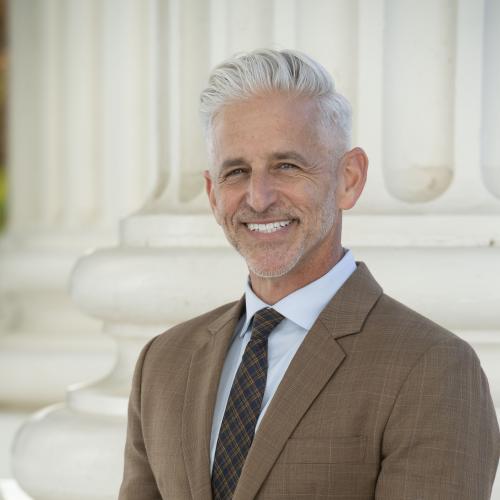
Asm. Josh Lowenthal
Sponsored bills
The Control, Regulate and Tax Adult Use of Marijuana Act (AUMA) , an initiative measure approved as Proposition 64 at the November 8, 2016, statewide general election, authorizes a person who obtains a state license under AUMA to engage in commercial adult-use cannabis activity pursuant to that license and applicable local ordinances. The Medicinal and Adult-Use Cannabis Regulation and Safety Act (MAUCRSA) , among other things, consolidates the licensure and regulation of commercial medicinal and adult-use cannabis activities, including retail commercial cannabis activity. MAUCRSA places specified requirements on the packaging of cannabis and cannabis products. MAUCRSA prohibits a licensee from engaging in specified advertising or marketing activities, including, among others, advertising or marketing in a manner that is false or untrue or tends to create a misleading impression. AUMA authorizes the Legislature to amend by majority vote certain provisions of the act to implement specified substantive provisions, provided that the amendments are consistent with and further the purposes and intent of AUMA. This bill would implement provisions of AUMA by prohibiting the sale, distribution, or manufacture of cannabis, cannabis products, packaging, or labeling that are attractive to children, as defined. The bill would require the adoption of emergency regulations to implement these provisions. This bill would incorporate additional changes to Section 26001 of the Business and Professions Code proposed by AB 152 and SB 152 to be operative only if this bill and AB 152 or SB 152 are enacted and this bill is enacted last.
Existing law generally requires county boards of supervisors, city councils, and the governing boards of school districts, community college districts, and other special districts, if those bodies are elected using district-based elections, to adopt new boundaries for the districts following each federal decennial census. Notwithstanding that requirement, existing law authorizes a local jurisdiction other than a charter city to establish an independent redistricting commission to adopt new boundaries for the local jurisdiction's districts. This bill would require a county, general law city, charter city, or charter city and county that contains over 300,000 residents, and a school district or community college district that contains over 500,000 residents, to establish an independent redistricting commission to adopt district boundaries after each federal decennial census. The bill would require a county, general law city, charter city, or charter city or county with over 300,000 residents, and a school district or community college district with over 500,000 residents, that does not enact an ordinance, resolution, or charter amendment establishing an independent redistricting commission by January 1, 2030, and January 1 of every subsequent year ending in 0, to establish a 14-member independent redistricting commission according to specified procedures, including procedures for the random selection of the members of the commission from among applicants meeting certain qualifications. By requiring certain local jurisdictions to establish independent redistricting commissions to adopt district boundaries, the bill would impose a state-mandated local program. The bill would prohibit a member of an independent redistricting commission from communicating with any individual or organization regarding redistricting matters, except as provided. The bill would require the State Auditor to provide the contact information of any applicant to serve on the Citizens Redistricting Commission, which is responsible for adjusting the boundary lines of the congressional, legislative, and State Board of Equalization districts, to any city or county that has established an independent or hybrid redistricting commission, provided that the applicant has consented to share this information and the city or county has requested to receive this information, and to inform those applicants of opportunities to serve on an independent or hybrid redistricting commission. The bill would require the State Auditor to establish a database and create and advertise a process for this exchange of information. Under existing law, independent redistricting commissions have been established for the Counties of Los Angeles, San Diego, Riverside, Fresno, and Kern. The bill would exempt the Counties of Los Angeles, San Diego, Riverside, Fresno, and Kern from the bill's provisions requiring a county with over 300,000 residents to establish an independent redistricting commission, unless the existing law provisions establishing independent redistricting commissions for those counties are repealed or invalidated. The bill also would exempt a charter city with a population of at least 2,500,000 people from the bill's provisions if specified conditions are met, including if both this bill and Senate Bill 52 are enacted and if the city complies with certain provisions in Senate Bill 52 that require such cities to establish independent redistricting commissions. This bill would incorporate additional changes to Section 23003 of the Elections Code proposed by Assembly Bill 764 to be operative only if this bill and Assembly Bill 764 are enacted and this bill is enacted last. The bill would include findings that changes proposed by this bill address a matter of statewide concern rather than a municipal affair and, therefore, apply to all cities, including charter cities. The California Constitution requires the state to reimburse local agencies and school districts for certain costs mandated by the state. Statutory provisions establish procedures for making that reimbursement. This bill would provide that, if the Commission on State Mandates determines that the bill contains costs mandated by the state, reimbursement for those costs shall be made pursuant to the statutory provisions noted above.
Existing law, until January 1, 2024, increases the smog abatement fee on certain vehicles by a specified amount and requires the revenues generated by the increase to be deposited in the Air Quality Improvement Fund and the Alternative and Renewable Fuel and Vehicle Technology Fund. Existing law, until January 1, 2024, increases vehicle registration fees and certain service fees for identification plates by specified amounts. Existing law requires the revenue generated by the increase in those fees to be deposited in the Alternative and Renewable Fuel and Vehicle Technology Fund and either the Air Quality Improvement Fund or the Enhanced Fleet Modernization Subaccount, as provided. This bill would extend the increases in those charges to July 1, 2035. Existing law, until January 1, 2024, prohibits the State Air Resources Board from enforcing any element of its clean fuels outlet regulations or other regulation that requires or has the effect of requiring suppliers, as defined, to construct, operate, or provide funding for the construction or operation of publicly available hydrogen-fueling stations. Existing law, until January 1, 2024, requires the state board to aggregate and make available certain information regarding projected leases and sales of, and the registration of, hydrogen-fueled vehicles, to evaluate, based on that information, the need for additional publicly available hydrogen-fueling stations for the actual and projected number of hydrogen-fueled vehicles, the geographic areas where fuel will be needed, and station coverage, and to report the finding of the evaluation to the State Energy Resources Conservation and Development Commission. Existing law, until January 1, 2024, requires the commission to annually allocate $20,000,000 to fund the number of publicly available hydrogen-fueling stations identified by the state board, not to exceed 20% of the moneys appropriated by the Legislature from the Alternative and Renewable Fuel and Vehicle Technology Fund, until at least 100 publicly available hydrogen-fueling stations are operating in the state. This bill would extend the above-described provisions to July 1, 2035, and would repeal them as of January 1, 2036. The bill would lower the annual allocation described above to $10,000,000, require the commission to make that allocation only until July 1, 2030, and impose other specified requirements. The bill would also delete the requirements that the hydrogen-fueling stations be publicly available and that there be at least 100 hydrogen-fueling stations operating in the state. Existing law creates the Enhanced Fleet Modernization Program to provide compensation for the retirement and replacement of passenger vehicles and light-duty and medium-duty trucks that are high polluters. Existing law requires the Bureau of Automotive Repair to administer the program and the state board to adopt the guidelines for the program. Existing law requires the guidelines to ensure vehicle replacement or a mobility option be an option for all motor vehicle owners and may be in addition to compensation for vehicles retired. Existing law creates the Enhanced Fleet Modernization Subaccount in the High Polluter Repair or Removal Account and makes available, upon appropriation, all moneys in the account to establish, implement, and administer the program. This bill would require the guidelines to ensure each replacement vehicle in the program be either a plug-in hybrid or zero-emission vehicle unless the state board makes a specified determination regarding either the availability of vehicles or the availability of charging and refueling capabilities in consultation with the commission, as specified. Existing law establishes the Clean Transportation Program that is administered by the commission to provide financial assistance to develop and deploy innovative technologies that transform California's fuel and vehicle types to help attain the state's climate change policies with an emphasis on the development and deployment of technology and alternative and renewable fuels in the marketplace. Existing law authorizes the commission to make a single source or sole source award for applied research. This bill would revise and recast the Clean Transportation Program to, among other things, change the emphasis of the program to the development and deployment of zero-emission technology and fuels in the marketplace where feasible and near-zero-emission technology and fuels elsewhere. The bill would additionally authorize the commission to make a single source or sole source award to public or nonpublic entities that manage a United States Department of Energy national laboratory. The bill would require the commission, on and after January 1, 2025, to expend at least 50% of the moneys appropriated to the program on programs and projects that directly benefit or serve residents of disadvantaged and low-income communities and low-income Californians. The bill would also require the State Energy Resources Conservation and Development Commission, by January 1, 2028, in consultation with the State Air Resources Board and the Department of Motor Vehicles, to propose to the Legislature alternative funding methodologies or fee structures for funding zero-emission vehicle infrastructure for light-, medium-, and heavy-duty vehicles. The bill would require the proposal to include an assessment of the economic equity of the alternatives. This bill would declare that it is to take effect immediately as an urgency statute.
Existing law, the California Values Act, prohibits a California law enforcement agency, defined as including both state and local agencies but excluding the Department of Corrections and Rehabilitation, from providing a person's release date or responding to a request for notification of a release date, unless that information is available to the public. The bill would prohibit the Department of Corrections and Rehabilitation from detaining on the basis of a hold request, providing an immigration authority with release date information, or responding to a notification request, transferring to an immigration authority, or facilitating or assisting with a transfer request any individual who is eligible for release pursuant to specified provisions, including, among others, youth offender, elderly, and medical parole releases. Existing law requires the Department of Corrections and Rehabilitation to cooperate with the United States Department of Homeland Security by providing the use of prison facilities, transportation, and general support, as needed, for the purposes of conducting and expediting deportation hearings and subsequent placement of deportation holds on undocumented immigrants who are incarcerated in state prison. Existing law requires the department to identify inmates serving terms in state prison who are undocumented aliens subject to deportation. Existing law would require the department, upon the enactment of any federal law requiring these persons to be incarcerated in federal prison, to provide this information to the federal government, as specified. This bill would repeal these provisions.
(1) Existing law categorizes certain drugs and other substances as controlled substances and prohibits various actions related to those substances, including their manufacture, transportation, sale, possession, and ingestion. This bill would, on and after January 1, 2025, make lawful the possession, preparation, obtaining, or transportation of, specified quantities of psilocybin, psilocyn, dimethyltryptamine (DMT) , and mescaline, for personal use, as defined, by and with persons 21 years of age or older. The bill would provide penalties for possession of these substances on school grounds, or possession by, or transferring to, persons under 21 years of age. The bill would require the California Health and Human Services Agency to convene a workgroup to study and make recommendations on the establishment of a framework governing the therapeutic use, including facilitated or supported use, of those substances. The bill would require that workgroup to send a report to the Legislature containing those recommendations on or before January 1, 2025. (2) Existing law prohibits the cultivation, transfer, or transportation, as specified, of any spores or mycelium capable of producing mushrooms or other materials that contain psilocybin or psilocyn. This bill would, on and after January 1, 2025, make lawful the cultivation or transportation of specified quantities of spores or mycelium capable of producing mushrooms or other materials that contain psilocybin or psilocyn for personal use, as defined, by and with persons 21 years of age or older. (3) Existing law prohibits the possession of drug paraphernalia, as defined. This bill would exempt from this prohibition, paraphernalia related, as specified, to these specific substances. The bill would also exempt from the prohibition items used for the testing and analysis of controlled substances. (4) Existing law states the intent of the Legislature that the messages and information provided by various state drug and alcohol programs promote no unlawful use of any drugs or alcohol. This bill would repeal those provisions. (5) By eliminating and changing the elements of existing crimes and creating new offenses, and by requiring new duties of local prosecutors, this bill would impose a state-mandated local program. The California Constitution requires the state to reimburse local agencies and school districts for certain costs mandated by the state. Statutory provisions establish procedures for making that reimbursement. This bill would provide that with regard to certain mandates no reimbursement is required by this act for a specified reason. With regard to any other mandates, this bill would provide that, if the Commission on State Mandates determines that the bill contains costs so mandated by the state, reimbursement for those costs shall be made pursuant to the statutory provisions noted above. (6) This bill would state that its provisions are severable.
Existing law prohibits a local authority from enacting or enforcing an ordinance on matters covered by the Vehicle Code unless expressly authorized by the Vehicle Code. Existing law authorizes local authorities to adopt rules and regulations by ordinance or resolution regarding specified matters, including, among others, crossing guards, the operation of bicycles, the removal of illegally parked vehicles, and cruising, as defined. This bill would remove the authorization for a local authority to adopt rules and regulations by ordinance or regulation regarding cruising. Existing law makes it unlawful to operate a passenger vehicle, or commercial vehicle under 6,000 pounds, that has been modified from its original design so that any portion of the vehicle, other than the wheels, has less clearance from the surface of a level roadway than the clearance between the roadway and the lowermost portion of any rim of any wheel in contact with the roadway. This bill would repeal that prohibition. This bill would incorporate additional changes to Section 21100 of the Vehicle Code proposed by AB 825 and SB 50 to be operative only if this bill and AB 825, this bill and SB 50, or this bill, AB 825, and SB 50 are enacted and this bill is enacted last.