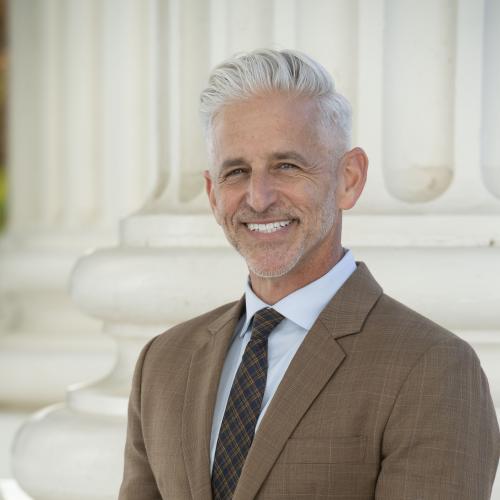
Photo of Josh Lowenthal
D California Assembly · District 69 On the 2026 ballot

Asm. Josh Lowenthal

Compare
Total votes
10,647
all sessions
Attendance
98%
155 missed
Near the chamber average
With party
99%
of cast votes
Near the chamber average
Bipartisan score
0%
crosses aisle rarely
Near the chamber average
Sponsored
853
bills & resolutions
Near the chamber average
Committees
10
assignments
853 bills and resolutions

Sponsored bills

Total
853
Primary
80
Co-sponsor
773
This page
853
matching current filters
Primary AB 10
Signed into law · California Assembly · Lead sponsor
Pupils: body shaming model policy and resources.

Existing law, the California Healthy Youth Act, states that its purposes include, among others, providing pupils with the knowledge and skills they need to develop healthy attitudes concerning, among other things, body image. This bill would require the State Department of Education to, on or before June 30, 2025, and in consultation with specified entities and relevant stakeholders, develop and post on its internet website a model policy and resources about body shaming, as defined, and would encourage school districts, county offices of education, and charter schools to inform teachers, staff, parents, and pupils about those resources, as provided.

Signed into law Oct 13, 2023 0 co-sponsors
Primary AB 1046
Signed into law · California Assembly · Lead sponsor
Alquist-Priolo Earthquake Fault Zoning Act: exemptions.

Under the Alquist-Priolo Earthquake Fault Zoning Act, before approving a project within an earthquake fault zone, a city or county is directed to require the preparation of a geologic report, subject to certain exceptions. Existing law exempts from this requirement the conversion of an existing apartment complex into a condominium, projects for the alteration or addition of any structure if the value of the alteration or addition does not exceed 50% of the value of the structure, and certain projects for alterations that include seismic retrofitting if a city or county, among other things, requires certain seismic retrofitting and prohibits an increase in human occupancy load. This bill would revise and recast the exemptions from the act to, among other things, exempt (1) projects for the alteration of any structure for human occupancy if the value of the alteration does not exceed 50% of the appraised value of the structure and, if the alteration results in a change in the use or occupancy of the structure, the change does not authorize a greater human occupant load and is less hazardous, based on life and fire risk, than the existing authorized use or occupancy of the structure permitted by the city or county with jurisdiction over the structure and (2) projects for alterations that include seismic retrofitting of certain types of structures for human occupancy permitted under specified prior editions of the Uniform Building Code. This bill would specify that terms used in the act that are not defined by the act have the same meaning as those defined in the California Building Standards Code.

Signed into law Oct 13, 2023 0 co-sponsors
Primary AB 1218
Signed into law · California Assembly · Lead sponsor
Development projects: demolition of residential dwelling units.

Existing law, the Housing Crisis Act of 2019, among other things, prohibits an affected city or an affected county, as defined, from approving a housing development project that will require the demolition of one or more residential dwelling units, unless the project creates at least as many residential dwelling units as will be demolished. The act also prohibits an affected city or affected county from approving any housing development project that will require the demolition of occupied or vacant protected units, unless specified conditions are met. In this regard, the act requires a project that will require the demolition of occupied or vacant protected units to, among other things, (1) replace all existing or demolished protected units, (2) include a minimum amount of residential units, (3) allow existing occupants to occupy their units until 6 months before the start of construction activities, and (4) provide relocation benefits to the existing occupants of any protected units that are lower income households. This bill would expand the demolition of residential dwelling units prohibitions to prohibit an affected city or affected county from approving any development project that will require the demolition of occupied or vacant protected units, or that is located on a site where protected units were demolished in the previous 5 years, unless the conditions described above are met, except as provided. In this regard, the bill would revise the above-described requirement that protected units be replaced and instead require the replacement of all existing protected units and protected units demolished on or after January 1, 2020, and would additionally require a proponent to ensure that the required replacement housing is developed prior to or concurrently with the development project, if the project is not a housing development project. If the development project will require the demolition of occupied or vacant protected units, existing law requires a developer to agree to provide a right of first refusal for a comparable unit available in the new housing development to the existing occupants of any protected units that are lower income households. This bill, if the development project will require the demolition of occupied or vacant protected units and the new development is not a housing development, would require a developer to provide a right of first refusal for a comparable unit in the required replacement units to the existing occupants of any protected units that are lower income households. Existing law requires the Department of Housing and Community Development to notify the city, county, or city and county and authorizes the department to notify the Attorney General that a city, county, or city and county is in violation of state law if the department finds that the housing element, amendment to the element, or other specified actions or failures to act do not substantially comply with specified provisions of existing law, including the above-described prohibition on an affected city or an affected county from approving a housing development project that will require the demolition of one or more residential dwelling units unless the project creates at least as many residential dwelling units as will be demolished. This bill would remove the above-described requirement and authorization for the department to notify the city, county, or city and county and the Attorney General of a housing element, amendment, or other action found to be in violation of specified law. The bill would make various other conforming and nonsubstantive changes. The California Constitution requires the state to reimburse local agencies and school districts for certain costs mandated by the state. Statutory provisions establish procedures for making that reimbursement. This bill would provide that no reimbursement is required by this act for a specified reason.

Signed into law Oct 11, 2023 0 co-sponsors
Co-sponsor SB 244
Signed into law · California Senate · Co-sponsor
Right to Repair Act.

Existing law, the Song-Beverly Consumer Warranty Act, provides a comprehensive set of procedures for the enforcement of express and implied warranties on consumer goods, as defined. Under existing law, every manufacturer making an express warranty with respect to an electronic or appliance product, including televisions, radios, audio or video recording equipment, major home appliances, antennas, and rotators, with a wholesale price to the retailer of not less than $50 nor more than $99.99 is required to make available to service and repair facilities sufficient service literature and functional parts to effect the repair of the product for at least 3 years after the date a product model or type was manufactured, regardless of whether the 3-year period exceeds the warranty period for the product. Existing law also requires every manufacturer making an express warranty with respect to an electronic or appliance product, as described above, with a wholesale price to the retailer of $100 or more, to make available to service and repair facilities sufficient service literature and functional parts to effect the repair of the product for at least 7 years after the date a product model or type was manufactured, regardless of whether the 7-year period exceeds the warranty period for the product. This bill would enact the Right to Repair Act. The bill would require, except as specified and regardless of whether any express warranty is made, the manufacturer of an above-described electronic or appliance product, in the above-described circumstances, and in those same circumstances but sold to others outside of direct retail sales, to make available, on fair and reasonable terms, to product owners, service and repair facilities, and service dealers, the means, as described, to effect the diagnosis, maintenance, or repair of the product, as provided. The bill would also require a service and repair facility or service dealer that is not an authorized repair provider, as defined, of a manufacturer to provide a written notice of that fact to any customer seeking repair of an electronic or appliance product before the repair facility or service dealer repairs the product, and to disclose if it uses replacement parts that are used or from a supplier that is not the manufacturer. The bill would also authorize a city, a county, a city and county, or the state to bring an action in superior court to impose civil penalties on a person or entity for violating the Right to Repair Act, as provided. The bill would make these requirements and enforcement provisions operative on July 1, 2024.

Signed into law Oct 10, 2023 1 co-sponsor
Co-sponsor SB 362
Signed into law · California Senate · Co-sponsor
Data broker registration: accessible deletion mechanism.

The California Consumer Privacy Act of 2018 (CCPA) grants a consumer various rights with respect to personal information that is collected or sold by a business, including the right to request that a business disclose specified information that has been collected about the consumer, to request that a business delete personal information about the consumer that the business has collected from the consumer, and to direct a business not to sell or share the consumer's personal information, as specified. The CCPA defines various terms for these purposes. The California Privacy Rights Act of 2020 (CPRA) , approved by the voters as Proposition 24 at the November 3, 2020, statewide general election, amended, added to, and reenacted the CCPA and establishes the California Privacy Protection Agency (agency) and vests the agency with full administrative power, authority, and jurisdiction to enforce the CCPA. Existing law requires a data broker to register with the Attorney General, pay a registration fee, and provide specified information on or before January 31 following each year in which a business meets the definition of data broker. Existing law defines various terms for these purposes. Existing law establishes the Data Brokers' Registry Fund and requires that these registration fees be deposited into the fund, to be available for expenditure by the Department of Justice, upon appropriation, for specified purposes. Existing law provides that a data broker that fails to register as required by these provisions is liable for civil penalties, fees, and costs in an action brought by the Attorney General, as specified, and requires these moneys be deposited in the Consumer Privacy Fund with the intent that they be used to fully offset costs incurred in connection with these provisions. Existing law requires the Attorney General to create and maintain an internet website where specified information provided by data brokers is accessible to the public. This bill would incorporate the definitions from the CCPA into the data broker provisions described above. The bill would require a data broker to register with, pay a registration fee to, and provide information to, the agency instead of the Attorney General and would require the agency to maintain the informational internet website described above. The bill would require a data broker to compile and disclose specified information relating to requests received under the CCPA. The bill would also require, on or before July 1 following each year in which a business meets the definition of a data broker, that business to provide specified information described above and make related changes. The bill would make a data broker that fails to register as required by the provisions described above liable for administrative fines and costs in an administrative action brought by the agency, as specified, instead of in an action brought by the Attorney General. This bill would require the agency to establish, by January 1, 2026, an accessible deletion mechanism that, among other things, allows a consumer, through a single verifiable consumer request, to request that every data broker that maintains any personal information delete any personal information related to that consumer held by the data broker or associated service provider or contractor. The bill would specify requirements for this accessible deletion mechanism, and would, beginning August 1, 2026, require a data broker to access the mechanism at least once every 45 days and, among other things, process all deletion requests, except as specified. Beginning August 1, 2026, after a consumer has submitted a deletion request and a data broker has deleted the consumer's data pursuant to the bill's provisions, the bill would require the data broker to delete all personal information of the consumer at least once every 45 days, as specified, and would prohibit the data broker from selling or sharing new personal information of the consumer, as specified. The bill would, beginning January 1, 2028, and every 3 years thereafter, require a data broker to undergo an audit by an independent third party to determine compliance with these provisions and would require the data broker to submit an audit report to the agency upon the agency's written request, as specified. The bill would authorize the agency to charge a fee to data brokers for accessing the accessible deletion mechanism, as specified. This bill would provide that a data broker that fails to comply with the requirements pertaining to the accessible deletion mechanism described above is liable for administrative fines, fees, expenses, and costs, as specified. The bill would require that moneys collected or received by the agency and the Department of Justice under these provisions be deposited in the Data Brokers' Registry Fund, which the bill would require to be administered by the agency, instead of the Consumer Privacy Fund and would expand the specified uses of moneys in the Data Brokers' Registry Fund to include the costs incurred by the state courts and the agency in connection with enforcing these provisions and the costs of establishing, maintaining, and providing access to the accessible deletion mechanism described above. This bill would require a data broker to provide additional information to the agency, including information related to requests received under the CCPA, whether the data broker collects specified information, and specified information regarding an audit under the provisions described above. This bill would prohibit an administrative action pursuant to these provisions from being commenced more than 5 years after the date on which a violation occurred. This bill would declare that it furthers the purposes and intent of the CPRA for specified reasons.

Signed into law Oct 10, 2023 1 co-sponsor
Co-sponsor AB 42
Signed into law · California Assembly · Co-sponsor
Tiny homes: temporary sleeping cabins: fire sprinkler requirements.

The Planning and Zoning Law, among other things, provides for the creation of accessory dwelling units by local ordinance, or, if a local agency has not adopted an ordinance, by ministerial approval, in accordance with specified standards and conditions. Existing law prohibits a local agency from requiring an accessory dwelling unit to provide fire sprinklers, if they are not required for the primary residence. The State Housing Law, among other things, requires the Department of Housing and Community Development to adopt, amend, or repeal rules and regulations for the protection of the health, safety, and general welfare of the occupant and the public relating to specified residential structures, as provided, which apply throughout the state. A violation of the State Housing Law, or of the building standards or rules and regulations adopted pursuant to that law, is a misdemeanor. This bill, until January 1, 2027, would prohibit a local agency from imposing or enforcing any requirement to provide fire sprinklers for a temporary sleeping cabin that is on a site with 50 or fewer temporary sleeping cabins. The bill would define "temporary sleeping cabin" to mean a nonpermanent structure that is intended to provide temporary housing to people experiencing homelessness or at risk of homelessness, has a total floor area of less than 250 feet, and does not include plumbing. The bill would require a temporary sleeping cabin that does not include fire sprinklers to comply with alternative fire life and safety standards that include providing, among other things, a smoke alarm and carbon monoxide alarm in the unit, a fire extinguisher in the unit, and ingress and egress that facilitates rapid exit of the temporary sleeping cabin. By requiring local agencies to impose alternative fire life and safety standards for these units, the bill would impose a state-mandated local program. This bill would require violations of those alternative fire and life safety standards to be handled pursuant to specified provisions of the State Housing Law. By adding to the duties of local officials with respect to enforcement of the State Housing Law, the violation of which is a crime, this bill would impose a state-mandated local program. This bill would include findings that changes proposed by this bill address a matter of statewide concern rather than a municipal affair and, therefore, apply to all cities, including charter cities. The California Constitution requires the state to reimburse local agencies and school districts for certain costs mandated by the state. Statutory provisions establish procedures for making that reimbursement. This bill would provide that no reimbursement is required by this act for specified reasons.

Signed into law Oct 10, 2023 1 co-sponsor
Co-sponsor AB 452
Signed into law · California Assembly · Co-sponsor
Childhood sexual assault: statute of limitations.

Existing law requires that specified actions for recovery of damages suffered as a result of childhood sexual assault, as defined, be commenced within 22 years of the date the plaintiff attains the age of majority or within 5 years of the date the plaintiff discovers or reasonably should have discovered that psychological injury or illness occurring after the age of majority was caused by the sexual assault, whichever occurs later. Existing law prohibits certain of those actions from commencing on or after the plaintiff's 40th birthday unless the person or entity knew or had reason to know, or was otherwise on notice, of any misconduct that creates a risk of childhood sexual assault by an employee, volunteer, representative, or agent, or the person or entity failed to take reasonable steps or to implement reasonable safeguards to avoid acts of childhood sexual assault, as specified. Existing law revives claims that would otherwise have been barred as of January 1, 2020, because the applicable statute of limitations, claim presentation deadline, or any other time limit had expired and authorizes the claims to be commenced within specified time periods. This bill would eliminate time limits for the commencement of actions for the recovery of damages suffered as a result of childhood sexual assault, as specified. The bill would eliminate the prohibition on certain actions proceeding on or after the plaintiff's 40th birthday unless specified conditions are met. The bill would specify that its provisions apply to any claim in which the childhood sexual assult occurred on and after January 1, 2024.

Signed into law Oct 10, 2023 1 co-sponsor
Co-sponsor AB 1399
Signed into law · California Assembly · Co-sponsor
Veterinary medicine: veterinarian-client-patient relationship: telehealth.

Existing law, the Veterinary Medicine Practice Act, establishes the Veterinary Medical Board within the Department of Consumer Affairs for the licensure and regulation of veterinarians and the practice of veterinary medicine. Existing law specifies that a violation of the act is a crime. The act prohibits any person from practicing veterinary medicine, as defined, without a license. The act authorizes the board to deny, revoke, or suspend a license or registration or assess a fine for, among other things, violation of a regulation adopted by the board and unprofessional conduct, as specified. A regulation adopted by the board makes it unprofessional conduct to provide specified treatment of an animal without having first established a veterinarian-client-patient relationship, as specified. That regulation also prohibits a person from practicing veterinary medicine in this state outside the context of a veterinarian-client-patient relationship or as otherwise permitted by law. This bill similarly would prohibit the practice of veterinary medicine outside the context of a veterinarian-client-patient relationship, as defined, except as specified. Existing administrative law requires telemedicine to be conducted within an existing veterinarian-client-patient relationship, with the exception for advice given in an emergency, as specified, and defines "telemedicine" to mean the mode of delivering animal health care services via communication technologies to facilitate consultation, treatment, and care management of the patient. This bill similarly would authorize a licensee to practice veterinary medicine via telehealth, as prescribed. The bill would require a veterinarian who practices veterinary medicine via telehealth, among other things, to employ sound professional judgment to determine whether using telehealth is an appropriate method for delivering medical advice or treatment to the animal patient and providing quality of care consistent with prevailing veterinary medical practice, be familiar with available medical resources, be able to provide the client with a list of nearby veterinarians who may be able to see the animal patient in person upon the request of the client, keep, maintain, and make an animal patient record summary available, provide the client with information about the veterinarian, and secure an alternative means of contacting the client if the electronic means is interrupted, as specified. The bill would also define the term "client" for purposes of the act and make other conforming changes. Existing law requires all veterinary premises to be registered with the board. Existing law defines "premises" for these purposes as inclusive of mobile units or vehicles, but exempts them from independent registration with the board if they are operated from a building or facility that is the licensee manager's principal place of business, the building is registered with the board, and the registration identifies and declares the use of the mobile unit or vehicle. Existing law specifies that the registration of veterinary premises is nontransferable and requires that, in the event of change of an owner or operator of the premises, the premises registration holder notify the board within 30 days after the change. This bill would exempt the location where a veterinarian practices telehealth from the requirement that it be registered if specified conditions are met, including, among other things, that the veterinarian does not perform any in-person examination or treatment of animal patients at that location. Because the bill would impose new requirements and prohibitions under the Veterinary Medicine Practice Act, the violation of which is a crime, this bill would impose a state-mandated local program. The California Constitution requires the state to reimburse local agencies and school districts for certain costs mandated by the state. Statutory provisions establish procedures for making that reimbursement. This bill would provide that no reimbursement is required by this act for a specified reason.

Signed into law Oct 8, 2023 1 co-sponsor
Co-sponsor AB 1394
Signed into law · California Assembly · Co-sponsor
Commercial sexual exploitation: child sexual abuse material: civil actions.

Existing law, in a civil action brought by, on behalf of, or for the benefit of a minor, or nonminor dependent, against a person who engaged in an act of commercial sexual exploitation, as defined, of a minor or nonminor dependent, authorizes the trier of fact to either impose a fine, civil penalty, or other penalty, or other remedy in an amount up to 3 times greater than authorized by the statute or to award a civil penalty not exceeding $50,000 and not less than $10,000 for each act of commercial sexual exploitation committed by the defendant if the tier of fact makes an affirmative finding regarding certain factors, including whether the defendant's conduct was directed to more than one minor or nonminor dependent, as prescribed. This bill would, beginning January 1, 2025, prohibit a social media platform, as defined, from knowingly facilitating, aiding, or abetting commercial sexual exploitation, as specified. The bill would require a court to award statutory damages not exceeding $4,000,000 and not less than $1,000,000 for each act of commercial sexual exploitation facilitated, aided, or abetted by the social media platform. The bill would define "facilitate, aid, or abet" to mean to deploy a system, design, feature, or affordance that is a substantial factor in causing minor users to be victims of commercial sexual exploitation. The bill would prohibit a social media platform from being deemed to be in violation of this provision if it demonstrates certain mitigating facts, including that the social media platform instituted and maintained a program of at least biannual audits of its designs, algorithms, practices, affordances, and features to detect designs, algorithms, practices, affordances, or features that have the potential to cause or contribute to violations of that provision, as prescribed. Existing law, the California Consumer Privacy Act of 2018, grants to a consumer various rights with respect to personal information, as defined, that is collected by a business, as defined, including the right to request that a business delete personal information about the consumer that the business has collected from the consumer. This bill would, beginning January 1, 2025, require a social media platform to, among other things, provide, in a mechanism that is reasonably accessible to users, a means for a user who is a California resident to report material to the social media platform that the user reasonably believes meets certain criteria, including that the reported material is child sexual abuse material, as defined, in which the reporting user is an identifiable minor depicted in the reported material. This bill would, beginning January 1, 2025, require the social media platform to permanently block the instance of reported material and make reasonable efforts to remove and block other instances of the same reported material from being viewable on the social media platform, as prescribed, if there is a reasonable basis to believe that the reported material is child sexual abuse material that is displayed, stored, or hosted on the social media platform, and the report contains basic identifying information, as specified, sufficient to permit the social media platform to locate the reported material. The bill would make a violator of those provisions liable to the reporting user, including for statutory damages of no more than $250,000 per violation, $125,000 per violation, or $75,000 per violation, as specified.


Signed into law Oct 8, 2023 1 co-sponsor
Co-sponsor AB 590
Signed into law · California Assembly · Co-sponsor
State-funded assistance grants and contracts: advance payments.

Existing law authorizes specified state departments and authorities, upon determination that an advance payment is essential for the effective implementation of a program, to advance to a community-based private nonprofit agency with which it has contracted for the delivery of services funds not exceeding 25% of the annual allocation to be made to the agency during the fiscal year. Existing law also establishes a pilot program, which is repealed on July 1, 2025, to explore possible improvements to the state's existing advance payment practices for state-funded assistance grants. Existing law authorizes an administering state agency of a grant program to advance a payment to a recipient entity, which means a local agency or a nongovernmental entity that is awarded a grant by an administering state agency and with whom the administering state agency has entered into a contract pursuant to that grant, in accordance with specified procedures. These procedures include stipulating an advance payment structure and request process within the grant agreement or contract and ensuring that the advance payment to the recipient entity does not exceed 25% of the total grant amount awarded to the recipient entity, except in specified circumstances. Existing law establishing the pilot program further authorizes an administering state agency to advance payment to a recipient state agency awarded a grant in accordance with specified procedures, including stipulating an advance payment structure and request process within the grant agreement or contract between the state agency administering the program and the recipient state agency and requiring the recipient state agency to provide an itemized budget, spending timeline, and workplan. This bill would declare the intent of the Legislature to improve and expand the state's existing advance payment practices for state grants and contracts with nonprofits. The bill would authorize an administering state agency to advance a payment to a recipient entity, defined to mean a private, nonprofit organization qualified under federal law, subject to meeting specified requirements. The bill would require the administering state agency to prioritize recipient entities and projects serving disadvantaged, low-income, and under-resourced communities, and to ensure an advance payment to the recipient entity does not exceed 25% of the total grant or contract amount. The bill would require the recipient entity to satisfy certain minimum requirements, including providing an itemized budget and submitting documentation, as required by the administering state agency, to support the need for advance payment. The bill would require the Department of Finance or its designee to audit a state agency subject to these provisions or any recipient or subrecipient that received an advance payment.

Signed into law Oct 8, 2023 1 co-sponsor
Showing 631 to 640 of 853 bills
Previous 1 … 63 64 65 … 86 Next