

The Alcoholic Beverage Control Act, administered by the Department of Alcoholic Beverage Control, regulates the application for, the issuance of, the suspension of, and the conditions imposed upon, various alcoholic beverage licenses. Existing law generally provides that a violation of the act is a misdemeanor. This bill would require an applicant for a new permanent on-sale general public premises (Type 48) license or the holder of an existing Type 48 license to offer for sale to their customers drug testing devices at a cost not to exceed a reasonable amount based on the wholesale cost of those devices. The bill would require a licensee to post a related notice containing specified language in a prominent and conspicuous location. The bill would prohibit a Type 48 licensee from being held liable for a defective test or inaccurate test result. The bill would require a Type 48 licensee to ensure that all testing devices offered to customers have not exceeded their expiration date or recommended period of use, as specified. The bill would specify that a violation of its provisions is not a crime. The bill would require the department to post on its internet website information about the bill's requirements, as specified. The bill would make its provisions operative on July 1, 2024, and would repeal its provisions on January 1, 2027.
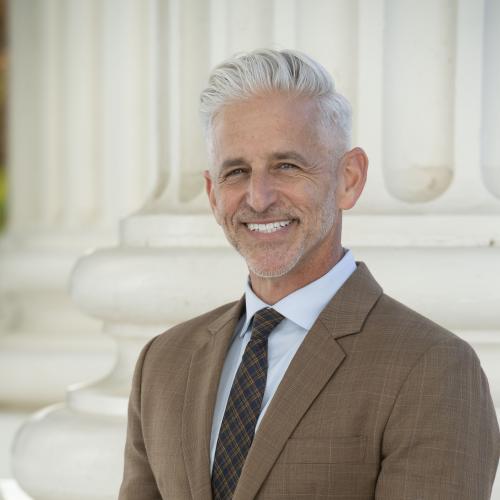
Asm. Josh Lowenthal
Sponsored bills
Existing law establishes the New Motor Vehicle Board in the Department of Motor Vehicles, and requires the board to hear and decide certain protests presented by a motor vehicle franchisee in regard to a dispute with the vehicle manufacturer. Existing law prohibits a franchisor from engaging in specified proscribed business practices. A violation of the Vehicle Code is punishable as an infraction. This bill would prohibit additional acts, including allocating vehicles and parts inconsistent with specified standards. Existing law prohibits a licensed manufacturer, manufacturer branch, distributor, distributor branch, or affiliate from engaging in specified proscribed business practices, including establishing or maintaining a performance standard, sales objective, or program for measuring a dealer's sales, service, or customer service performance, unless specified requirements are satisfied. A violation of the Vehicle Code is punishable as an infraction. This bill would prohibit additional acts, including exercising a right of first refusal in bad faith and implementing or modifying a vehicle reservation system for the sale or lease of motor vehicles that does not comply with specified requirements. This bill would additionally provide that a licensed manufacturer, manufacturer branch, distributor, distributor branch, or affiliate is not unlawfully competing with a franchise by providing an update or repair of motor vehicle software over-the-air at no cost or by creating a new line of motor vehicles and using new or existing franchisees to sell and service those vehicles. The bill would also declare the severability of its provisions. Because a violation of these new provisions would be punishable as a crime, the bill would impose a state-mandated local program. The bill includes legislative findings and declarations and would make other conforming changes. The California Constitution requires the state to reimburse local agencies and school districts for certain costs mandated by the state. Statutory provisions establish procedures for making that reimbursement. This bill would provide that no reimbursement is required by this act for a specified reason.
Existing law, until January 1, 2024, increases the smog abatement fee on certain vehicles by a specified amount and requires the revenues generated by the increase to be deposited in the Air Quality Improvement Fund and the Alternative and Renewable Fuel and Vehicle Technology Fund. Existing law, until January 1, 2024, increases vehicle registration fees and certain service fees for identification plates by specified amounts. Existing law requires the revenue generated by the increase in those fees to be deposited in the Alternative and Renewable Fuel and Vehicle Technology Fund and either the Air Quality Improvement Fund or the Enhanced Fleet Modernization Subaccount, as provided. This bill would extend the increases in those charges to July 1, 2035. Existing law, until January 1, 2024, prohibits the State Air Resources Board from enforcing any element of its clean fuels outlet regulations or other regulation that requires or has the effect of requiring suppliers, as defined, to construct, operate, or provide funding for the construction or operation of publicly available hydrogen-fueling stations. Existing law, until January 1, 2024, requires the state board to aggregate and make available certain information regarding projected leases and sales of, and the registration of, hydrogen-fueled vehicles, to evaluate, based on that information, the need for additional publicly available hydrogen-fueling stations for the actual and projected number of hydrogen-fueled vehicles, the geographic areas where fuel will be needed, and station coverage, and to report the finding of the evaluation to the State Energy Resources Conservation and Development Commission (Energy Commission) . Existing law, until January 1, 2024, requires the Energy Commission to annually allocate $20,000,000 to fund the number of publicly available hydrogen-fueling stations identified by the state board, not to exceed 20% of the moneys appropriated by the Legislature from the Alternative and Renewable Fuel and Vehicle Technology Fund, until at least 100 publicly available hydrogen-fueling stations are operating in the state. This bill would extend the above-described provisions to July 1, 2035, and would repeal them as of January 1, 2036. The bill would require the annual allocation described above to instead be no less than 15% of the moneys appropriated by the Legislature from the Alternative and Renewable Fuel and Vehicle Technology Fund from revenues attributable to specified sources, would require the commission to make that allocation only until July 1, 2030, and would impose other specified requirements. The bill would also delete the requirements that the hydrogen-fueling stations be publicly available and that there be at least 100 hydrogen-fueling stations operating in the state. Existing law creates the Enhanced Fleet Modernization Program to provide compensation for the retirement and replacement of passenger vehicles and light-duty and medium-duty trucks that are high polluters. Existing law requires the Bureau of Automotive Repair to administer the program and the state board to adopt the guidelines for the program. Existing law requires the guidelines to ensure vehicle replacement or a mobility option be an option for all motor vehicle owners and may be in addition to compensation for vehicles retired. This bill would require the guidelines to ensure each replacement vehicle in the program be either a plug-in hybrid or zero-emission vehicle unless the state board makes a specified determination regarding either the availability of vehicles or the availability of charging and refueling capabilities in consultation with the Energy Commission, as specified. Existing law establishes the Air Quality Improvement Program under the administration of the State Air Resources Board for the purpose of funding air quality improvement projects relating to fuel and vehicle technologies. The primary purpose of the program is to fund projects to reduce criteria air pollutants, improve air quality, and provide funding for research to determine and improve the air quality impacts of alternative transportation fuels and vehicles, vessels, and equipment technologies. This bill would instead provide that the purpose of the program is to fund air quality improvement projects relating to zero-emission fuel and vehicle technologies and that the primary purpose of the program is to fund projects to reduce criteria air pollutants in the logistics, goods movement, off-road, warehouse, and port sectors, improve air quality in nonattainment basins, with a priority for projects located in the areas of extreme nonattainment, and improve the air quality impacts of zero-emission transportation fuels and vehicles, vessels, and equipment technologies. The bill would also revise the list of the types of projects eligible for funding under the program. Existing law establishes the Clean Transportation Program that is administered by the Energy Commission to provide financial assistance to develop and deploy innovative technologies that transform California's fuel and vehicle types to help attain the state's climate change policies with an emphasis on the development and deployment of technology and alternative and renewable fuels in the marketplace. Existing law authorizes the Energy Commission to make a single source or sole source award for applied research. This bill would revise and recast the Clean Transportation Program to, among other things, change the emphasis of the program to the development and deployment of zero-emission technology and fuels in the marketplace where feasible and near-zero-emission technology and fuels elsewhere. The bill would require certain information regarding electric vehicle charging infrastructure and hydrogen-fueling infrastructure funded by the program to be reported to the Energy Commission. The bill would additionally authorize the Energy Commission to make a single source or sole source award to public or nonpublic entities that manage a United States Department of Energy national laboratory. The bill would require the Energy Commission, on and after January 1, 2025, to expend at least 50% of the moneys appropriated to the program on programs and projects that directly benefit or serve residents of disadvantaged and low-income communities and low-income Californians. The bill would require the Energy Commission, for any hydrogen application scoring under the program, to provide preference to applicants with the least carbon-intensive proposed fuel, as specified. The bill would also require the Energy Commission, by January 1, 2026, in consultation with the State Air Resources Board and the Department of Motor Vehicles, to propose to the Legislature alternative funding methodologies or fee structures for funding zero-emission vehicle infrastructure for light-, medium-, and heavy-duty vehicles. The bill would require the proposal to include an assessment of the economic equity of the alternatives. Existing law requires the Energy Commission, in consultation with the Public Utilities Commission, to develop uptime recordkeeping and reporting standards for electric vehicle chargers and charging stations by January 1, 2024, that only apply to electric vehicle chargers and charging stations installed on or after January 1, 2024, and that received an incentive from a state agency or through a charge on ratepayers. Existing law authorizes the Energy Commission, in consultation with the Public Utilities Commission, to adopt tools to increase charging station uptime and to include incentives, as specified. Existing law repeals these provisions on January 1, 2035. This bill would require the Energy Commission, by January 1, 2025, to set standards for how these stations shall notify customers about the availability and accessibility of publicly available charging infrastructure. This bill also would require, rather than authorize, the Energy Commission to adopt tools to increase charging station uptime. This bill would declare that it is to take effect immediately as an urgency statute.
Existing law, the Healthy Workplaces, Healthy Families Act of 2014 (act) , establishes requirements relating to paid sick days and paid sick leave, as described. The act excludes specified employees from its provisions, including an employee covered by a valid collective bargaining agreement, as described (CBA employees) . This bill would exclude railroad carrier employers and their employees from the act's provisions. Existing law, with certain exceptions, entitles an employee to paid sick days for certain purposes if the employee works in California for the same employer for 30 or more days within a year from the commencement of employment. Existing law imposes procedural requirements on employers regarding the use of paid sick days, including by prohibiting retaliation for using paid sick days, by prohibiting the imposition of certain conditions on the use of paid sick days, and by requiring the use of paid sick days for specified health care and situations. Existing law requires the leave to be accrued at a rate of no less than one hour for every 30 hours worked, and to be available for use beginning on the 90th day of employment. This bill would extend the above-described procedural requirements on the use of paid sick days to CBA employees. Existing law authorizes an employer to use a different accrual method as long as an employee has no less than 24 hours of accrued sick leave or paid time off by the 120th calendar day of employment or each calendar year, or in each 12-month period. Existing law also provides that an employer may satisfy the accrual requirements by providing not less than 24 hours or 3 days of paid sick leave that is available to the employee to use by the completion of the employee's 120th calendar day of employment. This bill would modify the employer's alternate sick leave accrual method to additionally require that an employee have no less than 40 hours of accrued sick leave or paid time off by the 200th calendar day of employment or each calendar year, or in each 12-month period. The bill would modify that satisfaction provision to authorize an employer to satisfy accrual requirements by providing, in addition to the existing criteria for satisfaction above, not less than 40 hours or 5 days of paid sick leave that is available to the employee to use by the completion of the employee's 200th calendar day of employment. Existing law requires accrued paid sick days to carry over to the following year of employment. Existing law, however, authorizes an employer to limit an employee's use of accrued paid sick days to 24 hours or 3 days in each year of employment, calendar year, or 12-month period. Under existing law, this provision is satisfied and no accrual or carryover is required if the full amount of leave is received at the beginning of each year of employment, calendar year, or 12-month period. Existing law defines "full amount of leave" for these purposes to mean 3 days or 24 hours. This bill would raise the employer's authorized limitation on the use of carryover sick leave to 40 hours or 5 days in each year of employment. The bill would redefine "full amount of leave" to mean 5 days or 40 hours. Existing law also entitles individual providers of in-home supportive services and waiver personal care services, as defined, to paid sick days in specified amounts in accordance with minimum wage increases, up to a maximum of 24 hours or 3 days each year of employment when the minimum wage has reached $15 per hour. Existing law authorizes the State Department of Social Services to implement and interpret these provisions. This bill would increase the sick leave accrual rate for these providers to 40 hours or 5 days in each year of employment, beginning January 1, 2024. Under existing law, an employer is not required to provide additional paid sick days pursuant to these provisions if the employer has a paid leave or paid time off policy, makes an amount of leave available to employees that may be used for the same purposes and under the same conditions as these provisions, and the policy satisfies one of specified conditions. Under that law, one of those conditions requires the employer to have provided paid sick leave or paid time off in a manner that results in an employee's eligibility to earn at least 3 days or 24 hours of sick leave or paid time off within 9 months of employment. This bill would change that condition so that the employee must be eligible to earn at least 5 days or 40 hours of sick leave or paid time off within 6 months of employment. Under existing law, an employer has no obligation under these provisions to allow an employee's total accrual of paid sick leave to exceed 48 hours or 6 days, provided that an employee's rights to accrue and use paid sick leave are not otherwise limited, as specified. This bill would increase those accrual thresholds for paid sick leave to 80 hours or 10 days. Existing paid sick days law sets forth provisions on, among other things, compensation for accrued, unused paid sick days upon specified employment events, the lending of paid sick days to employees, written notice requirements, the calculation of paid sick leave, reasonable advance notification requirements, and payment of sick leave taken. This bill would provide that these provisions shall preempt any local ordinance to the contrary. The bill would include findings that changes proposed by this bill address a matter of statewide concern rather than a municipal affair and, therefore, apply to all cities, including charter cities.
Existing law requires a person to report any lost or stolen firearm to a law enforcement agency, as specified. A violation of this provision is punishable as an infraction or misdemeanor. Existing law also requires the sheriff or chief of the law enforcement agency receiving such a report to enter a description of the lost or stolen firearm into the Department of Justice Automated Firearms System. Existing law defines a firearm for purposes of these provisions. This bill would, commencing on July 1, 2026, amend how a firearm is defined for purposes of these provisions to include the frame or receiver of the weapon, including both a completed frame or receiver, or a firearm precursor part. By expanding the definition of firearm, this bill would expand the applicability of a crime and impose a state-mandated local program. Also, by imposing new duties on local law enforcement, this bill would impose a state-mandated local program. This bill would incorporate additional changes to Section 16520 of the Penal Code proposed by AB 733 to be operative only if this bill and AB 733 are enacted and this bill is enacted last. The California Constitution requires the state to reimburse local agencies and school districts for certain costs mandated by the state. Statutory provisions establish procedures for making that reimbursement. This bill would provide that with regard to certain mandates no reimbursement is required by this act for a specified reason. With regard to any other mandates, this bill would provide that, if the Commission on State Mandates determines that the bill contains costs so mandated by the state, reimbursement for those costs shall be made pursuant to the statutory provisions noted above.
Existing law establishes the California Violence Intervention and Prevention (CalVIP) Grant Program, administered by the Board of State and Community Corrections, to award competitive grants for the purpose of violence intervention and prevention. Existing law imposes various taxes, including taxes on the privilege of engaging in certain activities. The Fee Collection Procedures Law, the violation of which is a crime, provides procedures for the collection of certain fees and surcharges. This bill, the Gun Violence Prevention and School Safety Act, would, commencing July 1, 2024, impose an excise tax in the amount of 11% of the gross receipts from the retail sale in this state of a firearm, firearm precursor part, and ammunition, as specified. The tax would be collected by the state pursuant to the Fee Collection Procedures Law. The bill would require that the revenues collected be deposited in the Gun Violence Prevention and School Safety Fund, which the bill would establish in the State Treasury. The bill would require the moneys received in the fund to be used to fund various gun violence prevention, education, research, response, and investigation programs, as specified. The bill would require the Director of Finance to transfer, as a loan, $2,400,000 from the General Fund to the California Department of Tax and Fee Administration to implement these provisions, as specified. The bill would require each licensed firearms dealer, firearms manufacturer, and ammunition vendor to register with the department for a certificate, as specified. The bill would also provide procedures for the issuance, revocation, and reinstatement of a permit. This bill would include a change in state statute that would result in a taxpayer paying a higher tax within the meaning of Section 3 of Article XIIIA of the California Constitution, and thus would require for passage the approval of 23 of the membership of each house of the Legislature. Because this bill would expand the scope of the Fee Collection Procedures Law, the violation of which is a crime, this bill would impose a state-mandated local program. The California Constitution requires the state to reimburse local agencies and school districts for certain costs mandated by the state. Statutory provisions establish procedures for making that reimbursement. This bill would provide that no reimbursement is required by this act for a specified reason.
Existing law authorizes the legislative body of an incorporated city and the county board of supervisors to license businesses carried on within their respective jurisdictions and to set license fees as specified. Existing law requires all single-user toilet facilities in any business establishment, place of public accommodation, or government agency to be identified as all-gender toilet facilities, as specified. This bill would require a city, county, or city and county that issues business licenses, equivalent instruments, or permits within its jurisdiction to provide written notice to each applicant for a new or renewed business license, equivalent instrument, or permit of the requirement that all single-user toilet facilities in any business establishment, place of public accommodation, or government agency be identified as all-gender toilet facilities. By increasing the duties of local officials, this bill would impose a state-mandated local program. The California Constitution requires the state to reimburse local agencies and school districts for certain costs mandated by the state. Statutory provisions establish procedures for making that reimbursement. This bill would provide that no reimbursement is required by this act for a specified reason. The bill would include findings that changes proposed by this bill address a matter of statewide concern rather than a municipal affair and, therefore, apply to all cities, counties, and cities and counties, including charter cities, counties, and cities and counties.
Existing law, the Davis-Stirling Common Interest Development Act, governs the management and operation of common interest developments. Existing law defines a board meeting as a congregation or a teleconference, as provided. Existing law requires, among other things, a board meeting held by teleconference to identify at least one physical location so that members of the association may attend, except as provided. Existing law also establishes alternative teleconferencing procedures for a board meeting or a meeting of the members if gathering in person is unsafe or impossible because the common interest development is in an area affected by a federal, state, or local emergency. This bill would authorize a board meeting or a meeting of the members to be conducted entirely by teleconference if specified conditions are satisfied. These conditions would include, among others, a requirement that the notice for the meeting provide clear instructions on how to participate by teleconference and would require each director and member to have the same ability to participate that would exist if the meeting were held in person. These teleconference provisions would not apply to a meeting at which ballots are counted and tabulated, as prescribed. The bill would make conforming changes and include related legislative findings.
This measure would denounce the actions of the Tennessee House of Representatives in expelling two African-American Democratic Representatives.
(1) The California Constitution prohibits the ad valorem tax rate on real property from exceeding 1% of the full cash value of the property, subject to certain exceptions. This measure would create an additional exception to the 1% limit that would authorize a city, county, city and county, or special district to levy an ad valorem tax to service bonded indebtedness incurred to fund the construction, reconstruction, rehabilitation, or replacement of public infrastructure, affordable housing, including downpayment assistance, or permanent supportive housing, or the acquisition or lease of real property for those purposes, if the proposition proposing that tax is approved by 55% of the voters of the city, county, city and county, or special district, as applicable, and the proposition includes specified accountability requirements. The measure would prohibit a city, county, city and county, or special district from placing a proposition on the ballot pursuant to these provisions if the voters have previously approved a proposition pursuant to these provisions or the below special tax provisions until all funds from the previous proposition are committed to programs and projects listed in the specific local program or ordinance, as described. The measure, subject to certain vote thresholds, would authorize the Legislature to enact laws establishing additional accountability measures and laws for the downpayment assistance programs authorized by the measure, as specified. The measure would specify that these provisions apply to any city, county, city and county, or special district measure imposing an ad valorem tax to pay the interest and redemption charges on bonded indebtedness for these purposes that is submitted at the same election as this measure. (2) The California Constitution conditions the imposition of a special tax by a local government upon the approval of 23 of the voters of the local government voting on that tax. This measure would authorize a local government to impose, extend, or increase a sales and use tax or transactions and use tax imposed in accordance with specified law or a parcel tax for the purposes of funding the construction, reconstruction, rehabilitation, or replacement of public infrastructure, affordable housing, including downpayment assistance, or permanent supportive housing, or the acquisition or lease of real property for those purposes, if the proposition proposing that tax is approved by a majority vote of the membership of the governing board of the local government and by 55% of its voters voting on the proposition and the proposition includes specified accountability requirements. The measure would prohibit a local government from placing a proposition on the ballot pursuant to these provisions if the voters have previously approved a proposition pursuant to these provisions or the above ad valorem tax provisions until all funds from the previous proposition are committed to programs and projects listed in the specific local program or ordinance, as described. The measure, subject to certain vote thresholds, would authorize the Legislature to enact laws establishing additional accountability measures and laws for the downpayment assistance programs authorized by the measure, as specified. This measure would also make conforming changes to related provisions. The measure would specify that these provisions apply to any local measure imposing, extending, or increasing a sales and use tax, transactions and use tax, or parcel tax for these purposes that is submitted at the same election as this measure. (3) The California Constitution prohibits specified local government agencies from incurring any indebtedness exceeding in any year the income and revenue provided in that year, without the assent of 23 of the voters and subject to other conditions. In the case of a school district, community college district, or county office of education, the California Constitution permits a proposition for the incurrence of indebtedness in the form of general obligation bonds for the construction, reconstruction, rehabilitation, or replacement of school facilities, including the furnishing and equipping of school facilities, or the acquisition or lease of real property for school facilities, to be adopted upon the approval of 55% of the voters of the district or county, as appropriate, voting on the proposition at an election. This measure would expressly prohibit a special district, other than a board of education or school district, from incurring any indebtedness or liability exceeding any applicable statutory limit, as prescribed by the statutes governing the special district. The measure would also similarly require the approval of 55% of the voters of the city, county, city and county, or special district, as applicable, to incur bonded indebtedness, exceeding in any year the income and revenue provided in that year, that is in the form of general obligation bonds issued to fund the construction, reconstruction, rehabilitation, or replacement of public infrastructure, affordable housing, or permanent supportive housing projects, if the proposition proposing that bond includes specified accountability requirements. The measure would specify that this 55% threshold applies to any proposition for the incurrence of indebtedness by a city, county, city and county, or special district for these purposes that is submitted at the same election as this measure. (4) This measure would deem another measure on the same statewide election ballot relating to state or local requirements for the imposition, adoption, creation, or establishment of taxes, charges, and other revenue measures in conflict with it and would make the other measure null and void if this measure receives more affirmative votes.