This measure would recognize the month of January 2024 as National Human Trafficking Awareness Month.
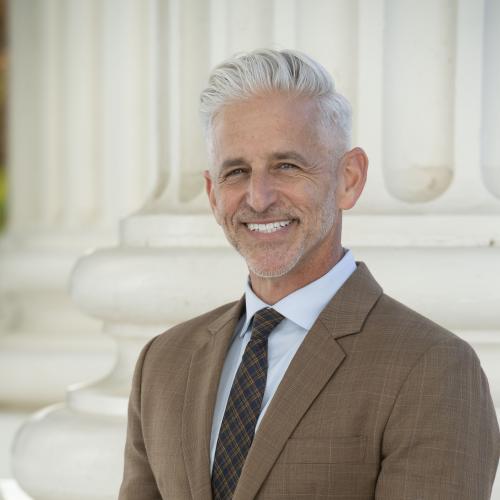
Asm. Josh Lowenthal
Sponsored bills
Existing law generally provides for the placement of foster youth in various placement settings and governs the provision of child welfare services, as specified. Existing law, the California Community Care Facilities Act, provides for the licensure and regulation of community care facilities, including community treatment facilities (CTFs) by the State Department of Social Services. Existing law requires the State Department of Health Care Services to adopt certain regulations for CTFs, including, among others, that only seriously emotionally disturbed children, as defined, either (1) for whom other less restrictive mental health interventions have been tried, as specified, or (2) who are currently placed in an acute psychiatric hospital or state hospital or in a facility outside the state for mental health treatment, and who may require periods of containment to participate in, and benefit from, mental health treatment, shall be placed in a CTF. This bill would make technical, nonsubstantive changes to these provisions.
This measure would designate, in perpetuity, the 4th week of January as Data Privacy Week and the last Sunday of January as Data Privacy Day.
Existing law, the Knox-Keene Health Care Service Plan Act of 1975, provides for the licensure and regulation of health care service plans by the Department of Managed Health Care, and makes a willful violation of the act a crime. Existing law provides for the regulation of health insurers by the Department of Insurance. Existing law sets forth specified coverage requirements for health care service plan contracts and health insurance policies, and limits the copayment, coinsurance, deductible, and other cost sharing that may be imposed for specified health care services. This bill would require a health care service plan contract or health insurance policy issued, amended, or renewed on or after January 1, 2024, to provide coverage for the prophylaxis, diagnosis, and treatment of Pediatric Autoimmune Neuropsychiatric Disorder Associated with Streptococcal Infections (PANDAS) and Pediatric Acute-onset Neuropsychiatric Syndrome (PANS) that is prescribed or ordered by the treating physician and surgeon. The bill would prohibit coverage for PANDAS and PANS from being subject to a copayment, coinsurance, deductible, or other cost sharing that is greater than that applied to other benefits. The bill would prohibit a plan or insurer from denying or delaying coverage for PANDAS or PANS therapies because the enrollee or insured previously received treatment for PANDAS or PANS or was diagnosed with or received treatment for the condition under a different diagnostic name. Because a willful violation of these provisions by a health care service plan would be a crime, the bill would impose a state-mandated local program. The California Constitution requires the state to reimburse local agencies and school districts for certain costs mandated by the state. Statutory provisions establish procedures for making that reimbursement. This bill would provide that no reimbursement is required by this act for a specified reason.

Existing law, the California Public Records Act, requires public records to be open to inspection at all times during the office hours of the state or local agency that retains those records, and provides that every person has a right to inspect any public record, except as provided. Existing law requires each agency, upon a request for records, to determine within 10 days whether that request, in whole or in part, seeks copies of disclosable public records in the agency's possession and to promptly notify the person making the request of its determination and reasons for that determination. Under existing law, the act generally does not require disclosure of personnel, medical, or similar files, the disclosure of which would constitute an unwarranted invasion of personal privacy. Existing law requires an agency, if it determines a request seeks disclosable public records, to state the estimated date and time when the records will be made available. Existing law permits the prescribed time limits of the act to be extended in unusual circumstances. In this connection, "unusual circumstances" include, among other reasons, the need to search for and collect the requested records from field facilities or other establishments separate from the office processing the request. This bill would require an agency to promptly provide a public agency employee with written notice of a request to disclose a record related to personnel, medical, or similar information of that employee, as specified. The bill would also require the agency, before disclosing or making those records available, to provide not less than 21 days' written notice to the employee of its intent to disclose or make the records available. The bill would further expand the definition of "unusual circumstances" to include the need to provide those advance written notices. By placing new requirements on local agencies, the bill would impose a state-mandated local program. The California Constitution requires local agencies, for the purpose of ensuring public access to the meetings of public bodies and the writings of public officials and agencies, to comply with a statutory enactment that amends or enacts laws relating to public records or open meetings and contains findings demonstrating that the enactment furthers the constitutional requirements relating to this purpose. This bill would make legislative findings to that effect. The California Constitution requires the state to reimburse local agencies and school districts for certain costs mandated by the state. Statutory provisions establish procedures for making that reimbursement. This bill would provide that no reimbursement is required by this act for a specified reason.

Existing law authorizes the legislative body of any county or city to adopt ordinances that, among other things, regulate the use of buildings, structures, and land as between industry, business, residences, and open space, as specified. Existing law requires those zoning ordinances to be consistent with the general plan of the county or city and authorizes any resident or property owner within a city or a county to bring an action or proceeding in the superior court to enforce this requirement, as specified. This bill would make nonsubstantive changes to those provisions.
The California Constitution authorizes the Legislature to authorize, pursuant to a 23 vote of the Legislature, county boards of supervisors to exempt real property having a full value so low that, if not exempt, the total taxes and applicable subventions on the property would amount to less than the cost of assessing and collecting them. Existing property tax law sets forth procedures for a county board of supervisors to make that exemption for such property. Existing property tax law requires that all property subject to tax be assessed at its full cash value, and includes certain possessory interests among those property interests that are subject to tax. This bill would authorize a county board of supervisors to exempt from property taxation any possessory interest held by a tenant of publicly owned housing, as defined, with a value so low that the total taxes and applicable subventions on the property would amount to less than the cost of assessing and collecting them, except as provided. The bill would provide that there is a rebuttable presumption that the property taxes and applicable subventions on a possessory interest held by a tenant in publicly owned housing are less than the costs of assessing and collecting those taxes and applicable subventions. The bill would set forth procedures for granting or denying those exemptions and for implementing the exemption. The bill would provide that the board shall be deemed to have agreed with the rebuttable presumption and the exemption shall be deemed granted if the board does not take any action, if the board agrees, by a majority vote, to grant the exemption at a public hearing, or if the board fails to reach a majority vote for or against the exemption at the public hearing. By imposing additional duties on county boards of supervisors and local tax officials, the bill would impose a state-mandated local program. Existing property tax law provides that there is a rebuttable presumption affecting the burden of proof in favor of the taxpayer or assessee who has supplied all information as required by law to the assessor in any administrative hearing involving the imposition of a tax on an owner-occupied single-family dwelling, the assessment of an owner-occupied single-family dwelling as specified, or the appeal of an escape assessment. This bill would provide that there is a rebuttable presumption affecting the burden of proof in favor of a taxpayer or assessee who is a tenant in publicly owned housing, as defined, in any administrative hearing involving the disputed existence or value of a possessory interest alleged to be held by that tenant. The California Constitution requires the state to reimburse local agencies and school districts for certain costs mandated by the state. Statutory provisions establish procedures for making that reimbursement. This bill would provide that, if the Commission on State Mandates determines that the bill contains costs mandated by the state, reimbursement for those costs shall be made pursuant to the statutory provisions noted above. Existing law requires the state to reimburse local agencies annually for certain property tax revenues lost as a result of any exemption or classification of property for purposes of ad valorem property taxation. This bill would provide that, notwithstanding those provisions, no appropriation is made and the state shall not reimburse local agencies for property tax revenues lost by them pursuant to the bill.
Existing law prohibits a person from administering a controlled substance or anaesthetic or intoxicating agent to a person with the intent of enabling themselves or another person to commit a felony. This bill would instead prohibit the administering of any such substance to a person without their consent. The bill would also impose an additional penalty if this prohibition was violated with the intent to enable the commission of a crime or if the violation results in bodily injury or death. By expanding the scope of an existing crime, this bill would impose a state-mandated local program. The California Constitution requires the state to reimburse local agencies and school districts for certain costs mandated by the state. Statutory provisions establish procedures for making that reimbursement. This bill would provide that no reimbursement is required by this act for a specified reason.
Existing law establishes the California Environmental Protection Agency, under the supervision of the Secretary for Environmental Protection, consisting of various departments, boards, and offices, and vests the agency with authority over various environmental matters. This bill would require the California Environmental Protection Agency, until January 1, 2028, to hold at least 4 public meetings per year, with the first meeting occurring on or before March 31, 2024, to, among other things, provide members of the public with current information on the agency's efforts to study and mitigate DDT and other chemical waste located at Dumpsite-1 and Dumpsite-2 off the coast of Los Angeles. The bill would require the agency, on or before June 30, 2026, to report to the Legislature with policy recommendations on how to further mitigate the negative impacts of anthropogenic chemical waste deposits at or from the dumpsites, as provided.