

Existing law authorizes the governing board of a school district that determines during a fiscal year that its revenues are less than the amount necessary to meet its current year expenditure obligations to request an emergency apportionment through the Superintendent of Public Instruction, subject to specified requirements. Existing law authorizes emergency apportionments to be provided through an interim loan from the General Fund and lease financing made available by the California Infrastructure and Economic Development Bank, which is authorized to issue bonds for purposes of the emergency apportionments and related costs, or as an alternative to lease financing, as an emergency apportionment from the General Fund. Existing law prescribes the financing conditions on emergency apportionments, including the calculation of the interest rate. Existing law, notwithstanding any other law, authorizes the Inglewood Unified School District, through the State Department of Education, to request cashflow loans from the General Fund for a total of up to $55,000,000 for emergency operational purposes, as provided. Existing law requires the interest on these loans to be charged at the annual rate of return of the Pooled Money Investment Account, plus an additional 2%. This bill, notwithstanding any other law, and once the Inglewood Unified School District has successfully repaid at least 10 years of a General Fund cashflow loan made pursuant to those provisions, would authorize the school district to seek, and would require the Department of Finance to grant, a waiver of interest on that loan for the next succeeding fiscal year if specified conditions are met, including, among other conditions, that the Los Angeles County Superintendent of Schools, in consultation with the County Office Fiscal Crisis and Management Assistance Team, determines that the school district is making substantial progress towards fiscal solvency and that a waiver of interest would help the school district to exit receivership, as provided. In each subsequent fiscal year, the bill would authorize the school district to seek, and would require the Department of Finance to grant, a subsequent waiver of interest for the applicable fiscal year if the school district again meets those same requirements. To the extent the bill would impose additional duties on the Los Angeles County Superintendent of Schools, the bill would impose a state-mandated local program. This bill would make legislative findings and declarations as to the necessity of a special statute for the Inglewood Unified School District. The California Constitution requires the state to reimburse local agencies and school districts for certain costs mandated by the state. Statutory provisions establish procedures for making that reimbursement. This bill would provide that, if the Commission on State Mandates determines that the bill contains costs mandated by the state, reimbursement for those costs shall be made pursuant to the statutory provisions noted above.
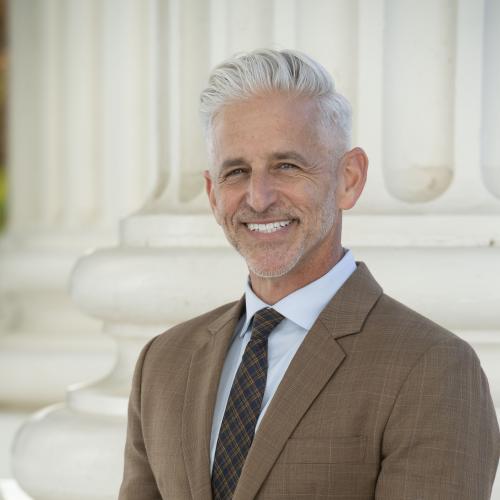
Asm. Josh Lowenthal
Sponsored bills
Existing law makes it a crime to possess, cultivate, and administer specified controlled substances, including psilocybin and psilocyn. Existing law makes it a crime for a person to rent, lease, or make available for use any building or room for the purpose of storing or distributing any controlled substance. This bill would, until January 1, 2031, request the University of California to establish local pilots in up to 5 counties to allow for the research and development of psilocybin services for veterans and former first responders as part of the Veterans and Former First Responders Research Pilot Program ("Pilot Program") . The bill would require these university partners, overseeing each Pilot Program to be responsible for protocol design, institutional review board approvals, training of psilocybin facilitators, data collection, and reporting. The bill would require each local pilot to partner with licensed health care and licensed community-based providers that provide services and care to the target population. The bill would require psilocybin to be provided by or under the supervision of a practitioner who has experience in providing or overseeing psilocybin or other psychedelic therapy services. The bill would require that each person being considered for the Pilot Program meet specified criteria, including that they are 21 years of age or older and have been given specified assessments. This bill would request the University of California to report specified information about the Pilot Program to the Legislature, the Secretary of California Health and Human Services, and the Governor by January 15, 2030. The bill would establish the Veterans and Former First Responders Research Pilot Special Fund and would continuously appropriate the fund to the University of California for the purposes of these provisions. The bill would request the University of California to apply for and accept grants, donations, and federal funding for the purposes of the Pilot Program, and would require those moneys to be deposited in the fund.
Existing law requires the State Board of Education to adopt statewide academically rigorous content standards in the core curriculum areas of reading, writing, mathematics, history/social science, and science, as specified. Existing law requires the Instructional Quality Commission to, among other things, recommend curriculum frameworks to the state board and develop criteria for evaluating instructional materials. This bill would require the state board to, on or before January 1, 2028, develop and adopt academically rigorous content standards for ethnic studies instruction in high school. The bill would require the commission, on or before January 1, 2028, to review and recommend to the state board curriculum frameworks and instructional materials for ethnic studies instruction in high school, as specified. The bill would require the state board to provide the commission with evaluation criteria to use in providing its review and recommendations. The bill would state the intent of the Legislature to enact subsequent legislation to establish an advisory committee with a majority of the advisory committee's members being experts in African American studies, Asian American and Pacific Islander studies, Native American studies, and Latino and Chicanx studies, to provide input to the state board on proposed content standards and to the commission on proposed curriculum frameworks and instructional materials for ethnic studies instruction in high school. Existing law requires a pupil to complete designated coursework while in grades 9 to 12, inclusive, in order to receive a diploma of graduation from high school. These graduation requirements include, commencing for pupils graduating in the 2029–30 school year, the completion of a one-semester course in ethnic studies meeting specified requirements. Under existing law, the requirement to complete an ethnic studies course may be fulfilled by the completion of, among others, a course based on the model curriculum developed by the Instructional Quality Commission, an ethnic studies course taught as part of a course that has been approved as meeting the A–G requirements of the University of California and the California State University, or a locally developed ethnic studies course approved by the governing board of a school district or the governing body of a charter school. Existing law requires the curriculum, instruction, and instructional materials for these ethnic studies courses to meet specified requirements, including that they not reflect or promote any bias, bigotry, or discrimination against any person or group of persons on the basis of certain characteristics. Existing law makes these provisions relating to ethnic studies courses operative only upon an appropriation of funds by the Legislature for purposes of these provisions. This bill would require the curriculum, instruction, and instructional materials for any high school ethnic studies course, including ethnic studies courses meeting high school graduation requirements, to meet the above-described requirements, and would require the curriculum, instruction, and instructional materials for all high school ethnic studies courses to additionally, among other things, foster multicultural respect and understanding and focus on the domestic experience and stories of historically marginalized peoples in American society. To the extent that the bill would impose new duties on local educational agencies, the bill would impose a state-mandated local program. The bill would require a school district, county office of education, or charter school to provide, on or before June 30, 2026, the State Department of Education with a copy of all curricula, instruction, and instructional materials in ethnic studies that schools offer or plan to offer to pupils in any of grades 9 to 12, inclusive, and the adoption calendar for curricula, instruction, and instructional materials in ethnic studies proposed for adoption by the governing board or body of the local educational agency for instruction to these pupils. The bill would require a local educational agency that does not have an ethnic studies course in place for its pupils in any of grades 9 to 12, inclusive, on or before June 30, 2026, to provide the department with a copy of all curricula, instruction, and instructional materials in ethnic studies that its schools seek to adopt at least 60 days before being first presented at a public meeting of the governing board or body of the local educational agency for instruction to these pupils. The bill would require the department to post the information received pursuant to these requirements on its internet website. To the extent that the bill would impose new duties on local educational agencies, it would impose a state-mandated local program. The bill would require the department to monitor compliance with the requirements of this bill as part of its annual compliance monitoring of state and federal programs and to provide a report to the relevant policy and fiscal committees of the Legislature summarizing the data collected through compliance monitoring, as specified. The California Constitution requires the state to reimburse local agencies and school districts for certain costs mandated by the state. Statutory provisions establish procedures for making that reimbursement. This bill would provide that, if the Commission on State Mandates determines that the bill contains costs mandated by the state, reimbursement for those costs shall be made pursuant to the statutory provisions noted above.
Existing law establishes the Department of Consumer Affairs, which is composed of specified boards that license and regulate various professions. Existing law requires those boards to expedite the licensure process for an applicant who holds a current license in another jurisdiction in the same profession or vocation and supplies evidence that they are married to or in a domestic partnership or other legal union with an active duty member of the Armed Forces of the United States who is assigned to a duty station in this state under official active duty military orders. This bill would require those boards to expedite applications for applicants seeking licensure who are descendants of American slaves once a process to certify descendants of American slaves is implemented, as specified. This bill would make these provisions operative only if SB 518 of the 2025–26 Regular Session is enacted establishing the Bureau for Descendants of American Slavery, and would make these provisions operative when the certification process is implemented pursuant to that measure. The bill would repeal these provisions 4 years from the date on which they become operative or on January 1, 2032, whichever is earlier.
(1) Existing law, the Medical Practice Act, provides for the licensure and regulation of physicians and surgeons by the Medical Board of California and requires the board to adopt and administer standards for the continuing education of those licensees. Existing law requires the board, in determining its continuing education requirements, to consider including a course in menopausal mental or physical health. This bill would delete that requirement of the board. The bill would require, beginning July 1, 2026, and until July 1, 2032, a qualifying physician and surgeon, as defined, who completes continuing medical education courses in perimenopause, menopause, and postmenopausal care to receive 2 hours of credit for each hour completed of that coursework, as specified. Existing law, the Osteopathic Act, provides for the licensure and regulation of osteopathic physicians and surgeons by the Osteopathic Medical Board of California and requires the board to adopt and administer standards for the continuing education of those licensees. This bill would require osteopathic physicians and surgeons to receive the same credit as described above for completed coursework relating to perimenopause, menopause, and postmenopausal care. (2) Existing law, the Knox-Keene Health Care Service Plan Act of 1975, provides for the licensure and regulation of health care service plans by the Department of Managed Health Care and makes a willful violation of the act a crime. Existing law also provides for the regulation of health insurers by the Department of Insurance. Existing law sets forth specified coverage requirements for health care service plan contracts and health insurance policies. This bill would require a health care service plan contract or health insurance policy that covers outpatient prescription drugs, except as specified, that is issued, amended, or renewed on or after January 1, 2026, to include coverage for evaluation and treatment options for symptoms of perimenopause and menopause. The bill would require a health care service plan or health insurer to annually provide clinical care recommendations, as specified, for hormone therapy to all contracted primary care providers who treat individuals with perimenopause and menopause. Because a willful violation of these provisions by a health care service plan would be a crime, the bill would impose a state-mandated local program. (3) The California Constitution requires the state to reimburse local agencies and school districts for certain costs mandated by the state. Statutory provisions establish procedures for making that reimbursement. This bill would provide that no reimbursement is required by this act for a specified reason.
Maddy summaryThis bill establishes January as National Human Trafficking Awareness Month in California to raise public awareness about human trafficking. The resolution recognizes the severity of human trafficking as a felony crime and highlights statistics showing its prevalence across the country and specific challenges with identifying male victims and labor trafficking cases. It aims to educate the public and encourage reporting and support for victims during this designated month.
Existing law generally provides protections for minors on the internet, including the California Age-Appropriate Design Code Act that, among other things, requires a business that provides an online service, product, or feature likely to be accessed by children to do certain things, including estimate the age of child users with a reasonable level of certainty appropriate to the risks that arise from the data management practices of the business or apply the privacy and data protections afforded to children to all consumers and prohibits an online service, product, or feature from, among other things, using dark patterns to lead or encourage children to provide personal information beyond what is reasonably expected to provide that online service, product, or feature or to forego privacy protections. This bill, beginning January 1, 2027, would require, among other things related to age verification with respect to software applications, an operating system provider, as defined, to provide an accessible interface at account setup that requires an account holder, as defined, to indicate the birth date, age, or both, of the user of that device for the purpose of providing a signal regarding the user's age bracket to applications available in a covered application store and to provide a developer, as defined, who has requested a signal with respect to a particular user with a digital signal via a reasonably consistent real-time application programming interface regarding whether a user is in any of several age brackets, as prescribed. The bill would require a developer to request a signal with respect to a particular user from an operating system provider or a covered application store when the application is downloaded and launched. This bill would prohibit an operating system provider or a covered application store from using data collected from a third party in an anticompetitive manner, as specified. This bill would punish noncompliance with a civil penalty to be enforced by the Attorney General, as prescribed. This bill would declare its provisions to be severable.
Existing law requires the State Department of Education to incorporate age-appropriate materials relating to, among other things, genocide and the Holocaust into publications that provide examples of curriculum resources for teacher use, consistent with the subject frameworks on history and social science. Under existing law, the Legislature encourages the incorporation of survivor, rescuer, liberator, and witness oral testimony into the teaching of genocide and the Holocaust. Existing law, upon appropriation by the Legislature, establishes the California Teachers Collaborative for Holocaust and Genocide Education to establish a statewide teacher professional development program on genocide, including the Holocaust, for school district, county office of education, and charter school teachers, and provides that the collaborative's mission is to ensure that genocide, including Holocaust, education is taught consistent with, among other things, content standards, curriculum frameworks, and instructional materials adopted by the State Board of Education, in ways that are interdisciplinary and age-appropriate to pupils of different grade levels. This bill would require the Superintendent of Public Instruction to establish the Holocaust and Genocide Education Grant Program to provide direct allocations to school districts, county offices of education, and charter schools for the purposes of providing Holocaust and genocide education and professional development on Holocaust and genocide education, as provided. The bill would establish the Holocaust and Genocide Education Grant Program Fund in the State Treasury, and would require moneys in the fund to be available, upon appropriation by the Legislature, to the Superintendent for purposes of the grant program. The bill would require the department to issue a notice to school districts, county offices of education, and charter schools serving pupils in grades 7 to 12, inclusive, regarding genocide and Holocaust instruction, and would authorize the department to issue a survey to these local educational agencies on the status of Holocaust and genocide instruction at their schools, as provided.
Existing law requires a social media platform to take various steps to prevent cyberbullying of minors on the platform, including by requiring the platform to establish a prominent mechanism within its internet-based service that allows any individual, whether or not that individual has a profile on the internet-based service, to report cyberbullying or any content that violates the existing terms of service related to cyberbullying. Existing law authorizes the State Department of Public Health to establish the Office of Suicide Prevention in the department, as prescribed. This bill would, among other things related to making a companion chatbot platform safer for users, if a reasonable person interacting with a companion chatbot would be misled to believe that the person is interacting with a human, require an operator of a companion chatbot platform to issue a clear and conspicuous notification indicating that the companion chatbot is artificially generated and not human. The bill would also require an operator to take certain actions with respect to a user the operator knows is a minor, including disclose to the user that the user is interacting with artificial intelligence. The bill would also require an operator to prevent a companion chatbot on its companion chatbot platform from engaging with users unless the operator maintains a protocol for preventing the production of suicidal ideation, suicide, or self-harm content to the user, as specified, and would require an operator to publish details on that protocol on the operator's internet website. This bill would, beginning July 1, 2027, require an operator to annually report to the Office of Suicide Prevention certain things, including protocols put in place to detect, remove, and respond to instances of suicidal ideation by users, and would require the office to post data from that report on its internet website. The bill would authorize a person who suffers injury in fact as a result of noncompliance with the bill to bring a certain civil action.
Existing law grants to a depicted individual a cause of action against a person who creates and intentionally discloses sexually explicit material if the person knows, or reasonably should have known, that the depicted individual in that material did not consent to its creation or disclosure or who intentionally discloses sexually explicit material that the person did not create if the person knows the depicted individual in that material did not consent to the creation of the sexually explicit material. Existing law defines "sexually explicit material" for purposes of that provision to mean any portion of an audiovisual work that shows the depicted individual performing in the nude or appearing to engage in, or being subjected to, sexual conduct and defines "depicted individual" to mean an individual who appears, as a result of digitization, to be giving a performance the individual did not actually perform or to be performing in an altered depiction. Existing law authorizes a plaintiff to recover, among other relief, statutory damages of not less than $1,500 but not more than $30,000, or $150,000 for a malicious violation, as prescribed. This bill would revise and recast the provision described above to additionally grant to a depicted individual a cause of action against a person who knows, or reasonably should know, that the depicted individual was a minor when the digitized sexually explicit material was created and would additionally grant a cause of action to that depicted individual against a person who knowingly facilitates or recklessly aids or abets conduct prohibited by that provision. The bill would define "digitized sexually explicit material" to mean any portion of a visual or audiovisual work created or substantially altered through digitization, including an image, that shows the depicted individual in the nude or appearing to engage in, or being subjected to, sexual conduct. This bill would make a person that provides a service that enables the ongoing operation of a deepfake pornography service presumed to be engaged in knowing facilitation or reckless aiding or abetting, as described above, if a depicted individual or public prosecutor provides the person with evidence sufficient to demonstrate that the person is providing services that enable the ongoing operation of a deepfake pornography service that engages in conduct described in the provisions described above, and the person fails to take all necessary steps to stop providing services that enable the ongoing operation of a deepfake pornography service within 30 days of receiving that evidence, as specified. This bill would increase the maximum statutory damages available to a depicted individual to $50,000 if the violation was not malicious and $250,000 for a malicious violation and would authorize certain public attorneys to bring a civil action to enforce these provisions, as specified.