

Existing law generally regulates social media platforms, including, among other laws, the Protecting Our Kids from Social Media Addiction Act that prohibits an operator of an addictive internet-based service or application, including a social media platform, from providing an addictive feed, as defined, to a minor user, except as prescribed. This bill would enact the Social Media Warning Law that would require a covered platform, as defined, to display a certain black box warning to certain users each day the user initially accesses the social media platform, again after 3 hours of cumulative active use, and thereafter at least once per hour of cumulative active use, as prescribed. This bill would specify that its provisions shall not be interpreted to serve as the basis for a private right of action, as specified. The bill would make its provisions operative on January 1, 2027, and would declare these provisions severable.
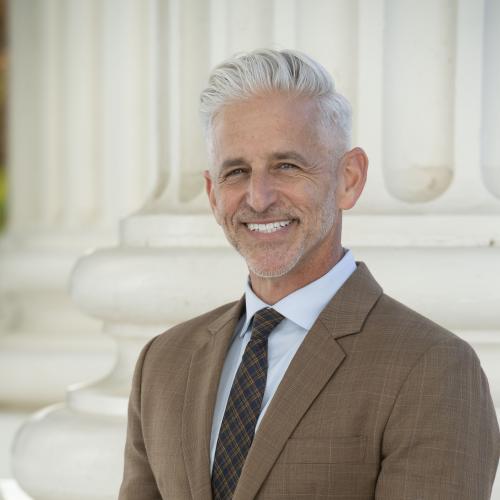
Asm. Josh Lowenthal
Sponsored bills
Under existing law, a prisoner can reduce their term of imprisonment by earning credit for, among other things, continuous incarceration, good behavior, and participation in approved rehabilitative programming. Existing law makes an inmate of a county jail or state prison who has completed training for assignment to a conservation camp, state or county facility, or a correctional institution as an inmate firefighter, or who is assigned to a state or county facility or a correctional institution as an inmate firefighter, and who is eligible to earn one day of credit for every one day of incarceration, instead eligible to earn 2 days of credit for every one day served in that assignment or after completing that training. Existing law authorizes a juvenile court to order placement of a ward at the Pine Grove Youth Conservation Camp if specified criteria are met, including if the county has entered into a contract with the Department of Corrections and Rehabilitation and the department has found the ward amenable. Existing law authorizes the department to enter into contracts with counties to operate the Pine Grove Youth Conservation Camp through a state-local partnership, or other management arrangement, to train justice-involved youth, as specified, in wildland firefighting skills. This bill would require an incarcerated individual hand crew member, in addition to receiving credits, and a ward or youth hand crew member placed at the Pine Grove Youth Conservation Camp to be paid an hourly wage equal to $7.25 while assigned to an active fire incident. The bill would require that wage rate to be reviewed annually. The bill would require the Department of Corrections and Rehabilitation and counties to maintain regulations regarding an administrative adjudication and remedy process for any disputes over sums owned pursuant to these provisions. This bill would declare that it is to take effect immediately as an urgency statute.
Existing law authorizes a court, on its own motion within 120 days of the date of the defendant's commitment, or at any time if the applicable sentencing laws have changed or upon a recommendation from the Secretary of the Department of Corrections and Rehabilitation, the Board of Parole Hearings, or the district attorney, to recall a defendant's sentence and resentence that defendant to a lesser sentence. Existing law establishes the California Conservation Camps for the purpose of having incarcerated persons work on projects supervised by the Department of Forestry and Fire Protection. Existing law requires the department to utilize incarcerated persons assigned to conservation camps in performing fire prevention, fire control, and other work at the department. This bill would require the Department of Corrections and Rehabilitation, no later than July 1, 2027, to promulgate regulations, as specified, regarding the referral of participants in the California Conservation Camp program and incarcerated persons working at institutional firehouses for resentencing.
(1) The Outdoor Advertising Act, a violation of which is a crime, provides for the regulation by the Department of Transportation of advertising displays, as defined, within view of public highways. Existing law exempts from certain provisions of the act advertising displays located in specific geographic areas in the City of Los Angeles if those displays meet prescribed conditions and requirements, including the condition that the advertising display is authorized by, or in accordance with, an ordinance adopted by the City of Los Angeles that regulates advertising displays by identifying the specific displays or establishing regulations that include, at a minimum, specified restrictions, as provided. This bill would authorize the ordinance adopted by the City of Los Angeles to authorize a framework of allowable signage that preserves flexibility in the ultimate placement, sizing, and scope of advertising displays, and define a range or maximum signage capacity, as specified. The bill would also authorize the City of Los Angeles to adopt implementing ordinances that sequence or phase the authorization of advertising displays over time. (2) This bill would declare that it is to take effect immediately as an urgency statute.
Existing law establishes various healing arts boards within the Department of Consumer Affairs that license and regulate various healing arts licensees. Existing laws, including, among others, the Medical Practice Act and the Dental Practice Act, make it a crime for a person who is not licensed as a specified health care professional to use certain words, letters, and phrases or any other terms that imply that they are authorized to practice that profession. Existing law requires, with certain exemptions, a health facility, clinic, physician's office, or office of a group practice that uses generative artificial intelligence, as defined, to generate written or verbal patient communications pertaining to patient clinical information, as defined, to ensure that those communications include both (1) a disclaimer that indicates to the patient that a communication was generated by generative artificial intelligence, as specified, and (2) clear instructions describing how a patient may contact a human health care provider, employee, or other appropriate person. Existing law provides that a violation of these provisions by a physician shall be subject to the jurisdiction of the Medical Board of California or the Osteopathic Medical Board of California, as appropriate. This bill would make provisions of law that prohibit the use of specified terms, letters, or phrases to falsely indicate or imply possession of a license or certificate to practice a health care profession, as defined, enforceable against an entity who develops or deploys artificial intelligence (AI) or generative artificial intelligence (GenAI) technology that uses one or more of those terms, letters, or phrases in its advertising or functionality. The bill would prohibit the use by AI or GenAI technology of certain terms, letters, or phrases that indicate or imply that the advice, care, reports, or assessments being provided through AI or GenAI is being provided by a natural person with the appropriated health care license or certificate. This bill would make a violation of these provisions subject to the jurisdiction of the appropriate health care profession board, and would make each use of a prohibited term, letter, or phrase punishable as a separate violation. By expanding the scope of existing crimes, this bill would impose a state-mandated local program. The California Constitution requires the state to reimburse local agencies and school districts for certain costs mandated by the state. Statutory provisions establish procedures for making that reimbursement. This bill would provide that no reimbursement is required by this act for a specified reason.
Existing law requires the Superintendent of Public Instruction to post, and annually update, on the State Department of Education's internet website and notify local educational agencies of the availability of a list of statewide resources, including community-based organizations, that provide support to youth, and their families, who have been subjected to school-based discrimination, harassment, intimidation, or bullying, as provided. Existing law requires a local educational agency to adopt, on or before December 31, 2019, procedures for preventing acts of bullying, including cyberbullying. This bill would require the department, on or before June 30, 2026, in consultation with relevant stakeholders, to develop, post on its internet website, and distribute to each local educational agency, as defined, a model policy on how to address certain reported acts of cyberbullying occurring outside of school hours and outside of the campus, as specified. The bill would require the model policy to clarify that local educational agencies are authorized, but not required, to address those acts. The bill would require each local educational agency, on or before July 1, 2027, to adopt a policy, or modify its existing procedures for preventing acts of bullying, on how to address certain reported acts of cyberbullying occurring outside of school hours and outside of the campus, as specified. The bill would authorize the adopted policy to be the model policy developed by the department or a locally adopted policy with input from stakeholders. The bill would require each local educational agency to post a copy of the adopted policy on its internet website and the internet website of each of its schoolsites. By imposing additional duties on local educational agencies, the bill would impose a state-mandated local program. The California Constitution requires the state to reimburse local agencies and school districts for certain costs mandated by the state. Statutory provisions establish procedures for making that reimbursement. This bill would provide that, if the Commission on State Mandates determines that the bill contains costs mandated by the state, reimbursement for those costs shall be made pursuant to the statutory provisions noted above.
Existing law provides for the creation by local ordinance, or by ministerial approval if a local agency has not adopted an ordinance, of accessory dwelling units in areas zoned for single-family or multifamily dwelling residential use in accordance with specified standards and conditions. Existing law prohibits a local agency from issuing a certificate of occupancy for an accessory dwelling unit before the local agency issues a certificate of occupancy for the primary dwelling. This bill, notwithstanding that prohibition, would require a local agency to issue a certificate of occupancy for an accessory dwelling unit constructed in a county that is subject to a proclamation of a state of emergency made by the Governor on or after February 1, 2025, even if the primary dwelling has not yet been issued a certificate of occupancy, if certain requirements are met, including that the primary dwelling was substantially damaged or destroyed by an event referenced in the state of emergency proclamation. By imposing new duties on local agencies, the bill would impose a state-mandated local program. Existing law requires a permitting agency to either approve or deny an application to create or serve an accessory dwelling unit within 60 days from the date the permitting agency receives a completed application if there is an existing single-family or multifamily dwelling on the lot. Existing law deems the application approved if the local agency has not approved or denied the completed application within 60 days. Under existing law, if the permit application to create or serve an accessory dwelling unit is submitted with a permit application to create or serve a new single-family or multifamily dwelling on the lot, the permitting agency may delay approving or denying the permit application for the accessory dwelling unit until the permitting agency approves or denies the permit application to create or serve the new single-family or multifamily dwelling, as provided. The California Coastal Act of 1976, which is administered by the California Coastal Commission, requires any person wishing to perform or undertake any development in the coastal zone, as defined, to obtain a coastal development permit from a local government or the commission, except as provided. Existing law specifies that the laws governing accessory dwelling units do not supersede or in any way alter or lessen the effect or application of the act, except as specified. This bill would create an exception to the above provision by requiring a local government or the commission, as specified, to either approve or deny a coastal development permit application for an accessory dwelling unit within 60 days of receiving a completed application. The bill would, notwithstanding that 60-day time limit, authorize the commission, if a coastal development permit application to create or serve an accessory dwelling unit is submitted with a coastal development permit application to create or serve a new single-family or multifamily dwelling on the lot, to delay approving or denying the coastal development permit application for the accessory dwelling unit until the commission approves or denies the coastal development permit application to create or serve the new single-family or multifamily dwelling. Under the bill, and except under the circumstance described above, if the commission has not approved or denied a completed application within 60 days, the application would be deemed approved. The bill would include findings that changes proposed by this bill address a matter of statewide concern rather than a municipal affair and, therefore, apply to all cities, including charter cities. The California Constitution requires the state to reimburse local agencies and school districts for certain costs mandated by the state. Statutory provisions establish procedures for making that reimbursement. This bill would provide that no reimbursement is required by this act for a specified reason. This bill would declare that it is to take effect immediately as an urgency statute.
Existing law generally regulates social media platforms, including by requiring a social media company to post terms of service for each social media platform owned or operated by the company in a manner reasonably designed to inform all users of the social media platform of the existence and contents of the terms of service, as prescribed. Existing law, the California Consumer Privacy Act of 2018 (CCPA) , grants a consumer various rights with respect to personal information that is collected or sold by a business, including the right to request that a business delete personal information about the consumer that the business has collected from the consumer, as specified. Existing law, the California Privacy Rights Act of 2020, an initiative measure approved by the voters as Proposition 24 at the November 3, 2020, statewide general election, amended, added to, and reenacted the CCPA. This bill would require a social media platform to provide a clear and conspicuous button that enables the user to delete their account and provide the user with the necessary steps to delete the user's account and personal information if the user clicks on that button, in accordance with specified procedures. The bill would prohibit a social media platform from obstructing or interfering with a user's ability to delete their account, as specified. The bill would provide that a user's request to delete an account constitutes a request to delete the consumer's personal information under the CCPA.
The California Consumer Privacy Act of 2018 (CCPA) grants a consumer various rights with respect to personal information that is collected or sold by a business, as defined, including the right to direct a business that sells or shares personal information about the consumer to third parties not to sell or share the consumer's personal information, as specified. The California Privacy Rights Act of 2020, approved by the voters as Proposition 24 at the November 3, 2020, statewide general election, amended, added to, and reenacted the CCPA and establishes the California Privacy Protection Agency and vests the agency with full administrative power, authority, and jurisdiction to enforce the CCPA. This bill would, beginning January 1, 2027, prohibit a business from developing or maintaining a browser, as defined, that does not include functionality configurable by a consumer that enables the browser to send an opt-out preference signal, as defined, to businesses with which the consumer interacts through the browser, as prescribed. The bill would require a business that develops or maintains a browser to make clear to a consumer in its public disclosures how the opt-out preference signal works and the intended effect of the opt-out preference signal. The bill would grant a business that develops or maintains a browser that includes this functionality immunity from liability for a violation of those provisions by a business that receives the opt-out preference signal. The bill would authorize the agency to adopt regulations as necessary to implement and administer those provisions. This bill would declare that its provisions further the purposes and intent of the California Privacy Rights Act of 2020.
(1) Existing law, the California Nutrition Monitoring Development Act of 1986, requires the State Department of Public Health to assess the availability and adequacy of existing state and local food and nutrition data systems. The act requires different state departments, including the State Department of Education, to provide to the State Department of Public Health, upon request, nutrition-related data collection forms, documentation, and reports of various programs. This bill would define "ultraprocessed food" for certain school-related purposes and would require the State Department of Public Health to adopt regulations, on or before June 1, 2028, to define "ultraprocessed foods of concern" and "restricted school foods," as specified. The bill would require the department, when defining ultraprocessed foods of concern and restricted school foods, to consider specified factors, including, among others, whether, based on reputable peer-reviewed scientific evidence, a substance or group of substances are linked to health harms or adverse health consequences, as specified. The bill would require schools, as defined, to begin to phase out restricted school foods and ultraprocessed foods of concern by no later than July 1, 2029. Beginning July 1, 2032, the bill would prohibit a vendor from offering restricted school foods and ultraprocessed foods of concern to a school. This bill, on or before February 1, 2028, and on or before February 1 of each year thereafter through February 1, 2032, would require a vendor to report specified information to the State Department of Public Health for each food product sold to a school in the past calendar year, including, among others, the total quantity of food product sold to schools and whether that food product is an ultraprocessed food, a restricted school food, or an ultraprocessed food of concern. The bill, on or before July 1, 2028, and on or before July 1 of each year thereafter through July 1, 2032, would require the State Department of Public Health, in consultation with the State Department of Education, to submit to the Legislature and the Governor a report that contains, among other things, a summary and analysis of the information reported to the State Department of Public Health by vendors and recommendations for state and local legislative actions that could reduce the consumption of ultraprocessed foods, restricted school foods, and ultraprocessed foods of concern in schools. The bill would require the State Department of Public Health to consult with the State Department of Education regarding compliance training and technical assistance for school food service and procurement staff for these purposes and would require the State Department of Public Health to establish a structure to deliver training and technical assistance to local educational agencies. (2) Existing law requires the State Department of Education to develop and maintain nutrition guidelines for school lunches and breakfasts, and for all food and beverages sold on public school campuses, consistent with the requirements for a nutritionally adequate breakfast and a nutritionally adequate lunch. Existing law defines a nutritionally adequate breakfast and a nutritionally adequate lunch for these purposes to mean those that qualify for reimbursement under the most current meal pattern for the federal School Breakfast Program and the federal National School Lunch Program, respectively. Existing law requires a school district, county superintendent of schools, or charter school maintaining kindergarten or any of grades 1 to 12, inclusive, to make available a nutritionally adequate breakfast and a nutritionally adequate lunch, free of charge, during each schoolday to any pupil who requests a meal without consideration of the pupil's eligibility for a federally funded free or reduced-price meal. Existing law authorizes a school operated and maintained by a school district or county office of education, from the midnight before to 30 minutes after the end of the official schoolday, to sell food and beverages other than meals reimbursed by specified federal nutrition programs, only if the food or beverages meet dietary guidelines, as specified, depending on grade level. This bill, beginning July 1, 2035, would prohibit a school district, county superintendent of schools, or charter school maintaining kindergarten or any of grades 1 to 12, inclusive, from offering a nutritionally adequate breakfast or lunch that includes restricted school foods or ultraprocessed foods of concern, as provided, and would prohibit a school operated and maintained by a school district or county office of education from selling food or beverages, except for food items sold as part of a school fundraising event, containing those restricted school foods or ultraprocessed foods of concern, as provided. (3) To the extent this bill would impose additional requirements on public schools, the bill would impose a state-mandated local program. (4) The California Constitution requires the state to reimburse local agencies and school districts for certain costs mandated by the state. Statutory provisions establish procedures for making that reimbursement. This bill would provide that, if the Commission on State Mandates determines that the bill contains costs mandated by the state, reimbursement for those costs shall be made pursuant to the statutory provisions noted above.