This measure would urge Secretary of the United States Department of Homeland Security Kristi Noem to resign, and would urge the United States Congress to impeach her if she does not resign.
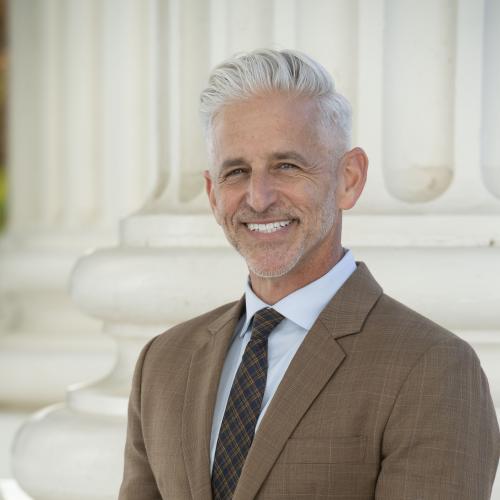
Asm. Josh Lowenthal
Sponsored bills
Maddy summaryCalifornia House Resolution 84 formally condemns a social media post by President Donald Trump that depicted former President Barack Obama and former First Lady Michelle Obama as apes, characterizing the imagery as racist dehumanization. The resolution calls on the President to issue a public apology to the Obamas and Black Americans nationwide for promoting this content. It also urges all elected officials, regardless of party affiliation, to reject the use of dehumanizing imagery against Black communities. Finally, the Assembly reaffirms its commitment to advancing policies that confront systemic racism and protect civil rights within the state.
This measure would, among other things, reaffirm California's commitment to universal human rights and call for the end to the humanitarian catastrophe in Gaza and the immediate release of all hostages.
Maddy summaryThis bill designates February 2026 as Unclaimed Property Month in California to raise awareness about state-held financial assets. It encourages residents to check the state Controller's website to claim unclaimed funds such as uncashed checks and insurance proceeds. The resolution does not change any laws or policies but serves as a public awareness campaign to help people locate and claim their abandoned property. It directs the Assembly Chief Clerk to distribute copies of the resolution for public distribution.
Maddy summaryThis House Resolution declares January 2026 as School Board Recognition Month to honor the nearly 5,000 school board members across California's 1,000 school districts and county offices of education. The resolution recognizes these locally elected officials for their work in guiding public education and serving diverse communities, emphasizing their role in ensuring students' academic, social-emotional, and health needs are met. It calls on community members to join in acknowledging the dedication of school board members and collaborate to improve the education system. The bill has no operational effect beyond this symbolic recognition and does not change any laws or policies.
Maddy summaryThis House Resolution formally recognizes the importance of affordable homeownership for California families, particularly those with lower incomes, and highlights how nonprofit-led programs help build generational wealth and reduce economic disparities. The document emphasizes that existing state programs like CalHome support the construction and preservation of affordable homes through competitive funding to cities, counties, indigenous communities, and nonprofit builders such as Habitat for Humanity. While the resolution does not create new laws or funding, it serves as an official acknowledgment of homeownership's role in improving educational outcomes, health, civic participation, and neighborhood stability. The text also notes California's significant housing deficit and racial wealth gaps as context for why expanding affordable ownership opportunities is a priority for state policy.
Existing law requires the lessor of a building intended for the occupation of human beings, in the absence of an agreement to the contrary, to put the building into a condition fit for that occupation and to repair all subsequent dilapidations thereof that render it untenantable, except as specified. Existing law describes the affirmative standard characteristics that, if lacking, make a dwelling untenantable. Existing law requires a city or county that receives a complaint from a tenant, resident, or occupant that a building contains lead hazards or is substandard to perform an inspection of the building or portion thereof intended for human occupancy, document any violations, advise the owner or operator of each violation and of each action that is required to be taken to remedy the violation, and schedule a reinspection to verify correction of the violations, as specified. This bill would authorize the landlord of a dwelling unit to elect to have an inspection performed to verify that the dwelling unit satisfies the habitability requirements described above before it is made available for hire. Because the bill would require local agencies to provides additional services, it would impose a state-mandated local program. The bill would establish a presumption that, if the landlord has an inspection performed showing no violation of the habitability requirements, the dwelling unit meets that standard for an unspecified period of time. If a tenant makes the landlord aware of a dilapidation of the premises during that time, the bill would provide the landlord an unspecified period of time in which to cure or correct the dilapidation, during which period the landlord would not be deemed to be in violation of the habitability requirements described above. The bill would authorize a local agency that performs an inspection at the request of a landlord to charge the landlord a fee sufficient to cover its cost in providing the inspection. The California Constitution requires the state to reimburse local agencies and school districts for certain costs mandated by the state. Statutory provisions establish procedures for making that reimbursement. This bill would provide that no reimbursement is required by this act for a specified reason.
Existing law imposes various taxes, including a tax on income, the gross receipts from the sale of tangible personal property, and real property. This bill would impose a tax on a social media platform provider, as defined, equal to an unspecified percentage of the annual gross receipts derived from the purchase of programmatic advertising for distribution on the provider's social media platform, as provided. The bill would require the California Department of Tax and Fee Administration to administer the tax pursuant to the Fee Collection Procedures Law, the violation of which is a crime. By extending the application of the Fee Collection Procedures Law, this bill would impose a state-mandated local program. This bill would create the Social Media Safety Trust Fund within the State Treasury and would require all moneys raised pursuant to these taxes be deposited into the fund. The bill would establish various accounts within the fund and would allocate moneys into those accounts for expenditure according to specified purposes, including an Education Account, Mental Health Care Account, Research and Development Account, and Social Services Account. The bill would continuously appropriate the moneys in the fund to administer those provisions. The California Constitution requires the state to reimburse local agencies and school districts for certain costs mandated by the state. Statutory provisions establish procedures for making that reimbursement. This bill would provide that no reimbursement is required by this act for a specified reason.
Existing law establishes the Division of Labor Standards Enforcement within the Department of Industrial Relations. Existing law authorizes the division, which is headed by the Labor Commissioner, to enforce the Labor Code and all labor laws of the state, the enforcement of which is not specifically vested in any other officer, board, or commission. This bill would generally regulate the use of workplace surveillance tools and an employer's use of worker data. The bill would, among other things, require an employer, at least 30 days before introducing a workplace surveillance tool, to provide a worker who will be affected a written notice that includes, among other things, a description of the worker data to be collected, the intended purpose of the workplace surveillance tool, and how this form of worker surveillance is necessary to meet that purpose. The bill would define "employer" to include public employers, as specified. The bill would prohibit an employer from transferring, selling, disclosing, or licensing worker data to a vendor, unless the vendor is under contract to analyze or interpret the worker data and the contract includes certain terms. The bill would prohibit an employer from using certain workplace surveillance tools, including a workplace surveillance tool that incorporates facial, gait, or emotion recognition technology, except as specified. The bill would also prohibit an employer from using a workplace surveillance tool to infer specified categories of information about a worker, including, among others, their immigration status, veteran status, ancestral history, religious or political beliefs, disability status, criminal record, or credit history. The bill would require the Labor Commissioner to enforce the bill's provisions, would authorize an employee to bring a civil action for specified remedies for a violation of the bill's provisions, and would authorize a public prosecutor to enforce the provisions. The bill would subject an employer who violates the bill's provisions to a civil penalty of $500 for each violation. The bill would define various terms for purposes of its provisions.

Existing law permits an individual to seek confidential voter status and have their residence address, telephone number, and email address declared confidential upon presentation of certification that the person is a participant in among other programs, the Address Confidentiality for Victims of Domestic Violence, Sexual Assault, and Stalking program or the person satisfies other specified requirements. This bill would authorize an individual who holds power of attorney for an individual with a cognitive impairment to apply for confidential voter status on behalf of the individual with cognitive impairment. The bill would require the application to contain a statement, signed under penalty of perjury, that the individual for whom they hold power of attorney has a cognitive impairment. The bill would require the elections official, in producing any list, roster, or index, to exclude the voters with confidential voter status granted under these provisions. The bill would require the Secretary of State to submit to the Legislature, no later than January 10 of each year, a report that includes the total number of applications received for confidential voter status under these provisions. By increasing the duties of county elections officials with regard to confidential voter information and by expanding the scope of the crime of perjury, the bill would impose a state-mandated local program. The California Constitution requires the state to reimburse local agencies and school districts for certain costs mandated by the state. Statutory provisions establish procedures for making that reimbursement. This bill would provide that with regard to certain mandates no reimbursement is required by this act for a specified reason. With regard to any other mandates, this bill would provide that, if the Commission on State Mandates determines that the bill contains costs so mandated by the state, reimbursement for those costs shall be made pursuant to the statutory provisions noted above.