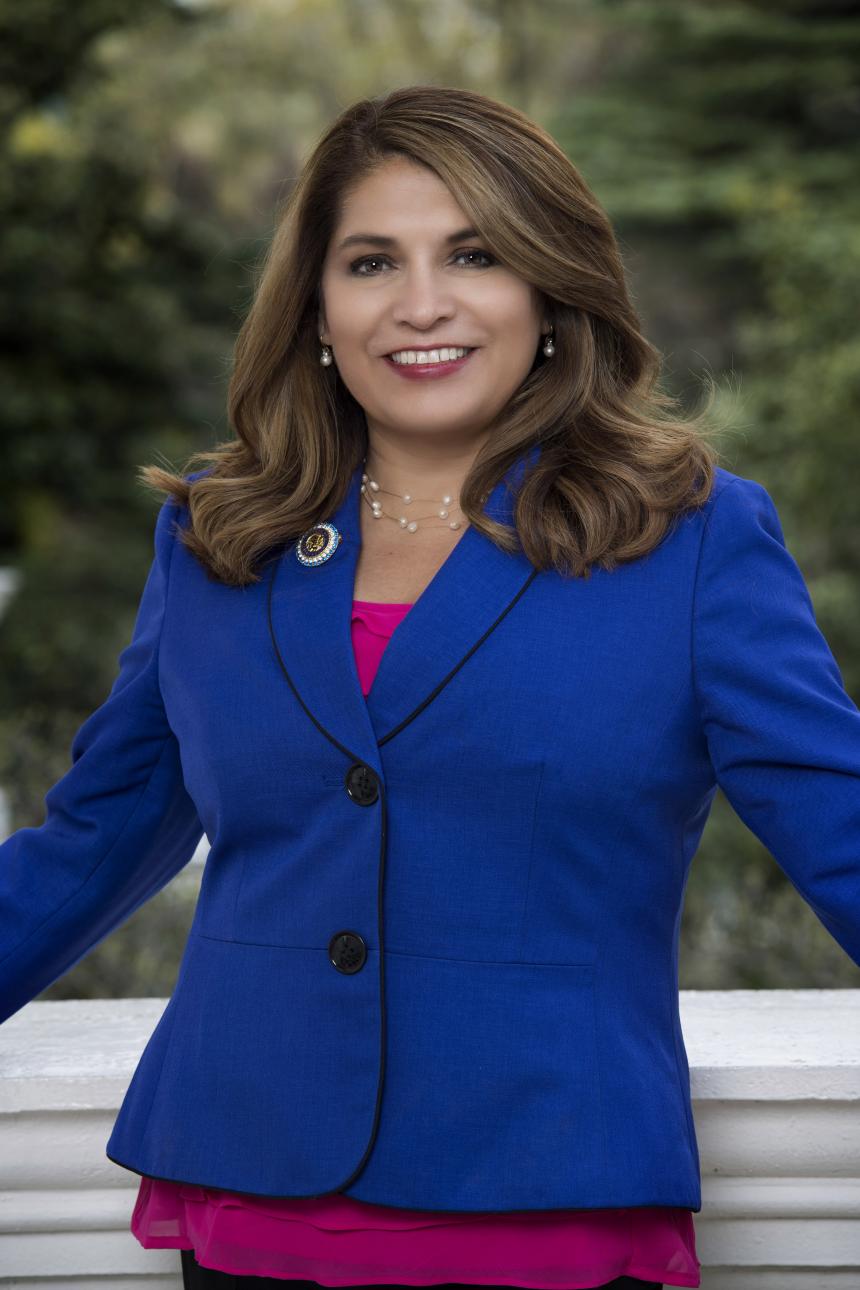
Photo of Sharon Quirk-Silva
D California Assembly · District 67

Asm. Sharon Quirk-Silva

Compare
Total votes
25,127
all sessions
Attendance
94%
1,296 missed
Near the chamber average
With party
98%
of cast votes
Near the chamber average
Bipartisan score
1%
crosses aisle rarely
Near the chamber average
Sponsored
2,398
bills & resolutions
Near the chamber average
Committees
15
assignments
2,398 bills and resolutions

Sponsored bills

Total
2,398
Primary
286
Co-sponsor
2,112
This page
2,398
matching current filters
Co-sponsor HR 86
Passed · California Assembly · Co-sponsor
Relative to Canine "K-9" Appreciation Week.

Maddy summaryCalifornia Assembly Resolution 86 proclaims the week of September 1 through 7, 2026, as Canine "K-9" Appreciation Week to honor police dogs and their handlers. The resolution cites the historical growth of canine units in California and highlights their contributions to law enforcement, such as apprehending suspects, detecting narcotics, and locating missing persons. It also notes that these teams often reduce the need for lethal force and engage with the public through community demonstrations.

Passed Aug 19, 2026 1 co-sponsor
Co-sponsor AB 1830
Passed · California Assembly · Co-sponsor
Ignition interlock devices.

(1) Existing law makes it unlawful for a person who is under the influence of any alcoholic beverage, has 0.08 or 0.04 percent or more, by weight, of alcohol in their blood, as specified, is addicted to the use of any drug, is under the influence of any drug, or is under the combined influence of any alcoholic beverage and drug to drive a vehicle. Existing law prohibits a person from driving a vehicle under the influence of any alcoholic beverage or drug and concurrently do an act forbidden by law, or neglect a duty imposed by law in driving the vehicle, which act or neglect proximately causes bodily injury to a person other than the driver. Existing law, until January 1, 2033, requires the Department of Motor Vehicles to immediately suspend or revoke the privilege of a person to operate a motor vehicle upon the receipt of an abstract of the record of a court showing that the person has been convicted of driving a vehicle under the circumstances above as well as for engaging in a motor vehicle speed contest for specified periods of time, depending on the statute under which the driving violation was punished, and prohibits the reinstatement of the driving privilege until the person gives proof of financial responsibility and proof satisfactory to the department of successful completion of a driving-under-the-influence (DUI) program, as specified. Existing law requires the department to advise the person that they may apply for a restricted driver's license if the person meets certain requirements, including, among others, satisfactorily providing proof of enrollment in a certain DUI program and the installment of a functioning, certified ignition interlock device (IID) . Existing law allows, for certain violations, a person who has had their driver's license suspended to apply to the department for a restricted license, subject to certain requirements. For specified violations, existing law requires the department to issue a restricted driver's license if the person has met certain requirements, including proof satisfactory to the department of enrollment in, or completion of, a DUI program, proof of financial responsibility, and the payment of all applicable reinstatement or reissue fees, among other fees, required by the department. This bill, beginning on January 1, 2031, would reorganize and recast the penalties and sanctions for the alcohol- and drug-related driving offenses described above. The bill would recast violations for driving under the influence of any alcoholic beverage or having 0.08 or 0.04 percent or more, by weight of alcohol in blood (collectively "alcohol-related driving violations") from violations for driving under the influence of any drug or driving while a person is addicted to the use of any drug (collectively "drug-related driving violations") . For convictions of alcohol-related driving violations, the bill would require the department to suspend the privilege to operate a motor vehicle and would allow the suspension to be indefinite. The bill would prohibit the reinstatement of that privilege until the person satisfies certain requirements, including, among others, the person applying for and maintaining a restricted driver's license for certain periods of time depending on the statute under which the driving violation is punished, which includes installing a certified IID on each vehicle operated by the person, providing proof satisfactory to the department of successful completion of a DUI program, as specified, paying all applicable reinstatement and reissue fees required by the department, and providing proof of financial responsibility. For convictions of drug-related driving violations described above, this bill would require the department to suspend the privilege to operate a motor vehicle for specified periods of time, depending on the statute under which the violation was punished. The bill would also prohibit the reinstatement of the privilege until the person satisfies certain requirements described above, but the bill would not require the person to install a certified IID or apply for and maintain a restricted driver's license for a specified period of time. This bill, beginning on January 1, 2031, would authorize a person, whose privilege to operate a motor vehicle is suspended for alcohol-related driving violations, to apply for a restricted license if certain requirements are met, including, among others, installing a certified IID on each vehicle operated by the person, as specified, providing proof of financial responsibility for 3 years, providing satisfactorily proof of enrollment in, or completion of, a DUI program, as specified, and paying a fee that is sufficient to cover the costs of administration of these requirements. The bill would require the department to terminate the restricted driver's license and suspend the privilege to drive if the person fails to comply with the DUI program requirements. The bill would also authorize a person, whose driving privilege was suspended for a conviction of a drug-related driving violation, to apply for a restricted driver's license if similar certain requirements are met, except the person would not be required to install a certified IID but would be required to complete a minimum number of months of a suspension period, as specified. This bill, beginning on January 1, 2031, would require the department to monitor the installation and maintenance of an IID that is installed pursuant to specified provisions. The bill would require the installer of the IID to notify the department if the device is removed or indicates that a person has attempted to remove, bypass, or tamper with the device, or the person fails 3 or more times to comply with these requirements. The bill would require the department to immediately suspend or revoke the privilege to operate a motor vehicle and any restricted driver's license if the person attempts to remove, bypass, or tamper with an IID, has the IID removed prior to the termination date of the restriction, or fails 3 or more times to comply with any requirement for the maintenance or calibration of the IID. The bill would require the department, and manufacturers, installers, and repairers of IIDs, to post information regarding filing complaints against manufacturers, installers, and repairers, as specified. (2) Existing law requires an order of suspension of a person's privilege to operate a motor vehicle for any of specified reasons, including the person was driving a motor vehicle when the person had 0.08 percent or more, by weight, of alcohol in their blood. Existing law requires the notice to be served on the person by a peace officer under specified conditions where test results show that the person has specified percentages of alcohol in the person's blood or where a person under 21 years of age refuses to take, or fails to complete, a specified test for alcohol in the blood. This bill, beginning on January 1, 2031, would include a person driving a motor vehicle when a passenger for hire was a passenger in the vehicle and the person had 0.04 percent or more, by weight, of alcohol in their blood as a reason to immediately suspend the privilege to operate a motor vehicle. The bill would authorize a person, whose driving privilege has been suspended pursuant to the provision above but not suspended or revoked based on the person's refusal to submit to, or failure to complete, a chemical test or tests, to apply for a restricted driver's license if certain requirements are met, including completing 30 days of the suspension period, providing proof of enrollment in a DUI program, installing a functioning, certified IID on any vehicle that they operate, being 21 years of age or older at the time of the offense, giving proof of financial responsibility, and paying all reissue and restriction fees. The bill would require the department to terminate the restricted driver's license and suspend the privilege to operate if the person has failed to comply with the DUI program requirements, or if the person attempts to remove, bypass, or tamper with the IID, removes the IID prior to the termination date of the restriction, or fails 3 or more times to comply with any requirement for the maintenance or calibration of the IID. (3) Existing law requires the department to suspend or revoke a person's privilege to operate a motor vehicle based on a peace officer's sworn statement or report, as specified. Existing law requires the department to review the record to determine whether the suspension or revocation is supported by the record, as specified. This bill, beginning on January 1, 2031, would require the department to review these determinations and consider the sworn report and any other information and evidence, as specified. If, by a preponderance of the evidence, the department determines in the review of a determination certain facts are proven, including, among other facts, that the peace officer had reasonable cause to believe that the person had been driving a motor vehicle in violation of an alcohol- or drug-related driving provision, the bill would require the department to sustain the order of suspension or revocation. If the department determines that any of these certain facts are not proven by a preponderance of the evidence, the bill would require the department to rescind the order of suspension or revocation, as specified. (4) Existing law allows, for certain violations, a person who has had their driver's license suspended to apply to the department for a restricted license, subject to certain requirements as provided above. This bill, beginning on January 1, 2031, would authorize a court to disallow the issuance of the restricted driver's license if the court determines that the person would present a traffic safety or public safety risk if the person were authorized to operate a motor vehicle during the period of suspension. This bill, beginning on January 1, 2031, would make conforming changes to include the provisions above, as applicable, in statutes that generally pertain to the suspension, revocation, or restriction of the privilege to operate a motor vehicle. (5) This bill would declare that it is to take effect immediately as an urgency statute.


Passed Aug 19, 2026 1 co-sponsor
Co-sponsor SCR 152
Signed into law Aug 18, 2026 1 co-sponsor
Co-sponsor HR 132
Passed · California Assembly · Co-sponsor
Relative to Young Women's Reproductive Health Awareness Month.

Maddy summaryThis California House Resolution proclaims September 2026 as Young Women's Reproductive Health Awareness Month to highlight the importance of early diagnosis and education for adolescent girls. The resolution urges high schools, colleges, public health agencies, and medical providers to promote educational campaigns on topics such as menstrual health, HPV vaccination, and sexual health practices. It specifically aims to address disparities in care by encouraging outreach to communities that face systemic barriers or lack culturally appropriate resources.

Passed Aug 13, 2026 1 co-sponsor
Primary AB 2748
Passed · California Assembly · Lead sponsor
Building standards: affordable housing developments: electric vehicle charging.

Existing law, the State Housing Law, establishes statewide construction and occupancy standards for buildings used for human habitation. Existing law requires the building department of every city or county to enforce within its jurisdiction all the provisions published in the California Building Standards Code and the provisions of the State Housing Law, as provided. Existing law makes any violation of the State Housing Law a misdemeanor punishable by a fine not exceeding $1,000, by imprisonment not exceeding 6 months, or by both. Existing law requires the California Building Standards Commission and the Department of Housing and Community Development to research and develop, and authorizes those entities to propose for adoption by the commission, mandatory building standards for the installation of electric vehicle charging stations in existing multifamily dwellings, hotels, motels, and nonresidential developments, as provided. This bill would require a new or existing affordable housing development, as defined, for which a permit application is submitted between January 1, 2025, and December 31, 2028, to comply with either the requirements for installation of low power Level 2 or higher electric vehicle charging receptacles in the 2025 California Green Building Standards Code, as provided, or the applicable requirements for installation of low power Level 2 or higher electric vehicle charging receptacles in the 2024 supplement to the 2022 edition of the California Green Building Standards Code. The bill would repeal these provisions on January 1, 2030. By adding to the duties of local officials, and by expanding the scope of a crime, this bill would impose a state-mandated local program. The bill would include findings that changes proposed by this bill address a matter of statewide concern rather than a municipal affair and, therefore, apply to all cities, including charter cities. The California Constitution requires the state to reimburse local agencies and school districts for certain costs mandated by the state. Statutory provisions establish procedures for making that reimbursement. This bill would provide that with regard to certain mandates no reimbursement is required by this act for a specified reason. With regard to any other mandates, this bill would provide that, if the Commission on State Mandates determines that the bill contains costs so mandated by the state, reimbursement for those costs shall be made pursuant to the statutory provisions noted above.

Passed Aug 13, 2026 0 co-sponsors
Co-sponsor ACA 18
Passed · California Assembly · Co-sponsor
A resolution to propose to the people of the State of California an amendment to the Constitution of the State, by amending Section 9 of Article IX thereof, relating to the University of California.

The California Constitution provides that the University of California constitutes a public trust, and requires the university to be administered by the Regents of the University of California, a corporation in the form of a board, with full powers of organization and government, subject to legislative control only for specified purposes. The California Constitution requires the board to consist of 7 ex officio members and 18 appointive members appointed by the Governor and approved by the Senate. The California Constitution authorizes the members of the board to appoint either a member of the faculty at a campus of the university or of another institution of higher education, or a person enrolled as a student at a campus of the university, or both, as members of the board serving for no less than one year with all rights of participation. Beginning on July 1, 2027, this measure would require, instead of authorize, the members of the board to appoint to the board for 2-year terms, 2 undergraduate students and 2 graduate students enrolled at a campus of the university for each regular academic term during their service as members of the board, as provided. The measure would require each student board member to serve as a nonvoting student regent-designate in the first year of their 2-year term, and would authorize a student member who graduates from the university on or after January 1 of the 2nd year of the student member's 2-year term to serve the remainder of their term.

Passed Aug 13, 2026 1 co-sponsor
Primary AB 2191
Passed · California Assembly · Lead sponsor
High school graduation requirements: alternate pathways for individuals with exceptional needs: statewide resources.

Existing law establishes the California Collaborative for Educational Excellence to advise and assist school districts, county superintendents of schools, and charter schools in achieving their local control and accountability plan goals. Existing law requires a local educational agency to exempt an individual with exceptional needs who satisfies specific eligibility criteria from all courses and other requirements adopted by the governing board or body of the local educational agency that are additional to the statewide course requirements and to award the pupil a diploma of graduation from high school, as provided. The bill would, subject to an appropriation, require the State Department of Education and the collaborative to, on or before July 1, 2027, establish a statewide resource focused on establishing alternate pathways to a diploma for individuals with exceptional needs through capacity building within the state's system of support, training, and technical assistance.

Passed Aug 13, 2026 0 co-sponsors
Co-sponsor HR 112
Passed · California Assembly · Co-sponsor
Relative to Black Music Month.

Maddy summaryThis House Resolution officially designates September as Black Music Month to honor the significant contributions of Black artists to American culture. The measure recognizes a wide range of musical genres, including jazz, blues, gospel, and hip-hop, by highlighting their historical origins and influential figures. While the text celebrates these artistic achievements, it does not impose any new legal requirements or funding mandates.

Passed Aug 13, 2026 1 co-sponsor
Co-sponsor AB 2403
Passed · California Assembly · Co-sponsor
Income tax: credits: commercial production.

The Personal Income Tax Law and the Corporation Tax Law allow various credits against the taxes imposed by those laws, including numerous motion picture credits. This bill, for taxable years beginning on or after January 1, 2027, and before January 1, 2032, would allow a credit against the taxes imposed by those laws to a qualified taxpayer that produces qualified commercials, as defined, in the state in an amount equal to 20% or 30% of the qualified production costs in excess of $500,000 that are attributable to the production of a qualified commercial, as specified. The bill would exclude any commercial that is created entirely by generative artificial intelligence, as specified, or that utilizes generative artificial intelligence or autonomous vehicles in a manner that replaces the job functions customarily performed by a human worker in the production. The bill would require the qualified commercial to adhere to specified labor standards. The bill would require the California Film Commission to establish an application process and allocate the credits on or after July 1 each year, in accordance with certain requirements. The bill would limit the aggregate amount of credits that may be allocated for a fiscal year under these provisions to $15,000,000. The bill would require specified certifications under penalty of perjury. By expanding the scope of a crime, this bill would impose a state-mandated local program. Existing law requires any bill authorizing a new tax expenditure to contain, among other things, specific goals, purposes, and objectives that the tax expenditure will achieve, detailed performance indicators, and data collection requirements. This bill would include additional information required for any bill authorizing a new tax expenditure. The California Constitution requires the state to reimburse local agencies and school districts for certain costs mandated by the state. Statutory provisions establish procedures for making that reimbursement. This bill would provide that no reimbursement is required by this act for a specified reason. This bill would take effect immediately as a tax levy.

Passed Aug 13, 2026 1 co-sponsor
Co-sponsor AB 1574
Passed · California Assembly · Co-sponsor
The Tribal Foster Care Prevention Program.

Existing federal law, the Indian Child Welfare Act of 1978 (ICWA) , governs the proceedings for determining the placement of an Indian child when that child is removed from the custody of the child's parent or guardian. Existing law specifies that the state is committed to protecting the essential tribal relations and best interest of an Indian child by promoting practices in accordance with ICWA. Existing law also provides for the state and an Indian tribe to enter into an agreement regarding the care and custody of Indian children and jurisdiction over Indian child custody proceedings. Existing law establishes, in order to provide additional funds to eligible Indian tribes that have entered into an agreement with the state pursuant to those provisions, the Tribally Approved Homes Compensation Program to provide funds to recruit and approve homes for the purpose of foster or adoptive placement of an Indian child and the Tribal Dependency Representation Program to provide funds to pay for legal counsel to represent the Indian tribe in a California Indian child custody proceeding. This bill would establish the Tribal Foster Care Prevention Program to provide funding to assist any federally recognized Indian tribe located in California, or with lands that extend into California, in funding the costs associated with services aimed at preserving families and preventing the entry of children into foster care. The bill would require an Indian tribe that seeks funding for this purpose to submit an annual letter of interest to the department. The bill would require the department, subject to an appropriation in the annual Budget Act for this purpose, to provide each Indian tribe that enters into a specified agreement and submits a letter of interest an annual allocation. The bill would require an Indian tribe that receives funds to submit a progress report regarding the number of Indian children and their families served to the department on or before September 30 following the close of the fiscal year in which funding was received. This bill would authorize the department to issue written guidance to implement, interpret, or make specific these provisions without taking any regulatory action.

Passed Aug 13, 2026 1 co-sponsor
Showing 71 to 80 of 2,398 bills
Previous 1 … 7 8 9 … 240 Next