

Existing law authorizes a county board of supervisors to appropriate and expend county general fund money to establish county programs or fund other programs to meet various social needs of the county population and the needs of physically, mentally, and financially handicapped persons and aged persons. Existing law authorizes the board of supervisors to contract with other public agencies, private agencies, or individuals to operate programs that the board of supervisors determines will serve public purposes. Existing law prohibits an Orange County Board of Supervisors member from awarding district discretionary funds to a community organization or a nonprofit organization unless the board of supervisors approves that award by a majority vote. Existing law requires the Orange County Board of Supervisors to post on its internet website a log of appropriated district discretionary funds at the end of each quarter, as specified. Existing law prohibits, within 90 days preceding an election, an Orange County Board of Supervisors member who is on the ballot as an Orange County Board of Supervisors member candidate and has an opponent on that ballot from taking any action related to spending district discretionary funds, as specified. This bill would prohibit the Alameda County Board of Supervisors from awarding discretionary funds, as defined, to a community organization, nonprofit organization, or private entity, unless the board of supervisors approves that award by a majority vote and the award includes a description of how the award provides resources of communitywide significance for the district that the member of the board requesting the award represents and identifies the public purposes, as defined, that the award will serve. The bill would prohibit the Alameda County Board of Supervisors from appropriating discretionary funds for an award that is not for a public purpose and from appropriating any funds in a way that allows a member, or less than a majority, of the board to appropriate funds, as specified. The bill would require the Alameda County Board of Supervisors to post on its internet website a log of appropriated discretionary funds at the end of each quarter, as specified. The bill would prohibit, within 90 days before an election, an Alameda County Board of Supervisors member who is on the ballot as an Alameda County Board of Supervisors member candidate from, among other things, placing an agenda item seeking approval to appropriate discretionary funds on the agenda for a meeting of the board. The bill would prohibit discretionary funds from being awarded at a special meeting or on the consent calendar. The bill would make its provisions severable. This bill would make legislative findings and declarations as to the necessity of a special statute for County of Alameda.
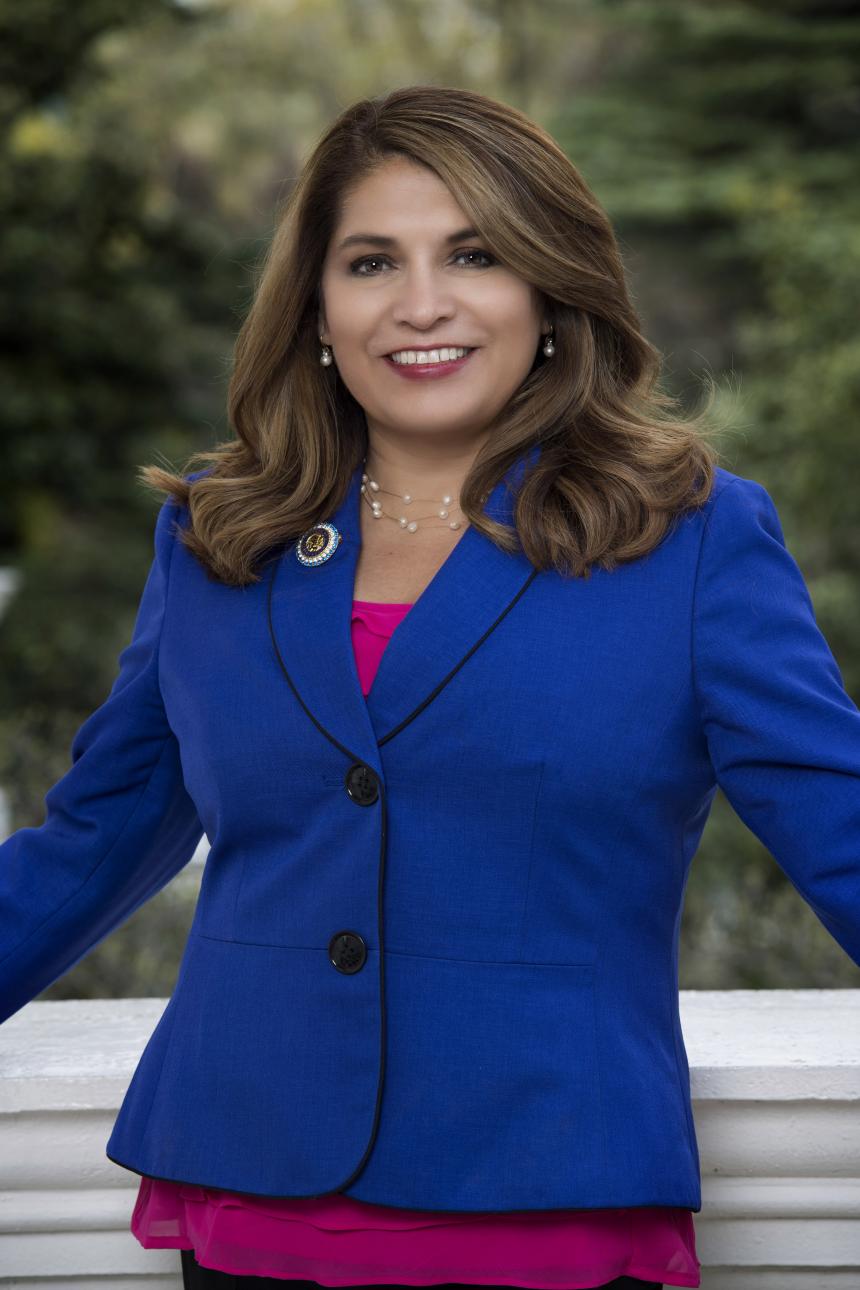
Asm. Sharon Quirk-Silva
Sponsored bills
Existing law establishes the jurisdiction of the juvenile court, which may adjudge children to be dependents of the court under certain circumstances, including when the child suffered or there is a substantial risk that the child will suffer serious physical harm, or a parent fails to provide the child with adequate food, clothing, shelter, or medical treatment. Existing law subjects a minor between 12 and 17 years of age, inclusive, who violates any federal, state, or local law or ordinance to, and a minor under 12 years of age who is alleged to have committed specified serious offenses to, the jurisdiction of the juvenile court, which may adjudge the minor to be a ward of the court. Existing law requires, unless waived for good cause, a court investigator, probation officer, or domestic relations investigator to make an investigation and file with the probate court a report and recommendation concerning each proposed guardianship of the person or guardianship of the estate. Existing law authorizes, in specified circumstances, the court to refer the matter, in writing, to the local child welfare agency to initiate an investigation, and requires the referral to include a summary of the reasons for the referral and authorizes the inclusion of a copy of the petition, the investigator's report, and any other material information. If the juvenile court commences dependency proceedings, the guardianship proceedings are stayed, and if the juvenile court does not commence dependency proceedings, the probate court retains jurisdiction to hear and determine the guardianship petition. Existing law authorizes the juvenile court to terminate or modify a guardianship of the person of a minor previously established under the Probate Code, or appoint a coguardian or successor guardian of the person of the minor, if the minor is the subject of a petition filed under the above-described provisions authorizing a juvenile court to adjudge children as dependents or wards, and subjects those proceedings to specified notice requirements. This bill would authorize the juvenile court to terminate or modify temporary probate guardianships at any hearing without further notice, if specified requirements are met, including, but not limited to, when in the best interests of the minor.
Existing law regulates the sale, manufacture, and exchange of toys in the state and prohibits the manufacture, sale, or exchange, possession with intent to sell or exchange, and exposition or offer for sale or exchange to a retailer a toy that is contaminated with a toxic substance, as provided. Violation of these provisions is punishable as a misdemeanor. Existing law requires an operator of a companion chatbot platform, as defined, to issue a clear and conspicuous notification indicating that the companion chatbot is artificially generated and not human if a reasonable person interacting with a companion chatbot would be misled to believe that the person is interacting with a human. For these purposes, existing law defines a "companion chatbot" to mean an artificial intelligence system with a natural language interface that provides adaptive, human-like responses to user inputs and is capable of meeting a user's social needs, including by exhibiting anthropomorphic features and being able to sustain a relationship across multiple interactions. Existing law also requires an operator to take certain actions with respect to a user the operator knows is a minor, including to disclose to the user that the user is interacting with artificial intelligence. Violation of these provisions is subject to civil liability. This bill would, until January 1, 2031, prohibit the manufacture, sale, exchange, possession with intent to sell or exchange, and exposition or offer for sale or exchange to a retailer a toy, as defined, that includes a companion chatbot, and would make violations of the bill subject to the same civil liability as violations of the provisions applicable to operators of companion chatbots in the above-described paragraph.
The California Constitution vests the judicial power of the state in the Supreme Court, courts of appeal, and superior courts. Existing law requires the sittings of every court to be public, except as authorized. This bill would bar a judicial officer, peace officer, or other law enforcement officer from prohibiting a member of the press or public from accessing court proceedings that are open to the public. The bill would authorize a violation of that provision to be subject to civil penalties, as specified.
Existing law requires the governing board of each school district to have general control of, and be responsible for, all aspects of the interscholastic athletic policies, programs, and activities in its school district, as provided, and requires the governing board of a school district to ensure that all interscholastic policies, programs, and activities in the school district are in compliance with state and federal law. Existing law authorizes the governing board of a school district to enter into associations or consortia with other governing boards for purposes of governing regional or statewide interscholastic athletics, as provided. Existing law describes the California Interscholastic Federation (CIF) as a voluntary organization that consists of school and school-related personnel with responsibility for administering interscholastic athletic activities in secondary schools and states the intent of the Legislature that the CIF, in consultation with the State Department of Education, implement specified policies relating to interscholastic athletics. Existing law, the 1998 California High School Coaching Education and Training Program, declares the intent of the Legislature to establish a California High School Coaching Education and Training Program, to be administered by school districts with an emphasis on specific components, including, among other components, sports psychology. Existing law requires every high school sports coach to complete, at their own expense, a coaching education program that meets the guidelines established by the California High School Coaching Education and Training Program. This bill would require specified trainings for coaches described in AB 1665 of the 2025–26 Regular Session to cover specified mental-health related topics, including, among other topics, trauma-informed care, as provided, and strategies of creating a positive team culture, as provided. The bill would require the department, on or before September 1, 2027, to identify existing training or develop a model youth athletics behavioral and mental health training, as specified, for persons who serve as coaches in youth sports organizations, both for recreational leagues and competitive or club leagues. The bill would require the department to post the training on its internet website and work with local partners to disseminate the training to appropriate youth athletic leagues, youth coaching entities, and relevant statewide organizations and associations. This bill would incorporate additional changes to Section 35179.1 of the Education Code proposed by AB 1665 to be operative only if this bill and AB 1665 are enacted and this bill is enacted last. This bill would make the operation of its provisions contingent upon the enactment of AB 1665 of the 2025–26 Regular Session.
Existing law generally regulates the business of renting passenger vehicles to the public. The law prohibits a rental company from taking various actions, including requiring the purchase of a damage waiver, optional insurance, or another optional good or service, and using electronic surveillance technology to track a renter in order to impose fines or surcharges relating to the renter's use of a rental vehicle. This bill would require any privately owned vehicle rented by, or furnished to, any federal, state, or local law enforcement agency for the use of detaining, arresting, or transporting persons who have violated, or are suspected of having violated, any law, to display a temporary decal displaying the agency name and logo, as specified. The bill would authorize certain attorneys, including the Attorney General, to pursue a civil action against the entity renting the vehicle from the private owner for failure to comply with these provisions. The bill would require the rental car contract to include a term that compliance with state law is mandatory. The bill would exempt privately owned vehicles rented or otherwise furnished or loaned to a law enforcement agency for specified purposes and rental car contracts entered into prior to January 1, 2027, from these provisions. The bill would make related findings and declarations.
(1) Existing law authorizes the governing board of a school district to authorize a pupil who meets specified criteria to attend community college. Existing law requires a pupil to receive credit for community college courses that the pupil completes at the level determined appropriate by the governing boards of the school district and community college district. This bill would authorize a pupil concurrently enrolled in specified community college courses to participate in work-based learning activities, as provided. (2) Existing law authorizes a group of students to organize a student body association within the public schools with the approval of and subject to the control and regulation of the governing board of the school district, as specified. This bill would authorize an above-described student body organization to operate a student-led enterprise program, as provided. (3) Existing law authorizes the governing board of a school district maintaining a high school to (A) establish courses of work-based learning or work experience education to provide pupils with instruction in the skills, attitudes, and understanding necessary for success in employment, (B) provide guidance and supervision procedures to ensure maximum educational benefit to pupils from placement in suitable work-based learning or work experience education courses, (C) provide for arranging, approving, coordinating, and awarding credit for work-based learning or work experience education courses, and employing personnel for purposes of providing that credit, and (D) provide or require pupils to acquire liability insurance for off-school-grounds work experience programs. This bill would extend the above-described authorizations provided by the governing boards of school districts to the governing boards or bodies of county offices of education, charter schools, and state special schools. The bill would define "work-based learning" and "work experience education" for purposes of those authorizations, would make other changes to those authorizations, and would make various other changes to law relating to work-based learning, as specified. Existing law authorizes work-based learning opportunities for pupils to be delivered by partnership academies, regional occupational programs, and local educational agencies, as specified. Existing law authorizes those opportunities to include work experience education, community classrooms, cooperative career technical education programs, and job shadowing experience, as specified. This bill would authorize work-based learning activities, instead of work-based learning opportunities, to be delivered by those entities, would authorize work-based learning activities to also be delivered by state special schools, and would authorize work-based learning activities to include on-the-job training in certain youth apprenticeship programs, internships, and mentorships. The bill would instead authorize work-based learning activities to be offered through work experience education courses, community classrooms, cooperative career technical education programs, and early college credit courses, among other related changes, as specified. Existing law requires the governing boards of school districts to grant credit to pupils enrolled in grade 11 or a higher grade for completing a work experience education program, as specified. This bill would extend the above-described requirement provided by the governing boards of school districts to the governing boards or bodies of county offices of education, charter schools, and state special schools. The bill would extend to pupils enrolled in grade 10 the granting of credit for completing a work experience education program to the same extent granted to pupils in grade 11 or a higher grade. To the extent that the bill would impose new duties on local educational agencies, the bill would impose a state-mandated local program. Existing law authorizes the governing board of a high school district, the governing board of a joint powers regional occupational center or program, or a county superintendent of schools that conducts a county-operated regional occupational center or program to establish and maintain cooperative career technical education programs or community classrooms as part of a career technical education course, as provided. This bill would authorize the above-described cooperative career technical education programs or community classrooms to include work-based learning activities, as provided. Existing law creates within the State Department of Education an agricultural career technical education unit to assist school districts in establishing and maintaining career technical education programs in agriculture, as provided. Existing law requires the curriculum of school districts that choose to participate in the state program of agricultural career technical education to include organized classes in the study of agricultural science and technology, a student-supervised occupational experience program in agriculture, and a program of leadership, organization, and personal development. This bill would authorize funding provided for the above-described purposes to be used to support agricultural career technical education programs that provide work-based learning activities, as provided. Existing law establishes the Golden State Pathways Program to promote pathways in high-wage, high-skill, high-growth areas, including technology, health care, education, and climate-related fields that, among other things, allow pupils to advance seamlessly from high school to college and career and provide the workforce needed for economic growth. Existing law appropriates $500,000,000 from the General Fund to the department to competitively award grant funds to local educational agencies, defined as school districts, charter schools, county offices of education, or regional occupational centers or programs operated by a joint powers authority or county office of education, for purposes of the program, and makes these funds available for encumbrance until June 30, 2029. This bill would authorize Golden State Pathways Program grants to be awarded to pathways programs that provide work-based learning activities, as provided. Existing law establishes the California Career Technical Education Incentive Grant Program, administered by the department, with the purpose of encouraging, maintaining, and strengthening the delivery of high-quality career technical education programs. Existing law requires, for the 2021–22 fiscal year and each fiscal year thereafter, $300,000,000 to be available to the department, upon appropriation by the Legislature, for the program. This bill would authorize California Career Technical Education Incentive Grant Program grants to be awarded to pathway programs and work-based learning activities, as provided. Existing law establishes the California Partnership Academies and finds and declares that partnership academies have proven to be highly effective state-school-private sector partnerships that combine academic and vocational training for high school pupils who present a high risk of dropping out of school, and motivate them to stay in school and graduate. Existing law requires the Superintendent of Public Instruction to issue grants to school districts, as specified, to plan, establish, and maintain these academies. Existing law requires the Superintendent to establish eligibility criteria for school districts that apply for these grants. This bill would authorize funding provided for these academies to be used to support those academies that provide work-based learning activities, as provided. Existing law provides that an essential component of transition services for individuals with exceptional needs is the project workability program that provides instruction and experiences that reinforce core curriculum concepts and skills leading to gainful employment. Existing law requires the Superintendent to develop criteria for awarding grants, funding, and evaluating workability projects, and requires project workability project applications to include specified elements. This bill would authorize transition and employment preparation services under the project workability program to include work-based learning activities, as provided. Existing law authorizes the governing board of a community college district to enter into a College and Career Access Pathways partnership with the governing board of a school district, a county office of education, or the governing body of a charter school with the goal of developing seamless pathways from high school to community college for career technical education or preparation for transfer, improving high school graduation rates, or helping high school pupils achieve college and career readiness. This bill would authorize a College and Career Access Pathways partnership agreement to include work-based learning activities, as provided. Existing law authorizes the Board of Governors of the California Community Colleges, to the extent that funds are available, to establish internship training programs and actively support apprenticeship training programs in collaboration with the Division of Apprenticeship Standards. This bill would authorize programs and partnerships established under the above-described provisions to include work-based learning activities, as provided. Existing law provides funding for the Strong Workforce Program and a K–12 component of the Strong Workforce Program with the purpose of creating, maintaining, supporting, encouraging, strengthening, and expanding the delivery of career technical education programs in the state, as provided. This bill would authorize Strong Workforce Program funds to be used to support career technical education programs that provide work-based learning activities, as provided. Existing law requires the Division of Apprenticeship Standards to develop a process to approve preapprenticeship programs, as specified. Existing law requires a program seeking approval as a preapprenticeship program to submit to the division a request for approval that includes documentation evidencing that the program's preapprenticeship training activities are conducted in partnership with an apprenticeship program approved by the division. This bill would authorize a preapprenticeship program seeking approval to instead include documentation evidencing that the program's preapprenticeship training activities are conducted with approval by a local building and construction trades council of the use of the multicraft core curriculum for the preapprenticeship program. (4) The California Constitution requires the state to reimburse local agencies and school districts for certain costs mandated by the state. Statutory provisions establish procedures for making that reimbursement. This bill would provide that, if the Commission on State Mandates determines that the bill contains costs mandated by the state, reimbursement for those costs shall be made pursuant to the statutory provisions noted above.
Under existing law, the Tom Bane Civil Rights Act (act) , if a person or persons, whether or not acting under color of law, interferes or attempts to interfere, by threats, intimidation, or coercion, with the exercise or enjoyment by any individual or individuals of rights secured by the Constitution or laws of the United States, or of the rights secured by the Constitution or laws of this state, the Attorney General, or any district attorney or city attorney, is authorized to bring a civil action for injunctive and other appropriate equitable relief in the name of the people of the State of California, in order to protect the exercise or enjoyment of the right or rights secured. Under that act, an individual may also institute and prosecute in their own name and on their own behalf a civil action for damages, as described, for any resulting interference or attempt at interference of the individual's exercise or enjoyment of rights secured by the Constitution or laws of the United States or this state. The act authorizes the court to award the petitioner or plaintiff reasonable attorney's fees in addition to any damages, injunction, or other equitable relief awarded in these civil actions (attorney's fees authorization) . Existing federal law provides that every person who, under color of any statute, ordinance, regulation, custom, or usage, of any state, territory, or the District of Columbia, subjects or causes to be subjected any United States citizen or other person within the jurisdiction to the deprivation of any rights, privileges, or immunities secured by the Constitution and laws, is liable to the party injured in an action at law, suit in equity, or other proper proceeding for redress, except as provided. This bill would also provide that every natural person, as defined, who, under color of any law, statute, ordinance, regulation, custom, or usage, as defined, subjects or causes to be subjected any citizen of this state or any person within the jurisdiction thereof to the deprivation of any rights, privileges, or immunities secured by the United States Constitution, shall be liable to the party injured in an action at law, suit in equity, or other proper proceeding for redress, except as specified. The bill would apply the aforementioned attorney's fees authorization, except as specified, to any action brought under these provisions. The bill would authorize a court, in its discretion, to also award costs, except as specified, to the prevailing plaintiff in any action brought under these provisions. This bill would authorize a defendant in an action brought under these provisions to assert and receive the benefit of a defense of absolute or qualified immunity only to the same extent as a person sued under certain federal provisions under like circumstances, as specified, and would specify that nothing in these provisions is to be construed to waive or abrogate any defense of sovereign immunity otherwise available to a party, as specified. The bill would prohibit any civil action brought under these provisions from being commenced later than 2 years after the date that the cause of action accrues. The bill would make its provisions severable. The bill would specify that these provisions apply retroactively to March 1, 2025, as provided. This bill would declare the intent of the Legislature in enacting these provisions. This bill would declare that it is to take effect immediately as an urgency statute.
The Personal Income Tax Law and the Corporation Tax Law, in conformity with federal income tax law, generally define "gross income" as income from whatever source derived, except as specifically excluded, and provide various exclusions from gross income. This bill would, for taxable years beginning on or after January 1, 2027, and before January 1, 2032, provide an exclusion from gross income for any qualified taxpayer, as defined, for amounts received for costs and losses associated with the 2026 Garden Grove chemical leak, as provided. Existing law requires any bill authorizing a new tax expenditure to contain, among other things, specific goals that the tax expenditure will achieve, detailed performance indicators, and data collection requirements. This bill would include additional information required for any bill authorizing a new tax expenditure. This bill would take effect immediately as a tax levy.
Existing law, the Mobilehome Residency Law, prescribes various terms and conditions of tenancies in mobilehome parks. The law defines "mobilehome park" for these purposes to mean an area of land where 2 or more mobilehome sites are rented, or held out for rent, to accommodate mobilehomes used for human habitation. The law caps the amount by which management of a qualified mobilehome park may increase the gross rental rate for a tenancy over the course of any 12-month period. The cap is the lower of 5% of the lowest gross rental rate charge for a tenancy at any time during the preceding 12 months or 3% of that amount plus the percentage change in the cost of living. Under that law, a mobilehome park is subject to that cap if it is located within and governed by the jurisdictions of 2 or more incorporated cities. The law repeals these rent cap provisions on January 1, 2030. This bill would additionally make any mobilehome park that is located in the City of Torrance subject to that cap, as specified, and would extend the repeal of these rent cap provisions to January 1, 2036. For a mobilehome park that is located in the City of Torrance, the bill would cap the rent on January 1, 2027, at the amount of rent as of January 5, 2026, plus the maximum permissible increase described above. This bill would make legislative findings and declarations as to the necessity of a special statute for the City of Torrance.