Existing law requires the State Department of Education to develop an online training module to assist all school staff, school administrators, parents, pupils, and community members in increasing their knowledge of the dynamics of bullying and cyberbullying. This bill would make nonsubstantive changes to that provision.
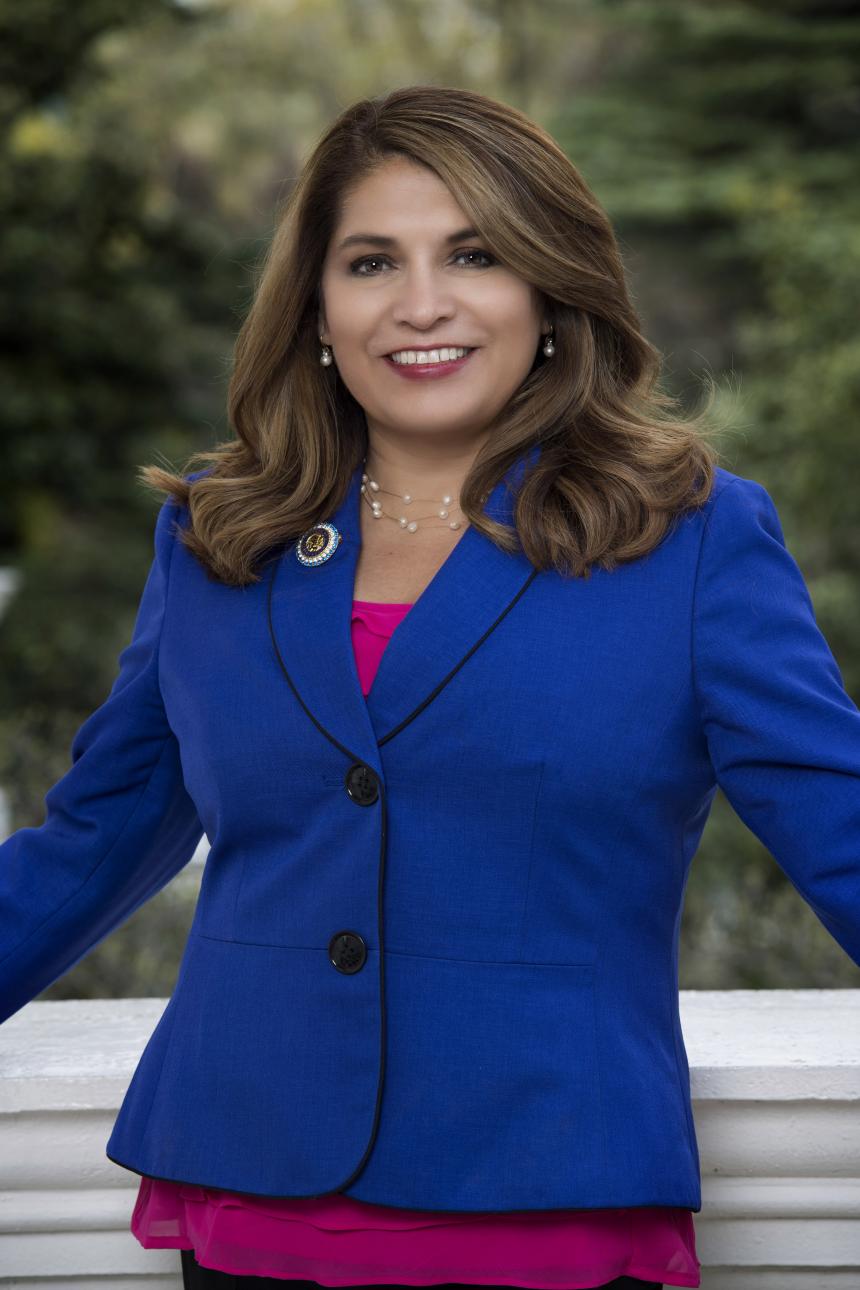
Asm. Sharon Quirk-Silva
Sponsored bills
The Small Business Procurement and Contract Act requires the Director of General Services and the heads of other state agencies that enter into contracts for the provision of goods, services, and information technology and for the construction of state facilities to establish goals for the participation of small businesses in these contracts, to provide for small business preference in the award of these contracts, to give special consideration and special assistance to small businesses, and, whenever possible, to make awards to small businesses, as specified. This bill would require a state agency, as defined, to establish and achieve an annual goal that at least 25% of the procurement activities administered by that agency include a small business participant, to ensure that the agency's procurement practices are administered in a manner that supports the agency in meeting or exceeding the goal, and to report to the director statistics regarding small business participation in the agency's procurement activities. The bill would require the Department of General Services to monitor the progress of the agencies toward meeting the goal and to provide this information to the Office of Small Business Advocate. The bill would also require a state agency that has not achieved the goal by the close of the fiscal year to submit a corrective action plan to the department within 45 days. The bill would require the department, in collaboration with the Office of Small Business Advocate, to undertake reasonable means to assist agencies in improving small business participation in their contracting. The bill would also require the Office of Small Business Advocate to collaborate with the department to cooperatively enhance the state's small business program by helping small businesses access capital and other financial resources necessary to successfully fulfill state contracts. The bill would define "state agency" to mean all state public entities that receive state public funding, including the California State University, the University of California, and the California Community Colleges. In calculating the total amount of contracting covered by this bill, the California State University, the University of California, and the California Community Colleges would only be required to meet the 25% goal for state funding used in contracting.
Existing law requires a school district to provide access to free, fresh drinking water during meal times in school food service areas, except as specified. This bill would require a school district, on or after July 1, 2018, to ensure that every drinking water fountain at each school under its jurisdiction is equipped with both a water fountain and a spigot, or a combination water fountain and spigot, for filling water bottles. Because the bill would impose new duties on local educational agencies, the bill would impose a state-mandated local program. The California Constitution requires the state to reimburse local agencies and school districts for certain costs mandated by the state. Statutory provisions establish procedures for making that reimbursement. This bill would provide that, if the Commission on State Mandates determines that the bill contains costs mandated by the state, reimbursement for those costs shall be made pursuant to the statutory provisions noted above.
Existing sales and use tax laws impose taxes on retailers measured by gross receipts from the sale of tangible personal property sold at retail in this state, or on the storage, use, or other consumption in this state of tangible personal property purchased from a retailer for storage, use, or other consumption in this state, measured by sales price. Those laws partially exempt from those taxes, for a specified period, the gross receipts from the sale of, and the storage, use, or other consumption of, specified tangible personal property purchased for use by a qualified person, as defined, to be used primarily in manufacturing or other processes, and in research and development. On and after July 1, 2014, tangible personal property with a useful life of one or more years, as defined by reference to state income or franchise taxes, is deemed to have a useful life of one or more years for purposes of the exemption. This bill would define "useful life" for periods on and after July 1, 2014, to also include tangible personal property that is expensed for state income or franchise tax purposes and that has a physical useful life of one or more years. The bill, with respect to property with a useful life of one or more years as redefined by this bill, would require the State Board of Equalization to cancel any notice of determination and any related penalties and interest and would prohibit the board from issuing any notice of determination with respect to the purchase or sale of that property. The bill would authorize a qualified person to offset the amount of sales tax reimbursement or use tax paid against any sales and use tax imposed on the qualified person when a qualified person has paid sales tax reimbursement or use tax on purchases of qualified tangible personal property that has a useful life of one or more years, as redefined by the bill, as provided. The bill, beginning on and after January 1, 2018, and before July 1, 2026, would additionally exempt from those taxes special purpose buildings and foundations used for the generation or production or storage and distribution, as defined, of electric power and qualified tangible personal property purchased for used by a qualified person to be used primarily in the generation or production or storage and distribution of electric power or purchased for use by a contractor for the qualified person, as specified. The bill, on and after January 1, 2018, would expand the definition of qualified person to include, among others, a person primarily engaged in the business of electric power generation. The bill would declare the intent of the Legislature to enact legislation that would improve the state's sales and use tax incentives to promote a stronger California economy by securing a greater share of the high-paying, high-skilled jobs in manufacturing and research and development.
Existing law requires the adopted course of study for grades 1 to 6, inclusive, to include instruction in specified areas of study, including English and the skill of handwriting. This bill would require instruction in the skill of handwriting required as part of the adopted course of study for grades 1 to 6, inclusive, to include instruction in cursive or joined italics in grades 2 to 5, inclusive. By imposing additional duties on school districts, the bill would impose a state-mandated local program. The California Constitution requires the state to reimburse local agencies and school districts for certain costs mandated by the state. Statutory provisions establish procedures for making that reimbursement. This bill would provide that, if the Commission on State Mandates determines that the bill contains costs mandated by the state, reimbursement for those costs shall be made pursuant to the statutory provisions noted above.
Existing law requires the Department of Motor Vehicles to issue a driver's license to an applicant when the department determines that the applicant is lawfully entitled to a license. Existing law also authorizes the Department of Motor Vehicles to issue an identification card to any person attesting to the true full name, correct age, and other identifying data as certified by the applicant for the identification card. Existing law authorizes a person who has been issued a driver's license or identification card by the department to use it as a form of identification for various purposes. This bill would establish the California E-Identity Program Task Force within the Government Operations Agency. The bill would require the Secretary of Government Operations to appoint 10 people to serve as the members of the task force. The bill would require the task force to study the development of an e-identity program within California, and to report its findings to the Legislature by January 1, 2019.
Existing law, the Racial and Identity Profiling Act of 2015, requires the Attorney General to establish the Racial and Identity Profiling Advisory Board (RIPA) to eliminate racial and identity profiling and to improve diversity and racial and identity sensitivity in law enforcement. Existing law requires the board, among other duties, to work in partnership with state and local law enforcement agencies to review and analyze racial and identity profiling policies and practices across geographic areas in California. Existing law requires each state and local agency that employs peace officers to annually report to the Attorney General data on all stops, as defined, conducted by the agency's peace officers for the preceding calendar year. Existing law requires the reporting to include specified information for each stop, including the time, date, and location of the stop; the reason for the stop; the perceived race or ethnicity, gender, and approximate age of the person stopped, provided that the identification of these characteristics be based on the observation and perception of the peace officer making the stop, and the information not be requested from the person stopped; and specified actions taken by the peace officer during the stop. Existing law requires that the data reported be available to the public, except for the badge number or other unique identifying information of the peace officer involved, which is released to the public only to the extent the release is permissible under state law. The California Public Records Act requires a state or local agency, as defined, to make public records available for inspection, subject to certain exceptions. Existing law provides that peace officer or custodial officer personnel records, as defined, and records maintained by any state or local agency relating to complaints against peace officers and custodial officers, or information obtained from those records, are confidential and prohibits the disclosure of those records in any criminal or civil proceeding except by discovery. Existing law describes exceptions to this policy for investigations or proceedings concerning the conduct of peace officers or custodial officers, or an agency or department that employs those officers, conducted by a grand jury, a district attorney's office, or the Attorney General's office. This bill would specify that the name or other means of identifying a peace officer in connection with the information that the peace officer collects pursuant to the Racial and Identity Profiling Act of 2015, as described above, is not subject to disclosure under the California Public Records Act. The bill would also state, in related provisions, that nothing in the Racial and Identity Profiling Act of 2015 was or is intended to allow public access to, or disclosure of, that information, as specified. The bill would also make technical, nonsubstantive changes to those provisions. Existing constitutional provisions require that a statute that limits the right of access to the meetings of public bodies or the writings of public officials and agencies be adopted with findings demonstrating the interest protected by the limitation and the need for protecting that interest. This bill would make legislative findings to that effect. The California Constitution requires local agencies, for the purpose of ensuring public access to the meetings of public bodies and the writings of public officials and agencies, to comply with a statutory enactment that amends or enacts laws relating to public records or open meetings and contains findings demonstrating that the enactment furthers the constitutional requirements relating to this purpose. This bill would make legislative findings to that effect. The California Constitution requires the state to reimburse local agencies and school districts for certain costs mandated by the state. Statutory provisions establish procedures for making that reimbursement. This bill would provide that no reimbursement is required by this act for a specified reason.
(1) Existing law establishes the Employment Training Panel within the Employment Development Department, and prescribes the functions and duties of the panel with respect to the development, implementation, and administration of various employment training programs in the state. Existing law requires the panel, among other things, to create and annually update a 3-year plan, fund training projects that best meet the panel's identified priorities, and solicit proposals and write contracts for the purpose of providing employment training. Existing law sets forth certain requirements for those contracts, including, but not limited to, that a job generated by a contract compensate an employee at a specified percentage of the state hourly wage, and that an eligible participant be employed at a minimum of 90 days by his or her employer. Existing law requires the panel to submit an annual report to the Legislature that contains summaries of information related to projects operated by the panel. This bill would require the panel to solicit proposals and write performance-based contracts to fund projects that expedite and increase the number of middle-skill workers employed in an eligible industry. This bill would require projects funded by this program to comply with certain requirements. This bill would authorize the panel to negotiate, on a case-by-case basis, to include specified provisions in a contract with an eligible applicant, including a provision authorizing the panel to waive, negotiate, or adjust the state hourly wage and 90-day requirement for contracts funded. The bill would also require the panel, when preparing the annual report described above to separately identify projects funded by these provisions. (2) Existing federal law, the federal Workforce Innovation and Opportunity Act, allocates funds to state and local workforce development boards for workforce investment activities. In order to be eligible to receive certain allotments under the act, the governor of each state is required to designate a state workforce development board, and to prepare and submit a state plan to the United States Secretary of Labor, in accordance with certain requirements. A state workforce development board is responsible for assisting the Governor in the development, implementation, and modification of a state plan, as well as other duties relating to workforce development within the state. Existing law, the California Workforce Innovation and Opportunity Act, establishes the California Workforce Development Board as the body responsible for assisting the Governor in the development, oversight, and continuous improvement of California's workforce investment system. Under existing administrative law, the board and the Employment Development Department have established the Accelerator Grant Program that funds projects and partnerships to create and prototype innovative strategies that bridge education and workforce gaps for targeted populations, and initial implementation of promising models and practices in workforce system service delivery infrastructure. This bill would require the California Workforce Development Board to create a grant program, known as the Employment Revitalization Initiative, that would award grants to applicants for a project that assists eligible targeted populations and meets other requirements. The bill would require the board to establish criteria for the selection of grant recipients, and require that applicants include certain provisions in applications. The bill would also require the board to evaluate how the grants address the needs of eligible targeted populations, and, by January 1, 2019, and annually thereafter, post a report on the board's Internet Web site. This bill would create the Employment Revitalization Fund within the State Treasury as a continuously appropriated fund. This bill would also create the Workforce Accelerator Account, a continuously appropriated fund, as an account within the Employment Revitalization Fund to be used by the board to supplement, but not supplant, the existing Accelerator Grant Program, as specified. (3) This bill would appropriate $310,000,000 from the General Fund for purposes of this bill in accordance with a specified schedule.

Existing sales and use tax laws impose taxes on retailers measured by gross receipts from the sale of tangible personal property sold at retail in this state, or on the storage, use, or other consumption in this state of tangible personal property purchased from a retailer for storage, use, or other consumption in this state, measured by sales price. Those laws partially exempt from those taxes, until July 1, 2018, the gross receipts from the sale of, and the storage, use, or other consumption of, specified tangible personal property purchased for use by a qualified person, as defined, to be used primarily in manufacturing or other processes, and in research and development. Consumables with a useful life of less than one year do not qualify for exemption, and useful life is defined by reference to state income or franchise taxes. This bill, on and after January 1, 2018, and before July 1, 2028, would additionally define useful life by reference to manufacturer or other warranties, maintenance contracts, and normal replacement as established by industry or business practices, would additionally exempt from those taxes special purpose buildings and foundations used for the generation, production, storage, or distribution, as defined, of electric power, and would expand the definition of qualified person to include, among others, a person primarily engaged in the business of electric power generation. The bill would declare the intent of the Legislature to enact legislation that would improve the state's sales and use tax incentives to promote a stronger California economy by securing a greater share of the high-paying, high-skilled jobs in manufacturing and research and development. This bill would take effect immediately as a tax levy.
Existing law, the Interagency School Safety Demonstration Act of 1985, requires school districts and county offices of education to be responsible for the overall development of comprehensive school safety plans for its schools operating kindergarten or any of grades 1 to 12, inclusive. Existing law requires each school to review and update its comprehensive school safety plan by March 1 every year. Existing law requires a new school campus to adopt a comprehensive school safety plan within 1 year of initiating operation and to review and update that plan by March 1 every year thereafter. This bill would require a school to also post the comprehensive school safety plan on its Internet Web site, as specified. By adding to the duties of public schools, this bill would impose a state-mandated local program. The California Constitution requires the state to reimburse local agencies and school districts for certain costs mandated by the state. Statutory provisions establish procedures for making that reimbursement. This bill would provide that, if the Commission on State Mandates determines that the bill contains costs mandated by the state, reimbursement for those costs shall be made pursuant to the statutory provisions noted above.