

Existing law requires the governing board of any school district to give diligent care to the health and physical development of pupils and authorizes the governing board of a school district to employ properly certified persons for the work. This bill would require the State Department of Education, in consultation with the State Department of Health Care Services and appropriate stakeholders, to, on or before July 1, 2020, develop guidelines, as provided, for the use of telehealth technology in public schools, including charter schools, to provide mental health and behavioral health services to pupils on school campuses. The bill would require the State Department of Education to post the guidelines on its Internet Web site on or before July 1, 2020. The bill would provide that it shall only be implemented if sufficient funds are made available to the State Department of Education pursuant to an appropriation in the annual Budget Act or another statute for that purpose.
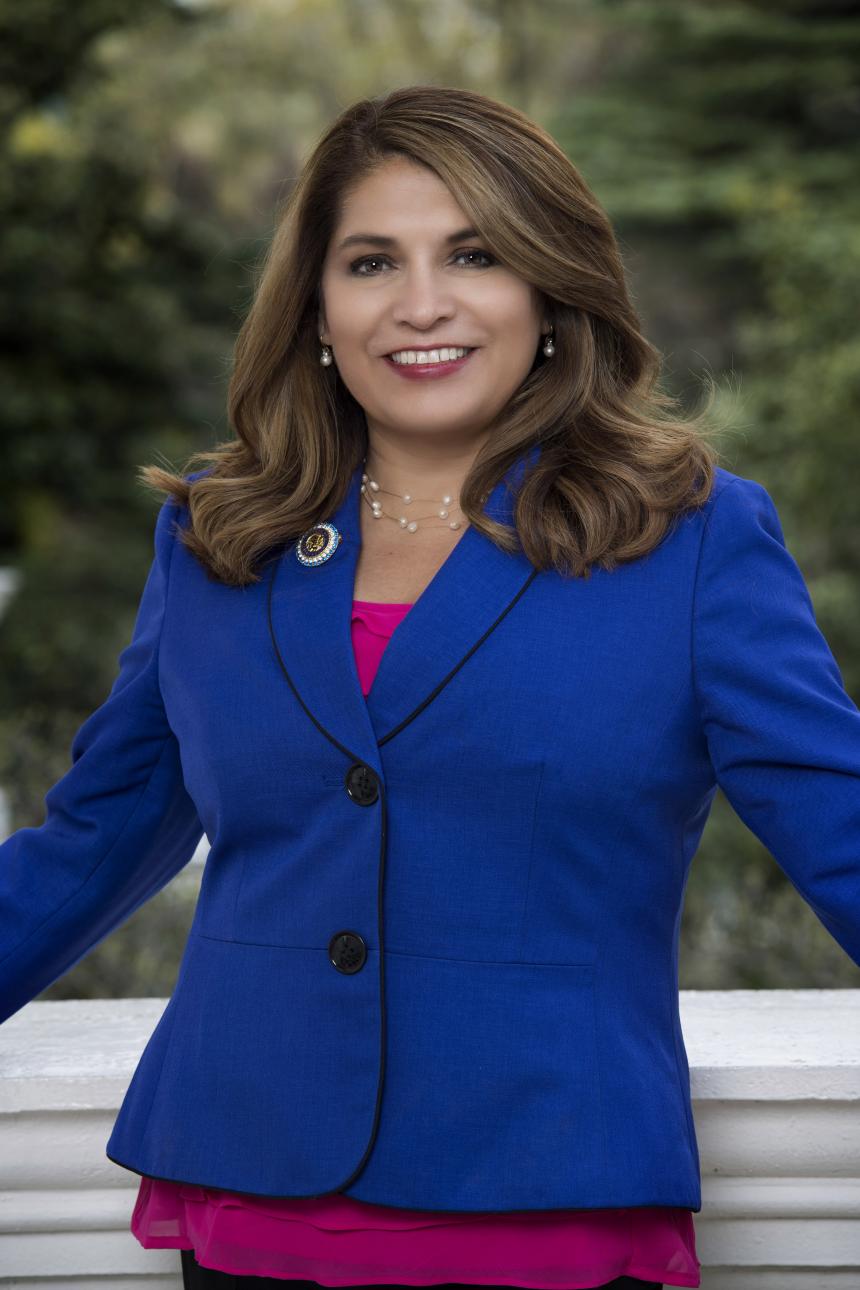
Asm. Sharon Quirk-Silva
Sponsored bills
Existing law establishes a workers' compensation system, administered by the Administrative Director of the Division of Workers' Compensation, to compensate an employee for injuries sustained in the course of his or her employment. Existing law requires workers' compensation proceedings to commence within one year of specified dates and circumstances, including, among others, the date of injury. Existing law provides that whenever any peace officer, as defined, is injured, dies, or is disabled from performing his or her duties as a peace officer by reason of engaging in the apprehension or attempted apprehension of law violators or suspected law violators, or protection or preservation of life or property, or the preservation of the peace anywhere in this state, including the local jurisdiction in which he or she is employed, but is not at the time acting under the immediate direction of his or her employer, the peace officer or his or her dependents, as the case may be, shall be accorded by his or her employer all of the same benefits, including the benefits that the peace officer or his or her dependents would have received had that peace officer been acting under the immediate direction of his or her employer. Existing law provides that any injury, disability, or death incurred under the circumstances described in this section shall be deemed to have arisen out of and been sustained in the course of employment for purposes of workers' compensation and all other benefits. This bill would state that an employer, at its discretion or in accordance with specified policies, is not precluded from accepting liability for compensation for an injury sustained by a peace officer by reason of engaging in the apprehension or attempted apprehension of law violators or suspected law violators, or protection or preservation of life or property, or the preservation of the peace, outside the state of California, but who was not at the time acting under the immediate direction of his or her employer, including any claims for injuries sustained by peace officers during the October 1, 2017, mass shooting in Las Vegas, Nevada, if the employer determines providing compensation serves its public purposes. The bill, for purposes of worker's compensation claims filed for injuries sustained during the October 1, 2017, mass shooting in Las Vegas, Nevada, would deem the date of injury as the operative date of these provisions. The bill would provide that acceptance of liability shall not affect the determination of whether or not the peace officer acted within the scope of his or her employment for any other purpose.
Existing law requires a school district or county superintendent of schools maintaining kindergarten or any of grades 1 to 12, inclusive, to provide a needy pupil, as defined, one nutritionally adequate free or reduced-price meal during each schoolday, and authorizes the school district or county superintendent of schools to use funds available from any federal program, including the federal National School Lunch Program, or state program to comply with that requirement, as provided. Existing federal regulations define "school food authority" as the governing body that is responsible for the administration of one or more schools and that has the legal authority or approval to operate the federal National School Lunch Program at that school or schools. This bill would require, upon appropriation by the Legislature, and contingent upon allocations provided by the federal Consolidated Appropriations Act, the State Department of Education to provide a state matching grant of up to $100,000 to a school food authority participating in the federal National School Lunch Program that applies for and is awarded a federal Equipment Assistance Grant for School Food Authorities from the department in its administration of the National School Lunch Program, as prescribed. The bill would authorize a school food authority to use the federal and state grants for up to 5 individual schoolsites or to combine the federal and state grants for one purpose. The bill would require that the state matching grant be competitively awarded and align with the federal equipment assistance grant requirements, as specified.
Existing law authorizes various state agencies to issue permits and licenses in accordance with specified requirements to conduct business within this state. Existing law establishes the Governor's Office of Business and Economic Development (GO-Biz) to serve the Governor as the lead entity for economic strategy and the marketing of California on issues relating to business development, private sector investment, and economic growth. Existing law requires GO-Biz to establish an electronic online permit assistance center, called the California Government Online to Desktops (CalGold) , through the Internet for use by any business or entity subject to a law or regulation to assist that business or entity with complying with those laws or regulations. Existing law requires CalGold to be reviewed periodically, as specified. This bill would, among other things, provide for a GO-Biz Information Technology Unit within GO-Biz, which would create an online Internet platform, called the California Business Development Portal, that is comprised of 3 elements, including economic and business development-related digital information, the systems and processes used to manage that information, and a public interface capability, as prescribed. The bill would recast provisions related to CalGold by requiring the GO-Biz Information Technology Unit to establish an electronic online government permit and license assistance center and by renaming the center the California Business License Center. The bill would establish, beginning in the 2018–19 fiscal year, 2 state civil service positions for the purposes of supporting the ongoing enhancement of the functionality of the California Business Development Portal, including the California Business License Center, the California Business Navigator, the California Business Mapping Tool, digital resources, and other online products that improve the state government's digital ecosystem.
Existing law establishes the Spaceport Office in the Department of Transportation to seek and obtain federal funding for the commercialization of private space activities in the state. Existing law, for the January 1, 2014, lien date to, and including, the January 1, 2024, lien date, exempts from taxation qualified property, as defined, for use in space flight. Existing law authorizes airport districts to provide and maintain spaceports and landing places for space reentry traffic. Existing law establishes the Governor's Office of Business and Economic Development (office) , which is administered by a director appointed by the Governor. The office serves the Governor as the lead entity for economic strategy and the marketing of California on issues relating to business development, private sector investment, and economic growth. This bill would establish the California Aerospace and Aviation Commission consisting of 17 members, as specified, to serve as a central point of contact for businesses engaged in the aerospace and aviation industries and to support the health and competitiveness of these industries in California. The bill would require the commission to make recommendations on legislative and administrative action that may be necessary or helpful to maintain or improve the state's aerospace and aviation industries and would require the commission to report and provide recommendations to the Governor and the Legislature, as specified. The bill would require the commission to have offices contained within existing operations of the office, as specified, and would require the operations of the commission to be supported through nonstate moneys. The bill would also require that funds received by the commission be deposited in the Aerospace and Aviation Account, which the bill would create in the California Economic Development Fund, to be used by the commission upon appropriation by the Legislature, and would preclude any actions by the office relating to the commission until a determination is made and reported regarding the sufficiency of funds received. The bill would enact other related provisions.
Existing law requires the adopted course of study for grades 1 to 12, inclusive, to include, among other subjects, the social sciences. Existing law encourages instruction in the area of social sciences for grades 7 to 12, inclusive, that may include instruction on the Vietnam War, including a component drawn from personal testimony of Southeast Asians who were involved in the Vietnam War and men and women who contributed to the war effort on the homefront, as specified. Existing law requires the State Board of Education, with the assistance of the Superintendent of Public Instruction, to establish a list of textbooks and other instructional materials that highlight the contributions of minorities in the development of California and the United States. Existing law establishes the Instructional Quality Commission and requires the commission to, among other things, recommend curriculum frameworks to the state board. This bill would require the commission to develop and submit to the state board, on or before December 31, 2022, and the state board to adopt, modify, or revise, on or before March 31, 2023, a model curriculum relative to the Vietnamese American refugee experience and a model curriculum relative to the Cambodian genocide, as specified, for use in elementary schools, middle schools, and high schools. The bill would encourage a school district, charter school, or county office of education that maintains kindergarten or any of grades 1 to 12, inclusive, that does not otherwise offer a standards-based curriculum relative to the Vietnamese American refugee experience, Vietnamese boat people, and the Republic of Vietnam Armed Forces, or that does not otherwise offer a standards-based curriculum relative to the Cambodian genocide, to offer a course of study based on the respective model curriculum. The bill would require the model curricula to be developed with participation from specified entities and individuals. The bill would provide that implementation of its provisions is subject to the receipt of grants, donations, or other financial support from private or public sources for its purposes, including, but not limited to, an appropriation in the annual Budget Act or another statute. The bill would require the commission to develop a model curriculum in Hmong history and cultural studies, as provided. The bill would require the commission, on or before December 31, 2022, to submit the model curriculum to the state board for adoption, and would require the state board to adopt, modify, or reject the model curriculum on or before March 31, 2023. The bill would require the Superintendent, following the adoption of the model curriculum, to post the model curriculum on the State Department of Education's Internet Web site for use on a voluntary basis by educators. The bill, beginning in the school year following the adoption of the model curriculum, would encourage local educational agencies, as defined, to use the model curriculum to provide instruction in kindergarten and grades 1 to 12, inclusive. The bill would provide that implementation of its provisions is subject to the receipt of grants, donations, or other financial support from private or public sources for its purposes, including, but not limited to, an appropriation in the annual Budget Act or another statute.
(1) Existing law, the California Industrial Development Financing Act, authorizes cities, counties, cities and counties, and redevelopment agencies to establish industrial development authorities that are authorized to issue industrial development bonds, the proceeds of which may be used to fund capital projects of private enterprise under terms and conditions specified in the act. The act authorizes an authority to issue tax-exempt bonds, and defines "tax-exempt" for these purposes to mean that the interest on the bonds is excluded from gross income of the holders thereof for federal income tax purposes. The act establishes the California Industrial Development Financing Advisory Commission, and requires the commission to approve the issuance of industrial development bonds pursuant to these provisions. The act also authorizes the commission to carry out other specified powers related to the issuance of industrial development bonds, including authorizing the commission to act as a bond pooling agent and requires fees to be charged to cover the costs of the commission in carrying out these provisions. Existing law requires these fees to be deposited in the Industrial Development Fund, which is available, upon appropriation, to the commission for expenses. This bill would abolish the California Industrial Development Financing Advisory Commission, and would make conforming changes to that effect. The bill would also provide that "tax-exempt" for purposes of the act includes that the interest on the bonds is otherwise entitled to any federal tax advantage. The bill would transfer any moneys, including interest earned, in the Industrial Development Fund to the California Debt Limit Allocation Committee Fund, established in existing law, and appropriate those moneys to the California Pollution Control Financing Authority to reimburse this authority for its administrative costs related to the abolishment of the California Industrial Development Financing Advisory Commission, as specified, and also to the California Debt Limit Allocation Committee. (2) Existing law establishes the Capital Access Loan Program to assist small businesses in financing the costs of complying with environmental mandates and the remediation of contamination on their properties. Existing law establishes the California Americans with Disabilities Act Small Business Capital Access Loan Program (ADA program) , within the Capital Access Loan Program, to assist small businesses in financing the eligible costs of projects that alter or retrofit existing small business facilities to comply with the federal Americans with Disabilities Act. Existing law defines a small business for purposes of the ADA program to mean a business that meets certain criteria, including that it be a small business concern, as defined under specified federal law, and additionally that it has 15 or fewer full-time employees, has less than $5,000,000 in total gross annual income from all sources, and does not provide overnight accommodations. Existing law establishes the California Americans with Disabilities Act Small Business Capital Access Loan Program Fund as a continuously appropriated fund, and requires the authority to use the fund for specified purposes related to the ADA program. This bill would modify the definition of a small business for purposes of the ADA program to instead mean a business that is independently owned and operated and not dominant in its field, and that has 30 or fewer full-time employees or that has less than $5,000,000 in total gross annual income from all sources. The bill would thereby expand the types of businesses that qualify for funding under the ADA program. By expanding the authorized uses of moneys in a continuously appropriated fund, the bill would make an appropriation. (3) Existing law establishes within the Capital Access Loan Program the California Seismic Safety Capital Access Loan Program to assist qualified residential property owners and qualified small business owners in seismically retrofitting qualified buildings by covering losses on qualified loans for those purposes. Existing law defines the term "qualified building" for these purposes to mean a building that is certified by the appropriate local building code enforcement authority as hazardous and in danger of collapse during an earthquake. Existing law requires a "qualified small business" and "qualified residential property owner" to own and occupy the qualified building, and prohibits a qualified loan under the program from being used to finance passive real estate ownership. Existing law requires the California Pollution Control Financing Authority to administer the program, including regulations and funds received for the program, as specified. Existing law establishes the California Seismic Safety Capital Access Loan Program Fund, which is continuously appropriated to the authority to carry out the purposes of the California Seismic Safety Capital Access Loan Program. This bill would modify the term "qualified building" to mean a residential or commercial building identified by the local building code official as a building in need of seismic retrofitting and is either a building of a type that is potentially vulnerable in the event of a catastrophic earthquake or a building constructed before 1981. This bill would no longer require a "qualified small business" or a "qualified residential property owner" to occupy a qualified building in order to be eligible under the program, and would authorize a qualified loan under the program to be used to finance passive real estate ownership. By expanding the purposes of a continuously appropriated fund, this bill would make an appropriation. (4) The California Alternative Energy and Advanced Transportation Financing Authority Act authorizes, until January 1, 2021, the authority to provide financial assistance in the form of a sales and use tax exclusion for projects, including those that promote California-based manufacturing, California-based jobs, the reduction of greenhouse gases, or the reduction in air and water pollution or energy consumption. The act prohibits the sales and use tax exclusions from exceeding $100,000,000 for each calendar year. The act authorizes the authority, until July 1, 2021, to grant financial assistance in the form of a sales and use tax exclusion for projects that promote the use of advanced manufacturing. This bill would expand the sales and use tax exemption to include the lease or transfer of tangible personal property, constituting any project, to any contractor for use in the performance of a construction contract that will use the property as an integral part of the approved project. (5) This bill would declare that it is to take effect immediately as an urgency statute.
Existing law requires the Department of Motor Vehicles to issue a driver's license to an applicant when the department determines that the applicant is lawfully entitled to a license. Existing law allows an in-person applicant for a driver's license or identification card to request the word "VETERAN" be printed on the face of the driver's license or identification card, subject to certain requirements, including, among others, verification of veteran status, as specified, and payment of a $5 fee, which the department is authorized to increase by regulation, in an amount not to exceed $15, as specified. Commencing July 1, 2019, existing law prohibits a fee from being charged for that request if made by (1) a person who has been determined to have a current income level that meets the eligibility requirements for specified assistance programs, or (2) a person who can verify his or her status as a homeless person, in accordance with specified provisions. This bill would make those fee provisions inoperative on July 1, 2019, and repeal them on January 1, 2020, as specified, thereby authorizing an applicant whose veteran status has been verified, as prescribed, to make a veteran designation request, and requiring the department to make that designation on the applicant's driver's license or identification card, without additional charge. The bill also would make conforming changes. This bill would incorporate additional changes to Section 12811 of the Vehicle Code proposed by SB 987 to be operative only if this bill and SB 987 are enacted and this bill is enacted last.
(1) Existing law creates the Joint Legislative Committee on Climate Change Policies and requires the committee to ascertain facts and make recommendations to the Legislature and to committees of the Legislature concerning the state's programs, policies, and investments related to climate change, as specified. This bill would provide that the joint committee may recommend that the State Air Resources Board provide education and support to local governments regarding specific components of local government climate action plans, such as ensuring the use of E85 in flexible fuel vehicles, expanding infrastructure for zero-emission vehicles, and enabling active transportation. (2) Existing law requires the State Energy Resources Conservation and Development Commission, in partnership with the State Air Resources Board, and in consultation with specified state agencies, to develop and adopt a state plan to increase the use of alternative fuels, as defined. This bill would require the state board, no later than April 1, 2019, to develop a simple, factual summary on the distribution of E85 and flexible fuel vehicle registrations, as specified; to provide that summary to the United States Environmental Protection Agency; and to post that summary on the state board's Internet Web site. The bill would require the state board to develop policy recommendations to maximize the use of E85 in flexible fuel vehicles that operate in the state and to consider adopting those policy recommendations at a board meeting no later than October 1, 2019.
Existing law establishes the Student Aid Commission as the state agency primarily responsible for the administration and coordination of student financial aid programs at California postsecondary educational institutions. Existing federal law establishes the Chafee Educational and Training Vouchers program for the purposes of providing financial aid to current and former foster youth who are attending qualifying postsecondary educational institutions. Existing law provides that the Student Aid Commission, through an interagency agreement with the State Department of Social Services, currently operates the program in California, and, commencing with the 2017–18 award year, requires the commission to make a new Chafee grant award to a student only if the student attends specified qualifying institutions. Commencing with the 2018–19 award year, and contingent upon an appropriation of sufficient funds in the annual Budget Act for this purpose, existing law adds the condition that the student not be 26 years of age or older by July 1 of the award year in order to receive a Chafee grant award. Existing law requires the commission to annually report to the Legislature specified information regarding Chafee grant awards for the preceding award year, including the number of students that apply to receive the Chafee grant award, and the number of, and age of, students paid through the program. Commencing with the 2018–19 award year, this bill would authorize the commission and the State Department of Social Services to expend up to $80,000, of any moneys appropriated by the Legislature to expand the Chafee Educational and Training Vouchers Program age eligibility of former foster youth up to 26 years of age, for specified outreach purposes to newly eligible former foster youth who are at least 23 years of age, but are not yet 26 years of age for the 2018–19 to 2020–21, inclusive, fiscal years. By authorizing moneys previously appropriated to be expended for a different purpose, the bill would make an appropriation. The bill would require the commission to include as part of its annual report to the Legislature the amount spent on outreach and education efforts and the types of activities that were funded, as specified. This bill would declare that it is to take effect immediately as an urgency statute.