

Existing law provides that a pupil enrolled in a public school is prohibited from being required to pay a pupil fee, as defined, for participation in an educational activity, as defined. The Child Hunger Prevention and Fair Treatment Act of 2017 prohibits certain local educational agencies, as defined, that provide school meals through the federal National School Lunch Program or the federal School Breakfast Program from taking any action directed at a pupil to collect unpaid school meal fees. The act authorizes a local educational agency to attempt to collect unpaid school meal fees from a parent or guardian, but prohibits the local educational agency from using a debt collector, as defined. This bill would enact the Public School Fair Debt Collection Act. The act would provide that a pupil or former pupil, unless emancipated at the time the debt is incurred, can never owe or be billed for a debt owed to a public school or school district, county office of education, charter school, or state special school. The act would prohibit those educational entities from taking negative actions against a pupil or former pupil because of a debt owed to the educational entity, including, among other things, denying or withholding grades or transcripts, or denying or withholding a diploma. The act would require those educational entities to provide an itemized invoice, including specified information, for any amount owed by the parent or guardian on behalf of a pupil or former pupil before pursuing payment of the debt and to provide a receipt to a parent or guardian for each payment made to the educational entity for any amount owed by the parent or guardian on behalf of the pupil or former pupil. The act would prohibit a debt collector, as defined, from reporting debt owed by a parent or guardian to a credit reporting agency if the debt collector is contracted with one of those educational entities for the purpose of pursuing repayment of any debt owed by a parent or guardian of a pupil or former pupil, and the bill would prohibit those educational entities from selling debt owed by a parent or guardian of a pupil or former pupil. The bill would provide that any waiver by a parent, guardian, pupil, or former pupil of the these provisions is contrary to public policy and is unenforceable and void. The bill would provide that these provisions do not apply to debt owed as a result of vandalism or to cover the replacement cost of public school or school district books, supplies, or property loaned to a pupil that the pupil fails to return or that are willfully cut, defaced, or otherwise injured, except if the pupil is a current or former homeless child or youth, as defined, or a current or former foster youth, as defined, and would authorize a public school or school district to offer a pupil or former pupil, with the permission of the parent or guardian of the pupil or former pupil, alternative, nonmonetary forms of compensation to settle such debt, as provided. By imposing additional duties on school districts, charter schools, and county offices of education, this bill would impose a state-mandated local program. The California Constitution requires the state to reimburse local agencies and school districts for certain costs mandated by the state. Statutory provisions establish procedures for making that reimbursement. This bill would provide that, if the Commission on State Mandates determines that the bill contains costs mandated by the state, reimbursement for those costs shall be made pursuant to the statutory provisions noted above.
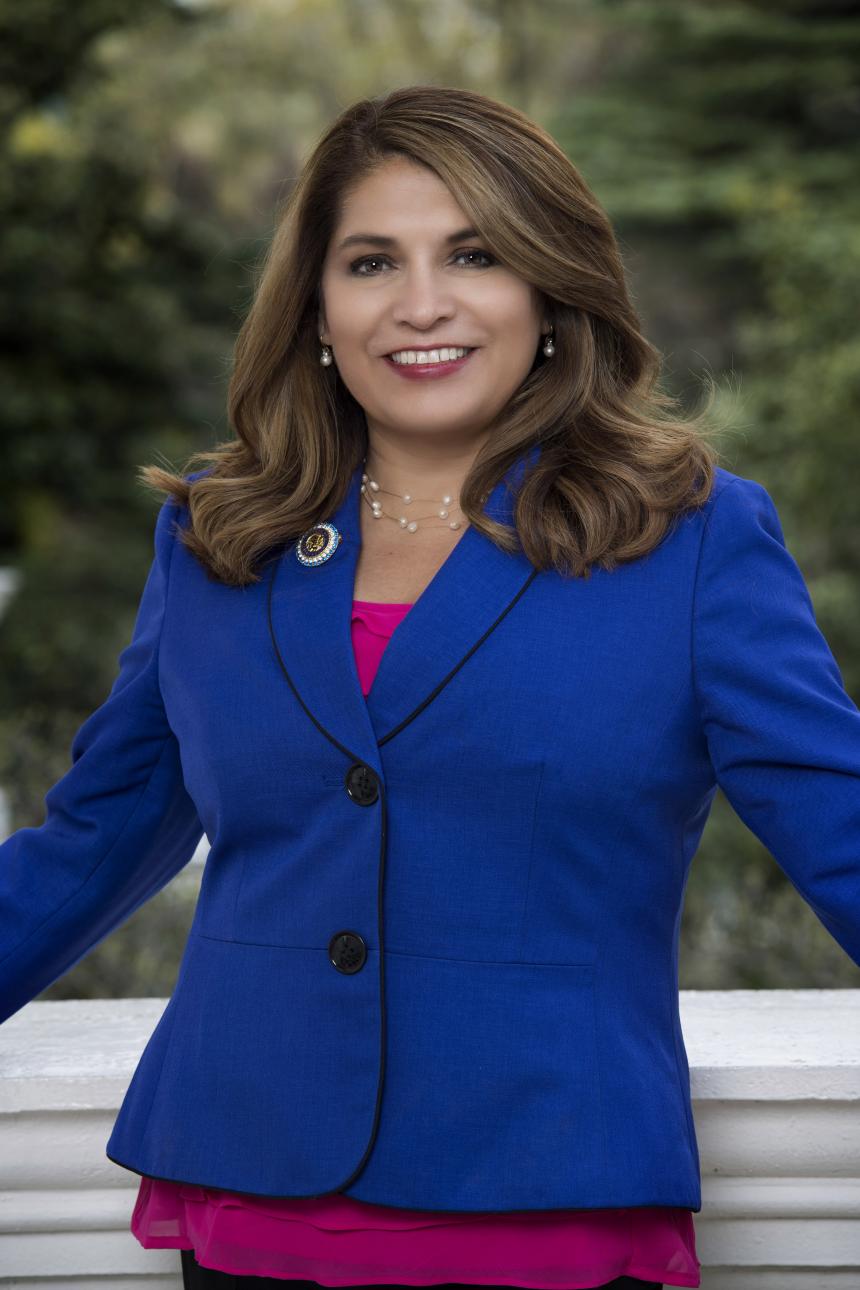
Asm. Sharon Quirk-Silva
Sponsored bills
(1) Existing law governing public contracting authorizes regional transportation agencies, as defined, to use the Construction Manager/General Contractor (CM/GC) project delivery method, as specified, to design and construct certain projects if there is an evaluation of the traditional design-bid-build method of construction and of the CM/GC method and the board of the regional transportation agency adopts the CM/GC method in a public meeting. Existing law defines "project" for these purposes to mean the construction of an expressway that is not on the state highway system, the construction of specified bridges that are not on the state highway system, specified projects in the County of Riverside, and the construction, alteration, repair, rehabilitation, or improvement of the Golden Gate Bridge. Existing law requires that specified information provided to a regional transportation agency under the CM/GC method be verified under oath. This bill would include in the definition of "project" a Metrolink commuter rail project. By expanding the scope of the existing crime of perjury, the bill would impose a state-mandated local program. This bill would make legislative findings and declarations as to the necessity of a special statute for Metrolink commuter rail projects. (2) Existing law exempts from civil liability any person who, in good faith and not for compensation, renders emergency care or treatment by the use of an automated external defibrillator (AED) at the scene of an emergency, except in the case of personal injury or wrongful death that results from the gross negligence or willful or wanton misconduct of the person who renders emergency care or treatment. Existing law also exempts from civil liability a person or entity that acquires an AED for emergency use and a health care professional who is involved with the selection, placement, or installation of the AED, as specified. This bill would require a public entity that operates, or contracts for the operation of, a commuter rail system to ensure that each train has an AED as part of its safety equipment subject to specified requirements, including that the AED be installed by July 1, 2020, except as specified, and to transmit confirmation of its compliance with those requirements in writing to the Public Utilities Commission. The bill would exempt an affected public entity that acquires an AED for emergency care from liability for any civil damages resulting from any acts or omissions in the rendering of the emergency care by use of the AED if the public entity has complied with certain requirements. (3) By imposing new duties on local public officials, the bill would create a state-mandated local program. (4) The California Constitution requires the state to reimburse local agencies and school districts for certain costs mandated by the state. Statutory provisions establish procedures for making that reimbursement. This bill would provide that with regard to certain mandates no reimbursement is required by this act for a specified reason. With regard to any other mandates, this bill would provide that, if the Commission on State Mandates determines that the bill contains costs so mandated by the state, reimbursement for those costs shall be made pursuant to the statutory provisions noted above.
Existing law establishes the State Department of Public Health and sets forth its powers and duties, including, but not limited to, the duties of the State Registrar relating to the uniform administration of provisions relating to vital records and health statistics. Existing law requires the State Registrar, local registrar, or county recorder to, upon request and payment of the required fee, supply to an applicant a certified copy of the record of a birth, fetal death, death, marriage, or marriage dissolution registered with the official. This bill would require each local registrar or county recorder to issue, without a fee, a certified record of live birth to any person who demonstrates that he or she is a youth who has been placed in foster care, as defined. The bill would authorize the youth, or any person who is lawfully entitled to request that record on behalf of a youth placed in foster care, to make that request. The bill would require a county welfare agency that has relevant knowledge regarding the youth to verify that the youth has been placed in foster care for purposes of these provisions. The bill would also require the department to develop an affidavit attesting to an applicant's status as a youth placed in foster care and the completed affidavit, as described, would be deemed sufficient verification for these purposes. The bill would prohibit charging a person applying for a certified record of live birth a fee for verification of his or her eligibility. These provisions would become operative on July 1, 2019. By imposing a higher level of service on county employees, the bill would impose a state-mandated local program. The California Constitution requires the state to reimburse local agencies and school districts for certain costs mandated by the state. Statutory provisions establish procedures for making that reimbursement. This bill would provide that no reimbursement is required by this act for a specified reason.
Existing law establishes the California Community Colleges, under the administration of the Board of Governors of the California Community Colleges, as one of the segments of public postsecondary education in this state. Existing law establishes community college districts throughout the state, and authorizes these districts to provide instruction at the campuses they operate. Existing law requires the Chancellor of the California Community Colleges, using common course descriptors and pertinent recommendations of the American Council on Education, to determine, by July 1, 2015, for which courses credit should be awarded for prior military experience. This bill would instead require the chancellor to establish, by March 31, 2019, an initiative to expand the use of course credit at the California Community Colleges for students with prior learning. The bill would require the chancellor to submit, by January 1, 2020, a report on the initiative to the Legislature.
This measure would urge the Congress and the President of the United States to support the retention of, and investment in, the Amtrak National Network of passenger trains, specifically the California Zephyr, the Coast Starlight, the Southwest Chief, and the Sunset Limited, as vital components of the state's rail program and would also urge Congress to reject President Trump's proposed Fiscal Year 2019 federal budget cuts to Amtrak and restore full funding for the Amtrak National Network through the appropriations process.
Existing law authorizes 2 or more public agencies, by agreement, to form a joint powers authority to exercise any power common to the contracting parties, as specified. Existing law authorizes the agreement to set forth the manner by which the joint powers authority will be governed. This bill would authorize the creation of the Orange County Housing Finance Trust, a joint powers authority, for the purposes of funding housing specifically assisting the homeless population and persons and families of extremely low, very low, and low income within the County of Orange, as specified. This bill would make legislative findings and declarations as to the necessity of a special statute for the County of Orange.
Existing law requires the Governor's Office of Business and Economic Development (GO-Biz) to develop and implement an International Trade and Investment Program that serves specified purposes. Existing law authorizes the Director of GO-Biz to establish and terminate international trade and investment offices outside of the United States if certain conditions are met. Existing law also authorizes GO-Biz to designate a nonprofit entity to operate international trade and investment offices outside of the United States. This bill would require the Director of GO-Biz to establish a process for accepting letters of interest from public and private entities that are interested in partnering with the state to operate an international trade and investment office in a foreign country. The bill would require the office to review the letters of interest and determine whether they are complete within 30 days of submittal. The bill would also require the director to make a determination, within 90 days of receipt of a complete letter of interest, as to whether to request a full proposal, as specified, for the operation of the office. Existing law authorizes GO-Biz to accept nonstate moneys for the purposes of operating an international trade and investment office. Existing law requires private sector moneys for these purposes to be deposited in the Economic Development and Trade Promotion Account, which is continuously appropriated to the Director of GO-Biz for these purposes. This bill would additionally authorize the moneys in the account to be used for the support of the operation of an international trade and investment office. By expanding the purposes of a continuously appropriated fund, this bill would make an appropriation.
This measure would urge the federal government and the United States Section of the International Boundary and Water Commission to take immediate action to adequately address cross-border pollution in the Tijuana River Valley.
This measure would urge the Congress and the President of the United States to rename any federal buildings, parks, roadways, highway markers, landmarks, or other federally owned property, such as United States military bases, that bear the names of elected or military leaders of the Confederate States of America and would urge the Congress that statues or busts of elected or military leaders of the Confederate States of America in the United States Capitol be removed and placed in museums where they can be viewed in proper historic context.
This measure would recognize October 12, 2018, as Arirang Day and would celebrate the culture and contributions of Korean Americans to California.