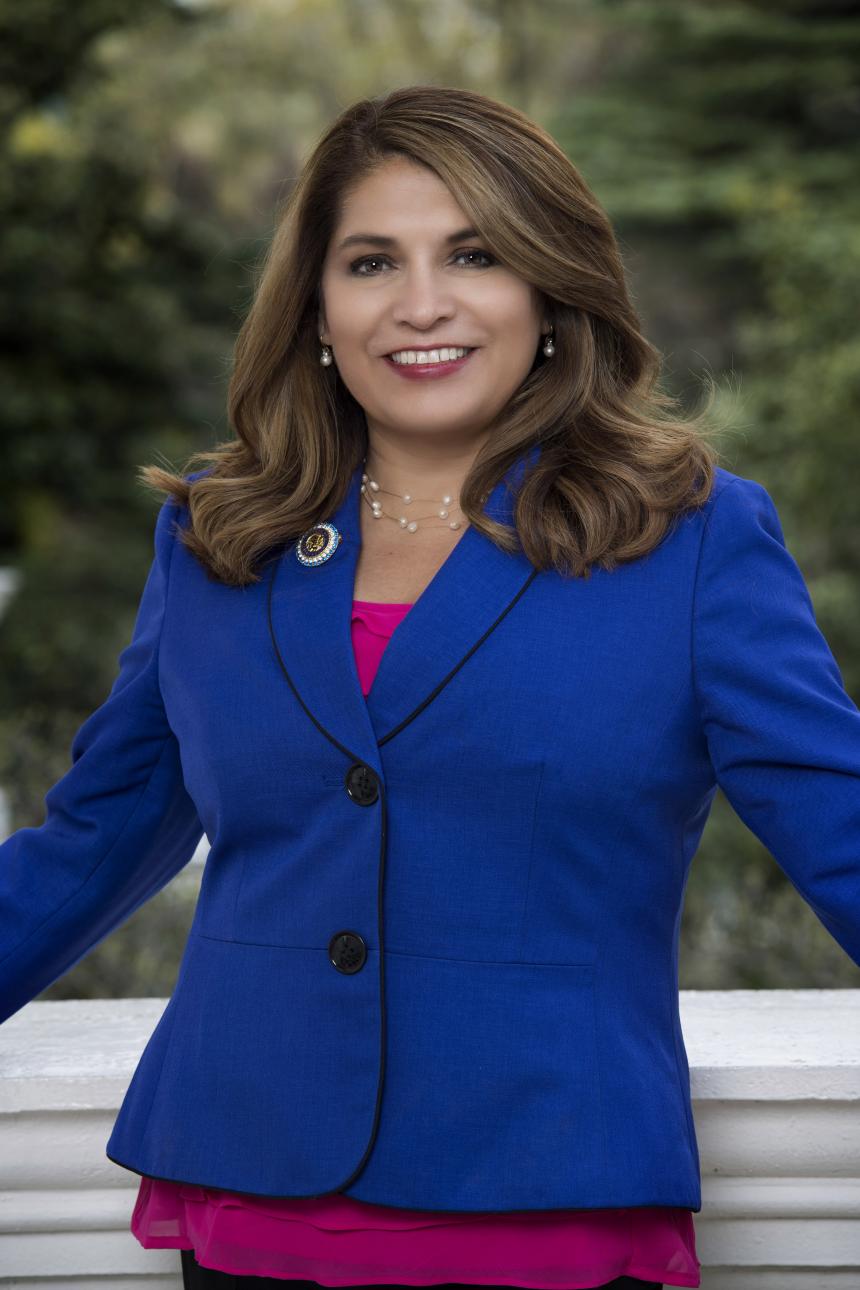
Photo of Sharon Quirk-Silva
D California Assembly · District 67

Asm. Sharon Quirk-Silva

Compare
Total votes
25,250
all sessions
Attendance
94%
1,303 missed
Near the chamber average
With party
98%
of cast votes
Higher than 76% of chamber peers
Bipartisan score
1%
crosses aisle rarely
Lower than 81% of chamber peers
Sponsored
2,398
bills & resolutions
Near the chamber average
Committees
15
assignments
2,398 bills and resolutions

Sponsored bills

Total
2,398
Primary
286
Co-sponsor
2,112
This page
2,398
matching current filters
Co-sponsor AB 1746
Signed into law · California Assembly · Co-sponsor
Criminal procedure: jurisdiction of public offenses.

Existing law provides that if more than one violation of certain specified offenses occurs in more than one jurisdictional territory, and the defendant and the victim are the same for all of the offenses, jurisdiction for any of those offenses and any other properly joinable offenses may be in any jurisdiction where at least one of the offenses occurred. This bill would add the offenses of sexual battery and unlawful sexual intercourse to the list of specified offenses to which that jurisdictional preference applies. This bill would incorporate additional changes to Section 784.7 of the Penal Code proposed by SB 1494 to be operative as specified.

Signed into law Sep 30, 2018 1 co-sponsor
Co-sponsor SB 215
Signed into law · California Senate · Co-sponsor
Diversion: mental disorders.

Existing law authorizes a court to grant pretrial diversion, for a period no longer than 2 years, to a defendant suffering from a mental disorder, on an accusatory pleading alleging the commission of a misdemeanor or felony offense, in order to allow the defendant to undergo mental health treatment. Existing law conditions eligibility on, among other criteria, a court finding that the defendant's mental disorder played a significant role in the commission of the charged offense. Existing law requires, if the defendant has performed satisfactorily in diversion, that the court dismiss the defendant's criminal charges, with a record filed with the Department of Justice indicating the disposition of the case diverted, that the arrest is deemed never to have occurred, and requires the court to order access to the record of the arrest restricted, except as specified. This bill would make defendants ineligible for the diversion program for certain offenses, including murder, voluntary manslaughter, and rape. The bill would authorize a court to require the defendant to make a prima facie showing that the defendant will meet the minimum requirements of eligibility for diversion and that the defendant and the offense are suitable for diversion, as specified. The bill would also require the court, upon request, to conduct a hearing to determine whether restitution is owed to any victim as a result of the diverted offense and, if owed, to order its payment during the period of diversion. The bill would provide that a defendant's inability to pay restitution due to indigence or mental disorder would not be grounds for denial of diversion or a finding that the defendant has failed to comply with the terms of diversion. The bill would also make technical changes.

Signed into law Sep 30, 2018 1 co-sponsor
Co-sponsor AB 237
Signed into law · California Assembly · Co-sponsor
Pilot Program for Increased Access to Responsible Small Dollar Loans.

(1) Existing law, the California Financing Law, generally provides for the licensure and regulation of finance lenders, brokers, and, beginning on January 1, 2019, program administrators, by the Commissioner of Business Oversight. The CFL makes a willful violation of specified provisions a crime. The CFL, until January 1, 2023, establishes the Pilot Program for Increased Access to Responsible Small Dollar Loans (pilot program) , which requires licensees and other entities that wish to participate in the pilot program to file an application and pay a specified fee to the commissioner to participate in the pilot program. The pilot program authorizes a licensee approved by the commissioner to participate in the pilot program to impose specified alternative interest rates and charges, including an administrative fee and delinquency fees, on unsecured loans of at least $300 and less than $2,500, subject to certain requirements. This bill would increase the upper limit on the amount of a permissible loan under the pilot program from $2,500 to $7,500 and make corresponding changes. (2) Under the pilot program, a licensee is prohibited from making a loan if that licensee determines, through its underwriting, that the borrower's total monthly debt service payments exceed 50% of the borrower's monthly gross income. This bill would instead prohibit a licensee from making a loan under these circumstances if the borrower's total monthly debt service payments exceed 50% of the borrower's gross monthly income for a loan of no more than $2,500, or exceed 36% of the borrower's gross monthly income for a loan in excess of $2,500. (3) The pilot program establishes that a loan with a principal balance, upon origination, of at least $1,500 is required to have a term of not less than 180 days. As an alternative to other authorized charges, a licensee approved by the commissioner to participate in the pilot program may contract for and receive charges at an annual simple interest rate not exceeding specified amounts. This bill would additionally require a loan under the pilot program that has a principal balance exceeding $2,500 to have a minimum term of one year and a maximum term of 5 years. The bill would also require licensees to reduce the interest rates on each subsequent loan to the same borrower by a minimum of one percentage point and subject to additional reductions, if specified conditions are satisfied. (4) Under the pilot program, licensees are required to develop and implement policies and procedures designed to respond to questions raised by applicants and borrowers regarding their loans, including those involving finders. Existing law describes a finder as an entity that brings a licensee and a prospective borrower together for the purpose of negotiating a loan contract. This bill would also require licensees to perform reasonable background checks on any finders associated with a licensee's participation in the pilot program. (5) The pilot program authorizes a licensee who is approved to participate in the program to use the services of one or more finders. Existing law defines a "finder" for these purposes as an entity that, at the finder's physical location for business, brings a licensee and a prospective borrower together for the purpose of negotiating a loan contract. This bill would authorize the commissioner to charge a licensee participating in the program an additional fee to offset the commissioner's costs to oversee and examine the activities of that licensee's finder or finders. (6) Existing law requires the Commissioner of Business Oversight to examine each licensee that is accepted into the program at least once every 24 months. This bill would require the commissioner also to examine each finder whose services were used by the licensee at least once every 24 months. (7) Existing law requires the Commissioner of Business Oversight to post reports containing specified information on his or her Internet Web site that summarize utilization of the Pilot Program for Increased Access to Responsible Small Dollar Loans. If more than one licensee is approved to participate in the program, existing law requires that information in the report to be stated in aggregate to avoid identifying data by specific licensee. This bill would require that these reports also contain specified information for each finder whose services were used by a licensee in connection with the loans or loan applications, along with the finder's identity. By increasing the scope of the program, the bill would expand the definition of a crime, thereby imposing a state-mandated local program. (8) The California Constitution requires the state to reimburse local agencies and school districts for certain costs mandated by the state. Statutory provisions establish procedures for making that reimbursement. This bill would provide that no reimbursement is required by this act for a specified reason.


Signed into law Sep 30, 2018 1 co-sponsor
Co-sponsor AB 1511
Vetoed · California Assembly · Co-sponsor
Sentencing enhancements: property loss.

State law, repealed as of January 1, 2018, required a court to impose an additional term of imprisonment, as specified, when any person takes, damages, or destroys any property in the commission or attempted commission of a felony, as specified. This bill would authorize the court, if a person takes, damages, or destroys property in the commission or attempted commission of a felony, with the intent to cause that taking, damage, or destruction, to impose an additional term of imprisonment of up to 2 years if the property loss exceeds $235,000, an additional term of imprisonment of up to 3 years if the property loss exceeds $1,500,000, or an additional term of imprisonment of up to 4 years if the property loss exceeds $3,700,000. The bill would require the Legislature to review those threshold amounts every 5 years and adjust them for inflation. Because this bill would increase the penalty for existing felonies, it would impose a state-mandated local program. The California Constitution requires the state to reimburse local agencies and school districts for certain costs mandated by the state. Statutory provisions establish procedures for making that reimbursement. This bill would provide that no reimbursement is required by this act for a specified reason. This bill would declare that it is to take effect immediately as an urgency statute.
Vetoed Sep 30, 2018 1 co-sponsor
Co-sponsor AB 2596
Vetoed · California Assembly · Co-sponsor
California Economic Development Strategic Action Plan.

The Economic Revitalization Act establishes the Governor's Office of Business and Economic Development, also known as GO-Biz, to serve as the Governor's lead entity for economic strategy and the marketing of California on issues relating to business development, private sector investment, and economic growth. The office, among others, makes recommendations to the Governor and the Legislature regarding policies, programs, and actions to advance statewide economic goals. This bill would require the office to lead the preparation of a California Economic Development Strategic Action Plan, as specified, to commission a study to identify and evaluate economic development issues, and to create a comprehensive agenda and framework for inclusive statewide and regional economic growth. The bill would authorize the office to accept nonstate moneys for the purposes of commissioning the study and developing the action plan. The bill would require the deposit of private sector donations into the Economic Action Plan Account, which the bill would establish in the California Economic Development Fund.

Vetoed Sep 28, 2018 1 co-sponsor
Co-sponsor AB 1882
Vetoed · California Assembly · Co-sponsor
Sex crimes: communication with a minor.

Existing law, as added by Proposition 83 of the November 7, 2006, statewide general election, makes it a crime for a person to contact or communicate with a minor, or attempt to contact or communicate with a minor, who knows or reasonably should know that the person is a minor, with intent to commit a specified offense involving the minor, including, among other offenses, kidnapping and rape. This bill would additionally make it a crime to contact or communicate with a minor, or attempt to contact or communicate with a minor, as specified, with the intent to commit human trafficking of the minor. By expanding the definition of a crime, the bill would impose a state-mandated local program. The California Constitution requires the state to reimburse local agencies and school districts for certain costs mandated by the state. Statutory provisions establish procedures for making that reimbursement. This bill would provide that no reimbursement is required by this act for a specified reason.

Vetoed Sep 27, 2018 1 co-sponsor
Co-sponsor AB 1994
Signed into law · California Assembly · Co-sponsor
Sex offenders: county or local custodial facilities.

Existing law requires specified sex offenders to register with local law enforcement within five working days of coming into, or changing his or her residence within, a city, county, or city and county. If the person's new address is in a Department of Corrections and Rehabilitation facility or state mental institution, existing law requires an official of the institution to forward the registrant's change of address information to the Department of Justice within 90 days. This bill would instead require the change of address to be forwarded within 15 working days of both receipt and release of the person. The bill would also require an official with a county or local custodial facility that receives or releases a sex offender registrant to forward his or her change of address information to the Department of Justice. By imposing duties on local officials, this bill would impose a state-mandated local program. The California Constitution requires the state to reimburse local agencies and school districts for certain costs mandated by the state. Statutory provisions establish procedures for making that reimbursement. This bill would provide that, if the Commission on State Mandates determines that the bill contains costs mandated by the state, reimbursement for those costs shall be made pursuant to the statutory provisions noted above.

Signed into law Sep 27, 2018 1 co-sponsor
Co-sponsor AB 2215
Signed into law · California Assembly · Co-sponsor
Veterinarians: cannabis: animals.

The California Uniform Controlled Substances Act classifies controlled substances into 5 designated schedules, and places cannabis and cannabis products under Schedule I. The act prohibits prescribing, administering, dispensing, or furnishing a controlled substance to or for any person or animal, unless otherwise specified. The Veterinary Medicine Practice Act provides for the licensure and regulation of veterinarians and the practice of veterinary medicine by the Veterinary Medical Board, which is within the Department of Consumer Affairs. The act authorizes the board to revoke or suspend the license of a person to practice veterinary medicine, or to assess a fine, for specified causes, including violating a statute related to controlled substances. The act also makes a violation of its provisions a misdemeanor. This bill would authorize the board to revoke or suspend a veterinarian license, or to assess a fine, for accepting, soliciting, or offering any form of remuneration from or to a Medicinal and Adult-Use Cannabis Regulation and Safety Act (MAUCRSA) licensee if the veterinarian or his or her immediate family has a financial interest, as defined, with the MAUCRSA licensee. The bill would authorize the board to revoke or suspend a veterinarian license, or to assess a fine, for discussing medicinal cannabis with a client while the veterinarian is employed by, or has an agreement with, a MAUCRSA licensee. The bill would authorize the board to revoke or suspend a license, or to assess a fine, for distributing any form of advertising for cannabis in California. The bill would prohibit a licensed veterinarian from dispensing or administering cannabis or cannabis products to an animal patient. Because a violation of the Veterinary Medicine Practice Act's provisions is a crime, the bill would expand the scope of that crime, thereby imposing a state-mandated local program. The bill would also prohibit the Veterinary Medical Board from disciplining, or denying, revoking, or suspending the license of, a licensed veterinarian solely for discussing the use of cannabis on an animal for medicinal purposes, absent negligence or incompetence. The bill would require the board to adopt guidelines for these discussions on or before January 1, 2020, and would require the board to post the guidelines on its Internet Web site. The California Constitution requires the state to reimburse local agencies and school districts for certain costs mandated by the state. Statutory provisions establish procedures for making that reimbursement. This bill would provide that no reimbursement is required by this act for a specified reason.

Signed into law Sep 27, 2018 1 co-sponsor
Co-sponsor AB 3162
Signed into law · California Assembly · Co-sponsor
Alcoholism or drug abuse treatment facilities.

Existing law provides for the licensure and regulation of alcoholism or drug abuse recovery or treatment facilities serving adults by the State Department of Health Care Services, as prescribed. Existing law makes a violation of these provisions punishable by a civil penalty of not less than $25 or more than $50 per day for each violation, with additional penalties for repeat violations, as specified. This bill would make an initial license for a new facility issued by the department to a provider provisional for one year and revocable for good cause, as defined. The bill would require licensed services offered or provided by a licensed alcoholism or drug abuse recovery or treatment facility to be specified on the license and provided exclusively within either the licensed facility or any facility identified on a single license by street address. The bill would increase the penalties for a violation of the licensing and regulatory provisions to not less than $250 or more than $500 per day for each violation, except as specified, and increase the additional penalties for repeat violations, as specified. The bill would prohibit a person or entity found to be in violation of the licensing provisions described above from applying for initial licensure for 5 years, as specified. The bill would require the department to adopt regulations to implement specified provisions on or before July 1, 2022, and would authorize the department to issue provider bulletins, written guidelines, or similar instructions, as specified.

Signed into law Sep 26, 2018 1 co-sponsor
Co-sponsor AB 2103
Signed into law · California Assembly · Co-sponsor
Firearms: license to carry concealed.

Existing law authorizes the sheriff of a county or the chief or other head of a municipal police department of any city or city and county to issue a license to carry a concealed firearm to an applicant for that license if the applicant is of good moral character, good cause exists for issuance of the license, the applicant meets specified residency requirements, and the applicant has completed a specified course of training, acceptable to the licensing authority. Under existing law, the required course of training for an applicant must be no more than 16 hours and must cover firearm safety and laws regarding the permissible use of a firearm. This bill would require that the course of training be at least 8 but not be required to exceed 16 hours. The bill would require the course of training to include instruction on firearm handling and shooting technique and to also include a demonstration by the applicant of shooting proficiency and safe handling of each firearm the applicant will be licensed to carry and to include live-fire exercises conducted on a firing range. The bill would require a licensing authority to establish, and make available to the public, standards it uses when issuing licenses with regards to the live-fire shooting exercises it requires, as specified. By imposing additional requirements on local licensing authorities, this bill would create a state-mandated local program. The California Constitution requires the state to reimburse local agencies and school districts for certain costs mandated by the state. Statutory provisions establish procedures for making that reimbursement. This bill would provide that, if the Commission on State Mandates determines that the bill contains costs mandated by the state, reimbursement for those costs shall be made pursuant to the statutory provisions noted above.

Signed into law Sep 26, 2018 1 co-sponsor
Showing 1,701 to 1,710 of 2,398 bills