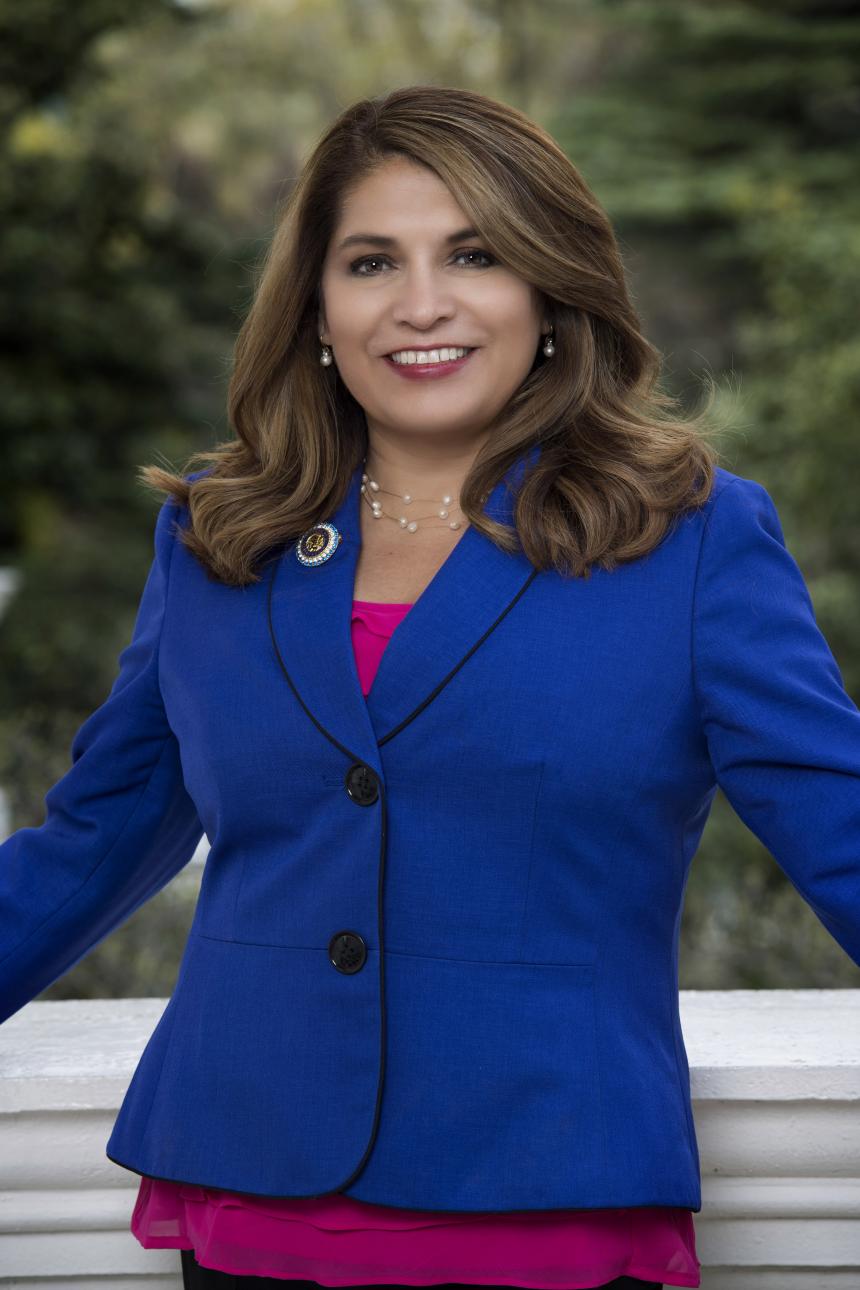
Photo of Sharon Quirk-Silva
D California Assembly · District 67

Asm. Sharon Quirk-Silva

Compare
Total votes
25,250
all sessions
Attendance
94%
1,303 missed
Near the chamber average
With party
98%
of cast votes
Higher than 76% of chamber peers
Bipartisan score
1%
crosses aisle rarely
Lower than 81% of chamber peers
Sponsored
2,398
bills & resolutions
Near the chamber average
Committees
15
assignments
2,398 bills and resolutions

Sponsored bills

Total
2,398
Primary
286
Co-sponsor
2,112
This page
2,398
matching current filters
Co-sponsor AJR 14
Signed into law · California Assembly · Co-sponsor
Relative to Special Olympics.

This measure would call for continued support and recognition of the many benefits provided by Special Olympics.

Signed into law Sep 9, 2019 1 co-sponsor
Co-sponsor SB 316
Signed into law · California Senate · Co-sponsor
Pupil and student safety: identification cards: domestic violence hotline telephone number.

Existing law requires a public school, including a charter school, or a private school, that serves pupils in any of grades 7 to 12, inclusive, that issues pupil identification cards, and a public or private institution of higher education that issues student identification cards, to have printed on the identification cards the telephone number for the National Suicide Prevention Lifeline, and authorizes those schools to have printed on the identification cards certain other suicide-prevention and emergency-response telephone numbers. This bill would, commencing October 1, 2020, additionally require a public school, including a charter school, or a private school, that serves pupils in any of grades 7 to 12, inclusive, that issues pupil identification cards to have printed on the identification cards the telephone number for the National Domestic Violence Hotline. The bill would, commencing October 1, 2020, require a public or private institution of higher education that issues student identification cards to have printed on the identification cards the telephone number for the National Domestic Violence Hotline or a local domestic violence hotline.

Signed into law Sep 6, 2019 1 co-sponsor
Co-sponsor AB 956
Signed into law · California Assembly · Co-sponsor
Telecommunications: automatic dialing-announcing devices: emergency alert notifications.

Under existing law, the Public Utilities Commission has regulatory authority over public utilities, including telephone corporations. Existing law authorizes the commission to control and regulate the use of automatic dialing-announcing devices. Existing law prohibits a person from operating an automatic dialing-announcing device except as specified. Existing law expressly provides that the use of automatic dialing-announcing devices by law enforcement agencies, fire protection agencies, public health agencies, public environmental health agencies, city or county emergency services planning agencies, or any private for-profit agency operating under contract with, and at the direction of, one or more of these agencies, for specified purposes relating to public safety and emergencies is not prohibited. This bill would expressly provide that the use of automatic dialing-announcing devices by those entities to test all modes of 911 emergency telephone systems, including basic 911 telephone services, enhanced 911 emergency telephone services, Next Generation 911 emergency communication systems, and similar 911 technologies, for data accuracy and emergency alert notification system capabilities is also not prohibited.

Signed into law Sep 5, 2019 1 co-sponsor
Primary ACR 87
Passed · California Assembly · Lead sponsor
Upholding democracy through civic education in public schools.

This measure would endorse activities in public schools that instruct pupils in upholding and sustaining American democracy, encourage, in the strongest terms, California schools to pursue certain recognized designations that reflect specified ethos and values, and encourage publicly elected officials to conduct themselves in ways that strengthen civic engagement and participation in civil society.

Passed Sep 4, 2019 0 co-sponsors
Co-sponsor AJR 21
Passed · California Assembly · Co-sponsor
Relative to reparations for descendants of enslaved persons.

This measure would formally apologize for California's past complicity in enabling and furthering the practice of slavery and would urge the United States Congress and the President of the United States to enact House Resolution 40 to study the legacy of slavery and provide recommendations on redress for descendants of enslaved persons.

Passed Sep 4, 2019 1 co-sponsor
Co-sponsor AJR 22
Passed · California Assembly · Co-sponsor
Relative to the 76th anniversary of the repeal of the Chinese Exclusion Act.

This measure would mark December 17, 2019, as the 76th anniversary of the repeal of the Chinese Exclusion Act to honor the contributions of all immigrants and refugees in our communities. The measure would also declare the opposition of the Legislature to executive orders and a presidential proclamation signed by President Trump relating to immigration, call upon the President to revoke those orders and that proclamation, condemn the expansion of deportations being undertaken under the current presidential administration, stand in firm opposition to the President's proposal for construction of a wall along the southern border with Mexico, and reaffirm that the state is open and welcoming to immigrants and refugees who are integral to life in our state.

Passed Sep 4, 2019 1 co-sponsor
Co-sponsor AJR 7
Passed · California Assembly · Co-sponsor
Relative to the Green New Deal.

This measure would encourage the United States Congress to adopt climate policies, including those that might be adopted under the Green New Deal, that build upon California's programs that have reduced greenhouse gas emissions while improving air and water quality, create new green jobs, and improve disadvantaged communities and that just climate actions offer the nation an opportunity to achieve community-mindful policies that California has successfully adopted while growing its economy.

Passed Sep 4, 2019 1 co-sponsor
Co-sponsor AB 67
Passed · California Assembly · Co-sponsor
Homeless integrated data warehouse.

Existing law establishes various programs, including, among others, the Emergency Housing and Assistance Program, to provide assistance to homeless persons. Existing law also establishes the Homeless Coordinating and Financing Council to, among other things, create a statewide data system or warehouse that collects local data through homeless management information systems, with the ultimate goal of matching data on homelessness programs to programs impacting homeless recipients of state programs, as specified. This bill would require the Department of Housing and Community Development to create a state homeless integrated data warehouse, in coordination with state and local partners, including the Homeless Coordinating and Financing Council, to develop a composite portrayal of the homeless population in the state and the services provided to this population or to those at risk of becoming homeless. The bill would require that the information compiled for the database include the data necessary, if available, to make certain findings, including, among other things, the number of individuals and families experiencing homelessness, their access to benefits, and the stated reasons for their homelessness. The bill would require the department to coordinate with other state agencies to draft and carry out a strategy to integrate information to provide longitudinal, cost-based studies with relevant data, as specified. The bill would require the database to comply with all relevant state and federal laws regarding privacy and personally identifying information and would direct participating local agencies to enter into data-sharing agreements and collaborate with the department, as specified. The bill would specify that these provisions would become operative if the Legislature appropriates sufficient funds, including funds from private donations if available, to the department for these purposes.

Passed Aug 30, 2019 1 co-sponsor
Co-sponsor AB 10
Passed · California Assembly · Co-sponsor
Income taxes: credits low-income housing: farmworker housing.

(1) Existing law establishes a low-income housing tax credit program pursuant to which the California Tax Credit Allocation Committee (CTCAC) provides procedures and requirements for the allocation, in modified conformity with federal law, of state insurance, personal income, and corporation tax credit amounts to qualified low-income housing projects that have been allocated, or qualify for, a federal low-income housing tax credit, and farmworker housing. Existing law limits the total annual amount of the state low-income housing credit for which a federal low-income housing credit is required to the sum of $70,000,000, as increased by any percentage increase in the Consumer Price Index for the preceding calendar year, any unused credit for the preceding calendar years, and the amount of housing credit ceiling returned in the calendar year, and authorizes CTCAC, for calendar years beginning in 2020, to allocate an additional $500,000,000 to specified low-income housing projects and, for calendar years beginning in 2021, requires this additional amount only to be available for allocation pursuant to an authorization in the annual Budget Act or related legislation, and specified regulatory action by CTCAC. This bill would remove the requirement that, beginning in the 2021 calendar year, the above-described additional $500,000,000 allocation only be available pursuant to an authorization in the annual Budget Act or related legislation, and specified regulatory action by CTCAC. (2) This bill would take effect immediately as a tax levy.

Passed Aug 30, 2019 1 co-sponsor
Co-sponsor AB 1031
Passed · California Assembly · Co-sponsor
Youth Substance Use Disorder Treatment and Recovery Program Act of 2019.

Existing law establishes the Medi-Cal program, which is administered by the State Department of Health Care Services and under which qualified low-income individuals receive medically necessary health care services, including Early and Periodic Screening, Diagnosis, and Treatment (EPSDT) for an individual under 21 years of age, subject to utilization controls and consistent with federal requirements. The Medi-Cal program is, in part, governed and funded by federal Medicaid program provisions. Existing law consolidated within the State Department of Health Care Services all substance use disorder functions and programs from the former State Department of Alcohol and Drug Programs. The existing Adolescent Alcohol and Drug Treatment and Recovery Program Act of 1998, which authorized the department to establish community-based nonresidential and residential recovery programs to intervene and treat the problems of alcohol and other drug use among youth, became inoperative on July 1, 2013. This bill would repeal those inoperative provisions and would enact the Youth Substance Use Disorder Treatment and Recovery Program Act of 2019, with similar provisions to, in part, require the department, on or before January 1, 2021, to establish community-based nonresidential and residential treatment and recovery programs to intervene and treat the problems of alcohol and drug use among youth under 21 years of age. The bill would additionally require the department, in collaboration with counties and providers of substance use disorder services, to establish through regulation criteria for participation, programmatic requirements, treatment standards, and terms and conditions for funding. The bill would require the criteria to also include consideration of indicators of drug and alcohol use among youth. The bill would require the department's regulations for these programs to describe a continuum of care to identify, treat, and support recovery from substance misuse for youth under 21 years of age, as specified. The bill would require the department to report to the Legislature during budget hearings regarding the status of the implementation of the program, and to annually report to the Legislature specified utilization data. The bill would additionally require the department to update its Medi-Cal billing codes to include specified services, based on whether those services are medically necessary. The bill would make related findings and declarations.


Passed Aug 30, 2019 1 co-sponsor
Showing 1,571 to 1,580 of 2,398 bills