

(1) Existing law requires each law enforcement agency to annually furnish specified information to the Department of Justice regarding the use of force by a peace officer. Existing law requires the Department of Justice, once per year, to update a summary of information contained in the reports received on its internet website. Existing law requires a department or agency that employs peace officers or custodial officers to establish a procedure to investigate complaints by members of the public against those officers. This bill would, by no later than January 1, 2021, require each law enforcement agency to maintain a policy that provides guidelines on the use of force, utilizing deescalation techniques and other alternatives to force when feasible, specific guidelines for the application of deadly force, and factors for evaluating and reviewing all use of force incidents, among other things. The bill would require each agency to make their use of force policy accessible to the public. By imposing additional duties on local agencies, this bill would create a state-mandated local program. (2) Existing law establishes the Commission on Peace Officer Standards and Training in the Department of Justice and requires the commission to adopt rules establishing minimum standards regarding the recruitment of peace officers. Existing law requires the commission to develop guidelines and implement courses of instruction regarding racial profiling, domestic violence, hate crimes, vehicle pursuits, and human trafficking, among others. This bill would require the commission to implement a course or courses of instruction for the regular and periodic training of law enforcement officers in the use of force. The bill would require the commission to develop uniform, minimum guidelines for adoption and promulgation by California law enforcement agencies for the use of force, as specified. The bill would require law enforcement agencies to adopt and promulgate a use of force policy and would state the intent of the Legislature that each law enforcement agency adopt, promulgate, and require regular and periodic training consistent with the agency's policy that complies with the guidelines developed under this bill. This bill would make findings and declarations regarding the intent of the bill, as it pertains to law enforcement agencies' use of force polices, including that those policies may be introduced in legal proceedings and may be considered as a factor in determining the reasonableness of an officer's actions, but do not impose a legal duty on an officer to act in accordance with the policy. (3) The California Constitution requires the state to reimburse local agencies and school districts for certain costs mandated by the state. Statutory provisions establish procedures for making that reimbursement. This bill would provide that, if the Commission on State Mandates determines that the bill contains costs mandated by the state, reimbursement for those costs shall be made pursuant to the statutory provisions noted above. (4) This bill would also make its provisions operative contingent on the enactment of Assembly Bill 392 of the 2019–20 Regular Session.
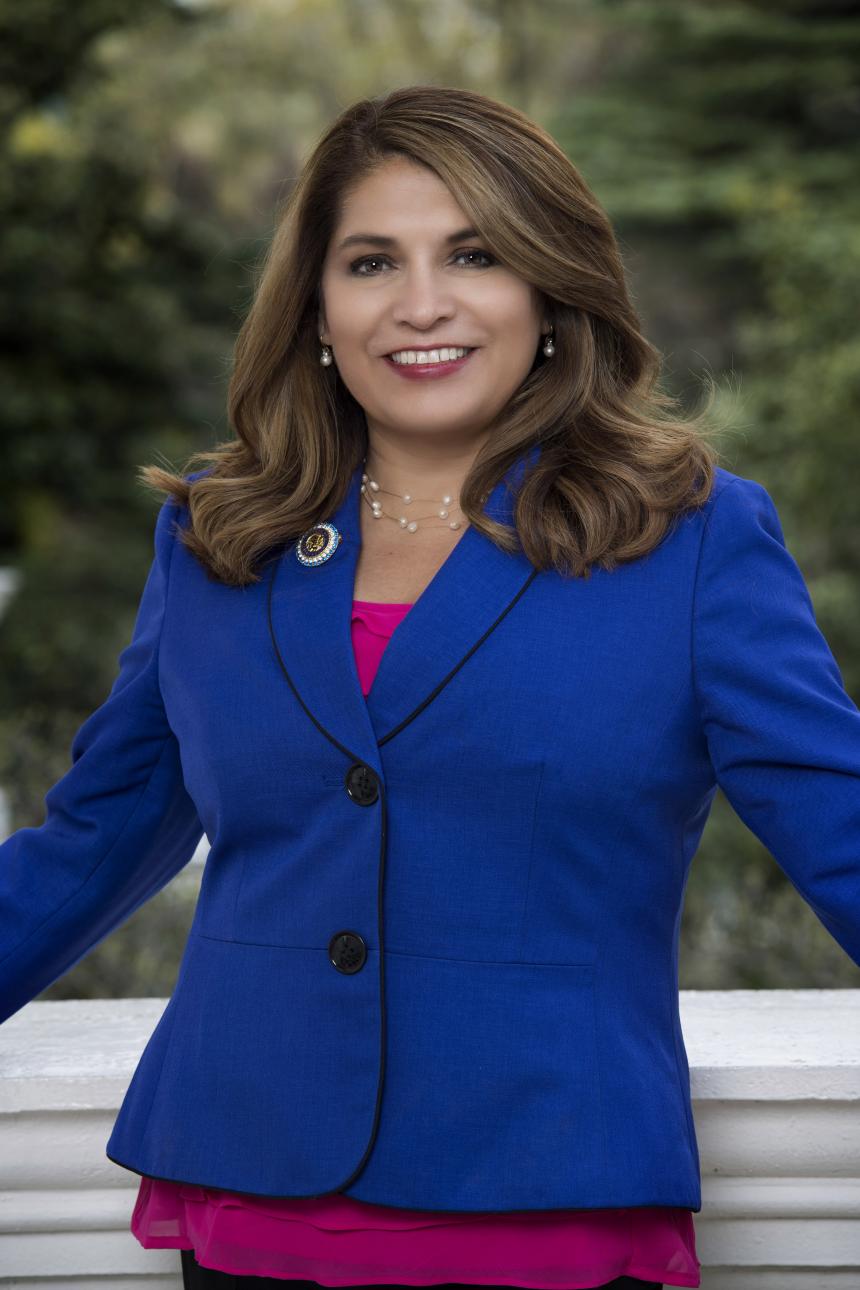
Asm. Sharon Quirk-Silva
Sponsored bills
Existing law authorizes the Department of Veterans Affairs to acquire, study, design, develop, construct, and equip a state-owned and state-operated Southern California Veterans Cemetery at the Bake Parkway site in Orange County. Existing law makes honorably discharged veterans and their spouses and dependent children eligible for interment in the cemetery, as specified. This bill would instead authorize the department to locate the cemetery at either a specified site in the Orange County Great Park in the City of Irvine, or at a site known as the Golf Course Site, as specified. The bill would require the department, after completing acquisition studies of each site, to consult with the Department of General Services to determine which site to pursue based on specified factors, including, among other things, the availability of each location.
This measure would, among other things, designate the year 2019 as "State of California Year of Commemoration of the Anniversary of the Armenian Genocide of 1915–1923," would designate April 24, 2019, as "State of California Day of Commemoration of the 104th Anniversary of the Armenian Genocide of 1915–1923," and would call upon the President of the United States and the United States Congress to formally and consistently reaffirm the historical truth that the atrocities committed against the Armenian people constituted genocide.
This measure would request the Trustees of the California State University and the Regents of the University of California to conduct a study on the usefulness, effectiveness, and need for the SAT and ACT to determine student admissions, and would provide that the study should include evaluation of specified admissions eligibility and qualifications measures and testing issues. The measure would also provide that the study should include recommendations and, if determined necessary, a plan for phasing out the use of the SAT and ACT as a basis for admission.
Existing law, the Escrow Law, requires people engaging in business as escrow agents to be organized as corporations for that purpose, as specified, and appropriately licensed by the Commissioner of Business Oversight. Existing law requires an escrow agent licensed on or after January 1, 1986, to maintain a tangible net worth of $50,000, including liquid assets of at least $25,000 in excess of current liabilities. Existing law requires an escrow agent licensed before January 1, 1986, to maintain a tangible net worth pursuant to a prescribed schedule, the amounts of which, in 1993, matched those required for escrow agents licensed on and after that date. Existing law provides criminal penalties for willful violations of the Escrow Law. This bill would delete the tangible net worth schedule for escrow agents licensed before January 1, 1986, as described above, and eliminate distinctions based on when an agent was licensed in this context. The bill would exclude a liability derived from an operating lease obligation from a licensee's current liabilities for purposes of establishing tangible net worth.
This measure would request the President and the Congress of the United States to enact legislation that would strengthen the communication between federal, state, local, and tribal officials, and that would require the United States Department of Justice, United States Department of the Interior, and United States Department of Health and Human Services to seek recommendations from tribes in enhancing the safety of Native American women and girls. The measure would also request that the Attorney General of the State of California begin the collection of data as it relates to missing and murdered Native American women and girls.
Existing law generally makes it unlawful to offer a prize or other inducement as a reward for the taking of a game bird, mammal, fish, reptile, or amphibian in an individual contest, tournament, or derby. Existing law makes specific exceptions to that general prohibition, including authorizing the Department of Fish and Wildlife to issue a permit, subject to Fish and Game Commission regulations, to a person authorizing that person to offer a prize or other inducement as a reward for the taking of a game fish if it makes a specified finding. Existing law vests the Department of Parks and Recreation with the control of the state park system. Existing regulations of the Department of Parks and Recreation prohibit a person from having control over a game or recreational activity occurring wholly or partially within or on any property owned, operated or administered by the department without an approved special event permit, as defined. Existing law authorizes the State Lands Commission to lease state lands under the jurisdiction of the commission for purposes as the commission deems advisable, including, but not limited to, grazing leases and leases for commercial, industrial, and recreational purposes. The California Coastal Act of 1976 establishes the California Coastal Commission and requires the commission to implement and administer a coastal development permit process within the coastal zone, as defined. The act exempts from the requirement for a coastal development permit a proposed development found to be a temporary event that does not have any significant adverse impact upon coastal resources within the meaning of guidelines adopted by the commission. The act subjects any permit that is issued or any development or action approved on appeal to be subject to reasonable terms and conditions in order to ensure that the development or action will be in accordance with the act. The act also declares that existing laws relating to discrimination and environmental justice apply to the California Coastal Commission and all public agencies implementing the act. The act provides that, as required by existing law relating to discrimination, no person in the State of California, on specified bases including sex, may be unlawfully denied full and equal access to the benefits of, or be unlawfully subjected to discrimination, under specified programs or activities under the act. Under existing law, the Department of Transportation may issue permits authorizing encroachments, as defined, on state highways. Existing law requires the department to either approve or deny an application for an encroachment permit within 60 days of receiving a completed application. This bill would require those entities to include in permit or lease conditions, for a competition event to be held on land under the jurisdiction of the entity, as described, and that awards prize compensation, as defined, to competitors in gendered categories, a requirement that the prize compensation be identical between the gendered categories at each participant level.
This measure would recognize August 15, 2019, as India's Independence Day, and urge all Californians to join in celebrating India's independence.