

Existing law requires a school district or county superintendent of schools maintaining a kindergarten or any of grades 1 to 12, inclusive, to provide a needy pupil with one nutritionally adequate free or reduced-price meal during each schoolday, and authorizes the school district or county superintendent of schools to use funds available from any federal or state program to comply with that requirement, as provided. Existing law generally requires a school district or a county superintendent of schools to provide breakfast and lunch free of charge to all pupils at a very high poverty school, as defined. This bill would require a school district or county superintendent of schools maintaining a kindergarten or any of grades 1 to 12, inclusive, to provide a pupil, eligible to receive a reduced-priced meal, that meal free of charge. By creating a new duty on a school district or a county superintendent of schools, the bill would create a state-mandated program. To comply with the above, the bill would authorize a school district or county office of education to use funds made available through any federal, to the extent allowed, or state program relating to the provision of meals to pupils, as provided. The California Constitution requires the state to reimburse local agencies and school districts for certain costs mandated by the state. Statutory provisions establish procedures for making that reimbursement. This bill would provide that, if the Commission on State Mandates determines that the bill contains costs mandated by the state, reimbursement for those costs shall be made pursuant to the statutory provisions noted above.
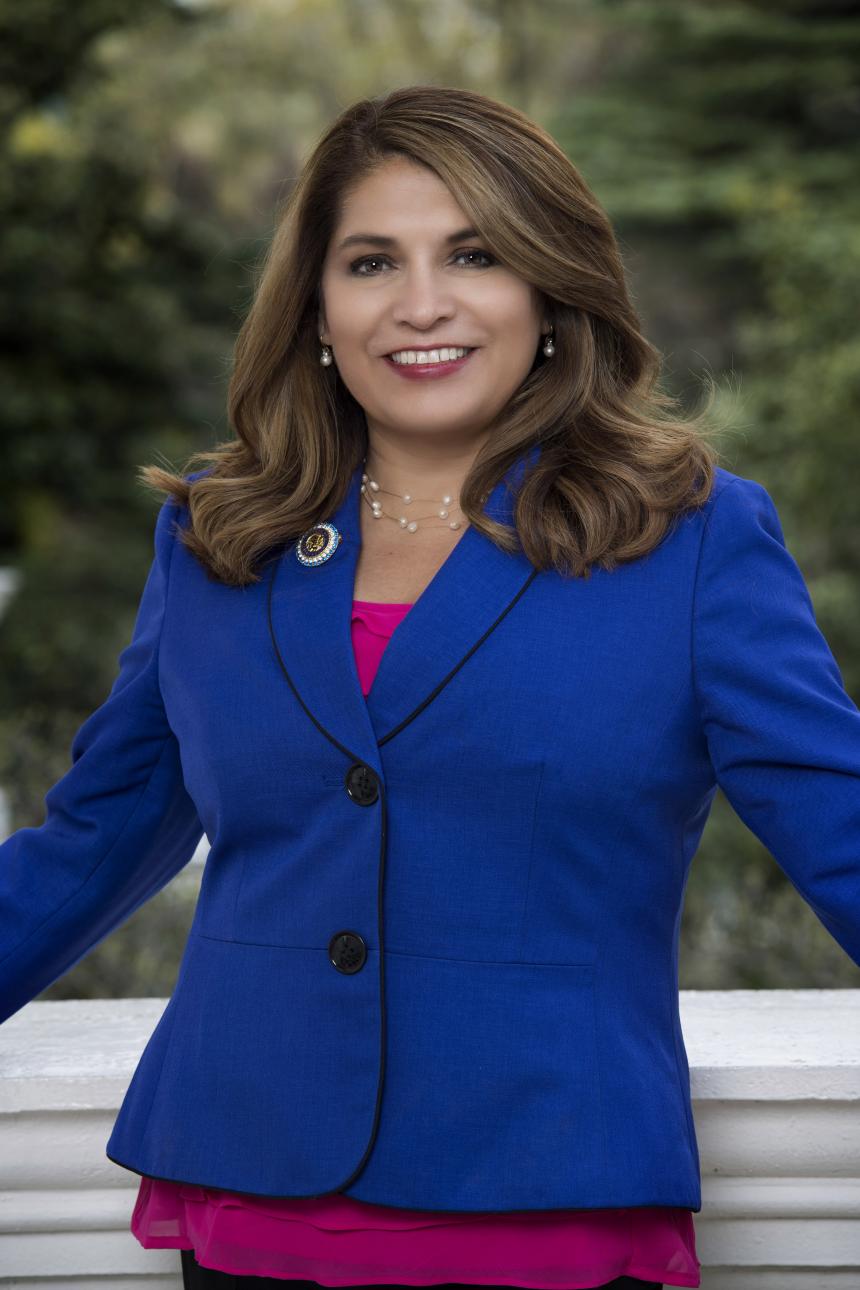
Asm. Sharon Quirk-Silva
Sponsored bills
Existing law authorizes a local educational agency to reinforce braille instruction using a braille instructional aide who meets specified criteria under the supervision of a teacher who holds an appropriate credential to teach pupils who are functionally blind or visually impaired. Existing law requires a local educational agency to provide a braille instructional aide with information regarding certain teacher credentialing programs. Existing law establishes the California Classified School Employee Teacher Credentialing Program as a grant program for purposes of encouraging classified school employees to enroll in teacher training programs and to provide instructional service as teachers in the public schools, as specified. This bill would require a local educational agency to provide a braille instructional aide with information regarding the California Classified School Employee Teacher Credentialing Program.
(1) Existing federal law, the McKinney-Vento Homeless Assistance Act, provides grants to states to carry out activities relating to the education of homeless children and youths, as defined, including, among others, providing services and activities to improve the identification of homeless children and youths and to enable them to enroll in, attend, and succeed in school. The act requires a state plan submitted for the receipt of the grant to include assurances that local educational agencies will designate an appropriate staff person to act as a local educational agency liaison for homeless children and youths and a description of how the state will ensure that local educational agencies and their liaisons will comply with specified requirements of the act, including the identification of homeless children and youths. Under existing state law, public schools, including charter schools, and county offices of education are required to immediately enroll a homeless child or youth seeking enrollment, except as specified. Existing law requires a local educational agency liaison for homeless children and youths to ensure that public notice of the educational rights of homeless children and youths is disseminated in schools within the liaison's local educational agency that provide services pursuant to the act. This bill would require a local educational agency to ensure that each school within the local educational agency identifies all homeless children and youths and unaccompanied youths enrolled at the school, create a housing questionnaire, as specified, for purposes of identifying homeless children and youths and unaccompanied youths, and annually provide the housing questionnaire to all parents or guardians of pupils and unaccompanied youths of the local educational agency. The bill would require a local educational agency to collect the completed housing questionnaires and report the data from those questionnaires to the State Department of Education in a format determined by the department. The bill would also require the local educational agency to annually report to the department the number of homeless children and youths and unaccompanied youths enrolled. The bill would require a local educational agency to ensure that its school personnel who provide services to youth experiencing homelessness receive training about the homeless education program at least annually. This bill would require a school district or county office of education to create an internet web page or post on its internet website a list of the local educational agency liaisons for homeless children and youths and unaccompanied youths in that school district or county, respectively, the contact information for those liaisons, and specific information regarding the educational rights and resources available to persons experiencing homelessness. The bill would require a school to post on its internet website the contact information for the liaison, if available. The bill would also require, if a school has an employee or person under contract whose duties include assisting the liaison in completing the liaison's duties under the federal act, the school to post on its internet website the contact information for that employee or person under contract. The bill would require data collected by the State Department of Education or by a local educational agency under these provisions to only be used for purposes of implementing the McKinney-Vento Homeless Assistance Act and related state agency programs. By imposing additional duties on local educational agencies, the bill would impose a state-mandated local program. This bill would appropriate the sum of $1,500,000 from the General Fund to the State Department of Education, to be equally allocated to 3 county offices of education in different regions throughout the state for purposes of establishing technical assistance centers to foster relationships with community partners and other local educational agencies in each region, as provided. The bill would require the department to determine which county offices of education to allocate those funds to through a competitive process, as provided, and to take into account geographic diversity and concentrations of homeless children and youths and unaccompanied youths. (2) Existing law requires the department to provide, among other things, informational and training materials to local educational agency liaisons regarding the educational rights of homeless children and youths and the responsibilities of the liaisons. This bill would require the department to develop, as specified, best practices and a model housing questionnaire that a local educational agency may use to identify and obtain accurate data on all homeless children and youths and unaccompanied youths enrolled in schools of the local educational agency. The bill would require the department to post the best practices and model housing questionnaire on its internet website. (3) The California Constitution requires the state to reimburse local agencies and school districts for certain costs mandated by the state. Statutory provisions establish procedures for making that reimbursement. This bill would provide that, if the Commission on State Mandates determines that the bill contains costs mandated by the state, reimbursement for those costs shall be made pursuant to the statutory provisions noted above.
Existing law establishes a statewide system of public elementary and secondary education under which local educational agencies throughout the state provide instruction and other services to pupils in kindergarten and grades 1 to 12, inclusive. Existing law establishes the State Department of Education, under the administration of the Superintendent of Public Instruction, and assigns to that department numerous duties and responsibilities with respect to the funding and governance of this system. The California State Lottery Act of 1984, an initiative measure approved by the voters at the November 6, 1984, statewide general election, authorizes a California State Lottery and provides for its operation and administration by the California State Lottery Commission and the Director of the California State Lottery, with certain limitations. The act requires all revenues from the imposition of the lottery after accrual of all obligations for prizes and expenses to be deposited in the California State Lottery Education Fund. The act continuously appropriates the moneys in the fund for the benefit of public education, as specified. Following the end of each fiscal year, existing law requires the commission to calculate and report to the Controller and the Legislature the amount of total net revenues allocated to the benefit of public education from that fund. This bill would require the department, commencing on or before October 1, 2021, and on or before October 1 of each year thereafter, to submit a report of the total amount of lottery funds allocated to public elementary and secondary schools in the school year ending the preceding July 1. The bill would require the report to specify the amount received by each school and to describe how each school expended these funds. The bill would require the report to be submitted to the Governor and to the respective chairpersons of the Committees on Budget and Education of the Assembly and the Senate. This bill would amend the California State Lottery Act to specify that revenues of the California State Lottery are to be allocated so as to ensure that the relationship between increases in the net revenue of the California State Lottery and increases in funding allocated to public education is directly proportional. This bill would declare that its provisions further the purposes of the California State Lottery Act.
Existing law establishes the California Statewide Housing Plan to serve as a state housing plan for all relevant purposes. Existing law requires that the plan incorporate, among other things, a statement of housing goals, policies, and objectives and that the Department of Housing and Community Development update and provide a revision of the plan to the Legislature every 4 years. This bill would establish the Legislative Task Force on the California Master Plan on Home Ownership, consisting of 11 members, as provided. The bill would require the task force to consider and evaluate current impediments to increasing the rate of home ownership for Californians and, no later than March 31, 2021, to develop a final report that includes specified information and recommendations and submit that report to the Legislature. The bill would require the Department of Housing and Community Development to provide technical support and administrative assistance to the task force and collaborate in the preparation of the final report.
Existing law allows a child who is sexually trafficked, or who receives food or shelter in exchange for, or who is paid to perform, sexual acts, and whose parent or guardian has failed or was unable to protect the child, to be adjudged a dependent of the juvenile court. This bill would explicitly authorize a child who is or was a victim of labor trafficking, and whose parent or guardian has failed or was unable to protect the child, to be adjudged a dependent of the juvenile court. The bill would make various related changes to reflect this expansion, including, among other things, a requirement that the case plan for a child nonminor dependent who is, or who is at risk of becoming, the victim of labor trafficking, document the services provided to address that issue. By expanding county duties, this bill would impose a state-mandated local program. Existing law authorizes a social worker, in specified circumstances, to take temporary custody of a child who is or may be subject to the dependency jurisdiction of the court. The bill would generally prohibit a social worker from taking temporary custody of a child who is the victim of human trafficking if the child's parent or guardian has not participated, either directly or indirectly, in the child's trafficking. Existing law establishes the Commercially Sexually Exploited Children Program, which is administered by the State Department of Social Services. The program requires the department to provide funds to participating counties to provide training to county children's services workers to identify, intervene, and provide case management services to children who are victims of commercial sexual exploitation and trafficking and to foster caregivers for the prevention and identification of potential victims. Existing law requires the department to provide specified information to the Legislature regarding the implementation of these provisions, including the number of victims served by each county and the types of services provided, no later than April 1, 2017. This bill would change the name of the program to the Human Trafficked Children Program and revise all parts of the program to include children who are victims of labor trafficking. The bill would require the department to provide and update information provided to the Legislature regarding implementation of these provisions and to provide additional information relating to serving child victims of labor trafficking. The California Constitution requires the state to reimburse local agencies and school districts for certain costs mandated by the state. Statutory provisions establish procedures for making that reimbursement. This bill would provide that the Legislature finds there is no mandate contained in the bill that will result in costs incurred by a local agency or school district for a new program or higher level of service which require reimbursement pursuant to these constitutional and statutory provisions.
This measure would designate September 4, 2020, and the same date in each year thereafter, as Taekwondo Day in California.
Existing law specifies a process for declaring a defendant who is charged with a felony to be mentally incompetent to stand trial. Existing law requires the court to order that the mentally incompetent defendant be delivered by the sheriff to a State Department of State Hospitals facility or to any other available public or private treatment facility that meets stated specifications, or placed on outpatient status. This bill would authorize a court to order a defendant who is charged with a felony and who is not in the custody of the sheriff to self-surrender to a State Department of State Hospitals facility at a specific date and time. The bill would also require the State Department of State Hospitals to provide a patient who self-surrenders to a state hospital with notice directing the defendant to appear in court at a specific date and time.
The Leroy Greene California Assessment of Academic Achievement Act establishes the California Assessment of Student Performance and Progress (CAASPP) as the statewide system of pupil assessments, under which various assessments are required or authorized to be administered in public schools, as specified. Existing law requires the governing board of each school district to conduct a testing program pursuant to the act, and authorizes the administration of other tests. This bill would prohibit a county office of education, school district, state special school, or direct-funded charter school from requiring the administration of additional standardized pupil assessments beyond what is required by the state or federal government.
(1) Existing law requires the Department of Justice to examine its records in order to determine whether the purchaser of a firearm is prohibited by state or federal law from possessing a firearm. If the department determines that the purchaser is prohibited from possessing a firearm, existing law requires the department to notify the firearms dealer and either the chief of police or the sheriff in the county in which the sale was made. This bill would, commencing January 1, 2022, require the Department of Justice to notify the relevant local law enforcement agency of each application to purchase a firearm, request to register the acquisition or ownership of a firearm, request to obtain a serial number for a firearm, request to register an assault weapon or .50 BMG rifle, and request for specified weapons permits. Commencing January 1, 2025, the bill would also require the department to notify the relevant local law enforcement agency of each request to purchase a firearm precursor part. (2) Existing law makes it a crime for certain persons to possess a firearm, including, among other persons, persons convicted of a felony, persons who are addicted to the use of a narcotic drug, persons convicted of specified violent offenses, persons who have been adjudicated by a court of any state to be a danger to others as a result of a mental disorder or mental illness, and persons who have been admitted to a facility, are receiving inpatient treatment, and, in the opinion of the attending health professional who is primarily responsible for the patient's treatment, are a danger to themselves or others. This bill would require the Department of Justice, if the department determines that a person prohibited from possessing a firearm by the provisions described above has attempted to acquire a firearm, to notify the local law enforcement agency with primary jurisdiction over the area in which the person was last known to reside. If the person is prohibited from owning or possessing a firearm because of a mental illness, as defined, the bill would require the department to also notify the county department of mental health in the county in which the person was last known to reside. (3) Existing law, as added by the Safety for All Act of 2016, an initiative statute approved by voters as Proposition 63 at the November 8, 2016, statewide general election, requires the sale of ammunition to be conducted by a licensed ammunition vendor. Existing law generally requires ammunition to be sold only to people who meet specified criteria, including to a person whose firearms ownership information matches an entry in the Automated Firearms System and who is eligible to possess ammunition. This bill would require the Department of Justice to notify the relevant local law enforcement agency if a person who is prohibited from possessing ammunition attempts to purchase ammunition.