

Existing property tax law, in accordance with the California Constitution, provides for a "welfare exemption" for property used exclusively for religious, hospital, scientific, or charitable purposes and owned or operated by certain types of nonprofit entities, if certain qualifying criteria are met. Under existing property tax law, property that meets these requirements that is used exclusively for rental housing and related facilities is entitled to a partial exemption, equal to that percentage of the value of the property that is equal to the percentage that the number of units serving lower income households represents of the total number of residential units, in any year that any of certain criteria apply. Existing property tax law, in accordance with the California Constitution, specifies that "property used exclusively for religious, hospital, or charitable purposes" includes facilities in the course of construction, and specified land on which the facilities are located, to be used for those purposes. Existing property tax law further specifies that "facilities in the course of construction" includes for these purposes definite onsite physical activity connected with construction or rehabilitation of a new or existing building or improvement that results in changes visible to any person inspecting the site, where the building or improvement is to be used exclusively for religious, hospital, or charitable purposes. This bill, for lien dates on and after January 1, 2021, and before January 1, 2026, would specify that "facilities in the course of construction" for these purposes also includes the acquisition of property or control of a site by an organization meeting the applicable constitutional and statutory requirements of the welfare exemption with the intent of using that property for a low-income housing project eligible for a partial exemption, as described above. Existing law requires any bill introduced on or after January 1, 2020, that would authorize certain tax expenditures, as defined, to identify specific goals, purposes, and objectives that the expenditure will achieve, detailed performance indicators, and data collection requirements. This bill would state the intent of the Legislature to comply with these requirements with respect to the changes made by the bill. The California Constitution requires the state to reimburse local agencies and school districts for certain costs mandated by the state. Statutory provisions establish procedures for making that reimbursement. This bill would provide that, if the Commission on State Mandates determines that the bill contains costs mandated by the state, reimbursement for those costs shall be made pursuant to the statutory provisions noted above. Existing law requires the state to reimburse local agencies annually for certain property tax revenues lost as a result of any exemption or classification of property for purposes of ad valorem property taxation. This bill would provide that, notwithstanding those provisions, no appropriation is made and the state shall not reimburse local agencies for property tax revenues lost by them pursuant to the bill. This bill would take effect immediately as a tax levy.
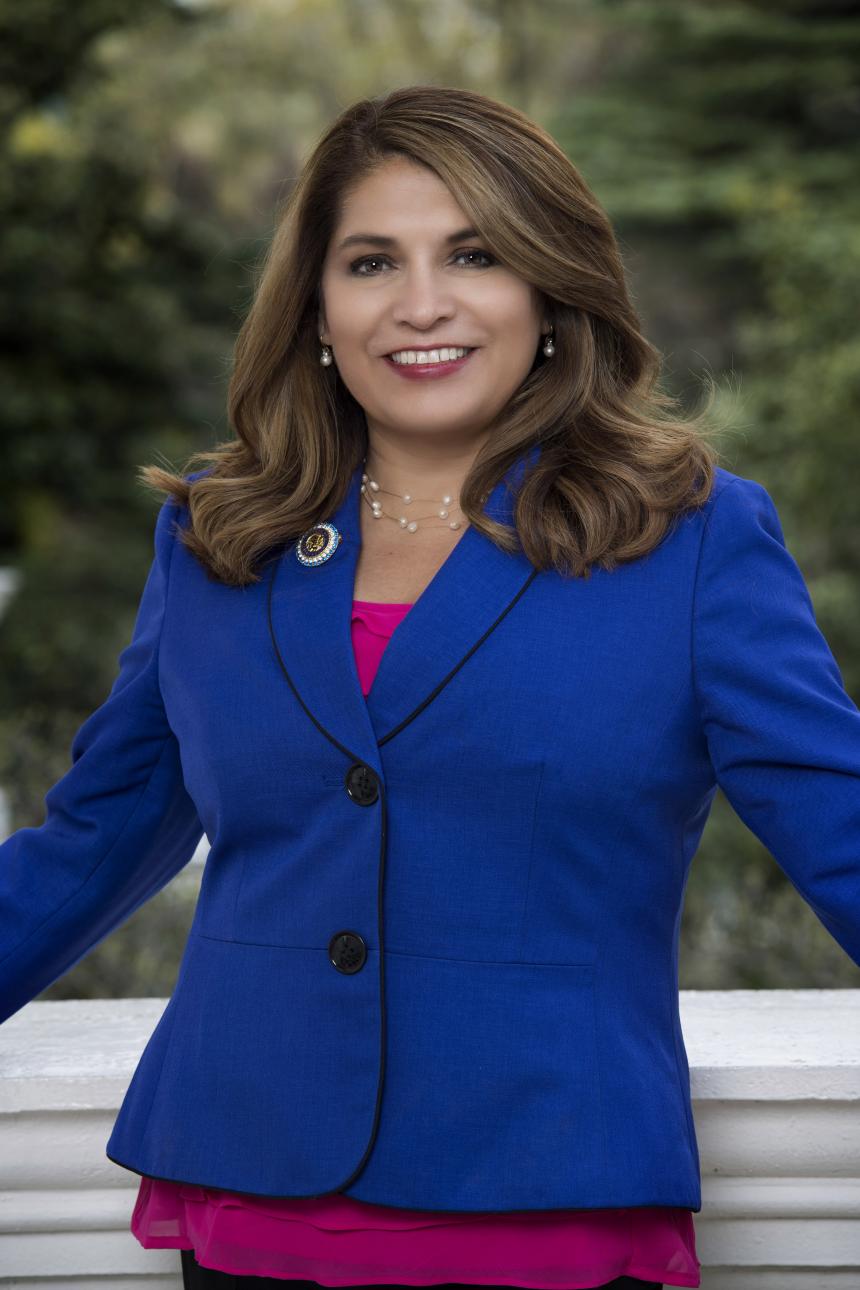
Asm. Sharon Quirk-Silva
Sponsored bills
Existing law, the Dental Practice Act, provides for the licensure and regulation of dentists and dental assistants by the Dental Board of California. The act, prior to January 1, 2020, required the board to approve foreign dental schools based on specified standards, and required a foreign dental school seeking approval to submit an application to the board, including, among other things, a finding that the educational program of the foreign dental school is equivalent to that of similar accredited institutions in the United States and adequately prepares its students for the practice of dentistry. Existing law required the foreign dental school to submit a specified registration fee and to pay the board's reasonable costs and expenses to conduct an approval survey. Existing law also required an approved institution to submit a renewal application every 7 years and to pay a specified renewal fee. Existing law, beginning January 1, 2020, prohibits the board from accepting new applications for approval of foreign dental schools and instead requires foreign dental schools seeking approval to complete the international consultative and accreditation process with the Commission on Dental Accreditation of the American Dental Association (CODA) or a comparable accrediting body approved by the board. Existing law requires previously approved foreign dental schools to complete the CODA accreditation by January 1, 2024, to remain approved. This bill would repeal the provisions that, beginning January 1, 2020, prohibit the board from accepting new applications for the approval of foreign dental schools, and would instead require the board to approve foreign dental schools in the same manner as prior to January 1, 2020.
(1) Existing law establishes the California State University and its various campuses under the administration of the Trustees of the California State University. Existing law requires the trustees to appoint a chief executive officer, known as the Chancellor of the California State University. Existing law authorizes the trustees to operate motor vehicle parking facilities and alternate methods of transportation for officers, students, and employees, and authorizes parking facilities to charge parking fees. Existing law requires, except as specified, that revenues received from these parking facilities be deposited into the State Treasury to the credit of the State University Parking Revenue Fund. This bill would require the trustees to include in the California State University Five-Year Capital Plan specified information relating to the costs and usage of its parking facilities and of alternative transportation strategies considered by campuses in determining the need for those parking facilities. (2) Existing law requires that the Trustees of the California State University control and expend all money appropriated for the support and maintenance of the university. This bill would require the Office of the Chancellor to, on or before November 30 of each year, report to the Legislature the current balance and projections of the surplus the California State University has accumulated for discretionary spending on operations and instruction, and an estimate of how much tuition has contributed to the surplus.
Existing law establishes the California State University, under the administration of the Trustees of the California State University, as one of the segments of public postsecondary education in this state. The California State University comprises 23 institutions of higher education located throughout the state. Existing law authorizes the trustees to require the payment of fees, rents, deposits, and charges for services, facilities, or materials provided by the trustees. Existing law establishes the California Promise, which requires at least 20 individual campuses of the California State University to establish a California Promise program through which each campus would enter into a pledge with a student who satisfies specified criteria to support the student in earning a baccalaureate degree in limited time. Existing law establishes the California College Promise, under the administration of the Chancellor of the California Community Colleges, to provide funding, upon appropriation by the Legislature, to each community college meeting prescribed requirements. Existing law authorizes a community college to use that funding to waive some or all of the fees for 2 academic years for certain first-time students. This bill would prohibit the charging of tuition or mandatory systemwide fees for enrollment at a campus of the California State University for any academic year, up to 2 academic years, to a California Community College resident transfer student who has completed an associate degree for transfer or has received a fee waiver pursuant to the California College Promise. Upon appropriation by the Legislature, the bill would require the Chancellor of the California State University to distribute funding to each campus participating in the California Promise to offset the costs of waiving tuition and mandatory systemwide fees to transfer students pursuant to this bill.
Existing law makes it unlawful to produce, process, sell, offer to sell, or possess olive oil that indicates on its label "California Olive Oil," or uses similar words, to suggest that California is the source of the oil, unless 100% of that oil is derived from olives grown in California. This bill would make it unlawful and subject to imprisonment, fine, or both, as specified, to make any false representation in a brand name, label, advertising matter, packaging material, letterhead, invoice, tag, sign, business card, or other oral, written, or printed matter that an olive oil is produced entirely from olives grown within California, including using the terms "California olive oil," "California olives," or substantially similar representations. This bill would apply a similar prohibition on representations that an olive oil was produced from olives from a specific region of California unless at least 85% of the olive oil, by weight, was produced from olives grown in that specific region. This bill would authorize the Department of Food and Agriculture to seize olive oil labeled in violation of these prohibitions and to dispose of the olive oil. By creating a new crime, this bill would impose a state-mandated local program. The California Constitution requires the state to reimburse local agencies and school districts for certain costs mandated by the state. Statutory provisions establish procedures for making that reimbursement. This bill would provide that no reimbursement is required by this act for a specified reason.
Existing law provides for the Medi-Cal program, which is administered by the State Department of Health Care Services and under which qualified low-income persons receive health care benefits. The Medi-Cal program is, in part, governed and funded by federal Medicaid program provisions. Existing law also establishes the Family Planning, Access, Care, and Treatment (Family PACT) Program, administered by the Office of Family Planning within the department, under which comprehensive clinical family planning services are provided to a person who has a family income at or below 200% of the federal poverty level, and who is eligible to receive these services. Existing law provides that comprehensive clinical family planning services under the program includes preconception counseling, maternal and fetal health counseling, and general reproductive health care, among other things. This bill would expand comprehensive clinical family planning services under the program to include the human papillomavirus (HPV) vaccine for persons of reproductive age.
Existing law, notwithstanding the requirement that each person between 6 and 18 years of age who is not otherwise exempted is subject to compulsory full-time education, requires a pupil to be excused from school for specified types of absences, including, among others, if the absence was due to the pupil's illness. This bill would include as another type of required excused absence an absence that is for the benefit of the mental or behavioral health of the pupil. To the extent that this bill would impose additional duties on local educational entities, the bill would impose a state-mandated local program. The California Constitution requires the state to reimburse local agencies and school districts for certain costs mandated by the state. Statutory provisions establish procedures for making that reimbursement. This bill would provide that, if the Commission on State Mandates determines that the bill contains costs mandated by the state, reimbursement for those costs shall be made pursuant to the statutory provisions noted above.
Existing law establishes the State Department of Education, under the administration of the Superintendent of Public Instruction, and assigns to the department numerous duties relating to the financing, governance, and guidance of the public elementary and secondary schools in this state. Existing law requires the Commission on Teacher Credentialing to establish standards for the issuance and renewal of credentials, certificates, and permits. This bill would establish the Computer Science Access Initiative to be administered by the department in consultation with the commission. The bill would require the department to award grants, on or before July 1, 2021, to eligible entities for the purpose of increasing the number of teachers authorized and trained to instruct pupils in computer science, as specified. The bill would require a grant recipient to submit to the department, in a form and manner determined by the department, a report containing certain information measuring the results of the use of grant funds. The bill would provide that the operation of these provisions is contingent on an appropriation in the annual Budget Act or another statute for these purposes.
Existing law establishes the Aid to Families with Dependent Children-Foster Care (AFDC-FC) program, under which counties provide to foster care providers a per-child, per-month rate, established by the State Department of Social Services, for the care and supervision of the child or nonminor dependent placed with the provider. Existing law requires that foster care providers be reimbursed for the costs of reasonable travel for the child to remain in the school in which the child was enrolled at the time of placement. Existing law also requires counties to provide payment to an emergency caregiver who is not yet a foster care provider on behalf of a child or nonminor dependent placed in the home of the caregiver that is equivalent to that per-child, per-month rate. This bill would additionally require a county to provide to those emergency caregivers a payment to cover the cost of reasonable travel for the child to remain in the school in which the child or nonminor dependent is enrolled at the time of placement. The bill would also require a county, at the time of placement, or within 3 business days after identifying the school in which the child or nonminor dependent is enrolled, to notify an emergency caregiver if a child or nonminor dependent is eligible for that reasonable travel reimbursement, as specified, or notify a foster care provider if the provider is eligible to receive transportation reimbursement in addition to the basic rate. By imposing new requirements on counties, the bill would impose a state-mandated local program. The California Constitution requires the state to reimburse local agencies and school districts for certain costs mandated by the state. Statutory provisions establish procedures for making that reimbursement. This bill would provide that no reimbursement is required by this act for a specified reason.
The Permit Streamlining Act, among other things, requires each state agency and each local agency to compile one or more lists that specify in detail the information that will be required from any applicant for a development project and requires a public agency that is the lead agency for a development project to approve or disapprove that project within specified time periods. This bill would enact the UNITY Act (act) , which requires the development of UNITY software for purposes of rapidly processing affordable housing applications on a single, shared platform, among other purposes. The bill would require, upon appropriation by the Legislature of no more than $5,000,000 in the Budget Act or other statute, a state agency to develop and implement, or procure a contract for a third party to develop and implement, UNITY software pursuant to the act. The bill would require the UNITY software to be developed in 3 phases, as described, within one year of appropriation by the Legislature. The bill would require the state agency or third party developing the software to collaborate with real estate developers when developing the software.