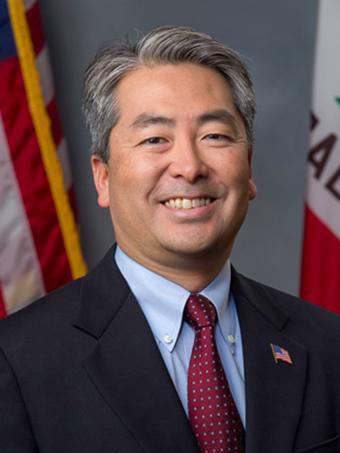
Photo of Al Muratsuchi
D California House · District 66

Rep. Al Muratsuchi

Compare
Total votes
25,954
all sessions
Attendance
94%
1,387 missed
Near the chamber average
With party
98%
of cast votes
Near the chamber average
Bipartisan score
1%
crosses aisle rarely
Near the chamber average
Sponsored
2,045
bills & resolutions
Near the chamber average
Committees
4
assignments
2,045 bills and resolutions

Sponsored bills

Total
2,045
Primary
262
Co-sponsor
1,783
This page
2,045
matching current filters
Co-sponsor HR 128
Passed · California House · Co-sponsor
Relative to Aromatic L-Amino Acid Decarboxylase Deficiency Awareness Day.

Maddy summaryCalifornia House Resolution 128 designates October 23, 2026, as Aromatic L-Amino Acid Decarboxylase (AADC) Deficiency Awareness Day. The resolution aims to increase public and medical community awareness of this ultrarare genetic condition, which prevents the body from producing dopamine and causes severe developmental delays. By highlighting the challenges faced by patients and their caregivers, the bill encourages Californians to learn more about the disease to support earlier diagnosis and continued research into treatments.

Passed Aug 13, 2026 1 co-sponsor
Co-sponsor HR 132
Passed · California House · Co-sponsor
Relative to Young Women's Reproductive Health Awareness Month.

Maddy summaryThis California House Resolution proclaims September 2026 as Young Women's Reproductive Health Awareness Month to highlight the importance of early diagnosis and education for adolescent girls. The resolution urges high schools, colleges, public health agencies, and medical providers to promote educational campaigns on topics such as menstrual health, HPV vaccination, and sexual health practices. It specifically aims to address disparities in care by encouraging outreach to communities that face systemic barriers or lack culturally appropriate resources.

Passed Aug 13, 2026 1 co-sponsor
Primary HR 131
Passed · California House · Lead sponsor
Relative to Student Cancer Education, Detection, and Prevention Week.

Maddy summaryCalifornia Assembly Resolution 131 proclaims October 11 through 17, 2026, as Student Cancer Education, Detection, and Prevention Week. The resolution encourages middle schools, high schools, colleges, public health agencies, pediatricians, and community health providers to promote educational campaigns on cancer prevention and detection. These efforts aim to inform students about risk factors, warning signs, and the importance of timely screenings to support better health outcomes for young people in the state.

Passed Aug 13, 2026 0 co-sponsors
Co-sponsor AB 2514
Passed · California House · Co-sponsor
Pupil achievement: State of the Achievement Gap Dashboard.

Existing law establishes the State Board of Education and requires the state board to study educational conditions and needs of the state and to make plans for the improvement of the administration and efficiency of the public schools of the state. Existing law establishes the State Department of Education under the administration of the Superintendent of Public Instruction and assigns to the department numerous responsibilities relating to the governance of the public elementary and secondary schools in the state. This bill would require a working group, proposed to be established by Assembly Bill 2225 of the 2025–26 Regular Session, to include as part of a report to the Governor and the Legislature, proposed to be required by Assembly Bill 2225 of the 2025–26 Regular Session, recommendations for the development of a State of the Achievement Gap Dashboard that would be annually updated to assess the state in its progress towards closing pupil academic achievement gaps. The bill would require the recommendations to include, among other things, a series of specified proposed metrics, as provided. This bill would become operative only if AB 2225 of the 2025–26 Regular Session is enacted and takes effect on or before January 1, 2027, and adds Section 52090 to the Education Code.

Passed Aug 13, 2026 1 co-sponsor
Co-sponsor ACA 18
Passed · California House · Co-sponsor
A resolution to propose to the people of the State of California an amendment to the Constitution of the State, by amending Section 9 of Article IX thereof, relating to the University of California.

The California Constitution provides that the University of California constitutes a public trust, and requires the university to be administered by the Regents of the University of California, a corporation in the form of a board, with full powers of organization and government, subject to legislative control only for specified purposes. The California Constitution requires the board to consist of 7 ex officio members and 18 appointive members appointed by the Governor and approved by the Senate. The California Constitution authorizes the members of the board to appoint either a member of the faculty at a campus of the university or of another institution of higher education, or a person enrolled as a student at a campus of the university, or both, as members of the board serving for no less than one year with all rights of participation. Beginning on July 1, 2027, this measure would require, instead of authorize, the members of the board to appoint to the board for 2-year terms, 2 undergraduate students and 2 graduate students enrolled at a campus of the university for each regular academic term during their service as members of the board, as provided. The measure would require each student board member to serve as a nonvoting student regent-designate in the first year of their 2-year term, and would authorize a student member who graduates from the university on or after January 1 of the 2nd year of the student member's 2-year term to serve the remainder of their term.

Passed Aug 13, 2026 1 co-sponsor
Primary AB 2202
Passed · California House · Lead sponsor
Pupil achievement: Closing the Achievement Gap Commission.

Existing law establishes the State Board of Education and requires the state board to study educational conditions and needs of the state and to make plans for the improvement of the administration and efficiency of the public schools of the state. Existing law establishes the State Department of Education under the administration of the Superintendent of Public Instruction and assigns to the department numerous responsibilities relating to the governance of the public elementary and secondary schools in the state. This bill would establish the Closing the Achievement Gap Commission as an advisory body to the state board. The bill would require the membership of the commission to consist of 17 voting members and one nonvoting member with an advisory vote, as provided. The bill would require 11 members of the commission to be appointed by the Governor and one member each to be appointed by the President pro Tempore of the Senate and the Speaker of the Assembly, pursuant to a specified application process and would require those members to reflect geographic, demographic, and local educational agency-type diversity. The bill would limit members appointed to the commission to one 4-year term, as provided. The bill would require the commission to annually elect a chair and vice chair and meet at least 2 times annually in the first year after its creation, and as needed thereafter, at the call of the chair or the state board. The bill would require the commission to, among other things, continually assess the extent to which there are gaps in state support for local educational agencies in their efforts to close achievement gaps. The bill would require the commission, on or before December 1, 2028, and every 2 years thereafter, to submit a report to the Governor, the appropriate policy and fiscal committees of the Legislature, the state board, and the department with recommendations and proposed actions that the state can take to help and support local educational agencies in closing the achievement gap. The bill would require the state board to consider those reports as an agenda item at a regularly scheduled public meeting or as provided and would require the department to post those reports on the department's internet website. This bill would become operative only if AB 2225 of the 2025–26 Regular Session is enacted and takes effect on or before January 1, 2027, and adds Section 52090 to the Education Code.

Passed Aug 13, 2026 0 co-sponsors
Co-sponsor HR 112
Passed · California House · Co-sponsor
Relative to Black Music Month.

Maddy summaryThis House Resolution officially designates September as Black Music Month to honor the significant contributions of Black artists to American culture. The measure recognizes a wide range of musical genres, including jazz, blues, gospel, and hip-hop, by highlighting their historical origins and influential figures. While the text celebrates these artistic achievements, it does not impose any new legal requirements or funding mandates.

Passed Aug 13, 2026 1 co-sponsor
Primary AB 2060
Passed · California House · Lead sponsor
Experienced Mentor Teacher Stipend Program.

Existing law requires the Commission on Teacher Credentialing to establish standards for the issuance and renewal of credentials, certificates, and permits. Existing law requires the commission to adopt standards for the accreditation of postsecondary teacher preparation programs. Existing law prescribes "clinical practice" as one of the commission-adopted standards and requires that teaching credential candidates perform 600 hours of clinical practice throughout the candidate's teacher preparation program, including, as a component of those hours, student teaching. Existing law establishes the Student Teacher Stipend Program to support prospective educators, as defined, during their completion of 500 or more hours of student teaching, as provided, and appropriates, for the 2025–26 fiscal year, $300,000,000 from the General Fund to the commission for allocation to support the Student Teacher Stipend Program. This bill would, contingent upon an appropriation of one-time funding by the Legislature, establish the Experienced Mentor Teacher Stipend Program, under the administration of the Commission on Teacher Credentialing, to expand the Student Teacher Stipend Program to award stipends of $3,000 each to compensate experienced mentor teachers, as defined, who mentor student teacher candidates who are in teacher preparation programs, as provided. In administering the Experienced Mentor Teacher Stipend Program, the bill would require the commission to expand the online process for local educational agencies, as defined, to submit an experienced mentor teacher's information, as provided. The bill would require local educational agencies awarded funding under the Experienced Mentor Teacher Stipend Program to also partner with a commission-approved teacher preparation program to create an experienced mentor teacher recruitment and selection process accompanied by planned professional learning and support activities, as provided. The bill would require the commission to annually report to the education and policy committees of both houses of the Legislature certain information regarding the Experienced Mentor Teacher Stipend Program, as provided.

Passed Aug 13, 2026 0 co-sponsors
Primary AB 1644
Passed · California House · Lead sponsor
Pupils: use of smartphones: prohibition: report.

Existing law requires the governing board of a school district, a county board of education, and the governing body of a charter school to, no later than July 1, 2026, develop and adopt, and update every 5 years, a policy to limit or prohibit the use by its pupils of smartphones while the pupils are at a schoolsite or while the pupils are under the supervision and control of an employee or employees of that local educational agency. Under existing law, a pupil shall not be prohibited from possessing or using a smartphone under specified circumstances, including, among others, when the possession or use of a smartphone is required in a pupil's individualized education program. This bill, commencing July 1, 2028, would require the above-described policy to continue to apply only to pupils in any of grades 9 to 12, inclusive. The bill would require the governing board of a school district, a county board of education, and the governing body of a charter school that serves pupils in transitional kindergarten, kindergarten, or grades 1 to 8, inclusive, to, no later than July 1, 2028, develop and adopt a policy that prohibits the use of smartphones by those pupils while the pupils are at a schoolsite or while the pupils are under the supervision and control of an employee or employees of that local educational agency, as provided. The bill, commencing July 1, 2028, would prohibit instruction provided to pupils in transitional kindergarten, kindergarten, and any of grades 1 to 8, inclusive, from requiring the use of a smartphone by a pupil. The bill, commencing January 1, 2027, would require (1) a pupil in any grade to also be allowed to possess or use a smartphone when the possession or use of a smartphone is required in a pupil's plan developed pursuant to the federal Rehabilitation Act of 1973 and (2) a policy adopted or updated pursuant to these provisions be included in a pupil handbook, if one is provided. By imposing additional duties on local educational agencies, the bill would constitute a state-mandated local program. This bill would require the State Department of Education, on or before January 1, 2029, to submit to the appropriate policy and fiscal committees of the Legislature, and post on their internet website, a report that contains (1) a description of the pupil smartphone policies of at least 30 selected local educational agencies that have provided consent to participate and that are representative of the demographic and geographic diversity of the state, including a copy of each policy, as provided, (2) the results of a survey of those local educational agencies, which the bill would require the department to conduct, and (3) recommended best practices for future local educational agency pupil smartphone use policies. The bill would authorize the department to collaborate with specified organizations with relevant expertise in preparing the report. The bill would repeal these provisions on January 1, 2033. The California Constitution requires the state to reimburse local agencies and school districts for certain costs mandated by the state. Statutory provisions establish procedures for making that reimbursement. This bill would provide that, if the Commission on State Mandates determines that the bill contains costs mandated by the state, reimbursement for those costs shall be made pursuant to the statutory provisions noted above.


Passed Aug 13, 2026 0 co-sponsors
Co-sponsor ACR 149
Signed into law · California House · Co-sponsor
Relative to the California Coastal Act of 1976.

This measure would acknowledge and celebrate 50 years of coastal protection and affirm the state's longstanding commitment to protecting its coastal waters, as specified.

Signed into law Aug 12, 2026 1 co-sponsor
Showing 41 to 50 of 2,045 bills
Previous 1 4 5 6 205 Next