

Passed Jan 18, 2024
1 co-sponsor
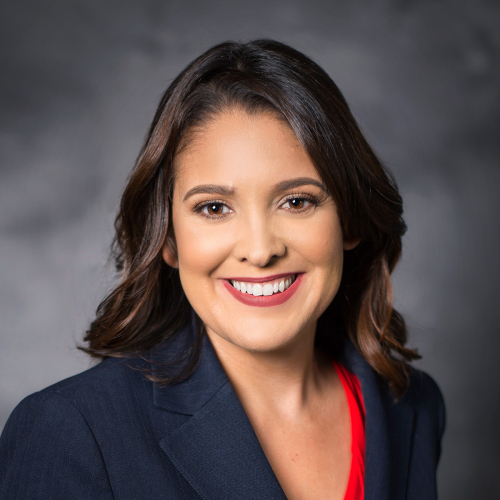
Asm. Blanca Pacheco
Total votes
12,834
all sessions
Attendance
96%
322 missed
Near the chamber average
With party
99%
of cast votes
Near the chamber average
Bipartisan score
0%
crosses aisle rarely
Near the chamber average
Sponsored
881
bills & resolutions
Near the chamber average
Committees
11
assignments
881 bills and resolutions
Sponsored bills
Total
881
Primary
72
Co-sponsor
809
This page
881
matching current filters
Passed Jan 16, 2024
1 co-sponsor
Relative to Women's Small Business Month.
This measure would declare October 2023 as Women's Small Business Month and encourage all citizens to recognize the economic importance of women's small business in California.
Passed Jan 4, 2024
1 co-sponsor
Vehicles.
Existing law prohibits a local authority from enacting or enforcing an ordinance on matters covered by the Vehicle Code unless expressly authorized by the Vehicle Code. Existing law authorizes local authorities to adopt rules and regulations by ordinance or resolution regarding specified matters, including, among others, crossing guards, the operation of bicycles, the removal of illegally parked vehicles, and cruising, as defined. This bill would remove the authorization for a local authority to adopt rules and regulations by ordinance or regulation regarding cruising. Existing law makes it unlawful to operate a passenger vehicle, or commercial vehicle under 6,000 pounds, that has been modified from its original design so that any portion of the vehicle, other than the wheels, has less clearance from the surface of a level roadway than the clearance between the roadway and the lowermost portion of any rim of any wheel in contact with the roadway. This bill would repeal that prohibition. This bill would incorporate additional changes to Section 21100 of the Vehicle Code proposed by AB 825 and SB 50 to be operative only if this bill and AB 825, this bill and SB 50, or this bill, AB 825, and SB 50 are enacted and this bill is enacted last.
Signed into law Oct 13, 2023
1 co-sponsor
Behavioral health.
Existing law, the Lanterman-Petris-Short Act, provides for the involuntary commitment and treatment of a person who is a danger to themselves or others or who is gravely disabled. Existing law, for purposes of involuntary commitment, defines "gravely disabled" as either a condition in which a person, as a result of a mental health disorder, is unable to provide for their basic personal needs for food, clothing, or shelter or has been found mentally incompetent, as specified. This bill expands the definition of "gravely disabled" to also include a condition in which a person, as a result of a severe substance use disorder, or a co-occurring mental health disorder and a severe substance use disorder, is, in addition to the basic personal needs described above, unable to provide for their personal safety or necessary medical care, as defined. The bill would also expand the definition of "gravely disabled," as it applies to specified sections, to include, in addition to the basic needs described above, the inability for a person to provide for their personal safety or necessary medical care as a result of chronic alcoholism. The bill would authorize counties to defer implementation of these provisions to January 1, 2026, as specified. The bill would make conforming changes. To the extent that this change increases the level of service required of county mental health departments, the bill would impose a state-mandated local program. Existing law also authorizes the appointment of a conservator, in the County of Los Angeles, the County of San Diego, or the City and County of San Francisco, for a person who is incapable of caring for the person's own health and well-being due to a serious mental illness and substance use disorder. Existing law establishes the hearsay rule, under which evidence of a statement is generally inadmissible if it was made other than by a witness while testifying at a hearing and is offered to prove the truth of the matter stated. Existing law sets forth exceptions to the hearsay rule to permit the admission of specified kinds of evidence. Under this bill, for purposes of an opinion offered by an expert witness in any proceeding relating to the appointment or reappointment of a conservator pursuant to the above-described provisions, the statements of specified health practitioners or a licensed clinical social worker included in the medical record would not be made inadmissible by the hearsay rule under specified conditions. The bill would authorize the court to grant a reasonable continuance if an expert witness in a proceeding relied on the medical record and the medical record has not been provided to the parties or their counsel. Existing law requires the State Department of Health Care Services to collect data quarterly and publish, on or before May 1 of each year, a specified report that includes, among other things, the number of persons for whom temporary conservatorship are established in each county and an analysis and evaluation of the efficacy of mental health assessments, detentions, treatments, and supportive services provided, as specified. This bill would, beginning with the report due May 1, 2024, require the report to also include the number of persons admitted or detained, as specified, for conditions that include, among others, grave disability due to a mental health disorder, severe substance use disorder, or both a mental health disorder and a severe substance use disorder. The California Constitution requires the state to reimburse local agencies and school districts for certain costs mandated by the state. Statutory provisions establish procedures for making that reimbursement. This bill would provide that, if the Commission on State Mandates determines that the bill contains costs mandated by the state, reimbursement for those costs shall be made pursuant to the statutory provisions noted above.
Signed into law Oct 10, 2023
1 co-sponsor
Elections: filings.
Existing law establishes procedures for authors to submit arguments for and against local ballot measures, and rebuttals to those arguments, in accordance with deadlines set by local elections officials. Existing law requires elections officials to select arguments from those submitted for publication in the voter information guide. This bill would establish a lead county, as defined, for the purposes of district or school district elections when the boundaries of the district or school district encompass more than one county. The bill would require authors of arguments for or against district or school district measures, and related rebuttal arguments, to submit the arguments to the elections official of the lead county. The bill would require the elections official of the lead county to work with the other counties within the district bounds to establish deadlines for receipt of the arguments. The bill would require the elections official of the lead county to select the arguments for publication in the county voter information guide, and to transmit copies of the selected arguments to elections officials in the other counties within the district or school district, as specified. The bill would require an elections official who receives arguments selected by the lead county to include the arguments in their county voter information guide. Existing law permits an elections official to post a form on their internet website for a candidate to use to submit the candidate's statement for the voter information portion of the county voter information guide. If the elections official posts the form, existing law requires the elections official to accept that form by electronic submission if it is submitted in accordance with certain timeframes and procedures for the preparation of the voter information portion of the county voter information guide. Existing law requires a candidate running in a multicounty district to provide to each county a hardcopy of the candidate statement form from the candidate's county of residence and payment of the requisite fee. This bill would require elections officials to post and accept electronic submission of a form for candidates to submit a candidate statement for the voter information portion of the county voter information guide. The bill would authorize a candidate running in a multicounty district to submit to each county an electronic copy of the form from the candidate's county of residence, and would require the candidate to transmit hardcopies of the candidate statement form, any accompanying form, and payment of the requisite fee to each county by overnight mail within 72 hours of filing the statement electronically. By increasing the duties of local elections officials, this bill would impose a state-mandated local program. The California Constitution requires the state to reimburse local agencies and school districts for certain costs mandated by the state. Statutory provisions establish procedures for making that reimbursement. This bill would provide that, if the Commission on State Mandates determines that the bill contains costs mandated by the state, reimbursement for those costs shall be made pursuant to the statutory provisions noted above. This bill would declare that it is to take effect immediately as an urgency statute.
Signed into law Oct 10, 2023
1 co-sponsor
State Athletic Commission: mixed martial arts: retirement benefit.
Existing law, the Boxing Act, also known as the State Athletic Commission Act, creates within the Department of Consumer Affairs the State Athletic Commission. Under existing law, the commission has sole direction, management, control of, and jurisdiction over all professional and amateur boxing and kickboxing, all forms and combinations of full contact martial arts contests, including mixed martial arts, and matches or exhibits conducted, held, or given within California. Existing law authorizes the commission to license professional and amateur boxers, professional and amateur martial arts fighters, booking agents, managers of professional boxers and professional martial arts fighters, trainers, chief seconds, and seconds of each. Existing law prohibits a person from participating in any contest, or serving in the capacity of a booking agent, manager, trainer, or second, unless the person has been licensed for that purpose by the commission. Existing law establishes the Boxers' Pension Fund, a retirement fund under the exclusive control of the commission, that is funded by an assessment on tickets that is transferred to the commission following a contest or wrestling exhibition, as prescribed, and by contributions by boxers, managers, promoters, or any one or more of these persons. Existing law requires all moneys in the Boxers' Pension Fund to be continuously appropriated to be used exclusively for the purposes and administration of the pension fund. Existing law prohibits any moneys with the Boxers' Pension Fund from being deposited or transferred to the general fund. This bill would, among other things, require the commission to establish the Mixed Martial Arts Retirement Benefit Fund (MMA Fund) and would continuously appropriate the moneys in the MMA Fund to be used exclusively for the purposes and administration of the MMA Fund. The bill would require the commission to establish a method for financing the MMA Fund, including by a specified assessment on tickets to events under the commission's jurisdiction, by revenue generated through the sale of special interest license plates and other commission-branded items, including, but not limited to, sport paraphernalia and souvenirs, and by contributions from mixed martial artists, managers, promoters, or any one or more of these persons. The bill would require a participating martial artist, as defined, to become vested in the amount credited to the participating martial artist's regular account in the MMA Fund when the participating martial artist has fought in at least 39 scheduled rounds in a commission-sanctioned professional mixed martial art contest held in the state and would prohibit a participating martial artist from being entitled to distribution of the funds held in the participating martial artist's regular account until the participating martial artist is at least 50 years of age. The bill would require contributions to finance the MMA Fund to be allocated to each participating martial artist's regular account on the last day of the MMA Fund year, as specified. The bill would authorize the commission to award an early retirement benefit to a participating martial artist, who has vested in the MMA Fund but is younger than 50 years of age, for vocational, education, training, or medical need in the amount contained in the participating martial artist's regular account, as specified. The bill would require information submitted by or to a participating martial artist pursuant to that early retirement benefit provision to be confidential and not subject to public disclosure unless, among other things, the participating martial artist, in writing, waives the confidentiality of information submitted to the commission. The bill would also authorize a participating martial artist to designate one or more beneficiaries of the martial artist's benefits from the MMA Fund upon the death of the participating martial artist, as prescribed. The bill would require a form submitted by a participating martial artist to the commission or its designee pursuant to that provision, including a beneficiary designation, to be confidential and not subject to public disclosure, except as specified. This bill would require the commission to notify any participating martial artist eligible to receive benefits from the MMA Fund of certain information when the right to receive those benefits vests in that martial artist, including the date upon which the martial artist will first be able to claim benefits from the MMA Fund or will first be able to convert all, or a portion of, those benefits to an early medical or early vocational retirement benefit. This bill would include a change in state statute that would result in a taxpayer paying a higher tax within the meaning of Section 3 of Article XIIIA of the California Constitution, and thus would require for passage the approval of 23 of the membership of each house of the Legislature. Existing constitutional provisions require that a statute that limits the right of access to the meetings of public bodies or the writings of public officials and agencies be adopted with findings demonstrating the interest protected by the limitation and the need for protecting that interest. This bill would make legislative findings to that effect.
Signed into law Oct 8, 2023
1 co-sponsor
Outdoor Advertising Act: local governmental entities: relocation.
The Outdoor Advertising Act regulates the placement of advertising displays adjacent to and within specified distances of highways that are part of the national system of interstate and defense highways and federal-aid highways. The act prohibits a governmental entity from compelling the removal of a lawfully erected advertising display within the state, or limiting its customary maintenance or use, without payment of compensation, as defined in the Eminent Domain Law, to the owner or owners of the display and the land upon which the display is located. This prohibition does not apply to an advertising display relocated by mutual agreement between the display owner and a local entity. The act generally prohibits placing or maintaining advertising displays on Department of Transportation-owned property adjacent to landscaped freeways if the advertising display is designed to be viewed primarily by persons traveling on the landscaped freeway, but exempts (1) a county that designates where advertising displays may be placed or prohibited as part of a county land use or zoning ordinance and (2) the relocation or height increase for lawfully erected advertising displays pursuant to a relocation agreement, including the conversion of an advertising display to a message center as part of a relocation agreement. This bill would expand the exemption described in (1) above to also include a city or city and county that designates where advertising displays may be placed or prohibited as part of the city's or city and county's land use or zoning ordinance. The bill would expand the exemption described in (2) above to include agreements, entered into for any purpose, to relocate an advertising display or to convert or replace a relocated advertising display with a message center, as specified. The bill would authorize a relocated advertising display to be placed in the same or a different city, county, or city and county, as specified. This bill would require the department to allow any lawfully erected advertising display to be converted or replaced with a message center at its permitted location, as specified.
Signed into law Oct 8, 2023
0 co-sponsors
Open meetings: local agencies: teleconferences.
(1) Existing law, the Ralph M. Brown Act, requires, with specified exceptions, that all meetings of a legislative body of a local agency, as those terms are defined, be open and public and that all persons be permitted to attend and participate. The act contains specified provisions regarding providing for the ability of the public to observe and provide comment. The act allows for meetings to occur via teleconferencing subject to certain requirements, particularly that the legislative body notice each teleconference location of each member that will be participating in the public meeting, that each teleconference location be accessible to the public, that members of the public be allowed to address the legislative body at each teleconference location, that the legislative body post an agenda at each teleconference location, and that at least a quorum of the legislative body participate from locations within the boundaries of the local agency's jurisdiction. The act provides an exemption to the jurisdictional requirement for health authorities, as defined. Existing law, until January 1, 2024, authorizes the legislative body of a local agency to use teleconferencing without complying with those specified teleconferencing requirements in specified circumstances when a declared state of emergency is in effect. Those circumstances are that (1) state or local officials have imposed or recommended measures to promote social distancing, (2) the legislative body is meeting for the purpose of determining whether, as a result of the emergency, meeting in person would present imminent risks to the health or safety of attendees, or (3) the legislative body has previously made that determination. If there is a continuing state of emergency, or if state or local officials have imposed or recommended measures to promote social distancing, existing law requires a legislative body to make specified findings not later than 30 days after the first teleconferenced meeting, and to make those findings every 30 days thereafter, in order to continue to meet under these abbreviated teleconferencing procedures. Existing law requires a legislative body that holds a teleconferenced meeting under these abbreviated teleconferencing procedures to give notice of the meeting and post agendas, as described, to allow members of the public to access the meeting and address the legislative body, to give notice of the means by which members of the public may access the meeting and offer public comment, including an opportunity for all persons to attend via a call-in option or an internet-based service option. Existing law prohibits a legislative body that holds a teleconferenced meeting under these abbreviated teleconferencing procedures from requiring public comments to be submitted in advance of the meeting and would specify that the legislative body must provide an opportunity for the public to address the legislative body and offer comment in real time. This bill would revise the authority of a legislative body to hold a teleconference meeting under those abbreviated teleconferencing procedures when a declared state of emergency is in effect. Specifically, the bill would extend indefinitely that authority in the circumstances under which the legislative body either (1) meets for the purpose of determining whether, as a result of the emergency, meeting in person would present imminent risks to the health or safety of attendees, or (2) has previously made that determination. The bill would also extend the period for a legislative body to make the above-described findings related to a continuing state of emergency to not later than 45 days after the first teleconferenced meeting, and every 45 days thereafter, in order to continue to meet under the abbreviated teleconferencing procedures. The bill would additionally make nonsubstantive changes to those provisions and correct erroneous cross-references. (2) This bill would incorporate additional changes to Section 54953 of the Government Code proposed by SB 537 to be operative only if this bill and SB 537 are enacted and this bill is enacted last. (3) The California Constitution requires local agencies, for the purpose of ensuring public access to the meetings of public bodies and the writings of public officials and agencies, to comply with a statutory enactment that amends or enacts laws relating to public records or open meetings and contains findings demonstrating that the enactment furthers the constitutional requirements relating to this purpose. This bill would make legislative findings to that effect.
Signed into law Oct 8, 2023
1 co-sponsor
Courts: court interpreters.
(1) The Trial Court Interpreter Employment and Labor Relations Act (the act) establishes procedures governing the employment and compensation of certified and registered trial court interpreters and court interpreters pro tempore employed by the courts. Existing law requires trial courts to appoint trial court employees, rather than independent contractors to perform interpretation of court proceedings, as specified. Existing law permits a court to appoint an independent contractor for interpretation in specified circumstances, including when an interpreter is paid directly by the parties to the proceeding. The bill, beginning January 1, 2025, would authorize an interpreter that is certified or registered and paid directly by the parties in a proceeding to be appointed under these provisions. (2) The act establishes an employee classification entitled "court interpreter pro tempore" and requires employees in this classification to work under specified conditions, including being paid on a per diem basis for work performed, unless a memorandum of understanding or agreement with a recognized employee organization provides otherwise. Existing law requires a court to offer to employ an interpreter as a court interpreter pro tempore that meets specified criteria and specifies how the court is required to accept and process applications for court interpreters pro tempore. Beginning January 1, 2025, this bill would instead rename a court interpreter pro tempore as an intermittent, part-time interpreter and would make conforming changes. The bill, on January 1, 2025, would eliminate the requirement that a court offer to employ as a court interpreter an interpreter who meets the specified criteria requiring the hiring of court interpreters and the provisions regarding the acceptance and processing of applications for court interpreters pro tempore. The bill would also authorize courts to hire registered or nonregistered interpreters as employees to perform relay interpretation, as defined, but only if the trial court has employed an interpreter of the same language pair. (3) Existing law creates the regional court interpreter employment relations committee for the purposes of developing regional terms and conditions of employment for court interpreters and for collective bargaining with recognized employee organizations, as specified. Existing law authorizes trial courts to employ certified and registered interpreters to perform spoken language interpretation for the trial courts in full-time or part-time court interpreter positions created by the trial courts with the authorization of the regional committee and subject to meet and confer in good faith. Existing law provides an order of priority for applicants that courts are required to adhere to when hiring interpreters, except as specified. Beginning January 1, 2025, this bill would remove the requirement for the authorization of the regional committee and meet and confer provisions when a court seeks to employ an interpreter for full-time, part-time, or intermittent, part-time interpreter positions created by the court. The bill, beginning January 1, 2025, would modify the prioritization for court interpreters who have previously performed work for that trial court. The bill would authorize trial courts to set additional local compensation, as defined, for interpreters. (4) Existing law provides for a regional transition period, defined as January 1, 2003, to July 1, 2005, except to the extent that a region may have a memorandum of understanding at an earlier point, regarding the employment of interpreters pursuant to the provisions of the act. This bill would remove various references to the transition period and various compliance deadlines related to the transition period. The bill would update obsolete cross-references and make other technical changes. (5) The California Constitution vests the judicial power of the state in the Supreme Court, courts of appeal, and superior courts, and establishes the Judicial Council to, among other things, adopt rules of court and perform functions prescribed by statute. This bill would require the Judicial Council to conduct a court interpreter workforce study and provide recommendations to the Legislature on or before January 1, 2026, regarding court interpreter availability and the future court interpreter workforce. The bill would require the Judicial Council to work in collaboration with key stakeholder groups, as specified.
Signed into law Oct 8, 2023
0 co-sponsors
Ask Maddy
·
AI policy assistant
Ask Maddy about Blanca Pacheco
Scope: california
Hi! I can help you understand Blanca Pacheco's legislative record. What would you like to know?
Try one of these
i
Maddy answers using official bill text and legislative records. Always verify before sharing.
Sources cited inline