

Courts: court interpreters.
Summary
(1) The Trial Court Interpreter Employment and Labor Relations Act (the act) establishes procedures governing the employment and compensation of certified and registered trial court interpreters and court interpreters pro tempore employed by the courts. Existing law requires trial courts to appoint trial court employees, rather than independent contractors to perform interpretation of court proceedings, as specified. Existing law permits a court to appoint an independent contractor for interpretation in specified circumstances, including when an interpreter is paid directly by the parties to the proceeding. The bill, beginning January 1, 2025, would authorize an interpreter that is certified or registered and paid directly by the parties in a proceeding to be appointed under these provisions. (2) The act establishes an employee classification entitled "court interpreter pro tempore" and requires employees in this classification to work under specified conditions, including being paid on a per diem basis for work performed, unless a memorandum of understanding or agreement with a recognized employee organization provides otherwise. Existing law requires a court to offer to employ an interpreter as a court interpreter pro tempore that meets specified criteria and specifies how the court is required to accept and process applications for court interpreters pro tempore. Beginning January 1, 2025, this bill would instead rename a court interpreter pro tempore as an intermittent, part-time interpreter and would make conforming changes. The bill, on January 1, 2025, would eliminate the requirement that a court offer to employ as a court interpreter an interpreter who meets the specified criteria requiring the hiring of court interpreters and the provisions regarding the acceptance and processing of applications for court interpreters pro tempore. The bill would also authorize courts to hire registered or nonregistered interpreters as employees to perform relay interpretation, as defined, but only if the trial court has employed an interpreter of the same language pair. (3) Existing law creates the regional court interpreter employment relations committee for the purposes of developing regional terms and conditions of employment for court interpreters and for collective bargaining with recognized employee organizations, as specified. Existing law authorizes trial courts to employ certified and registered interpreters to perform spoken language interpretation for the trial courts in full-time or part-time court interpreter positions created by the trial courts with the authorization of the regional committee and subject to meet and confer in good faith. Existing law provides an order of priority for applicants that courts are required to adhere to when hiring interpreters, except as specified. Beginning January 1, 2025, this bill would remove the requirement for the authorization of the regional committee and meet and confer provisions when a court seeks to employ an interpreter for full-time, part-time, or intermittent, part-time interpreter positions created by the court. The bill, beginning January 1, 2025, would modify the prioritization for court interpreters who have previously performed work for that trial court. The bill would authorize trial courts to set additional local compensation, as defined, for interpreters. (4) Existing law provides for a regional transition period, defined as January 1, 2003, to July 1, 2005, except to the extent that a region may have a memorandum of understanding at an earlier point, regarding the employment of interpreters pursuant to the provisions of the act. This bill would remove various references to the transition period and various compliance deadlines related to the transition period. The bill would update obsolete cross-references and make other technical changes. (5) The California Constitution vests the judicial power of the state in the Supreme Court, courts of appeal, and superior courts, and establishes the Judicial Council to, among other things, adopt rules of court and perform functions prescribed by statute. This bill would require the Judicial Council to conduct a court interpreter workforce study and provide recommendations to the Legislature on or before January 1, 2026, regarding court interpreter availability and the future court interpreter workforce. The bill would require the Judicial Council to work in collaboration with key stakeholder groups, as specified.
Bill status
signed
all 5 stages cleared
Introduction
Feb 2023
Committee Review
Aug 2023
Assembly Passage
May 2023
Senate Passage
Sep 2023
Signed into Law
Oct 2023
Introduced Feb 15, 2023
Signed Oct 8, 2023
Floor votes · Senate Sep 13, 2023 · Assembly May 30, 2023
How they voted
31–8
Passed · 1 other
Total votes 40
Sep 13, 2023
D
Democratic31
96% Yea
R
Republican9
88% Nay
Vote distribution
All Yea
All Nay
Mixed
No data
Full legislative history
Actions timeline
Total actions
28
Key actions
12
Committee
9
Amendments
9
Oct 8, 2023
Signed into law
Approved by the Governor.
legislature
Sep 14, 2023
Lower · Passed
Senate amendments concurred in. To Engrossing and Enrolling. (Ayes 65. Noes 15. Page 3536.).
lower
Sep 13, 2023
Introduced
In Assembly. Concurrence in Senate amendments pending.
lower
Sep 13, 2023
Upper · Passed
Read third time. Passed. Ordered to the Assembly. (Ayes 31. Noes 8. Page 2726.).
upper
Sep 8, 2023
Upper · Passed
Read third time and amended. Ordered to second reading.
upper
Sep 1, 2023
Upper · Passed
Read second time and amended. Ordered returned to second reading.
upper
Sep 1, 2023
Introduced
From committee: Amend, and do pass as amended. (Ayes 5. Noes 2.) (September 1).
upper
Aug 14, 2023
Committee
In committee: Referred to APPR suspense file.
upper
Jul 13, 2023
Upper · Passed
Read second time and amended. Re-referred to Com. on APPR.
upper
Jul 12, 2023
Introduced
From committee: Amend, and do pass as amended and re-refer to Com. on APPR. (Ayes 9. Noes 2.) (July 11).
upper
Jul 3, 2023
Introduced
From committee chair, with author's amendments: Amend, and re-refer to committee. Read second time, amended, and re-referred to Com. on JUD.
upper
Jun 20, 2023
Introduced
From committee chair, with author's amendments: Amend, and re-refer to committee. Read second time, amended, and re-referred to Com. on JUD.
upper
Jun 7, 2023
Committee
Referred to Com. on JUD.
upper
May 30, 2023
Lower · Passed
Read third time. Passed. Ordered to the Senate. (Ayes 61. Noes 16. Page 1888.)
lower
May 18, 2023
Lower · Passed
From committee: Do pass. (Ayes 11. Noes 4.) (May 18).
lower
May 10, 2023
Committee
In committee: Set, first hearing. Referred to APPR. suspense file.
lower
May 3, 2023
Lower · Passed
In committee: Hearing postponed by committee.
lower
Apr 26, 2023
Lower · Passed
In committee: Hearing postponed by committee.
lower
Apr 12, 2023
Lower · Passed
From committee: Do pass and re-refer to Com. on APPR. (Ayes 5. Noes 2.) (April 12). Re-referred to Com. on APPR.
lower
Mar 2, 2023
Committee
Referred to Com. on P.E. & R.
lower
Feb 16, 2023
Lower · Passed
From printer. May be heard in committee March 18.
lower
1 primary · 2 co-sponsors
Sponsors
Role
Legislator
Party
State
District
P

Blanca Pacheco
DDemocratic
Co
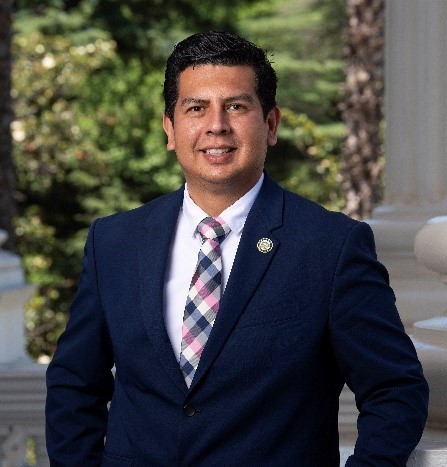
David Alvarez
DDemocratic
Co

Dawn Addis
DDemocratic
Ask Maddy
·
AI policy assistant
Ask Maddy about AB 1032
Scope: CA
Hi! I can help you understand AB 1032. What would you like to know?
Try one of these
i
Maddy answers using official bill text and legislative records. Always verify before sharing.
Sources cited inline