

Passed Feb 8, 2024
1 co-sponsor
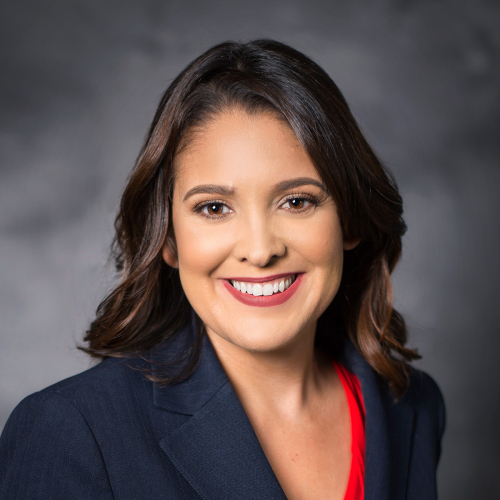
Asm. Blanca Pacheco
Total votes
12,834
all sessions
Attendance
96%
322 missed
Near the chamber average
With party
99%
of cast votes
Near the chamber average
Bipartisan score
0%
crosses aisle rarely
Near the chamber average
Sponsored
881
bills & resolutions
Near the chamber average
Committees
11
assignments
881 bills and resolutions
Sponsored bills
Total
881
Primary
72
Co-sponsor
809
This page
881
matching current filters
Gas corporations: renewable gas procurement.
Existing law vests the Public Utilities Commission with regulatory authority over public utilities, including gas corporations. Existing law requires the commission, in consultation with the State Air Resources Board, to consider adopting specific biomethane procurement targets or goals for each gas corporation, as specified. Existing law requires that the commission, before establishing biomethane procurement targets or goals, find that the targets or goals are cost-effective means of achieving the reductions in emissions of short-lived climate pollutants and other greenhouse gases forecast pursuant to specified laws and that the targets or goals comply with all applicable state and federal laws. Existing law authorizes the commission to establish rules and to fix the rates and charges for all public utilities, subject to control by the Legislature, and requires that the rates and charges of a public utility be just and reasonable. Existing law requires the commission and the State Energy Resources Conservation and Development Commission to undertake specified actions to advance the state's clean energy and pollution reduction objectives, including, where feasible, cost effective, and consistent with other state policy objectives, increasing the use of large- and small-scale energy storage with a variety of technologies, including green electrolytic hydrogen, as defined. This bill would require the commission to open a new proceeding, or a new phase of an existing proceeding, to consider establishing procurement goals for renewable hydrogen, as defined, and consider requiring each gas corporation and core transport agent to annually procure a proportionate share of renewable hydrogen to meet those goals. The bill would require the commission to make specified findings before establishing renewable hydrogen procurement targets or goals. Under existing law, a violation of the Public Utilities Act or any order, decision, rule, direction, demand, or requirement of the commission is a crime. Because the provisions of this bill would be a part of the act and because a violation of an order or decision of the commission implementing its requirements would be a crime, the bill would impose a state-mandated local program by creating a new crime. The California Constitution requires the state to reimburse local agencies and school districts for certain costs mandated by the state. Statutory provisions establish procedures for making that reimbursement. This bill would provide that no reimbursement is required by this act for a specified reason.
Failed Feb 1, 2024
0 co-sponsors
Pupil literacy: home book delivery: grant program.
Existing law establishes a system of public elementary and secondary schools in this state and authorizes local educational agencies throughout the state to operate schools and provide instruction to pupils in kindergarten and grades 1 to 12, inclusive. Existing law establishes in the state government a State Department of Education and the department is responsible for various ongoing activities involving the public schools. This bill would, upon appropriation by the Legislature for this purpose, establish the Home Book Delivery and School Connection Grant Program for the purpose of increasing access to books that are culturally relevant and reflect the diversity of the state, and build connections between school and home to support pupils in achieving grade-level reading by 3rd grade. The bill would require the department to award formula grants to up to 75 local educational agencies that opt in to the program. The bill would require the department to fund selected local educational agencies with pupils in transitional kindergarten, kindergarten, and grades 1 to 3, inclusive, that have the highest percentage of 3rd-grade pupils scoring at the lowest performance level on the California Assessment of Student Performance and Progress in English language arts who opt in to the grant pilot program. The bill would authorize the department to select a county office of education to assist in the administration of the grant program. This bill would require the pilot program to deliver, on a regular schedule, a minimum of 12 books per year to homes of participating families, as provided. The bill would authorize the department to contract with one or more entities, as provided, in order to implement the delivery services necessary to implement the pilot program. The bill would authorize local educational agencies to opt in their eligible schools for participation in the program and upon being chosen to participate, would require the local educational agencies to notify parents and families about the option to access and select books for home delivery and would require those local educational agencies to provide an annual report on an unspecified date to the selected entity or entities that are chosen to administer the program, as provided.
Failed Feb 1, 2024
0 co-sponsors
Real property: property records: personal identifying information.
Existing law generally regulates county recorders, and requires recorders to, upon payment of proper fees and taxes, accept for recordation any instrument, paper, or notice that is authorized or required by statute, or court order to be recorded, or authorized or required to be recorded by a local ordinance that relates to the recordation of any instrument, paper, or notice that relates to real property, as specified. Existing law requires the county recorder or each county to establish a social security number truncation program in order to create a public record version of each official record, as specified. This bill would, except as specified, require a county recorder or other county official who manages a county's property records to establish a procedure that, among other things, redacts personal identifying information from property records and only allows access to an unredacted property record in person at the office of the county recorder or other county official who manages the county's property records. By mandating a new program and higher level of service on county recorders and other county officials who manage a county's property records, this bill would impose a state-mandated local program. The bill would define "personal identifying information" as a property address, a home address, an assessor's parcel number, and a property legal description. The bill would make related findings and declarations. The California Constitution requires the state to reimburse local agencies and school districts for certain costs mandated by the state. Statutory provisions establish procedures for making that reimbursement. This bill would provide that no reimbursement is required by this act for a specified reason.
Failed Feb 1, 2024
0 co-sponsors
Domestic violence protective orders: possession of a firearm.
(1) Existing law prohibits a person subject to a protective order, as defined, from owning, possessing, purchasing, or receiving a firearm or ammunition while that protective order is in effect. Existing law makes a violation of that prohibition with regard to purchasing or receiving a firearm or ammunition punishable by imprisonment in the county jail for up to one year, by imprisonment in the state prison for 16 months or 2 or 3 years, or by a fine not exceeding $1,000, or by both that imprisonment and fine. Existing law makes a violation of that prohibition with regard to owning or possessing a firearm or ammunition punishable by imprisonment in the county jail for up to one year, or by a fine not exceeding $1,000, or by both that imprisonment and fine. After notice and hearing, this bill would, for protective orders, as specified, issued on or after July 1, 2024, prohibit a person subject to the protective order from owning, possessing, purchasing, or receiving a firearm or ammunition within 3 years after the expiration of the order and make a violation of these provision a crime. The bill would require a court, if they find that the person willfully violated that prohibition within 3 years after the expiration of the order, to impose the maximum fine allowed under existing law. (2) Existing law allows a search warrant to be issued upon various grounds, including when the property or things to be seized include a firearm, if the prohibited firearm is possessed, owned, in the custody of, or controlled by a person against whom a specified protective order has been issued, and the person is served with the order and fails to relinquish the firearm as required by law. This bill would expand the grounds for the search warrant to include a person who is subject to any civil or criminal protective order that includes a prohibition on owning, possessing, or having custody or control of a firearm. (3) Existing law requires the Judicial Council to provide notice on all protective orders issued within the state and requires a restraining order requiring a person to relinquish a firearm or ammunition to state on its face that the respondent is prohibited from owning, possessing, purchasing, or receiving a firearm or ammunition while the protective order is in effect. This bill would require the Judicial Council to also include a statement in the notice that the firearm and ammunition prohibition extends for 3 years after the expiration of the protective order that is issued on or after July 1, 2024. The bill would require a restraining order to include a similar statement. By creating new crimes, this bill would create a state-mandated local program. The California Constitution requires the state to reimburse local agencies and school districts for certain costs mandated by the state. Statutory provisions establish procedures for making that reimbursement. This bill would provide that no reimbursement is required by this act for a specified reason.
Failed Feb 1, 2024
1 co-sponsor
Vital records: diacritical marks.
Existing law prescribes the duties of the State Registrar of Vital Statistics (State Registrar) and local registrars of births and deaths with respect to the registration of certificates of live birth, fetal death, or death, and marriage licenses. Existing law requires the State Registrar to prescribe and furnish all record forms for use in carrying out the provisions governing vital records and prohibits the use of any record form or format other than those prescribed by the State Registrar. Existing law requires every live birth, fetal death, death, and marriage that occurs in the state to be registered with the local registrar. Existing law requires certificates of live birth, fetal death, or death, and a marriage license to include specified information, such as the full name of the child on a certificate of live birth and the full names of the parties to be married on a marriage license. Existing law also requires the county clerk to issue a confidential marriage license, as specified, on a form prescribed by the State Registrar. This bill would require the State Registrar to require the use of a diacritical mark on an English letter to be properly recorded, when applicable, on a certificate of live birth, fetal death, death, marriage license and certificate, or confidential marriage license and certificate, and would require the use of a diacritical mark to be deemed an acceptable entry by the State Registrar. The bill would provide that the absence of a diacritical mark on a certificate of live birth, fetal death, or death, or a marriage license does not render the document invalid nor affect any constructive notice imparted by proper recordation of the document. The bill would authorize, if a name is not accurately recorded because of the absence of a diacritical mark on an English letter in any certificate of live birth, fetal death, death, or marriage already registered, the person asserting the omission, or the person's conservator, or if a minor, the person's parent or guardian, to submit a written request to the State Registrar for the issuance of a new certificate of birth, fetal death, death, or marriage stating the changes necessary to make the name correct. The bill would require the State Registrar to review the request and, if the request is accompanied with the payment of a specified fee, to issue a new certificate of live birth, fetal death, death, or marriage with the accurate name identified in the request. The bill would also authorize, if a name is not accurately recorded because of the absence of a diacritical mark on an English letter on any confidential license and certificate of marriage already registered, the party asserting the omission to make an affidavit, under oath, stating the changes necessary to make the record correct and file it with the county clerk. The bill would require the county clerk to review the amendment for acceptance for filing, and if accepted, file the amendment and note the fact of the amendment, with its date, on the otherwise unaltered original confidential license and certificate of marriage. By requiring the affidavit to be under oath, the bill would expand the crime of perjury, thereby imposing a state-mandated local program. By increasing duties on county clerks, the bill would impose a state-mandated local program. The California Constitution requires the state to reimburse local agencies and school districts for certain costs mandated by the state. Statutory provisions establish procedures for making that reimbursement. This bill would provide that with regard to certain mandates no reimbursement is required by this act for a specified reason. With regard to any other mandates, this bill would provide that, if the Commission on State Mandates determines that the bill contains costs so mandated by the state, reimbursement for those costs shall be made pursuant to the statutory provisions noted above.
Failed Feb 1, 2024
0 co-sponsors
Clinics: licensure.
Existing law requires the State Department of Public Health to license and regulate various types of clinics, including primary care clinics and specialty clinics. This bill would authorize a licensed primary care clinic with a license in good standing with the department for the preceding 5 years to construct a new outpatient clinic, acquire ownership or control of an outpatient setting, as defined, acquire or control certain offices or clinics exempt from licensure, as specified, or acquire ownership or control of a previously licensed primary care clinic. The bill would authorize a facility constructed or acquired by a licensed primary care clinic under these provisions to be deemed compliant with the minimum construction standards of adequacy and safety required for the primary care clinic constructing or acquiring the facility, as specified. The bill would require the department to immediately approve a license for these facilities without the necessity of first conducting an initial onsite survey upon receipt of a written notice, as specified. Existing law requires the Department of Health Care Access and Information, formerly the Office of Statewide Health Planning and Development, in consultation with the Community Clinics Advisory Committee, to prescribe minimum construction standards of adequacy and safety for clinics, as specified, in the California Building Standards Code. This bill would additionally require the department to consult the California Building Standards Commission in prescribing these minimum construction standards. The bill would require these standards to be developed in consideration of the essential role of clinics in increasing access to care and health equity and the unique and distinct needs of clinics in contrast to health facilities, as defined. Existing law imposes plan review and building inspection responsibilities on cities and counties for the construction or alteration of buildings where outpatient clinical services or limited inpatient services of a licensed health facility, as defined, are provided when those buildings are separated from a building in which hospital services are provided. Existing law prohibits building standards for the construction or alteration of these buildings from being more restrictive or comprehensive than comparable building standards established or applied to licensed clinics, as defined. This bill would remove the prohibition described above.
Vetoed Jan 25, 2024
0 co-sponsors
Juvenile Detention Facilities Improvement Grant Program.
Existing law requires the Board of State and Community Corrections to adopt minimum standards for the operation and maintenance of juvenile halls for the confinement of minors. Existing law requires the judge of the juvenile court of the county to annually inspect any jail or juvenile hall that was used for the confinement of any minor and to notify the operator of the jail or juvenile hall of any observed noncompliance with the minimum standards of the juvenile facility adopted by the board. Existing law defines a county of the first class as a county containing a population of 4,000,000 and over. Upon appropriation by the Legislature, this bill would create the Juvenile Detention Facilities Improvement Grant Program, to be administered by the board, to provide grants to a county of the first class to address the critical infrastructure needs of the state's detained and supervised youth in the county. The bill would require, as a condition for receiving a grant, a county of the first class to prepare a juvenile detention facilities improvement plan for the expenditure of funds for capital improvements that are necessary to preserve and protect the county's juvenile detention facilities to enhance each facility's rehabilitation function. The bill would require the plan to be approved by both the board and the governing body of the county. The bill would require the board, by January 1, 2025, to submit a report to the budget and public safety committees of the Legislature detailing the grants awarded and the projects funded through the program. This bill would make legislative findings and declarations as to the necessity of a special statute for the County of Los Angeles.
Vetoed Jan 25, 2024
0 co-sponsors
Passed Jan 25, 2024
1 co-sponsor
Health care coverage: hearing aids.
Existing law, the Knox-Keene Health Care Service Plan Act of 1975, provides for the licensure and regulation of health care service plans by the Department of Managed Health Care and makes a willful violation of the act a crime. Existing law also provides for the regulation of health insurers by the Department of Insurance. Existing law sets forth specified coverage requirements for health care service plan contracts and health insurance policies. This bill, the Let California Kids Hear Act, would require a health care service plan contract or health insurance policy issued, amended, or renewed on or after January 1, 2025, to include coverage for hearing aids for enrollees and insureds under 21 years of age, if medically necessary. The bill would limit the maximum required coverage amount to $3,000 per individual hearing aid, as specified. Because a willful violation of the bill's requirements relative to a health care service plan would be a crime, the bill would impose a state-mandated local program. The California Constitution requires the state to reimburse local agencies and school districts for certain costs mandated by the state. Statutory provisions establish procedures for making that reimbursement. This bill would provide that no reimbursement is required by this act for a specified reason.
Vetoed Jan 25, 2024
1 co-sponsor
Ask Maddy
·
AI policy assistant
Ask Maddy about Blanca Pacheco
Scope: california
Hi! I can help you understand Blanca Pacheco's legislative record. What would you like to know?
Try one of these
i
Maddy answers using official bill text and legislative records. Always verify before sharing.
Sources cited inline