

Existing law, to protect public health and water quality, regulates a broad range of consumer products and processes, including water softeners, water treatment devices, and backflow prevention devices, among others. This bill would require, on and after January 1, 2029, that all new washing machines sold or offered for sale in California for residential or state use contain a microfiber filtration system, as defined, with a mesh size not greater than 100 micrometers, and bear a label with a specified consumer notice, as provided. The bill would provide that a violation of these provisions is punishable by a specified civil penalty, upon an action brought by the Attorney General, a city attorney, a county counsel, or a district attorney. The bill would also include legislative findings and declarations.
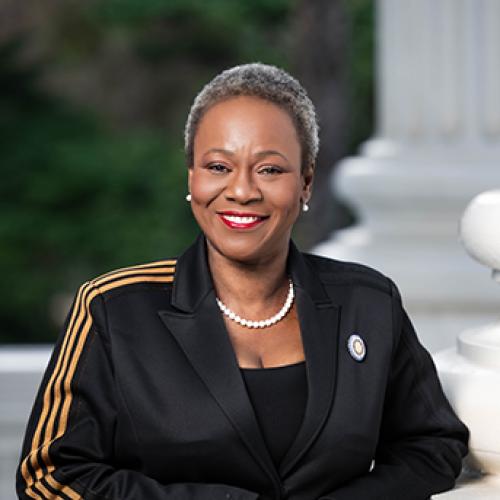
Asm. Tina McKinnor
Sponsored bills
Existing law provides for the payment of unemployment compensation benefits and extended benefits to eligible individuals who meet specified requirements. Under existing law, unemployment benefits are paid from the Unemployment Fund, which is continuously appropriated for these purposes. Existing law makes an employee ineligible for benefits if the employee left work because of a trade dispute and specifies that the employee remains ineligible for the duration of the trade dispute. Existing case law holds that employees who left work due to a lockout by the employer, even if it was in anticipation of a trade dispute, are eligible for benefits. This bill would restore eligibility after the first 2 weeks for an employee who left work because of a trade dispute. The bill would codify specified case law that holds that employees who left work due to a lockout by the employer, even if it was in anticipation of a trade dispute, are eligible for benefits. The bill would specify that the bill's provisions do not diminish eligibility for benefits of individuals deprived of work due to an employer lockout or similar action, as specified. Because this bill would expand the categories of people eligible to receive benefits from a continuously appropriated fund, it would make an appropriation.
Existing law generally requires the minimum wage for all industries to not be less than specified amounts to be increased until it is $15 per hour commencing January 1, 2022, for employers employing 26 or more employees, and commencing January 1, 2023, for employers employing 25 or fewer employees. Existing law makes a violation of minimum wage requirements a misdemeanor. This bill would establish 5 separate minimum wage schedules for covered health care employees, as defined, depending on the nature of the employer. This bill would require, for any covered health care facility employer, as defined, with 10,000 or more full-time equivalent employees (FTEE) , as defined, any covered health care facility employer that is a part of an integrated health care delivery system or a health care system with 10,000 or more FTEEs, a covered health care facility employer that is a dialysis clinic or is a person that owns, controls, or operates a dialysis clinic, or a covered health facility owned, affiliated, or operated by a county with a population of more than 5,000,000 as of January 1, 2023, the minimum wage for covered health care employees to be $23 per hour from June 1, 2024, to May 31, 2025, inclusive, $24 per hour from June 1, 2025, to May 31, 2026, inclusive, and $25 per hour from June 1, 2026, and until as adjusted as specified. This bill would require, for any hospital that is a hospital with a high governmental payor mix, an independent hospital with an elevated governmental payor mix, a rural independent covered health care facility, or a covered health care facility that is owned, affiliated, or operated by a county with a population of less than 250,000 as of January 1, 2023, as those terms are defined, the minimum wage for covered health care employees to be $18 per hour from June 1, 2024, to May 31, 2033, inclusive, and $25 per hour from June 1, 2033, and until as adjusted as specified. This bill would require, for specified clinics that meet certain requirements, the minimum wage for covered health care employees to be $21 per hour from June 1, 2024, to May 31, 2026, inclusive, and $22 per hour from June 1, 2026, to May 31, 2027, inclusive, and $25 from June 1, 2027, and until as adjusted as specified. This bill would require, for all other covered health care facility employers, the minimum wage for covered health care employees to be $21 per hour from June 1, 2024, to May 31, 2026, inclusive, $23 per hour from June 1, 2026, to May 31, 2028, inclusive, and $25 per hour from June 1, 2028, and until as adjusted as specified. This bill would provide that a covered health care facility that is county owned, affiliated, or operated must implement the appropriate minimum wage schedule described above, as applicable, beginning January 1, 2025. This bill would also separately require, for a licensed skilled nursing facility, as described, the minimum wage for certain other covered health care employees, as described, to be $21 per hour from June 1, 2024, to May 31, 2026, inclusive, $23 per hour from June 1, 2026, to May 31, 2028, inclusive, and $25 per hour from June 1, 2028, and until as adjusted as specified. The bill would make this minimum wage requirement effective only when a patient care minimum spending requirement applicable to skilled nursing facilities is in effect. This bill would provide that the health care worker minimum wages constitute the state minimum wage for covered health care employment for all purposes under the Labor Code and the Wage Orders of the Industrial Welfare Commission. The bill would provide that a health care worker minimum wage is enforceable by the Labor Commissioner or by a covered worker through a civil action, through the same means and with the same relief available for violation of any other state minimum wage requirement. By establishing new minimum wages, the violation of which would be a crime, the bill would impose a state-mandated local program. This bill would require, for covered health care employment where the employee is paid on a salary basis, that the employee earn a monthly salary equivalent to no less than 150% of the health care worker minimum wage or 200% of the applicable minimum wage, whichever is greater, for full-time employment in order to qualify as exempt from the payment of minimum wage and overtime. This bill would require the Department of Health Care Access and Information to publish, on or before January 31, 2024, and on the department's internet website, specified information, including a list of hospitals that qualify under certain classifications. The bill would provide, until January 31, 2025, a process for hospitals excluded from that list to request classification. This bill would authorize, until January 1, 2025, the adoption of any necessary rules and regulations for purposes of implementing certain provisions of the bill as emergency regulations in accordance with the Administrative Procedure Act and would deem the adoption of those emergency regulations an emergency and necessary for the immediate preservation of the public peace, health and safety, or general welfare. The bill would require the Department of Health Care Access and Information to consider input from specified stakeholders when adopting those rules and regulations, as specified. This bill would, by March 1, 2024, require the Department of Industrial Relations, in collaboration with the State Department of Health Care Services and the Department of Health Care Access and Information, to develop a waiver program that would allow a covered health care facility, as defined, to apply for and receive a temporary pause or alternative phase in schedule of the minimum wage requirements described above. In order to obtain a waiver, the bill would require a covered health care facility to demonstrate that compliance with the minimum wage requirements would raise doubts about the covered health care facility's ability to continue as a going concern under generally accepted accounting principles, as specified. The bill would provide that issuance of the terms of the pause or alternative phase in schedule is solely and exclusively within the authority of the Department of Industrial Relations, and the authority regarding whether the covered health care facility demonstrates the inability to continue as a going concern pursuant is solely and exclusively within the authority of the State Department of Health Care Services. This bill would prohibit any ordinance, regulations, or administrative action that is applicable to a covered health care facility and that establishes, requires, imposes, limits, or otherwise relates to wages or compensation for covered health care facility employees from being enacted or enforced in or by any city, county, or city and county, except as provided. This bill would also make its provisions severable. This bill would make legislative findings and declarations as to the necessity of a special statute for health care workers. The bill would include findings that changes proposed by this bill address a matter of statewide concern rather than a municipal affair and, therefore, apply to all cities, including charter cities. The California Constitution requires the state to reimburse local agencies and school districts for certain costs mandated by the state. Statutory provisions establish procedures for making that reimbursement. This bill would provide that no reimbursement is required by this act for a specified reason.
The Planning and Zoning Law requires each county and city to adopt a comprehensive, long-term general plan for its physical development, and the development of certain lands outside its boundaries, that includes, among other mandatory elements, a housing element. That law allows a development proponent to submit an application for a development that is subject to a specified streamlined, ministerial approval process not subject to a conditional use permit, if the development satisfies certain objective planning standards. Existing law, the Zenovich-Moscone-Chacon Housing and Home Finance Act, establishes the California Tax Credit Allocation Committee within the Department of Housing and Community Development. Existing law requires the committee to allocate state low-income housing tax credits in conformity with state and federal law that establishes a maximum rent that may be charged to a tenant for a project unit constructed using low-income housing tax credits. This bill would require that a housing development project be a use by right upon the request of an applicant who submits an application for streamlined approval, on any land owned by an independent institution of higher education or religious institution on or before January 1, 2024, if the development satisfies specified criteria, including that the development is not adjoined to any site where more than one-third of the square footage on the site is dedicated to industrial use. The bill would define various terms for these purposes. Among other things, the bill would require that 100% of the units, exclusive of manager units, in a housing development project eligible for approval as a use by right under these provisions be affordable to lower income households, except that 20% of the units may be for moderate-income households, and 5% of the units may be for staff of the independent institution of higher education or the religious institution that owns the land, provided that the units affordable to lower income households are offered at affordable rent, as set in an amount consistent with the rent limits established by the California Tax Credit Allocation Committee, or affordable housing cost, as specified. The bill would authorize the development to include ancillary uses on the ground floor of the development, as specified. This bill would specify that a housing development project that is eligible for approval as a use by right under the bill is also eligible for a density bonus, incentives, or concessions, or waivers or reductions of development and parking standards, except as specified. The bill would require a development subject to these provisions to provide off-street parking of up to one space per unit, unless a state law or local ordinance provides for a lower standard of parking, in which case the law or ordinance applies. The bill would prohibit a local government from imposing any parking requirement on a development subject to these provisions if the development is located within one-half mile walking distance of public transit, either a high-quality transit corridor or a major transit stop, as those terms are defined, or it is within one block of a car share vehicle. This bill would require a local government that determines a proposed development is in conflict with any objective planning standards, as specified, to provide the developer with written documentation explaining those conflicts under a specified timeframe. The bill would provide that the development shall be deemed to satisfy the required objective planning standards if the local government fails to provide the requisite documentation explaining any conflicts. The bill would authorize a local government to conduct a design review, as described, only if the design review focuses on compliance with the requisite criteria of a streamlined, ministerial review process. The bill would prohibit a local government from using a design review, as specified, from inhibiting, chilling, or precluding a streamlined, ministerial approval. The bill would require a local government to issue a subsequent permit for developments approved under the provisions of this act. The bill would include findings that changes proposed by this bill address a matter of statewide concern rather than a municipal affair and, therefore, apply to all cities, including charter cities. The California Environmental Quality Act (CEQA) requires a lead agency, as defined, to prepare, or cause to be prepared, and certify the completion of, an environmental impact report on a project that it proposes to carry out or approve that may have a significant effect on the environment or to adopt a negative declaration if it finds that the project will not have that effect. CEQA does not apply to the ministerial approval of projects. This bill, by requiring approval of certain development projects as a use by right, would expand the exemption for ministerial approval of projects under CEQA. The bill would repeal its provisions as of January 1, 2036. By adding to the duties of local planning officials with respect to approving certain development projects, this bill would impose a state-mandated local program. The California Constitution requires the state to reimburse local agencies and school districts for certain costs mandated by the state. Statutory provisions establish procedures for making that reimbursement. This bill would provide that no reimbursement is required by this act for a specified reason.
Existing law, the California Fair Employment and Housing Act (FEHA) , prohibits, in instances in which there is a government rent subsidy, the use of a financial or income standard in assessing eligibility for the rental of housing that is not based on the portion of the rent to be paid by the tenant. FEHA requires the Civil Rights Department to enforce specific provisions of the act, including the provision described above. This bill would additionally prohibit the use of a person's credit history as part of the application process for a rental housing accommodation without offering the applicant the option of providing lawful, verifiable alternative evidence of the applicant's reasonable ability to pay the portion of the rent to be paid by the tenant, including, but not limited to, government benefit payments, pay records, and bank statements, in instances in which there is a government rent subsidy. The bill would, if the applicant elects to provide lawful, verifiable alternative evidence of the applicant's reasonable ability to pay, require the housing provider to provide the applicant reasonable time to respond with that alternative evidence and reasonably consider that alternative evidence in lieu of the person's credit history in determining whether to offer the rental accommodation to the applicant.
Existing law regulates the terms and conditions of residential tenancies, and prohibits a landlord from demanding or receiving security for a rental agreement for residential property, however denominated, in an amount or value in excess of an amount equal to 2 months' rent, in the case of unfurnished residential property, and an amount equal to 3 months' rent, in the case of furnished residential property, in addition to any rent for the first month paid on or before initial occupancy. This bill would, beginning July 1, 2024, instead prohibit a landlord from demanding or receiving security for a rental agreement for residential property in an amount or value in excess of an amount equal to one month's rent, regardless of whether the residential property is unfurnished or furnished, in addition to any rent for the first month paid on or before initial occupancy. The bill, unless the prospective tenant is a service member, as defined, would prohibit a landlord from demanding or receiving security for a rental agreement for residential property in an amount or value in excess of 2 months' rent, in addition to any rent for the first month, if the landlord (1) is a natural person or a limited liability corporation in which all members are natural persons and (2) owns no more than 2 residential rental properties that collectively include no more than 4 dwelling units offered for rent.
Existing law, the California Fair Employment and Housing Act, makes it an unlawful employment practice for an employer to refuse to grant a request by any employee to take up to 5 days of bereavement leave upon the death of a family member. This bill would additionally make it an unlawful employment practice for an employer to refuse to grant a request by an eligible employee to take up to 5 days of reproductive loss leave following a reproductive loss event, as defined. The bill would require that leave be taken within 3 months of the event, except as described, and pursuant to any existing leave policy of the employer. The bill would provide that if an employee experiences more than one reproductive loss event within a 12-month period, the employer is not obligated to grant a total amount of reproductive loss leave time in excess of 20 days within a 12-month period. Under the bill, in the absence of an existing policy, the reproductive loss leave may be unpaid. However, the bill would authorize an employee to use certain other leave balances otherwise available to the employee, including accrued and available paid sick leave. The bill would make leave under these provisions a separate and distinct right from any right under the California Fair Employment and Housing Act. The bill would make it an unlawful employment practice for an employer to retaliate against an individual, as described, because of the individual's exercise of the right to reproductive loss leave or the individual's giving of information or testimony as to reproductive loss leave, as described. The bill would require the employer to maintain employee confidentiality relating to reproductive loss leave, as specified. Existing constitutional provisions require that a statute that limits the right of access to the meetings of public bodies or the writings of public officials and agencies be adopted with findings demonstrating the interest protected by the limitation and the need for protecting that interest. This bill would make legislative findings to that effect.
Existing law, the Lanterman-Petris-Short Act, provides for the involuntary commitment and treatment of a person who is a danger to themselves or others or who is gravely disabled. Existing law, for purposes of involuntary commitment, defines "gravely disabled" as either a condition in which a person, as a result of a mental health disorder, is unable to provide for their basic personal needs for food, clothing, or shelter or has been found mentally incompetent, as specified. This bill expands the definition of "gravely disabled" to also include a condition in which a person, as a result of a severe substance use disorder, or a co-occurring mental health disorder and a severe substance use disorder, is, in addition to the basic personal needs described above, unable to provide for their personal safety or necessary medical care, as defined. The bill would also expand the definition of "gravely disabled," as it applies to specified sections, to include, in addition to the basic needs described above, the inability for a person to provide for their personal safety or necessary medical care as a result of chronic alcoholism. The bill would authorize counties to defer implementation of these provisions to January 1, 2026, as specified. The bill would make conforming changes. To the extent that this change increases the level of service required of county mental health departments, the bill would impose a state-mandated local program. Existing law also authorizes the appointment of a conservator, in the County of Los Angeles, the County of San Diego, or the City and County of San Francisco, for a person who is incapable of caring for the person's own health and well-being due to a serious mental illness and substance use disorder. Existing law establishes the hearsay rule, under which evidence of a statement is generally inadmissible if it was made other than by a witness while testifying at a hearing and is offered to prove the truth of the matter stated. Existing law sets forth exceptions to the hearsay rule to permit the admission of specified kinds of evidence. Under this bill, for purposes of an opinion offered by an expert witness in any proceeding relating to the appointment or reappointment of a conservator pursuant to the above-described provisions, the statements of specified health practitioners or a licensed clinical social worker included in the medical record would not be made inadmissible by the hearsay rule under specified conditions. The bill would authorize the court to grant a reasonable continuance if an expert witness in a proceeding relied on the medical record and the medical record has not been provided to the parties or their counsel. Existing law requires the State Department of Health Care Services to collect data quarterly and publish, on or before May 1 of each year, a specified report that includes, among other things, the number of persons for whom temporary conservatorship are established in each county and an analysis and evaluation of the efficacy of mental health assessments, detentions, treatments, and supportive services provided, as specified. This bill would, beginning with the report due May 1, 2024, require the report to also include the number of persons admitted or detained, as specified, for conditions that include, among others, grave disability due to a mental health disorder, severe substance use disorder, or both a mental health disorder and a severe substance use disorder. The California Constitution requires the state to reimburse local agencies and school districts for certain costs mandated by the state. Statutory provisions establish procedures for making that reimbursement. This bill would provide that, if the Commission on State Mandates determines that the bill contains costs mandated by the state, reimbursement for those costs shall be made pursuant to the statutory provisions noted above.