

The California Integrated Waste Management Act of 1989, administered by the Department of Resources Recycling and Recovery, establishes an integrated waste management program. Existing law provides that is the policy goal of the state that at least 75% of solid waste generated annually be source reduced, recycled, or composted, and that statewide landfill disposal of organic waste be reduced from the 2014 level by 50% on or before 2000 and by 75% on or before 2025. Existing law prohibits a person from establishing or expanding a solid waste facility in a county after a countywide or regional agency integrated waste management plan has been approved unless the solid waste facility is, among other things, a disposal facility, a transformation facility, or an EMSW conversion facility that meets specific criteria. Existing law defines an "EMSW conversion facility" as a facility where municipal solid waste conversion that meets specific requirements takes place and defines "transformation" as incineration, pyrolysis, distillation, or biological conversion, excluding composting, gasification, EMSW conversion, or biomass conversion. Existing law authorizes the department, by regulation, to specify classifications of solid waste facilities that are exempt from these and other facility regulations if the department makes specific findings, including that the nature of the solid wastes poses no significant threat to the public health, the public safety, or the environment. This bill would prohibit a person from establishing or expanding a transformation facility or an EMSW conversion facility in the state until the Department of Resources Recycling and Recovery has determined that the state has achieved the above-described solid waste and organic waste policy goals of the state for 3 consecutive years.
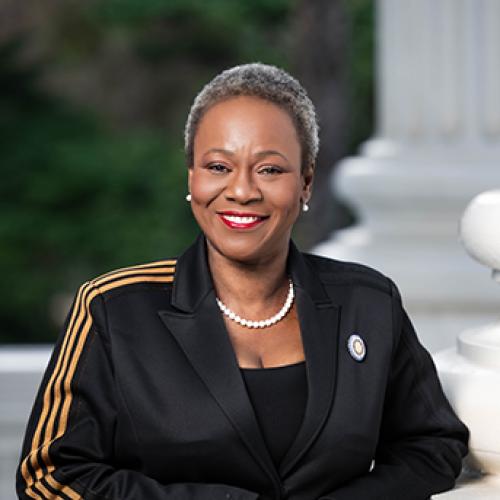
Asm. Tina McKinnor
Sponsored bills
Existing law requires that specified actions for recovery of damages suffered as a result of childhood sexual assault, as defined, be commenced within 22 years of the date the plaintiff attains the age of majority or within 5 years of the date the plaintiff discovers or reasonably should have discovered that psychological injury or illness occurring after the age of majority was caused by the sexual assault, whichever occurs later. Existing law prohibits certain of those actions from commencing on or after the plaintiff's 40th birthday unless the person or entity knew or had reason to know, or was otherwise on notice, of any misconduct that creates a risk of childhood sexual assault by an employee, volunteer, representative, or agent, or the person or entity failed to take reasonable steps or to implement reasonable safeguards to avoid acts of childhood sexual assault, as specified. This bill would provide that a claim seeking to recover damages arising out of a sexual assault by an employee of a juvenile probation camp or detention facility owned and operated by a county or of a youth facility owned and operated by the Division of Juvenile Justice at the time the sexual assault occurred, that would otherwise be barred before January 1, 2024, because the applicable statute of limitations has expired, is revived and may proceed or be commenced within one year, as specified.
Existing law establishes the California State University, under the administration of the Trustees of the California State University, as one of the segments of public postsecondary education in the state. This bill would establish the Legislative Internship Program under the administration of the California State University's Center for California Studies to provide paid internship opportunities at offices of the Legislature, to qualified applicants, as provided. The bill would establish the Legislative Internship Program Fund as the initial depository of all moneys appropriated, donated, or otherwise received for the program, and upon appropriation by the Legislature, would require the Center for California Studies to distribute moneys in the fund to program participants, as specified. Existing law requires all appropriations for contingent expenses of the Senate and the Assembly and legislative committees thereof to be available and disbursed, as provided. This bill would prohibit these funds from being used to provide a paid internship position pursuant to the Legislative Internship Program.
Existing law prescribes the duties of the State Registrar of Vital Statistics (State Registrar) and local registrars of births and deaths with respect to the registration of certificates of live birth, fetal death, or death, and marriage licenses. Existing law requires the State Registrar to prescribe and furnish all record forms for use in carrying out the provisions governing vital records and prohibits the use of any record form or format other than those prescribed by the State Registrar. Existing law requires every live birth, fetal death, death, and marriage that occurs in the state to be registered with the local registrar. Existing law requires certificates of live birth, fetal death, or death, and a marriage license to include specified information, such as the full name of the child on a certificate of live birth and the full names of the parties to be married on a marriage license. Existing law also requires the county clerk to issue a confidential marriage license, as specified, on a form prescribed by the State Registrar. This bill would require the State Registrar to require the use of a diacritical mark on an English letter to be properly recorded, when applicable, on a certificate of live birth, fetal death, death, marriage license and certificate, or confidential marriage license and certificate, and would require the use of a diacritical mark to be deemed an acceptable entry by the State Registrar. The bill would provide that the absence of a diacritical mark on a certificate of live birth, fetal death, or death, or a marriage license does not render the document invalid nor affect any constructive notice imparted by proper recordation of the document. The bill would authorize, if a name is not accurately recorded because of the absence of a diacritical mark on an English letter in any certificate of live birth, fetal death, death, or marriage already registered, the person asserting the omission, or the person's conservator, or if a minor, the person's parent or guardian, to submit a written request to the State Registrar for the issuance of a new certificate of birth, fetal death, death, or marriage stating the changes necessary to make the name correct. The bill would require the State Registrar to review the request and, if the request is accompanied with the payment of a specified fee, to issue a new certificate of live birth, fetal death, death, or marriage with the accurate name identified in the request. The bill would also authorize, if a name is not accurately recorded because of the absence of a diacritical mark on an English letter on any confidential license and certificate of marriage already registered, the party asserting the omission to make an affidavit, under oath, stating the changes necessary to make the record correct and file it with the county clerk. The bill would require the county clerk to review the amendment for acceptance for filing, and if accepted, file the amendment and note the fact of the amendment, with its date, on the otherwise unaltered original confidential license and certificate of marriage. By requiring the affidavit to be under oath, the bill would expand the crime of perjury, thereby imposing a state-mandated local program. By increasing duties on county clerks, the bill would impose a state-mandated local program. The California Constitution requires the state to reimburse local agencies and school districts for certain costs mandated by the state. Statutory provisions establish procedures for making that reimbursement. This bill would provide that with regard to certain mandates no reimbursement is required by this act for a specified reason. With regard to any other mandates, this bill would provide that, if the Commission on State Mandates determines that the bill contains costs so mandated by the state, reimbursement for those costs shall be made pursuant to the statutory provisions noted above.
Existing law requires, in conformance with federal law, that the Secretary of State and the Department of Motor Vehicles establish and implement the California New Motor Voter Program for the purpose of increasing opportunities for voter registration for qualified voters. Existing law requires the department to transmit to the Secretary of State specified information related to a person's eligibility to vote, which the person provides when applying for a driver's license or identification card or when the person notifies the department of an address change. Existing law requires that if this information transmitted to the Secretary of State constitutes a completed affidavit of registration, the Secretary of State must register or preregister the person to vote, as applicable, unless the person affirmatively declines to register or is ineligible to vote, as specified. This bill would additionally require the Department of Motor Vehicles to transmit specified information to the Secretary of State for a person submitting a driver's license application who provides documentation demonstrating United States citizenship and that the person is of an eligible age to register or preregister to vote. The bill would deem this information to constitute a completed affidavit of registration for such persons, and require the Secretary of State to register or preregister the person to vote, unless the Secretary of State determines they are ineligible. The bill would require, if a person is registered or preregistered to vote in this manner, that the county elections official send a notice to the person advising that they may decline to register or preregister to vote, designate a party preference, or select a language preference. The bill would also require the county elections official to send a notice to a person who is already registered to vote, but for whom the Secretary of State changes their registration information after receiving updated name or address information from the department. This bill would prohibit the department from providing a person the opportunity to attest to meeting voter eligibility requirements when they submit a driver's license application, if the person provides a document to the department during the transaction demonstrating that the person is not a United States Citizen. This bill would expand the definition of "voter registration agency" to include entities designated by the Secretary of State. The bill would require the Secretary of State to establish a schedule whereby specified voter registration agencies must provide the Secretary of State electronic information regarding individuals who are eligible to vote or who provide updated registration information. This bill would make these provisions operative on the earlier of January 1, 2026, or 5 days after the Secretary of State certifies that the information technology infrastructure to substantially implement the bill is functional. The bill would allow the Secretary of State, commencing January 1, 2024, to perform administrative actions necessary to implement these provisions. By imposing new duties on county elections officials with respect to voter registration, the bill would impose a state-mandated local program. The California Constitution requires the state to reimburse local agencies and school districts for certain costs mandated by the state. Statutory provisions establish procedures for making that reimbursement. This bill would provide that, if the Commission on State Mandates determines that the bill contains costs mandated by the state, reimbursement for those costs shall be made pursuant to the statutory provisions noted above.
Existing law establishes the Office of Health Care Affordability within the Department of Health Care Access and Information to analyze the health care market for cost trends and drivers of spending, develop data-informed policies for lowering health care costs for consumers and purchasers, and create a state strategy for controlling the cost of health care. Existing law requires the office to collect data and other information it deems necessary from health care entities to carry out the functions of the office, and requires the office to require providers and physician organizations to submit audited financial reports or comprehensive financial statements, as specified. Existing law requires those reports and statements to be kept confidential, and specifies that they are not required to be disclosed under the California Public Records Act. Existing law requires the office to obtain information about health care service plans from the Department of Managed Health Care. Existing law requires a contract between a health care service plan and a risk-bearing organization to include provisions concerning the risk-bearing organization's administrative and financial capacity. Existing law requires the director of the Department of Managed Health Care to adopt regulations regarding, among other things, periodic reports from a health care service plan that include information concerning the risk-bearing organizations and the type and amount of financial risk they have assumed. Existing law establishes, within the office, the Health Care Affordability Board, composed of 8 members, appointed as prescribed. This bill, the Medical Group Financial Transparency Act, would authorize the disclosure of audited financial reports and comprehensive financial statements of providers and physician organizations collected by the Office of Health Care Affordability and financial and other records of risk-bearing organizations made available to the Department of Managed Health Care. This bill would authorize the board, members of the board, the office, the department, and the employees, contractors, and advisors of the office and the department to use confidential audited financial reports and comprehensive financial statements only as necessary to carry out functions of the office. The bill would also require certain physician organizations, as specified, to produce or disclose audited financial reports and comprehensive financial statements to the office, subject to these provisions. The bill would require the audited financial reports and comprehensive financial statements produced or disclosed to the office to be made available to the public, by the office, as specified. The bill would also make related findings and declarations.
Existing law, the Outdoor Advertising Act, provides for the regulation by the Department of Transportation of an advertising display, as defined, within view of public highways. The act regulates, as an "off-premises advertising display," a display along a highway that generally advertises business conducted or services rendered or goods produced or sold at a location other than the property where the display is located. The act does not apply to "on-premises advertising displays," which generally advertise business conducted or services rendered or goods produced or sold at the location where the display is located and which are separately regulated. This bill would subject digital displays owned by the City of Hawthorne that would otherwise be regulated as off-premises advertising displays to treatment as on-premises advertising displays, if certain requirements are met. This bill would make legislative findings and declarations as to the necessity of a special statute for the City of Hawthorne.
Existing law requires the Department of Human Resources to establish and adjust salary ranges for each class of position in the state civil service. Existing law requires the department, with respect to the collective bargaining process for specified bargaining units, to submit to the parties meeting and conferring and to the Legislature a report containing the department's findings relating to the salaries of employees in comparable occupations in private industry and other governmental agencies, in accordance with certain timeframes. Existing law requires the state, in order to recruit and retain the highest qualified employees in specified classifications, to consider the estimated average total compensation paid to employees in comparable occupations. This bill would require the University of California, Berkeley, Labor Center (Center) , in recognition of the need to retain skilled state scientists, to undertake a study of existing salary structure and issues currently impacting horizontal and vertical salary relationships as compared to historical relationships, and to provide recommendations, if applicable, for alternative salary models for State Bargaining Unit 10 (Professional Scientific) rank-and-file employees. The bill would require the Center to consult with the Department of Human Resources and the scientists' exclusive bargaining representative to identify the study's parameters and objectives. The bill would require, by April 30, 2024, the Center to report to the Director of Finance, the Chairperson of the Joint Legislative Budget Committee, and the chairpersons of relevant legislative policy and budget committees the study's findings, as specified. The bill would require the Center's report to include information regarding advantages of any alternative salary model included in the recommendations, the transition costs and ongoing costs associated with any recommended alternative salary model, and ways that alternative models address issues of horizontal and vertical salary relationships as compared to historical relationships. The bill would specify that preparation of the report required under the bill shall not delay or prejudice the collective bargaining process required under existing law. The bill would require any increase in salary resulting from the study to be implemented through the negotiation of a memorandum of understanding as required by existing law.
Existing law, the Pharmacy Law, requires the California State Board of Pharmacy to license and regulate the practice of pharmacy by pharmacists and pharmacy corporations in this state. Existing law prohibits a pharmacy from compounding sterile drug products unless the pharmacy has obtained a sterile compounding pharmacy license from the board. Existing law requires the compounding of drug preparations by a pharmacy for furnishing, distribution, or use to be consistent with standards established in the pharmacy compounding chapters of the current version of the United States Pharmacopeia-National Formulary, including relevant testing and quality assurance. Existing law authorizes the board to adopt regulations to impose additional standards for compounding drug preparations. This bill would, notwithstanding those provisions, specify that compounding does not include reconstitution of a drug pursuant to a manufacturer's directions, the sole act of tablet splitting or crushing, capsule opening, or the addition of a flavoring agent to enhance palatability. The bill would require a pharmacy to retain documentation that a flavoring agent was added to a prescription and to make that documentation available to the board or its agent upon request.
(1) Existing law establishes the Aid to Families with Dependent Children-Foster Care (AFDC-FC) program, under which counties provide payments to foster care providers on behalf of qualified children in foster care. Existing law establishes a schedule of basic rates to be paid for the care and supervision of each foster child. Existing law also establishes the Kinship Guardianship Assistance Payment Program (Kin-GAP) , which provides aid on behalf of eligible children who have a kinship guardianship, and the Approved Relative Caregiver Funding Program (ARC) , which provides payments to approved relative caregivers who are caring for children and nonminor dependents who are ineligible for AFDC-FC payments. Existing law requires, when a child is living with a parent who receives AFDC-FC or Kin-GAP benefits, or ARC payments, that the rate paid to the foster care provider on behalf of the parent include an additional amount, known as an infant supplement, for the care and supervision of the child. Existing law makes a pregnant minor or nonminor dependent eligible for the infant supplement, referred to in this instance as an expectant parent benefit, for the 3-month period immediately prior to the month the birth is anticipated. This bill would expand eligibility for the expectant parent benefit to include minors and nonminor dependents who are under the dependency jurisdiction of the juvenile court and who would be eligible to have foster care benefits paid on their behalf but for the minor or nonminor dependent not residing in an approved placement. The bill would require the department to develop and implement automated payments for these purposes, as specified. Because counties would administer these extended benefits, this bill would impose a state-mandated local program. (2) Existing law authorizes a county to pay, in addition to the basic rate, a clothing allowance to provide additional clothing for a child. This bill would require a county, if the county opts to provide a clothing allowance, to provide the clothing allowance to a minor or nonminor dependent who is under the dependency jurisdiction of the juvenile court and who would be eligible to have foster care benefits paid on their behalf but for the minor or nonminor dependent not residing in an approved placement. The bill would require the department to develop and implement automated payments for these purposes, as specified. (3) The California Constitution requires the state to reimburse local agencies and school districts for certain costs mandated by the state. Statutory provisions establish procedures for making that reimbursement. This bill would provide that no reimbursement is required by this act for a specified reason.