

Passed Feb 8, 2024
1 co-sponsor
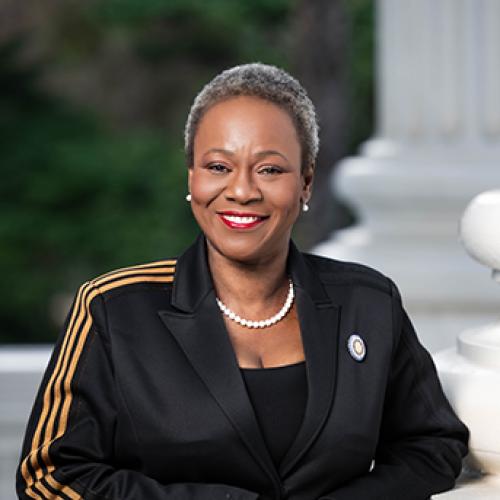
Asm. Tina McKinnor
Total votes
10,628
all sessions
Attendance
91%
873 missed
Lower than 88% of chamber peers
With party
99%
of cast votes
Near the chamber average
Bipartisan score
0%
crosses aisle rarely
Near the chamber average
Sponsored
967
bills & resolutions
Near the chamber average
Committees
9
assignments
967 bills and resolutions
Sponsored bills
Total
967
Primary
87
Co-sponsor
880
This page
967
matching current filters
Family reunification services.
Existing law establishes the jurisdiction of the juvenile court, which may adjudge children to be dependents of the court under certain circumstances, including when the child suffered or there is a substantial risk that the child will suffer serious physical harm, or a parent fails to provide the child with adequate food, clothing, shelter, or medical treatment. Existing law establishes the grounds for removal of a dependent child from the custody of the child's parents or guardian, and requires the court to order the social worker to provide designated child welfare services, including family reunification services, as prescribed. Existing law provides that reunification services do not need to be provided to a parent or guardian when the court finds, by clear and convincing evidence, certain circumstances exist, including that the parent or guardian of the child has been convicted of a violent felony, as defined. This bill would instead provide that reunification services do not need to be provided to a parent or guardian when the court finds that the parent or guardian of the child has been convicted of a violent felony, and the victim of the violent felony was a child under the custody of the parent or guardian. By expanding the scope of individuals requiring reunification services, the bill would impose additional duties on county child welfare departments, thereby imposing a state-mandated local program. The California Constitution requires the state to reimburse local agencies and school districts for certain costs mandated by the state. Statutory provisions establish procedures for making that reimbursement. This bill would provide that no reimbursement is required by this act for a specified reason.
Failed Feb 1, 2024
0 co-sponsors
Rental passenger vehicles: additional mandatory charges.
Existing law regulates rental passenger vehicle transactions, including, among other provisions, required disclosures by a rental company, mandatory and prohibited contract provisions for a vehicle rental agreement, and authorization for a rental company to collect specific types of fees and charges from its customers. Existing law authorizes a rental company, when providing a quote, or imposing charges for a rental, to separately state the rental rate, additional mandatory charges, as defined, and a mileage charge, if applicable, that a renter must pay to hire or lease the vehicle for the period of time to which the rental rate applies. This bill would instead require a rental company to only advertise or quote a rental rate that includes the entire amount that the renter is required to pay to hire or lease the vehicle for the period of time to which the rental rate applies, including, but not limited to, additional mandatory charges and any gas or mileage charge, if applicable.
Failed Feb 1, 2024
0 co-sponsors
Housing.
Existing law sets forth the general responsibilities and roles of the Business, Consumer Services, and Housing Agency, the Department of Housing and Community Development, and the California Housing Finance Agency in carrying out state housing policies and programs. This bill would make nonsubstantive changes to these provisions.
died Feb 1, 2024
0 co-sponsors
Parole: hearing records.
Existing law requires the Board of Parole Hearings to conduct hearings for the purpose of determining the suitability of inmates for parole. Existing law requires the board, after a parole suitability hearing, to allow an inmate to request a stenographic record of the proceedings. This bill would instead require the board to send a copy of the record and, upon request of the incarcerated person, an audio recording of the hearing upon completion of the stenographic record. The bill would prohibit the board from charging a fee for a stenographic record or an audio recording.
Failed Feb 1, 2024
0 co-sponsors
Emergency response services: "911" call and dispatch data.
Existing law requires every local public agency within its respective jurisdiction to establish and have in operation a basic system, or be part of a system, that processes "911" emergency telephone calls. Existing law requires each system to include police, firefighting, and emergency medical and ambulance services, and authorizes the system to include other emergency services, such as poison control services, suicide prevention services, and civil defense services. Existing law requires a public safety agency that provides "911" call processing services for emergency medical response to make a connection available from the public safety agency dispatch center to an emergency medical services (EMS) provider's dispatch center for the timely transmission of emergency response information. Existing law requires a public safety agency implementing an emergency medical dispatch program to perform "911" call processing services and operate the program in accordance with applicable state guidelines and regulations and the policies adopted by the local EMS agency, as specified. This bill would require the University of California at Davis Health (UC Davis Health) to establish a program for the receipt and collection of "911" emergency call and dispatch data, in order to complete an analysis of the data for the purpose of improving emergency response services systems. The bill would require UC Davis Health to adopt uniform statewide data standards for "911" call and dispatch data, as specified, and to create a data portal that catalogs the collected data, aggregated on a statewide level, and containing only deidentified data, as defined. Under the bill, the Emergency Medical Services Authority, the Office of Emergency Services, the Department of Health Care Access and Information, and the Department of Justice would collaborate with UC Davis Health for purposes of this program. The bill would require any applicable entity, as specified, whether state or local, public or private, that has available to it "911" call and dispatch data to send the data to UC Davis Health. By creating new duties for local public entities, the bill would impose a state-mandated local program. The bill would condition implementation of these provisions on an appropriation, approval by the Regents of the University of California for the participation of UC Davis Health, and the provisions not superseding or preempting the applicability of any existing state or federal privacy laws. The California Constitution requires the state to reimburse local agencies and school districts for certain costs mandated by the state. Statutory provisions establish procedures for making that reimbursement. This bill would provide that, if the Commission on State Mandates determines that the bill contains costs mandated by the state, reimbursement for those costs shall be made pursuant to the statutory provisions noted above.
Failed Feb 1, 2024
0 co-sponsors
Youth offender parole hearings.
Existing law requires the Board of Parole Hearings to conduct a youth offender parole hearing for offenders sentenced to state prison who committed specified crimes when they were under 25 years of age. Existing law makes a person who was convicted of a controlling offense that was committed when the person was 25 years of age or younger and for which the sentence is a life term of less than 25 years to life eligible for release on parole at a youth offender hearing by the board during the person's 20th year of incarceration. Existing law makes a person who was convicted of a controlling offense that was committed when the person was 25 years of age or younger and for which the sentence is a life term of 25 years to life eligible for release on parole at a youth offender hearing by the board during the person's 25th year of incarceration. Under existing law, a murder perpetrated by specified means or under certain circumstances is defined as murder of the first degree. All other kinds of murder are of the 2nd degree. Existing law, as added by the Briggs Initiative, a measure approved by the voters at the November 7, 1978, statewide general election, requires that persons convicted of first-degree murder be subject to death, life in prison without the possibility of parole, or confinement in the state prison for a term of 25 years to life. Existing law, as approved by the voters as Proposition 67 at the June 7, 1988, statewide primary election, made the 2nd-degree murder of a peace officer, as specified, punishable by imprisonment in the state prison for a term of 25 years to life. Existing law, as approved by the voters as Proposition 222 at the June 2, 1998, statewide primary election, prohibits a person convicted of murder from being given credits to reduce a minimum term imposed, and prohibits a person from being released on parole prior to serving the minimum term of confinement, as specified. These acts do not provide for amendment by the Legislature. Existing law, the Sexual Predator Punishment and Control Act: Jessica's Law, adopted by voters as Proposition 83 at the November 7, 2006, statewide general election, requires a habitual sexual offender to be imprisoned in the state prison for 25 years to life. Proposition 83 allows its amendment by a statute passed by 23 of both houses of the Legislature. This bill would instead make a person who was convicted of a controlling offense that was committed when the person was 25 years of age or younger and for which the sentence is a life term of less than 25 years to life or a life term of 25 years to life eligible for release on parole at a youth offender hearing by the board during the person's 15th year of incarceration. The bill would require the board to complete, by January 1, 2026, all hearings for individuals who are or will be entitled to have their parole suitability considered at a youth offender parole hearing by these provisions. By decreasing the period of incarceration for a person sentenced pursuant to the above initiative statutes, the bill would amend those initiative statutes.
Failed Feb 1, 2024
0 co-sponsors
Labor Code.
Existing law includes a code known as the Labor Code. This bill would make nonsubstantive changes in the title provision of that code.
died Feb 1, 2024
0 co-sponsors
Alcoholic beverage licenses: off-sale privileges: airports.
Existing law, the Alcoholic Beverage Control Act, which is administered by the Department of Alcoholic Beverage Control, regulates the application, issuance, and suspension of alcoholic beverage licenses. Existing law authorizes specified licensees to sell alcoholic beverage for off-sale consumption for which their license permits on-sale consumption, subject to specified requirements, including that the beverages are packaged in specified containers. This bill would authorize an airport operator, as defined, to permit or prohibit the sale of alcoholic beverages for off-sale consumption by the holder of an on-sale license located in an airport terminal. If so permitted, the bill would authorize the on-sale licensee to sell alcoholic beverages for off-sale consumption in the airport terminal subject to specified requirements, including that the license permits on-sale consumption of the type of alcohol being sold for off-sale consumption. The bill would require the licensee to notify the department before selling any alcoholic beverages for off-sale consumption in the airport terminal. The bill would authorize the department to impose conditions on a licensee selling alcoholic beverages under these provisions and would permit a licensee to petition the department to modify or remove a condition within 10 days following imposition of the condition, as provided.
Failed Feb 1, 2024
0 co-sponsors
Incarcerated persons: certified record of live birth.
Existing law establishes the State Department of Public Health and sets forth its powers and duties, including, but not limited to, the duties as State Registrar relating to the uniform administration of provisions relating to vital records and health statistics. Existing law requires the State Registrar, local registrar, or county recorder, upon request and payment of the required fee, to supply to an applicant a certified copy of the record of a birth, fetal death, death, marriage, or marriage dissolution registered with the official. This bill would require the local registrar, county recorder, or State Registrar to issue, without a fee, a certified record of live birth to any person who demonstrates that they are currently incarcerated in prison or a county correctional facility. The bill would authorize the incarcerated person, or any person who is lawfully entitled to request that record on behalf of an incarcerated person, to make that request. The bill would specify methods for verification of an individual's incarcerated status, including, among other things, confirmation through a state or county "inmate locator" internet website. The bill would also require the department to develop an affidavit attesting to an applicant's incarcerated status to be used by local registrars, county recorders, and the State Registrar. By imposing a higher level of service on counties, the bill would impose a state-mandated local program. The California Constitution requires the state to reimburse local agencies and school districts for certain costs mandated by the state. Statutory provisions establish procedures for making that reimbursement. This bill would provide that, if the Commission on State Mandates determines that the bill contains costs mandated by the state, reimbursement for those costs shall be made pursuant to the statutory provisions noted above.
Failed Feb 1, 2024
0 co-sponsors
Ask Maddy
·
AI policy assistant
Ask Maddy about Tina McKinnor
Scope: CA
Hi! I can help you understand Tina McKinnor's legislative record. What would you like to know?
Try one of these
i
Maddy answers using official bill text and legislative records. Always verify before sharing.
Sources cited inline