

The California Global Warming Solutions Act of 2006 designates the State Air Resources Board as the state agency responsible for monitoring and regulating sources emitting greenhouse gases. Existing law also generally designates the State Air Resources Board as the state agency with the primary responsibility for the control of vehicular air pollution. Existing law requires the state board to adopt and implement motor vehicle emission standards, in-use performance standards, and motor vehicle fuel specifications for the control of air contaminants and sources of air pollution the state board has found to be necessary, cost effective, and technologically feasible, to carry out specified purposes, unless preempted by federal law. This bill would, if the state board adopts a regulation on or after April 28, 2023, requiring a fleet owner to acquire zero-emission vehicles as part of its fleet, require the state board to authorize the rental of a zero-emission vehicle or vehicles for a cumulative total of 260 days in a calendar year to be deemed ownership of one zero-emission vehicle for purposes of meeting that obligation. The bill would provide that a fleet owner that rents a zero-emission vehicle pursuant to this authority is not precluded from including that vehicle in their fleet for purposes of calculating any zero-emission vehicle acquisition requirement.
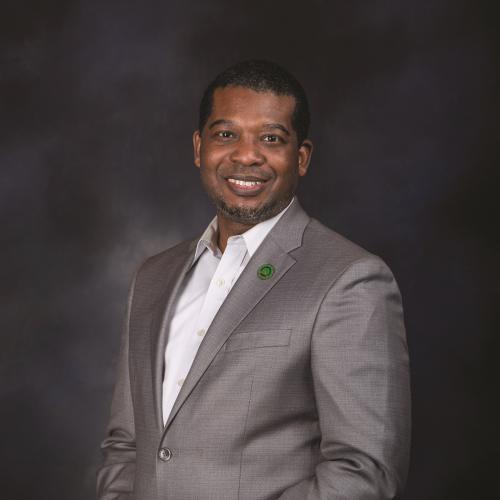
Asm. Corey Jackson
Sponsored bills
Existing law requires the department to establish the California Child and Family Service Review System, in order to review all county child welfare systems, including child protective services, foster care, adoption, family preservation, family support, and independent living. Existing law requires the California Health and Human Services Agency to convene a workgroup, as prescribed, to establish a work plan by which child and family service reviews shall be conducted. Existing law requires the workgroup to consider, among other things, measurable outcome indicators, which shall be consistent with specified federal measures and standards. This bill, subject to an appropriation by the Legislature in the annual Budget Act or another statute for these purposes, would require the California Child and Family Service Review System to include data from the Child and Adolescent Needs and Strengths (CANS) assessment tool, and would also authorize it to include other behavioral health data that is readily available to the department and determined by the department to be relevant. The bill would authorize the department to consider feedback from specified stakeholders in determining which additional relevant data to include.
Existing federal law establishes the Supplemental Nutrition Assistance Program (SNAP) , known in California as CalFresh, under which supplemental nutrition assistance benefits allocated to the state by the federal government are distributed to eligible individuals by each county. Existing law requires the State Department of Education, the State Department of Health Care Services, and the State Department of Social Services to work together with specified stakeholders to develop a proposed statewide process for using data collected for purposes of the CalFresh program, Medi-Cal, free and reduced-price school meals programs, and the electronic benefits transfer system in order to increase enrollment in the CalFresh program, as specified. Existing law also authorizes the State Department of Social Services, under CalFresh provisions, to administer outreach programs and adopt rules and regulations requiring counties to conduct outreach programs to the extent permitted by federal law and eligible for federal financial participation. This bill would require the State Department of Social Services, in consultation with various stakeholders, on or before July 1, 2025, to develop a methodology for estimating the CalFresh participation rate and identifying characteristics of Californians who are eligible for, but not receiving, CalFresh benefits. The bill would require the department to utilize the data and metrics to develop informed and targeted outreach strategies and to maximize federal funding for CalFresh outreach to reach Californians who are eligible for CalFresh benefits. The bill would also authorize the department to identify data-sharing opportunities with other state and local public entities, and any other unit of state government, for the purposes of improving the administration of CalFresh, increasing CalFresh participation, measuring the impact of CalFresh, and increasing access to critical public health and poverty-alleviating services and other services and benefits available to low-income individuals.
Under existing law, the State Department of Health Care Services is responsible for administering prevention, treatment, and recovery services for alcohol and drug abuse and problem gambling. Existing law defines "alcohol abuser" and "drug abuser," for these purposes, as anyone who has a problem related to the consumption of alcoholic beverages or illicit, illegal, legal, or prescription drugs or over-the-counter medications in a manner other than prescribed, respectively, whether or not it is of a periodic or continuing nature. Existing law defines "alcohol and other drug services" as a service that is designed to encourage recovery from the abuse of alcohol and other drugs, and "alcohol and other drug abuse program" as a collection of alcohol and other drug services that are coordinated to achieve specified objectives. Existing law also provides for the licensure and regulation of adult alcoholism or drug abuse recovery and treatment facilities by the department and authorizes the department to enforce those provisions. Existing law, the Bronzan-McCorquodale Act, contains provisions governing the operation and financing of community mental health services, including substance abuse services, for persons with mental health disorders in every county through locally administered and locally controlled community mental health programs. Existing law, the Lanterman-Petris-Short Act, provides for the involuntary commitment and treatment of persons with specified mental health disorders for the protection of the persons so committed, including detention of inebriates for evaluation and detoxification treatment, as specified. The Bronzan-McCorquodale Act, Lanterman-Petris-Short Act, and other various provisions of the Welfare and Institutions Code refer to "substance abuse" or "drug abuse" and "substance using adults" or "inebriates." This bill would revise and recast various terms, including alcohol and other drug abuse program, alcohol abuser, drug abuser, and inebriate to use person-first terminology. The bill would also make other technical and conforming changes to remove stigmatization of individuals seeking alcohol or other drug treatment or services. This bill would incorporate additional changes to Section 11833.05 of the Health and Safety Code proposed by AB 2574 to be operative only if this bill and AB 2574 are enacted and this bill is enacted last. This bill would also incorporate additional changes to Sections 5348, 5600.3, 5802, 5806, 5814, 5856.2, and 18986.40 of the Welfare and Institutions Code proposed by AB 2119 to be operative only if this bill and AB 2119 are enacted and this bill is enacted last.
Existing law prohibits a person employed by or engaged in a public school from inflicting, or causing to be inflicted, corporal punishment upon a pupil. Existing law prohibits the use of certain restraint and seclusion techniques. Existing law authorizes staff trained in prone containment to use the procedure on a pupil who is an individual with exceptional needs in a public school program as an emergency intervention. If prone restraint techniques are used, existing law requires a staff member to observe the pupil for any signs of distress throughout the use of prone restraint. This bill instead would prohibit the use of prone restraint, defined to include prone containment, by an educational provider. The bill would also prohibit the use of prone restraint, including prone containment, on a pupil who is an individual with exceptional needs in a public school program.
(1) Existing law requires the juvenile court to order the petition of a minor who is subject to the jurisdiction of the court dismissed if the minor satisfactorily completes a term of probation or an informal program of supervision, as specified, and requires the court to seal all records pertaining to that dismissed petition in the custody of the juvenile court and in the custody of law enforcement agencies, the probation department, or the Department of Justice in accordance with a specified procedure. Existing law also generally authorizes a person who is the subject of a juvenile court record, or the county probation officer, to petition the court to seal the person's records, including records of arrest, relating to the person's case in the custody of the juvenile court and the probation officer and any other agencies, including law enforcement agencies and public officials. This bill would require a county probation officer, once a person who was the subject of a petition has reached 18 years of age and the juvenile court's jurisdiction has been terminated, to petition the court to seal certain records, as specified. The bill would require the court to order all records sealed if the court finds that the person has not been convicted of a felony or a misdemeanor involving moral turpitude after the juvenile court's jurisdiction was terminated, as specified. If the probation officer does not file a petition, the bill would require the probation officer to notify the person and their counsel of the reason for not filing the petition. The bill would prescribe methods for a record that has been ordered sealed by the court to accessed, inspected, or utilized, including by request of the subject of the record. Unless the court determines there is good cause to retain the juvenile court record, the bill would require the court to order the destruction of a person's juvenile court records that are sealed, as specified. By imposing additional duties on county probation departments, this bill would impose a state-mandated local program. (2) Existing law requires the Department of Justice, on a monthly basis, to review the records in the statewide criminal justice databases and identify persons who are eligible for arrest record relief and automatic conviction record relief, as specified. This bill would require the department, on a monthly basis, to review state summary criminal history information and identify arrests that are, among other conditions, of a person who was younger than 18 years of age and which did not result in a charge being sustained and do not have related pending juvenile delinquency matters, as specified. The bill would require the department to provide a list of those arrests to all agencies associated with the record of arrest, and would require each arresting agency to review that list and seal its records of the arrest, if the agency's records do not indicate that the arrest is not eligible to be sealed. The bill would require the agency to report to the Department of Justice the records that shall be sealed, and would require the department to then seal its records of those arrests. By imposing additional duties on local agencies, this bill would impose a state-mandated local program. The bill would require the department to, commencing July 1, 2028, annually publish statistics on these arrests, as specified. The bill would only make these requirements operative upon an appropriation for these purposes in the annual Budget Act, and only after July 1, 2027. (3) Existing law requires a probation department to seal the arrest and other records in its custody relating to a juvenile's arrest and referral and participation in a diversion or supervision program under certain circumstances, as specified. Existing law requires the probation department to notify the arresting law enforcement agency to seal the arrest records, and requires the arresting law enforcement agency to seal the records in its custody relating to the arrest, as specified. This bill would require the probation department to additionally notify the Department of Justice, and require the department to seal the records in its custody relating to the arrest, as specified. (4) Existing law authorizes a court and a state or local agency to access certain sealed juvenile records for the limited purpose of complying with data collection or data reporting requirements imposed by other provisions of law. Existing law authorizes a court to grant a researcher or research organization access to information contained in those records, as specified. This bill would additionally authorize a court, a state or local agency, and, subject to approval by a court, a researcher or research organization to access those juvenile records sealed by the court as a result of a petition filed by the probation department pursuant to the above provisions. The California Constitution requires the state to reimburse local agencies and school districts for certain costs mandated by the state. Statutory provisions establish procedures for making that reimbursement. This bill would provide that, if the Commission on State Mandates determines that the bill contains costs mandated by the state, reimbursement for those costs shall be made pursuant to the statutory provisions noted above. (5) This bill would incorporate additional changes to Section 786.5 of the Welfare and Institutions Code proposed by SB 1161 to be operative only if this bill and SB 1161 are enacted and this bill is enacted last.
Existing law establishes the California Community Colleges, under the administration of the Board of Governors of the California Community Colleges, the California State University, under the administration of the Trustees of the California State University, and the University of California, under the administration of the Regents of the University of California, as the segments of public postsecondary education in this state. This bill would require the California State University, and request the University of California, on or before July 1, 2026, and, within 18 months of an appropriation by the Legislature, require the California Community Colleges, to develop and implement, a systemwide and campus-level reconciliation master plan for use on each of their respective campuses to respond to and address cultural and political conflicts that arise on campus, as provided. The bill would require the California Community Colleges and the California State University, and request the University of California, to use the recommendations contained in the report submitted by their respective stakeholder workgroups, convened as described below, as a basis for the development of the reconciliation master plan, as provided. This bill would require the Chancellor of the California State University, and request the President of the University of California, on or before July 1, 2025, and within 6 months of an appropriation by the Legislature, require the Chancellor of the California Community Colleges, to convene stakeholder workgroups in their respective segments that include representatives from specified stakeholders, including faculty, staff, and students. The bill would require each stakeholder workgroup to submit to the Legislature and the board president or chancellor of its respective system 9 months after the first meeting of the stakeholder workgroup a report that includes recommendations related to responding to cultural and political conflicts that arise, with the goal of promoting reconciliation on each of its respective campuses. In preparing this report, the bill would require each stakeholder workgroup, at a minimum, to evaluate and report on existing systemwide and campus policies, procedures, and processes regarding cultural and political conflicts. To the extent the bill would impose additional duties on community college districts, the bill would impose a state-mandated local program. The California Constitution requires the state to reimburse local agencies and school districts for certain costs mandated by the state. Statutory provisions establish procedures for making that reimbursement. This bill would provide that, if the Commission on State Mandates determines that the bill contains costs mandated by the state, reimbursement for those costs shall be made pursuant to the statutory provisions noted above.
The existing federal Indian Gaming Regulatory Act of 1988 provides for the negotiation and execution of tribal-state gaming compacts for the purpose of authorizing certain types of gaming on Indian lands within a state. The California Constitution prohibits the Legislature from authorizing casinos of the type operating in Nevada and New Jersey and authorizes the Governor to negotiate and conclude tribal-state gaming compacts, subject to ratification by the Legislature. Existing law expressly ratifies a number of tribal-state gaming compacts between the State of California and specified Indian tribes. Existing law, the Gambling Control Act, provides for the regulation, oversight, and licensure of gambling establishments by the California Gambling Control Commission. Existing law prohibits a list of specified gambling games or any banking or percentage game played with cards, dice, or any device, for money, checks, credit, or any representative of value, and provides that any person who offers for play or participates in these games is guilty of a misdemeanor and is punishable as specified. Existing law authorizes gambling establishments to operate controlled games utilizing a player-dealer position, as defined, and to contract with a third party for the provision of proposition player services subject to specified conditions and regulatory requirements. Existing law generally specifies the persons or entities that may bring a civil action as prescribed for relief. Existing law authorizes a court to grant a preliminary injunction or temporary restraining order at any time prior to judgment, if the verified complaint or affidavits provide sufficient grounds to do so and the opposing party has been given notice. This bill would authorize a California Indian tribe, under certain conditions, to bring an action solely against licensed California card clubs and third-party proposition player services providers to seek a declaration as to whether a controlled game operated by a licensed California card club and banked by a third-party proposition player services provider constitutes a banking card game that violates state law, including tribal gaming rights under the constitutional provisions described above, and to request injunctive relief. The bill would require that any review of such a challenge be conducted de novo. The bill would prohibit a claim for money damages, penalties, or attorney's fees and would require that actions be filed no later than April 1, 2025, as specified. The bill would clarify that it does not intend to authorize an action, or otherwise impose any liability, against the state and would prohibit a court from issuing a preliminary injunction or temporary restraining order under certain circumstances. This bill would provide that its provisions are severable.
The federal Reception and Placement Program (RPP) under the United States Department of State is established to serve refugees during their first 3 months after arrival in the United States, through contracts with local resettlement agencies to provide various services using federal funds. Existing state law requires the State Department of Social Services, after setting aside the necessary state administrative funds, to allocate federal funds appropriated for refugee social services programs to each eligible county or service provider, as defined, based on the number of refugees receiving aid, or who reside, in the eligible county. If an eligible county or service provider that receives funds declines all or part of those funds, or returns unexpended funds, existing law authorizes the department to exercise its discretion to reallocate the declined or returned funds among eligible counties and service providers. Existing law conditions the applicability of the requirements under these provisions on the availability of federal funds. This bill would make those requirements also applicable if state funds are available subject to an appropriation. Under the bill, if a refugee recipient of refugee social services under RPP completes 90 days of those services and exhausts the federal funds allocated for that recipient, the recipient would be eligible for a 90-day extension of those services using state funds within the first 12 months of arrival in the United States. The bill would require that services covered pursuant to these provisions include (1) English language and employment training and (2) case management services, as specified. The bill would authorize a qualified nonprofit organization, an eligible county, or any office or affiliate of the agencies authorized under RPP to provide these services. The bill would also make conforming changes to related provisions.
Existing law establishes the California Racial Mascots Act, which prohibits public schools from using the term Redskins as a school or athletic team name, mascot, or nickname. Existing law requires the Superintendent of Public Instruction to establish and implement a system of complaint processing, known as the Uniform Complaint Procedures, for specified educational programs. This bill would exempt public schools operated by an Indian tribe or a tribal organization from this prohibition. The bill would prohibit, beginning July 1, 2026, public schools, except for public schools operated by an Indian tribe or tribal organization, from using any derogatory Native American term, as defined, as a school or athletic team name, mascot, or nickname, except as provided. The bill would require the Uniform Complaint Procedures to apply to school or athletic team names, mascots, or nicknames pursuant to the bill. To the extent that the bill would impose new duties on public schools, the bill would impose a state-mandated local program. The California Constitution requires the state to reimburse local agencies and school districts for certain costs mandated by the state. Statutory provisions establish procedures for making that reimbursement. This bill would provide that, if the Commission on State Mandates determines that the bill contains costs mandated by the state, reimbursement for those costs shall be made pursuant to the statutory provisions noted above.