This measure would recognize the 2nd Saturday of January each year as World Desert Day in California, and would encourage local jurisdictions to partner with organizations, agencies, or community groups to host educational programs and community celebrations highlighting desert conservation.
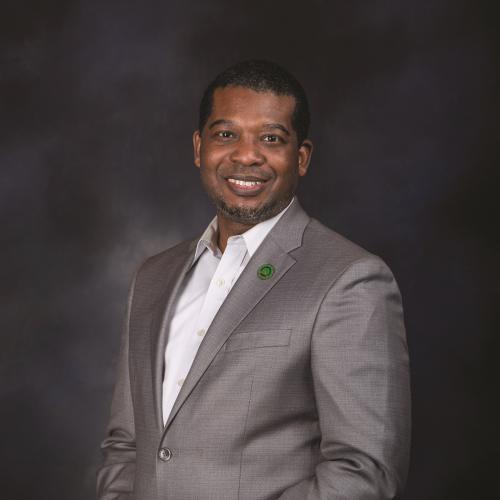
Asm. Corey Jackson
Sponsored bills
Maddy summaryACR 10 designates January 13, 2025, as Korean American Day in California. The resolution commemorates the arrival of the first Korean immigrants to the U.S. on January 13, 1903, and recognizes Korean Americans' historical contributions to California and the nation. It does not create new laws or policies, but serves as a ceremonial acknowledgment of this community's heritage and impact.
Maddy summaryThis bill is a House Resolution that formally recognizes the work of school board members across California by designating January 2025 as School Board Recognition Month. It directly affects local school districts and county offices of education by honoring the nearly 5,000 elected school board members who serve in these roles. The resolution expresses appreciation for their dedication to public education and encourages community members to support these local officials in their efforts to serve students. This is a commemorative measure rather than a policy change, as it does not alter laws or regulations but instead highlights the importance of school governance.
The California Constitution prohibits the total annual appropriations subject to limitation of the State and of each local government from exceeding the appropriations limit of the entity of government for the prior year adjusted for the change in the cost of living and the change in population. The California Constitution defines "appropriations subject to limitation" of the State for these purposes. The California Constitution establishes the Budget Stabilization Account and requires, for every fiscal year and based on the Budget Act for that fiscal year, the Controller to transfer from the General Fund to the Budget Stabilization Account, no later than October 1, a sum equal to 1.5% of the estimated amount of General Fund revenues for that fiscal year. The California Constitution requires other transfers between the General Fund and the Budget Stabilization Account, as specified. The California Constitution prohibits the amount transferred pursuant to these provisions for any fiscal year from exceeding an amount that would result in a balance in the account that, when the transfer is made, exceeds 10% of the amount of the General Fund proceeds of taxes for the fiscal year estimate, as specified. This measure would change the 1.5% required transfer to an undetermined percentage of the estimated amount of General Fund revenues for that fiscal year. The measure would change the 10% limit on the balance in the Budget Stabilization Account to 20% of the amount of the General Fund proceeds of taxes for the fiscal year estimate, as specified. The measure would specify that funds transferred under these provisions to the Budget Stabilization Account do not constitute appropriations subject to the above-described annual appropriations limit.
This measure would declare the conflict in Sudan an international crisis and would call upon the Trump Administration and the international community to take greater action and bring aid to the people of Sudan.
The California Constitution prohibits Members of the Legislature from accruing any pension or retirement benefit other than participation in the federal Social Security program as a result of legislative service. This measure, the Legislative Diversification Act, would repeal that prohibition and instead require the Legislature to establish a retirement system for Members elected to or serving in the Legislature on or after November 1, 2010. The measure would require a Member to serve at least 10 years in the Legislature to be eligible to receive benefits under the retirement system. The measure would authorize a Member who serves fewer than 10 years to transfer the service credit earned as a result of service in the Legislature to any other public employees' pension or retirement system in which the Member participates.
Existing law, beginning on June 26, 2023, establishes the Independent Consumer Fuels Advisory Committee within the State Energy Resources Conservation and Development Commission (Energy Commission) to advise the Energy Commission and the Division of Petroleum Market Oversight, as provided. Existing law prescribes the composition of the 8-member committee, including 6 specified members appointed by the Governor, one member appointed by the Speaker of the Assembly, and one member appointed by the Senate Committee on Rules. Existing law requires one member appointed by the Governor to represent labor. Existing law prohibits a member of the committee from having been employed by, contracted with, or received direct compensation from, a company that produces, refines, distributes, trades in, markets, or sells any petroleum product in the preceding 12 months, except as provided. Existing law specifies that the schedule of meetings of the committee is to be prescribed by the Energy Commission. This bill would specify that the above prohibition does not exclude a representative of a labor organization whose membership consists of, in whole or in part, individuals employed by a company that produces, refines, distributes, trades in, markets, or sells any petroleum product. The bill would require the gubernatorial appointee who represents labor to instead represent a labor organization with experience in refinery operations. The bill would require the committee to meet no less than annually. Existing law requires the Energy Commission, in consultation with the Labor and Workforce Development Agency and labor and industry stakeholders, to consider ways to manage necessary refinery turnarounds and maintenance that would protect the health and safety of employees and the public, and minimize the impacts of maintenance-related production losses on fuel prices. Existing law authorizes the Energy Commission, by regulation, to impose requirements governing the timing of turnaround and maintenance. This bill would expressly require those regulations to protect the health and safety of employees, local communities, and the public, and to include criteria that are required to be met before a refinery commences a turnaround or maintenance event, as provided. This bill would require the Energy Commission, in consultation with the committee, to consider the effects of refiners' inventories of fuel and feedstocks and blending components on the price of transportation fuels in California. The bill would authorize the Energy Commission, by regulation, to develop and impose requirements for refiners operating in the state to maintain minimum levels of inventories of refined transportation fuels meeting California specifications, including any feedstocks and blending components, as specified. The bill would prohibit the Energy Commission from applying a minimum inventory requirement to a refiner in a manner that would be met only by the construction of additional storage infrastructure, as determined by the Energy Commission. The bill would repeal these provisions on January 1, 2033. This bill would impose an administrative civil penalty on a refiner or person who fails to comply with regulations adopted pursuant to the above-described authority and would authorize the Energy Commission to seek any form of injunctive or remedial relief to enforce compliance with those regulations, as provided. Existing law requires the Energy Commission, on or before January 1, 2024, and every 3 years thereafter, to submit an assessment to the Governor and the Legislature that, among other things, identifies methods to ensure a reliable supply of affordable and safe transportation fuels in California, as provided. This bill, beginning with the first assessment submitted after the effective date of the bill, would require that the assessment also include an evaluation of California's future petroleum product and crude oil import needs, identification of steps that can be taken to ensure that marine infrastructure and port facilities will be adequate to accommodate the efficient movement of petroleum products to meet those needs, an evaluation of ways to maximize use of existing infrastructure and minimize cumulative pollution burdens, and an evaluation of the effects on supplies of transportation fuels of state regulations that the Energy Commission identifies may be causing supply constraints, or for which the Energy Commission believes alternative compliance pathways should be considered by state agencies to mitigate potential impacts on supply.

Existing law establishes independent institutions of higher education as one of the segments of postsecondary education in the state. Existing law, the Cal Grant Program, establishes the Cal Grant A Entitlement Awards, the Cal Grant B Entitlement Awards, the California Community College Expanded Entitlement Awards, the California Community College Transfer Entitlement Awards, the Competitive Cal Grant A and B Awards, the Cal Grant C Awards, and the Cal Grant T Awards under the administration of the Student Aid Commission. The Cal Grant Reform Act revises and recasts the provisions establishing and governing the existing Cal Grant Program into a new Cal Grant Program. Existing law specifies that the act becomes operative only if General Fund moneys over the multiyear forecasts beginning in the 2024–25 fiscal year are available to support ongoing augmentations and actions, and if funding is provided in the annual Budget Act to implement the act. This bill would prohibit, commencing September 1, 2025, an independent institution of higher education, as defined, from providing a legacy preference or donor preference in admissions, as defined, to an applicant as part of the regular or early action admissions process. The bill would require, on or before June 30, 2026, and annually thereafter, an independent institution of higher education to report to the Legislature and the Department of Justice on whether it is in compliance or violation of these provisions, and if in violation of these provisions, to also report, for that academic year, (1) specified information about newly enrolled students and (2) the admission rate of students who are provided a legacy preference or donor preference in admissions, as compared to the admission rate of students who are not provided a legacy preference or donor preference in admissions. The bill would require the department to post the names of the independent institutions of higher education that violate the prohibition on its internet website by the next fiscal year.
Existing law, the California Child Day Care Facilities Act, provides for the licensure and regulation of daycare centers by the State Department of Social Services. Existing regulation generally requires child daycare facilities that are licensed by the State Department of Social Services to require proof of each child's immunizations, including tuberculosis testing, and to maintain files of this proof on the premises. Existing law exempts from these requirements any child daycare center that exclusively offers a program of services for which there is no contract or agreement between the parent and the center for the regular care of the child, and there is no prearranged schedule of care for any child. Existing law requires parents using these exempt child daycare centers to sign a form acknowledging that they understand the center is not required to verify immunizations and tuberculosis testing for any children accepted for care. Existing law makes a willful or repeated violation of the act a crime. This bill would define the child daycare facilities subject to the above exemption as "drop-in childcare centers" and would make conforming changes. The bill would require, upon admission of a child to a drop-in childcare center, if the medical assessment required by department regulations is not available for the child, a licensee to obtain a written health assessment completed by the child's authorized representative, as specified. By expanding the scope of a crime, this bill would impose a state-mandated local program. The California Constitution requires the state to reimburse local agencies and school districts for certain costs mandated by the state. Statutory provisions establish procedures for making that reimbursement. This bill would provide that no reimbursement is required by this act for a specified reason.
Existing law requires the State Registrar to create a document, no later than March 1, 2020, with annual updates, containing information received by a local registrar concerning marriage certificates in which one or both of the parties were minors at the time of solemnization of the marriage. Existing law requires the local registrar, at least annually, to submit information, as specified, to the State Registrar for those purposes. Under existing law, a local registrar is not required to submit this information to the State Registrar if the local registrar did not receive a copy of the court order, as specified. This bill would remove that exception and require a local registrar to submit information to the State Registrar, as specified. By increasing the reporting requirements for local registrars, this bill would impose a state-mandated local program. The bill would require the State Registrar to create a report containing the number of marriage certificates that were submitted by a local registrar, as specified. This bill would require the State Registrar, on or before September 1, 2027, to publish the report on its internet website and submit the report to the Legislature. The bill would repeal this provision on January 1, 2028. This bill would also require the State Registrar, subject to an appropriation, to establish a grant program to study extralegal marriages, as defined. The bill would require a report completed through the grant program to address the prevalence of, conditions of, and circumstances surrounding extralegal marriages in the state, as specified. The California Constitution requires the state to reimburse local agencies and school districts for certain costs mandated by the state. Statutory provisions establish procedures for making that reimbursement. This bill would provide that, if the Commission on State Mandates determines that the bill contains costs mandated by the state, reimbursement for those costs shall be made pursuant to the statutory provisions noted above.