

Existing law requires the governing board or body of a local educational agency, defined as a county office of education, school district, state special school, or charter school, that serves pupils in kindergarten and grades 1 to 12, inclusive, to adopt a policy on pupil suicide prevention that specifically addresses, among other things, procedures relating to suicide prevention, intervention, and postvention, and any training on suicide awareness and prevention to be provided to teachers of pupils in all of the grades served by the local educational agency. Existing law requires the governing board or body of a local educational agency that serves pupils in kindergarten and grades 1 to 12, inclusive, to review, at minimum every 5th year, its policy on pupil suicide prevention and, if necessary, update its policy. To assist local educational agencies in developing policies for pupil suicide prevention, existing law requires the State Department of Education to develop and maintain a model policy to serve as a guide for local educational agencies, as provided. This bill would require, on or before July 1, 2026, the department to update the model policy to address crisis intervention protocols in the event of a pupil suicide crisis, as defined, including the process by which staff and external agencies are deployed to address a pupil suicide crisis, limiting the involvement and notification of law enforcement to situations in which a pupil's life is in imminent danger and their needs cannot be addressed by a mental health professional, and the assessment process that law enforcement officers should follow to determine whether the pupil experiencing a suicide crisis is endangered by parental notification. The bill would require, on or after July 1, 2026, the governing board or body of a local educational agency to update their pupil suicide prevention policy to include these crisis intervention protocols, as provided. The bill would encourage, when the governing board or body of a local educational agency reviews its policy on pupil suicide prevention, if the local educational agency does not have a school mental health professional, as defined, or contract with a mental health professional, as defined, the governing board or body to consider whether funding should be identified for purposes of hiring a school mental health professional. By imposing additional duties on local educational agencies, the bill would impose a state-mandated local program. The California Constitution requires the state to reimburse local agencies and school districts for certain costs mandated by the state. Statutory provisions establish procedures for making that reimbursement. This bill would provide that, if the Commission on State Mandates determines that the bill contains costs mandated by the state, reimbursement for those costs shall be made pursuant to the statutory provisions noted above.
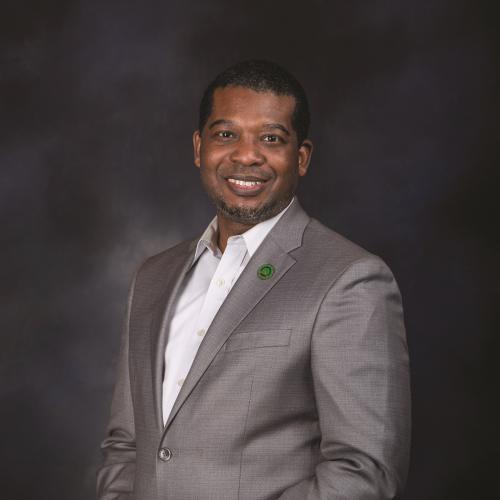
Asm. Corey Jackson
Sponsored bills
Under existing law, supportive housing is a use by right in zones where multifamily and mixed uses are permitted if the developer satisfies certain requirements. Existing law defines "supportive housing" as housing with no limit on length of stay, that is occupied by the target population, and that is linked to onsite or offsite services that assist the supportive housing resident in specified activities. Existing law requires a supportive housing development to include nonresidential floor area used for onsite services in specified amounts. In this regard, existing law requires a supportive housing development with more than 20 units to provide at least 3% of the total nonresidential floor area for onsite supportive services. The California Environmental Quality Act (CEQA) requires a lead agency, as defined, to prepare, or cause to be prepared, and certify the completion of, an environmental impact report on a project that it proposes to carry out or approve that may have a significant effect on the environment or to adopt a negative declaration if it finds that the project will not have that effect. CEQA does not apply to the approval of ministerial projects. This bill would revise the above-described requirement for a supportive housing development with more than 20 units to, instead, require the supportive housing development provide at least 3% of the total floor area for onsite supportive services. The bill would authorize a supportive housing development to include administrative office space in its nonresidential floor area, provided that the total floor area dedicated to administrative office space does not exceed 25% of the total floor area. The bill would define "administrative office space" as an organizational headquarters or auxiliary office space utilized by a nonprofit organization for the purpose of providing onsite supportive services at a supportive housing development and other nonprofit operations. The bill would specify that "administrative office space" includes parking necessary to serve the office space. By expanding the use by right provisions to include administrative office space, the bill would expand the exemption for approval of ministerial projects under CEQA. This bill would also specify that "supportive housing" specifically includes transitional housing for youth and young adults for purposes of the use by right provisions described above. By requiring local officials to engage in expanded ministerial project approval, this bill would impose a state-mandated local program. The California Constitution requires the state to reimburse local agencies and school districts for certain costs mandated by the state. Statutory provisions establish procedures for making that reimbursement. This bill would provide that no reimbursement is required by this act for a specified reason.
Existing law establishes the Medi-Cal program, which is administered by the State Department of Health Care Services (department) , under which qualified low-income individuals receive health care services. The Medi-Cal program is, in part, governed and funded by federal Medicaid program provisions. Under existing law, specialty mental health services include federal Early and Periodic Screening, Diagnostic, and Treatment (EPSDT) services provided to eligible Medi-Cal beneficiaries under 21 years of age. This bill would require, when a child or youth 21 years of age or younger who is receiving Medi-Cal specialty mental health services changes residence from one county to another, the receiving county to provide specialty mental health services to the child or youth, if the transfer of those services from one county to another is not otherwise governed by a process established in statute. The bill also would require the State Department of Health Care Services to collect specified data related to the receipt of specialty mental health services by children and youth who move outside of the county where they originally received specialty mental health services, and to include the data in the department's Medi-Cal specialty mental health services performance dashboard. The bill would require the department to issue guidance, as specified, to define the requirements placed on a receiving county for the continued provision of specialty mental health services, to coordinate and expedite the transfer of services from one county to another, and reduce the burden on children and youth and their caregivers to reestablish services in the receiving county. The bill would authorize the department to implement, interpret, or make specific its provisions by means of all-county letters, plan letters, plan or provider bulletins, or similar instructions, until regulations are adopted, as specified.
Existing law establishes the California Community Colleges, under the administration of the Board of Governors of the California Community Colleges. Existing law establishes community college districts throughout the state, under the administration of community college district governing boards, and authorizes these districts to provide instruction at the community college campuses they operate. Existing law establishes a statewide baccalaureate degree program that authorizes up to a total of 30 baccalaureate degree programs at community college districts to be approved per academic year, as provided. This bill would require the office of the Chancellor of the California Community Colleges to develop a Baccalaureate Degree in Nursing Pilot Program that authorizes select community college districts to offer a Bachelor of Science in Nursing degree. The bill would limit the pilot program to 10 community college districts statewide and would require the chancellor's office to identify and select eligible community college districts based on specified criteria. The bill would require the chancellor's office to develop a process designed to assist community college districts with nursing programs that are applying for national accreditation for the purpose of qualifying for the pilot program, as provided. The bill would require each participating community college district to give priority registration for enrollment in the pilot program to students with an associate degree in nursing from that community college district. The bill would require the Legislative Analyst's Office to conduct an evaluation of the pilot program to determine the effectiveness of the program and the need to continue or expand the program, as specified, to be submitted to the Legislature on or before July 1, 2032. The bill would repeal these provisions as of January 1, 2034.
Existing law establishes various boards within the Department of Consumer Affairs to license and regulate various health professionals. Existing law requires specified boards to expedite the licensure process of an applicant who can demonstrate that they intend to provide abortions within their scope of practice and specifies the documentation an applicant is required to provide to demonstrate their intent. This bill would require the Board of Behavioral Sciences, the Board of Registered Nursing, the Board of Vocational Nursing and Psychiatric Technicians of the State of California, the California State Board of Pharmacy, the Dental Board of California, the Dental Hygiene Board of California, the Podiatric Medical Board of California, and the Physician Assistant Board to develop a process to expedite the licensure process by giving priority review status to the application of an applicant for a license who demonstrates that they intend to practice in a medically underserved area or in a health professional shortage area, as reflected in a specified federal database, or serve a medically underserved population, as defined, and who meets specified requirements for the expedited licensure process. The bill would require an applicant for a license to demonstrate their intent to practice in a medically underserved area or in a health professional shortage area, or serve a medically underserved population, by providing a letter addressed to the applicable board from an employer that includes prescribed information. The bill would require the employer to include a written statement, signed and dated by an authorized representative of the employer, on the employer letterhead, declaring that the information provided in the letter to the board is true and correct. Under the bill, no criminal or civil penalty would be imposed for a violation of that requirement. The bill would become operative on March 1, 2025. The bill would repeal these provisions on January 1, 2029.
Existing law grants pupils, parents, and guardians certain rights regarding the delivery of educational services, including, among others, rights regarding primary supplemental instruction materials. Existing law provides that none of these rights shall be construed as restricting teachers in the assignment of homework. This bill, the Healthy Homework Act, would encourage each school district, county office of education, and charter school to (1) develop a homework policy for all grades maintained by the local educational agency, as specified, by the start of the 2027–28 school year, (2) formally adopt a final homework policy by the start of the 2028–29 school year, and (3) update the adopted homework policy at least once every 5 years, as provided. The bill would, among other things, encourage the local educational agency to annually distribute the adopted or updated homework policy at the beginning of the school year to all certificated staff and administrators, to all pupils and parents or legal guardians, as specified, and by publication on the local educational agency's internet website and on the internet websites of the individual schools operated by the local educational agency. For a local educational agency that formally adopted a homework policy on or before July 31, 2024, the bill would encourage the local educational agency to update its adopted homework policy before the start of the 2028–29 school year or within 5 years of its adoption, whichever is later, and would encourage the local educational agency's updated homework policy to be consistent with the bill's provisions. The bill would authorize the State Department of Education to develop and post on its internet website, guidelines for local educational agencies to use in developing the homework policy, as provided, and would encourage those guidelines to be developed and posted by January 1, 2026.
Existing law provides for the licensure and regulation of health facilities by the State Department of Public Health. Existing law requires a health facility to develop, implement, and comply with a patient safety plan to improve the health and safety of patients and to reduce preventable patient safety events. The patient safety plan requires specified elements, including, but not limited to, a reporting system for patient safety events that allows anyone involved to make a report of a patient safety event to the health facility, and a process for a team of facility staff to conduct analyses related to root causes of patient safety events. A violation of these provisions is a crime. This bill would require the reporting system to include anonymous reporting options. The bill would also require analysis of patient safety events by specified sociodemographic factors to identify disparities in these events and would state the intent of the Legislature that a health facility use prescribed stratification categories for this requirement and that a health facility, for certain sociodemographic factors, only be required to disclose information that is voluntarily provided by the patient or client. The bill would require that the safety plan include a process for addressing racism and discrimination and its impacts on patient health and safety, including monitoring sociodemographic disparities in patient safety events and developing interventions to remedy known disparities, and encouraging facility staff to report suspected instances of racism and discrimination. The bill would require, beginning January 1, 2026, and biannually thereafter, that health facilities submit patient safety plans to the department's licensing and certification division. The bill would authorize the department to impose a fine not to exceed $5,000 on health facilities for failure to adopt, update, or submit patient safety plans, and would authorize the department to grant an automatic 60-day extension to submit biannual patient safety plans. The bill would require the department to make all patient safety plans submitted by health facilities available to the public on its internet website. By expanding the requirements on health facilities, the bill would expand the definition of a crime and would impose a state-mandated local program. The California Constitution requires the state to reimburse local agencies and school districts for certain costs mandated by the state. Statutory provisions establish procedures for making that reimbursement. This bill would provide that no reimbursement is required by this act for a specified reason.
Existing law, the California Emergency Services Act, authorizes use of the Emergency Alert System to inform the public of local, state, and national emergencies. Existing law authorizes a law enforcement agency to request the Department of the California Highway Patrol to activate a "Feather Alert," as defined, if the law enforcement agency determines that specified criteria are satisfied with respect to an endangered indigenous person who has been reported missing under unexplained or suspicious circumstances. Existing law requires the department, if it concurs that those specified requirements are met, to activate a Feather Alert within the appropriate geographical area requested by the investigating law enforcement agency and to assist the agency by disseminating specified alert messages and signs. Existing law requires the department to create and submit a report to the Governor's office and the Legislature that includes an evaluation of the Feather Alert, as specified. This bill would require the department, in consultation with specified groups including tribal nations, to develop policies and procedures providing instruction specifying how a law enforcement agency and certain entities involved in emergency warnings are required to proceed after a missing person has been reported to a law enforcement agency, as defined, and prescribed conditions are met. The bill would require those policies and procedures to include, among other things, procedures for the transfer of information regarding the missing person and the circumstances surrounding the missing person's disappearance, as specified. This bill would require the department to respond to a law enforcement agency's or tribe's request to activate a Feather Alert within 48 hours of receiving the request. The bill would require the department to take reasonable steps to confirm that a report from a missing person's family members is not an attempt to locate an indigenous person who is intentionally avoiding or evading abuse, as specified. If the department declines to activate a Feather Alert, the bill would require it to provide written notice to the requesting law enforcement agency or tribe, as specified. This bill would revise the conditions under which a law enforcement agency may request the department to activate a Feather Alert. In this regard, the bill would authorize the agency to make that request if it determines a Feather Alert would be an effective tool in the investigation of missing and murdered indigenous persons. To make that determination, the bill would require a law enforcement agency to consider prescribed factors, including, among other things, that the agency or tribe believes that the person is in danger and is missing under specified circumstances. This bill would revise the reporting requirement described above to require the department to work with law enforcement agencies and tribal nations to create the report and to submit the report no later than January 1, 2027. The bill would require the report to include information on the efficacy and advantages of the Feather Alert, including, but not limited to, statistical data on the number of cases closed and the number of cases that remain open, and the impact of the Feather Alert on other alert programs.
Existing law, the Knox-Keene Health Care Service Plan Act of 1975 (hereafter the act) , provides for the licensure and regulation of health care service plans by the Department of Managed Health Care and makes a willful violation of the act a crime. Existing law requires the records, books, and papers of a health care service plan and other specified entities to be open to inspection by the director of the department during normal business hours. This bill would instead require the records, books, and papers of a health care service plan and other specified entities to be open to inspection by the director, including through electronic means. The bill would require a plan and other specified entities to furnish in electronic media records, books, and papers that are possessed in electronic media and to conduct a diligent review of records, books, and papers and make every effort to furnish those responsive to the director's request. The bill would require records, books, and papers to be furnished in a format that is digitally searchable, to the greatest extent feasible. The bill would require records, books, and papers to be preserved until furnished, if requested by the department. The bill would authorize the director to inspect and copy these records, books, and papers, and to seek relief in an administrative law proceeding if, in the director's determination, a plan or other specified entity fails to fully or timely respond to a duly authorized request for production of records, books, and papers. Because a willful violation of these requirements would be a crime, the bill would impose a state-mandated local program. Existing law requires the department to conduct periodically an onsite medical survey of the health delivery system of each plan. Existing law requires the director to publicly report survey results no later than 180 days following the completion of the survey, and requires a final report to be issued after public review of the survey. Existing law requires the department to conduct a followup review to determine and report on the status of the plan's efforts to correct deficiencies no later than 18 months following release of the final report. This bill would state that nothing in those provisions prohibits the director from taking any action permitted or required under the act in response to the survey results before the followup review is initiated or completed, including, but not limited to, taking enforcement actions and opening further investigations. The bill would declare that these provisions are declaratory of and clarify existing law with regard to the director's enforcement authority. Existing law enumerates acts or omissions by a health care service plan that constitute grounds for disciplinary action by the director. This bill would add to those enumerated acts or omissions the failure by a health care service plan to respond fully or timely, or both, to a duly authorized request for production of records. The California Constitution requires the state to reimburse local agencies and school districts for certain costs mandated by the state. Statutory provisions establish procedures for making that reimbursement. This bill would provide that no reimbursement is required by this act for a specified reason.
Existing law, the Unruh Civil Rights Act, provides that all persons within the jurisdiction of this state are entitled to full and equal accommodations in all business establishments regardless of their sex, race, color, religion, ancestry, national origin, disability, medical condition, genetic information, marital status, sexual orientation, citizenship, primary language, or immigration status. Existing law, the California Fair Employment and Housing Act, makes it unlawful to engage in specified discriminatory employment practices based on certain protected characteristics, including race, unless based on a bona fide occupational qualification or applicable security regulations, and prohibits housing discrimination based on specified personal characteristics, including race. Existing law states the policy of the State of California to afford all persons in public schools, regardless of their disability, gender, gender identity, gender expression, nationality, race or ethnicity, religion, sexual orientation, or any other specified characteristic, equal rights and opportunities in the educational institutions of the state, and to prohibit acts that are contrary to that policy and to provide remedies therefor. Existing law prohibits discrimination because of a perception that a person has one of those protected characteristics or is associated with a person who has, or is perceived to have, any of those characteristics. The California Fair Employment and Housing Act and public school policy define the term race for purposes of those provisions to include traits historically associated with race, including, but not limited to, hair texture and protective hairstyles, as defined. This bill would remove the term "historically" from the definitions of race, thus defining race to include traits associated with race, including, but not limited to, hair texture and protective hairstyles, as defined, and would add those definitions for "race" and "protective hairstyle" to the Unruh Civil Rights Act. This bill would declare that its provisions are declaratory of existing law. This bill would incorporate additional changes to Section 51 of the Civil Code proposed by SB 1137 to be operative only if this bill and SB 1137 are enacted and this bill is enacted last. This bill would incorporate additional changes to Section 12926 of the Government Code proposed by SB 1022 and SB 1137 to be operative only if this bill and either or both of those bills are enacted and this bill is enacted last.