

Existing law defines an electric bicycle as a bicycle equipped with fully operable pedals and an electric motor that does not exceed 750 watts of power. Existing law classifies electric bicycles into 3 classes with different restrictions. Existing law defines a "class 1 electric bicycle" as a bicycle equipped with a motor that provides assistance only when the rider is pedaling, that is not capable of exclusively propelling the bicycle, and that ceases to provide assistance when the bicycle reaches the speed of 20 miles per hour. Existing defines a "class 2 electric bicycle" as a bicycle equipped with a motor that may be used exclusively to propel the bicycle and that is not capable of providing assistance when the bicycle reaches the speed of 20 miles per hour. Existing law defines a "class 3 electric bicycle" as a bicycle equipped with a speedometer and a motor that, in pertinent part, provides assistance only when the rider is pedaling and that ceases to provide assistance when the bicycle reaches the speed of 28 miles per hour. A violation of the Vehicle Code is a crime. This bill would instead define a class 1 electric bicycle as a bicycle equipped with a motor that provides assistance only when the rider is pedaling, that is not capable of exclusively propelling the bicycle, and that ceases to provide assistance when the bicycle reaches the speed of 16 miles per hour. The bill would define a class 2 electric bicycle as a bicycle equipped with a motor that may be used exclusively to propel the bicycle, and that is not capable of providing assistance when the bicycle reaches the speed of 16 miles per hour. The bill would provide that, notwithstanding these definitions, an electric bicycle manufactured prior to January 1, 2027, that was equipped with a motor that is not capable of exceeding 750 watts of continuous power and otherwise met the legal requirements for the relevant class at the time of manufacture shall retain its classification. This bill would authorize a cargo electric bicycle to be equipped with an electric motor with a maximum continuously rated power of 750 watts. The bill would define a cargo electric bicycle as an electric bicycle that is built with a reinforced frame and integrated rack or platform designed to transport goods or additional persons. This bill would prohibit a manufacturer from equipping, and a retailer from offering for sale or advertising, any device labeled as an electric bicycle with a motor that is capable of exceeding 750 watts of peak power. The bill would also prohibit a manufacturer from equipping, and a retailer from offering for sale or advertising, any device labeled as a class 1 or class 2 electric bicycle with a motor that is capable of exceeding 250 watts of continuous power or that is capable of providing assistance to reach speeds greater than 16 miles per hour. The bill would make a violation of these provisions punishable by a civil penalty not to exceed $15,000 for a first violation and not to exceed $50,000 for each subsequent violation, upon an action brought by the Attorney General, a city attorney, a county counsel, or a district attorney. The bill would specify that a violation of this provision is not a criminal offense. Existing law prohibits a person under 16 years of age from operating a class 3 electric bicycle, and authorizes a peace officer to remove the electric bicycle being operated by the person. Existing law requires an agency to release a seized electric bicycle to the owner, violator, or their agent after a minimum of 48 hours if certain conditions are met, including that the costs of removal, seizure, and storage have been paid. Existing law authorizes an agency to require, as a condition of release of an electric bicycle removed under this provision, proof that the violator has completed an electric bicycle safety and training program or a related local bicycle safety course, as described. This bill would prohibit a person under 16 years of age from operating an electric bicycle with a motor that is capable of exceeding 250 watts of continuous power, and would authorize a peace officer to remove the electric bicycle that is being operated by the person. The bill would authorize an agency to require proof that the violator has completed an electric bicycle safety and training program or a related local bicycle safety course, as described, as a condition of release of the electric bicycle. Because a violation of this prohibition would be a crime, the bill would impose a state-mandated local program. The California Constitution requires the state to reimburse local agencies and school districts for certain costs mandated by the state. Statutory provisions establish procedures for making that reimbursement. This bill would provide that no reimbursement is required by this act for a specified reason.
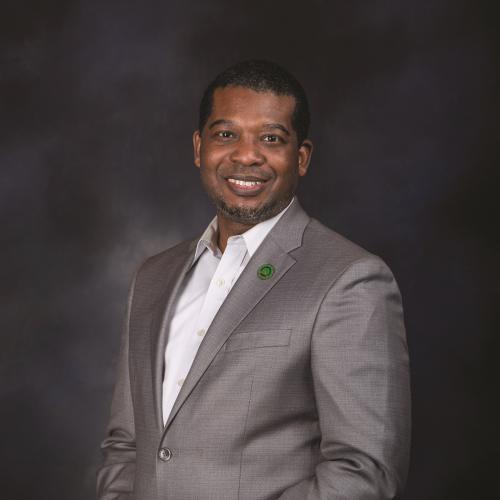
Asm. Corey Jackson
Sponsored bills
Existing law, the Alcoholic Beverage Control Act, provides for the issuance, suspension, revocation, and conditions upon licensure for the manufacture, distribution, and sale of alcoholic beverages. Existing law makes every person who sells, furnishes, gives, or causes to be sold, furnished or given away any alcoholic beverage to any person under 21 years of age guilty of a misdemeanor. Existing law also makes it unlawful for a person who is under the influence of any alcoholic beverage or drug, or the combined influence of both, to drive a vehicle and requires a court, when granting probation following conviction of a driving under the influence offense, to impose certain terms and conditions, including that the individual not drive a vehicle with any measurable amount of alcohol in their blood, among others. This bill would require everyone who sells or furnishes alcoholic beverages to first review bona fide evidence of majority and identity, as described. The bill would authorize a court when granting probation for certain driving under the influence offenses to prohibit the person from purchasing alcohol and would require the Department of Motor Vehicles to issue an identification card or driver's license with an appropriate designation on the face upon the receipt of an abstract of the record of a court. The bill would authorize the court to prohibit the purchase of alcohol when the offense occurred within 10 years of 2 or more driving under the influence offenses that resulted in conviction or certain other prior convictions, or if the conviction was for vehicular manslaughter, as specified. The bill would require a seller of alcoholic beverages to refuse to sell or serve someone subject to such an order. To the extent this bill would require a higher level of service from court staff who are county employees, the bill would impose a state-mandated local program. The California Constitution requires the state to reimburse local agencies and school districts for certain costs mandated by the state. Statutory provisions establish procedures for making that reimbursement. This bill would provide that, if the Commission on State Mandates determines that the bill contains costs mandated by the state, reimbursement for those costs shall be made pursuant to the statutory provisions noted above.
Maddy summaryThis bill designates April 2026 as Second Chance Month in California to raise awareness about opportunities for individuals reentering society after incarceration. The measure is a ceremonial proclamation that does not alter laws, allocate funding, or change government operations. Its primary purpose is to encourage public recognition of the challenges faced by formerly incarcerated people and to highlight available support resources during that specific month.
This measure would proclaim the week of April 20, 2026, to April 24, 2026, inclusive, as California Home Visiting Week, and would encourage all Californians to recognize and celebrate the contributions of home visiting programs and professionals and the families they serve.
Maddy summaryThis bill designates the week of April 19 to April 25, 2026, as Mosquito Awareness Week. The measure is a commemorative resolution that officially recognizes this specific time period to highlight mosquito-related issues. It does not create new laws, impose regulations, or allocate funding, but rather serves to raise public awareness through official designation.
Maddy summaryThis bill designates April 14 of every year as Sylvia Mendez Day to honor the civil rights activist who challenged school segregation in California. The measure is a commemorative resolution that does not change laws, allocate funding, or alter government operations. By establishing this annual observance, the state recognizes Mendez's historical contributions to education and civil rights.
Maddy summaryThis bill designates the week of April 5, 2026, through April 11, 2026, as Special Districts Week. It directly affects special districts, which are local government entities that provide specific services like water supply or fire protection to communities. The primary mechanism is an official proclamation that encourages public awareness and recognition of the work these districts perform. This measure does not alter any laws or budgets but serves as a commemorative resolution to highlight the importance of special districts.
Maddy summaryThis bill designates the week of April 12 to April 18, 2026, as California Public Safety Telecommunicators Week to honor the work of emergency call operators. The measure does not change laws or allocate funding; it simply establishes an official state observance. By creating this designated week, the legislation aims to bring public attention to the role of telecommunicators without altering their duties or compensation.
Maddy summaryThis bill designates April 19, 2026, as World Irritable Bowel Syndrome Day within the state of California. It serves as a commemorative resolution intended to raise awareness about the condition on a specific date. The measure does not create new laws, funding, or administrative requirements but simply establishes an official day of recognition.
Maddy summaryThis bill is a House Resolution that formally recognizes May 2026 as Asian and Pacific Islander American Heritage Month in California. It commends the community for its historical contributions to the state and nation while acknowledging the hardships they have faced, such as discrimination and internment. The resolution serves as a symbolic gesture to celebrate the achievements and diverse cultures of over 7.3 million Asian and Pacific Islander Americans living in California. As a commemorative measure, it does not create new laws or change government operations but rather directs the Assembly to acknowledge this specific month of observance.