

Existing law establishes the Medi-Cal program, which is administered by the State Department of Health Care Services and under which qualified low-income individuals receive health care services. The Medi-Cal program is in part governed by, and funded pursuant to, federal Medicaid program provisions. Existing federal law, Public Law 119-21, enacted on July 4, 2025, sets forth various changes to different health care programs, including certain requirements for Medicaid eligibility with regard to work or community engagement reporting, redeterminations, and cost sharing, among other factors, for certain Medicaid populations pursuant to a specified implementation timeline. Existing law, the federal Patient Protection and Affordable Care Act, imposes a certain assessment on an applicable large employer, as defined, that offers full-time employees and their dependents the opportunity to enroll in minimum essential coverage, and for whom one or more full-time employees have been certified as having enrolled in a qualified health plan for which a premium tax credit or cost-sharing reduction is allowed or paid. This bill would create the Employer Responsibility for Medi-Cal Trust Fund to consist of new taxes and deposits, including employer penalties specified in the Budget Act of 2026. The bill would continuously appropriate moneys in the fund to the department to fund the costs of administering the Medi-Cal program in a manner necessary to prevent loss of or to restore health care coverage, benefits, or access to care following the passage of Public Law 119-21 and subsequent state budget actions. The bill would state that these provisions would become operative only if the Medicaid provisions of Public Law 119-21 are not repealed prior to January 1, 2027. By creating a continuously appropriated fund, the bill would make an appropriation. This bill would declare that it is to take effect immediately as an urgency statute.
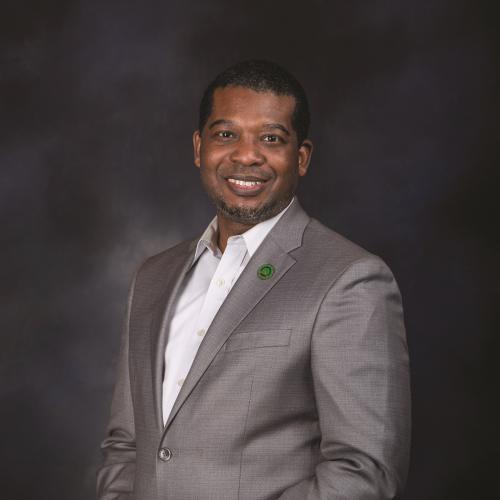
Rep. Corey Jackson
Sponsored bills
This measure would recognize the significance of Vesak Day to people of Buddhist faith and extend sincere best wishes to the state's Buddhist community in celebrating Vesak Day.
Maddy summaryThis House Resolution recognizes May 17, 2026, as the International Day Against Homophobia, Biphobia, Interphobia, and Transphobia within the California Legislature. The measure formally acknowledges the ongoing discrimination faced by LGBTQ+ individuals globally and reaffirms the state's commitment to equality and civil rights. By adopting this resolution, the Assembly encourages all Californians to support inclusive practices and stand against hate toward the LGBTQ+ community.
The Corporation Tax Law imposes on every corporation doing business in the state, as defined, a tax according to or measured by net income and, in the case of a corporation with income derived from or attributable to sources both within and without this state, apportions the income between this state and other states and foreign countries in accordance with a single sales formula based on the sales within and without this state, except that in the case of an apportioning trade or business that derives more than 50% of its gross business receipts from conducting one or more qualified business activities, as defined, business income is apportioned in accordance with a specified 3-factor formula. Existing federal law, for purposes of determining a taxpayer's gross income for federal income tax purposes, requires that a person who is a United States shareholder of any controlled foreign corporation, as defined, to include in their gross income the net CFC tested income, as provided. The Corporation Tax Law, for taxable years beginning on or after January 1, 2003, for purposes of determining income derived from or attributable to sources within this state, allows corporations to make a statutory election as to whether their income is determined on a "water's-edge" basis or on a worldwide unitary basis. Under existing law, the election to report income on a water's-edge basis remains in effect until terminated, and provides conditions for the termination of the election. This bill, for taxable years beginning on or after January 1, 2026, would require a taxpayer that files on a water's-edge basis to account for net CFC tested income within the water's-edge group, as provided. The bill would require a taxpayer that files on a water's-edge basis to include all income and apportionment factors of any corporation, other than a bank, whose sales factor, instead of the average of 3 factors, in the United States is at least 20%. The bill would also terminate all water's-edge elections for the first taxable year beginning on or after January 1, 2028, and would not allow a taxpayer to make a water's-edge election, or file on a water's-edge basis, for taxable years beginning on or after January 1, 2028. The bill would authorize any taxpayer that has made a water's-edge election to terminate that election without the consent of the Franchise Tax Board for taxable years beginning on or after January 1, 2026, and before January 1, 2028. This bill would include a change in state statute that would result in a taxpayer paying a higher tax within the meaning of Section 3 of Article XIIIA of the California Constitution, and thus would require for passage the approval of 23 of the membership of each house of the Legislature. This bill would take effect immediately as a tax levy.
Existing law creates, within the Government Operations Agency, a Chief Equity Officer, who is appointed by, and serves at the pleasure of, the Governor. Existing law requires the Chief Equity Officer to improve equity and inclusion throughout state government operations and authorizes the Chief Equity Officer to engage with state entities for these purposes. The State Government Strategic Planning and Performance and Review Act requires each agency, department, office, or commission for which strategic planning efforts are recommended, as specified, to develop a strategic plan and to report to the Governor and the Joint Legislative Budget Committee by April 1 each year on the steps being taken to develop and adopt a strategic plan. The act requires the report to include a description of the elements to be included in the strategic plan, the process for developing and adopting the strategic plan, and the timetable for the plan's completion. This bill would additionally require every state agency or department subject to the Governor's authority to take specified actions in regard to any strategic plan to more effectively advance racial equity, as specified, and to undertake a racial equity analysis before implementing any budget or before any regulation takes effect, by the agency's or department's diversity, equity, and inclusion officer or comparable position. If that position does not exist within the agency or department, the bill would require the analysis to be performed by an individual who has demonstrated expertise, and demonstrated satisfaction of appropriate criteria, in specified areas including analyzing, implementing, or developing public policies that impact racial equity.
Existing law places with the State Department of Social Services responsibility for various programs, services, and systems relating to early learning and care, including, among others, various childcare and development programs, the California Child Care Initiative Project, the Child Development Management Information System, and other related data systems, as specified. This bill would establish the statewide Early Childhood Integrated Data System under the department to, among other things, link data across programs serving children from birth to 5 years of age. The bill would require the department to establish the Interagency Early Childhood Data Task Force to coordinate efforts on development and implementation of the system, as specified. The bill would require the task force to annually submit a report to the Legislature on the progress in developing, establishing, and operating the data system, with the report containing certain recommendations. The bill would require the department to ingest data, sourced from administrative data systems maintained by each data provider, to be implemented in 2 phases, as specified. The bill would set forth certain conditions on the department relating to the ingestion, deletion, use, and sharing of the data.
Existing law establishes specified rights for victims and witnesses of crimes, including to be notified or informed regarding specified court proceedings and the right to have a support person present at any interviews with law enforcement for a victim of domestic violence or sexual assault. Existing law requires a law enforcement agency to inform a victim of the rights they may have. This bill would state that a victim of sexual assault or domestic violence has the right to a fair, unbiased, and complete investigation by law enforcement. The bill would require a district attorney to establish a process for reviewing and investigating reported cases of sexual assault or domestic violence and would require that process to include a report to the victim explaining the decision whether or not to bring criminal accusations and which accusations to allege. Existing law establishes the Commission on Peace Officer Standards and Training and requires the commission to create courses of training that must be completed by persons before those persons can become peace officers. The commission is also required to create guidelines and training courses for peace officers on specified law enforcement topics, including the investigation of domestic violence complaints and sexual assault. This bill would require those courses and guidelines to include trauma-informed methods for responding to victims, gender-neutral or gender-inclusive language in reporting, and best practices for bias prevention. The bill would require the commission to prepare a course on gender bias in responding to reports of sexual assault and domestic violence and would require that course to adhere to guidance provided by the Department of Justice, as specified. Existing law establishes the State Department of Public Health and charges it with providing education and outreach to the public on various issues relating to public health, such as lyme disease, human immunodeficiency virus and acquired immune deficiency syndrome, and hepatitis C. This bill would require the department to develop materials to educate the public that all genders may be the victim of sexual assault and domestic violence, that all genders may perpetrate sexual assault and domestic violence, and that all genders have equal rights to safety, shelter, and legal protections and remedies. Because this bill would create new duties for local law enforcement agencies, it would impose a state-mandated local program. The California Constitution requires the state to reimburse local agencies and school districts for certain costs mandated by the state. Statutory provisions establish procedures for making that reimbursement. This bill would provide that, if the Commission on State Mandates determines that the bill contains costs mandated by the state, reimbursement for those costs shall be made pursuant to the statutory provisions noted above.
Maddy summaryThis bill designates the week of May 17 to May 24, 2026, as National Public Works Week throughout California to honor the contributions of public works professionals. It directly affects engineers, managers, and employees in government and the private sector who maintain essential infrastructure like transportation systems, water supplies, and public buildings. The resolution requests that the Governor issue a proclamation encouraging the public to observe the week with educational programs and activities that highlight the importance of these workers.
Existing law, the Cortese-Knox-Hertzberg Local Government Reorganization Act of 2000, provides the sole and exclusive authority and procedure for the initiation, conduct, and completion of changes of organization and spheres of influence for cities and special districts, including incorporation of cities and formation of districts. The act establishes a local agency formation commission in each county with various powers and duties, including to make certain determinations regarding, and to review and approve or disapprove, proposals for changes or organization or reorganization, as specified. This bill, the Moreno Valley-Perris Childcare Special District Act, would establish the Moreno Valley-Perris Childcare Special District for a period of 5 years for the purpose of, among other things, expanding childcare capacity and access through the development, coordination, and operation of universal childcare programs. The bill would establish the district boundaries as the incorporated area of the City of Moreno Valley, the incorporated area of the City of Perris, and the officially adopted spheres of influence for each city as determined and updated by the County of Riverside local agency formation commission (LAFCO) . The bill would establish a 5-member board to govern the district and specify that certain entities, including the City of Moreno Valley and the City of Perris, are charged with each appointing a member to the board. The bill would specify the duties of the board, including, among others, the duty to develop and submit a plan of services to LAFCO that details the scope of childcare services, the hours of operation, the governance and management structure, and funding sources and sustainability. The bill would also outline various powers of the board, including the authority to hire a general manager to oversee daily operations, and powers of the district, including the authority to designate, contract with, or directly operate child daycare facilities. The bill would authorize initial funding for the district to be provided by any of the entities authorized to appoint a board member, would require the board to call and conduct an election, consistent with applicable law, to seek voter approval for funding mechanisms necessary to formally establish and operate the district, and would prohibit the district from incurring bonded indebtedness until the district has completed formation, as specified. The bill would require the district, between July 1, 2031, and January 1, 2032, to adopt an ordinance to determine whether the district should continue in existence beyond the initial 5-year period established in this act or if the district should be dissolved. If the district determines it should continue, the bill would require the district to submit an application to LAFCO for the formation of a special district and follow the procedures established in the Community Services District Law and in the Cortese-Knox-Hertzberg Local Government Reorganization Act of 2000. If the district is dissolved, the bill would require that any revenue be returned to the entity in which the revenue originated, except as specified. By establishing a new special district and imposing new duties on that district, this bill would impose a state-mandated local program. This bill would make legislative findings and declarations as to the necessity of a special statute for Moreno Valley-Perris Childcare Special District. The California Constitution requires the state to reimburse local agencies and school districts for certain costs mandated by the state. Statutory provisions establish procedures for making that reimbursement. This bill would provide that, if the Commission on State Mandates determines that the bill contains costs mandated by the state, reimbursement for those costs shall be made pursuant to the statutory provisions noted above.
Existing law establishes the Division of Labor Standards Enforcement within the Department of Industrial Relations. Existing law authorizes the division, which is headed by the Labor Commissioner, to enforce the Labor Code and all labor laws of the state, the enforcement of which is not specifically vested in any other officer, board, or commission. This bill would prohibit an employer from using a worker's personal information, as defined, to train an artificial intelligence system to replicate, automate, or replace a worker's job, and would prohibit an employer from selling, disclosing, or otherwise providing access to a worker's personal information to a third party for the purpose of training an artificial intelligence system to replicate, automate, or replace a worker's job. The bill would prohibit a vendor providing services to an employer under a contract from providing access to the personal information of an employer's worker to a third party or using the personal information of an employer's worker to train artificial intelligence, as specified. The bill would require a contract between an employer and vendor to include a requirement that the vendor implement and maintain reasonable security procedures to protect the worker's personal information from, among other things, unauthorized or illegal access. The bill would define terms for these provisions, including "employer" and "personal information." The bill would require the Labor Commissioner and authorize a public prosecutor to enforce these provisions. The bill would authorize a worker, or their exclusive representative, who suffered a violation of these provisions to bring a civil action for damages, injunctive relief, punitive damages, and attorney's fees and costs. The bill would establish a statutory penalty for a violation of these provisions of up to $500 for each violation. The bill would include findings that changes proposed by this bill address a matter of statewide concern rather than a municipal affair and, therefore, apply to all cities, including charter cities.