

Existing law establishes the Instructional Quality Commission and requires the commission to, among other things, develop, and the State Board of Education to adopt, modify, or revise, model curriculum frameworks, as specified. Existing law requires the commission, when the health curriculum framework is next revised on or after January 1, 2025, to consider providing for inclusion, in that curriculum framework, content on sextortion, as defined. Existing law, the California Healthy Youth Act, requires school districts, defined to include county boards of education, county superintendents of schools, the California School for the Deaf, the California School for the Blind, and charter schools, to ensure that all pupils in grades 7 to 12, inclusive, receive comprehensive sexual health education and human immunodeficiency virus (HIV) prevention education from instructors trained in the appropriate courses, at least once in junior high or middle school and at least once in high school. Under the act, this instruction includes, among other things, information about human trafficking. Existing law requires school districts, as part of the requirement of the California Healthy Youth Act that pupils receive comprehensive sexual health education and HIV prevention education from instructors trained in the appropriate courses, to ensure the periodic conduction of continuation training to enable school district personnel to learn about new developments in the understanding of, among other things, human trafficking, and to receive instruction on current prevention resources, as provided. This bill would require the commission, when the health curriculum framework is next revised on or after January 1, 2027, to consider providing for inclusion in that framework content related to human trafficking and online safety, including how to prevent human trafficking, how to prevent exploitation for labor and services, how to stay safe from sexually exploitative materials and deepfakes online, foundational digital citizenship skills, and skills-based content that builds protective factors, as provided. The bill would require the topics considered to follow a cumulative, age-appropriate progression from kindergarten to grades 1 to 12, inclusive, as provided. The bill would require the State Department of Education to curate and maintain information on its internet website related to the above-described topics, and related recommended training for educators, as provided.
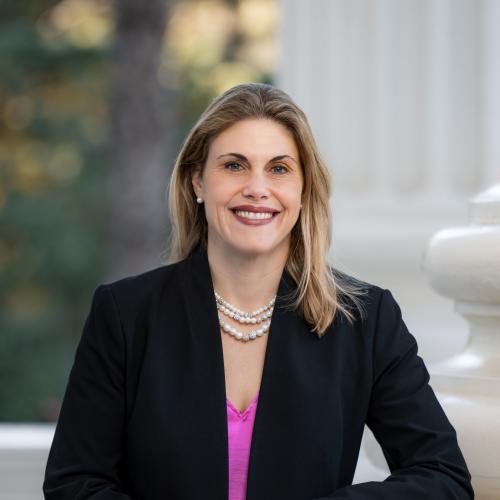
Rep. Maggy Krell
Sponsored bills
Maddy summaryThis bill designates September 2026 as Childhood Cancer Awareness Month. It directly affects state agencies and organizations by encouraging them to recognize this specific month for awareness activities. The measure does not change laws or allocate funding but serves as a formal commemorative resolution.
This measure would recognize and affirm the important role of artists, arts organizations, creative arts therapists, and arts for health initiatives in supporting behavioral health, promoting recovery, strengthening community resilience, and contributing to public safety. The measure would encourage and recognize exploration, support, and integration of arts and behavioral health within California's health care, behavioral health, and community-based systems.
Existing law requires certain businesses or establishments to post a notice relating to slavery and human trafficking, including hotlines and available services and support information. Existing law requires certain businesses or establishments to provide certain employees at least 20 minutes of training on human trafficking, as specified. Under existing law, the training must cover certain subjects, including how to recognize human trafficking. The training may also include information and material utilized by private nonprofit organizations that represent the interests of human trafficking victims and the Department of Justice, among other things. This bill would additionally require body art facilities, by July 1, 2027, to post the above-described notice and to provide the human trafficking training to their employees and registered practitioners, as specified. The bill would instead authorize the training to include evidence-based, trauma-informed curriculum developed by the above-described nonprofit organizations and information and material available on the Department of Justice's internet website.
(1) Existing law prohibits a transport escort service from accompanying or transporting a minor to any residential facility or institution located outside the state, unless the person or persons transporting or accompanying the minor are trustline-registered childcare providers. Existing law also requires every transport escort service that accompanies or transports a minor who is a resident of California to any residential facility or institution located outside the state to first provide the minor's parents, custodial parent, or legal guardian with specified information, including, among others things, a description of the childcare provider trustline registry. Existing law makes a violation of these provisions a misdemeanor. This bill, the Safe Passage for Youth Act, would expand those provisions relating to transport escort services to apply when accompanying or transporting a minor, without regard to whether the destination is an out-of-state residential facility or institution. The bill would revise the definition of a "transport escort service" and also make these provisions inapplicable to the transport of minors by a transportation network company, minors in the care of a community care facility, or an individual providing private childcare, casual babysitting, or domestic nanny services, if certain conditions are met. The bill would also require a transport escort service accompanying or transporting a minor to an out-of-state facility to provide the minor's parents with specified information, including an explanation of how a parent may obtain more information about the childcare provider trustline registry. By expanding the scope of a crime, the bill would impose a state-mandated local program. The bill would also impose various additional requirements and restrictions on transport escort services, including, among other things, a requirement that they maintain written policies governing the safety and welfare of minors and a prohibition on using behavioral restraints unless it is necessary to prevent imminent, serious physical harm and less restrictive alternatives are not available. The bill would authorize the Attorney General to bring an action in superior court to enforce these provisions if a transport escort service engages in repeated or egregious violations of any of the above provisions. (2) Existing law, the Private Investigator Act, provides for the license and regulation of private investigators, as provided. The act defines private investigator to mean a person who engages in business or accepts employment to furnish any person to protect persons or investigation for the purposes of obtaining information, as specified. Under this bill, a private investigator license issued under the act would not constitute or confer a permit to operate as a transport escort service. Under the bill, a transport escort service would not be required to hold a private investigator license under the act solely by reason of transporting or accompanying a minor. (3) The California Constitution requires the state to reimburse local agencies and school districts for certain costs mandated by the state. Statutory provisions establish procedures for making that reimbursement. This bill would provide that no reimbursement is required by this act for a specified reason.
This measure would proclaim the month of October 2026 as California Firefighter Appreciation Month and October 3, 2026, as California Firefighters Memorial Day.
The California Constitution vests the judicial power of the state in the Supreme Court, courts of appeal, and superior courts. Existing law requires the sittings of every court to be public, except as authorized. This bill would bar a judicial officer, peace officer, or other law enforcement officer from prohibiting a member of the press or public from accessing court proceedings that are open to the public. The bill would authorize a violation of that provision to be subject to civil penalties, as specified.
(1) Existing law tolls the periods of limitation to bring specific civil actions for up to 2 years, if during that time that the claimant is imprisoned on a criminal charge, as specified. However, under existing law these tolling provisions do not apply to an action brought against a public entity or public employee, as specified. This bill would, notwithstanding any other law, provide that the period for bringing an action for sexual assault against a public entity or public employee that is alleged to have occurred while the claimant was imprisoned on a criminal charge, or in execution under the sentence of a criminal court, is tolled during the entire period of the claimant's imprisonment or sentence. Under the bill, any claim for sexual assault against a public entity or public employee subject to that provision is exempt from all state and local government claim presentation requirements. (2) Existing law establishes the Office of the Sexual Abuse in Detention Elimination Ombudsperson with the authority to inspect all of the Department of Corrections and Rehabilitation institutions and to interview all inmates and wards. Under existing law, if an investigation confirms that any employee of the department has sexually abused an inmate or ward, that employee is required to be terminated. Existing law prohibits retaliation against an inmate or ward for making an allegation of sexual abuse. Existing law requires the department to keep statistics on the sexual abuse of inmates and wards and make that data available to the Office of the Sexual Abuse in Detention Elimination Ombudsperson. This bill would prohibit an employee who has been terminated after an investigation confirms that the employee has sexually abused an incarcerated person or ward from future employment with the department. This bill would require the department to monitor for 90 days an incarcerated person who reports sexual assault, and the incarcerated person reported to have suffered the sexual assault, by a staff member for possible retaliation. The bill would require the department to make specific notifications and reporting after an incarcerated person is reported to have suffered a sexual assault. The bill would require the department, on or before January 1, 2028, to develop and implement procedures for notifications of an incarcerated person's contact person, as defined. The bill would require the department to minimize the transfer of an incarcerated person who is reported to have suffered a sexual assault by a staff member for 90 days following the report, unless there is an operational need to do so or there are safety, security, or health concerns. The bill would define terms for its purposes and declare these provisions are severable.
Existing law establishes a specialized license plate program and requires the Department of Motor Vehicles to issue specialized license plates, also referred to as environmental license plates, on behalf of a sponsoring state agency if the agency receives 7,500 applications for that plate within a 12-month period, among other requirements. Existing law authorizes a person who is the registered owner or lessee of a vehicle to apply to the department for specialized license plates. Existing law imposes a fee, in addition to the regular registration fee, for the issuance, renewal, retention, transfer, and duplication of specialized license plates. Existing law requires that all revenue derived from these fees be deposited in the California Environmental License Plate Fund. This bill would require the Arts Council to apply to the department to sponsor "The Lowrider" specialized license plate program, as specified. The bill would require the design of the plate to reflect lowrider culture and heritage. The bill would require the council to consult with a nonprofit entity for plate design consultation, stakeholder engagement, publicity, and community outreach. The bill would authorize the council to accept and use donated or licensed artwork from a nonprofit entity for these purposes, and to use funds from nonprofit or private sources to augment implementation. The bill would require the department, after deducting its administrative costs, to deposit additional revenue derived from the issuance, renewal, transfer, and substitution of the plate into the Specialized License Plate Fund in the State Treasury. The bill would require the council to use those funds, upon appropriation by the Legislature, to fund projects that include, among others, supporting lowrider arts and cultural preservation efforts. The bill would authorize the council to use 4 to 6% of those funds to consult with or enter into an agreement with a nonprofit entity to support implementation of the program.
Existing law generally provides for the compensation of victims and derivative victims of specified types of crimes by the California Victim Compensation Board from the Restitution Fund, a continuously appropriated fund, for specified losses suffered as a result of those crimes. Existing law sets forth eligibility requirements and limits on the amount of compensation that the board may award, and requires the application for compensation to be verified under penalty of perjury. This bill would create a pilot program, the Trauma Healing and Resilience Investment for Victimized and Exposed Youth Act (T.H.R.I.V.E.) , to be administered by the State Department of Health Care Services, upon appropriation by the Legislature, for the administration of grants to the County of Los Angeles to establish and administer a program to pay for mental health and counseling services for youth survivors of gun violence, as defined, who request those services and who reside in that county. The bill would require policies and procedures for distributing funds to meet certain requirements, including, among other things, allowing youth survivors of gun violence, or their parents or guardians for survivors who are minors, to attest to their experiences of gun violence without requiring external documentation of the gun violence incident. The bill would create the Trauma Healing and Resilience Investment for Victimized and Exposed Youth Fund to be used by the department for the purposes of this program, upon appropriation by the Legislature. The bill would make client information and records of mental health services provided to these provisions confidential. The bill would make implementation of these provisions contingent upon appropriation by the Legislature. The bill would repeal these provisions on January 1, 2032. Existing constitutional provisions require that a statute that limits the right of access to the meetings of public bodies or the writings of public officials and agencies be adopted with findings demonstrating the interest protected by the limitation and the need for protecting that interest. This bill would make legislative findings to that effect.