

Existing law, the Knox-Keene Health Care Service Plan Act of 1975, provides for the licensure and regulation of health care service plans by the Department of Managed Health Care and makes a willful violation of the act a crime. Existing law provides for the regulation of disability insurers by the Department of Insurance. Existing law requires a health care service plan or disability insurer to allow an individual to enroll in or change their health benefit plan as a result of a specified triggering event. This bill would make pregnancy a triggering event for purposes of enrollment or changing a health benefit plan. Because a willful violation of this provision by a health care service plan would be a crime, the bill would impose a state-mandated local program. The California Constitution requires the state to reimburse local agencies and school districts for certain costs mandated by the state. Statutory provisions establish procedures for making that reimbursement. This bill would provide that no reimbursement is required by this act for a specified reason.
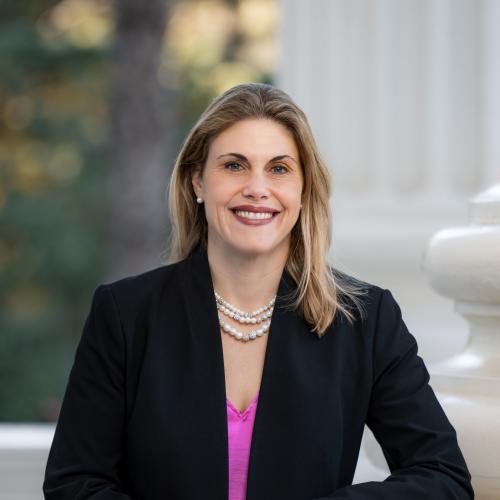
Rep. Maggy Krell
Sponsored bills
Existing law requires a social media platform to take certain actions with respect to child sexual abuse material on the social media platform, including requiring the platform to provide, in a mechanism that is reasonably accessible to users, a means for a user who is a California resident to report material to the platform that the user reasonably believes meets certain criteria, including that the reported material is child sexual abuse material and that the reporting user is depicted in the material. Existing law also requires the social media platform to collect information reasonably sufficient to enable the platform to contact, as specified, a reporting user. Existing law defines child sexual abuse material for these purposes to include obscene matter that depicts a minor personally engaging in, or personally simulating, sexual conduct. This bill would revise the definition of child sexual abuse material to instead include an intimate visual depiction, as defined, of an identifiable individual who is a minor. The bill would additionally require the above-described mechanism to be clear and conspicuous, as defined, and would delete the requirement that the reporting user be depicted in the material. The bill would require a social media platform to, among other things, ensure review by a natural person if there is not an established or known hash match to child sexual abuse material with respect to the reported material and the reported material is not otherwise blocked. The bill would require a social media platform to restore availability or functionality of the reporting mechanism if the reporting mechanism is unavailable or nonfunctional. Existing law makes a noncomplying social media company liable to a reporting user for actual damages and statutory damages, as specified. This bill would instead make a social media company liable to a depicted individual, as defined, for actual and statutory damages, as provided. The bill would also impose specified civil penalties on a noncomplying company to be collected in a civil action by certain public attorneys, including the Attorney General. Existing law establishes the Survivor Support Fund within the state treasury and makes moneys in the fund available, upon appropriation by the Legislature, for grants by the California Victim Compensation Board to community-based organizations that provide direct services to vulnerable individuals in areas with a high concentration of sex trafficking. This bill would require any penalty collected in a civil action by the Attorney General under these provisions to be deposited into the Survivor Support Fund. Existing law prohibits a social media platform from knowingly facilitating, aiding, or abetting commercial sexual exploitation, as defined. Existing law deems a social media platform to have knowledge for the purposes of this prohibition if material was reported to the social media platform using the reporting mechanism for 4 consecutive months, as provided. Existing law exempts a social media platform from being deemed in violation of this prohibition if it instituted a specified audit program and provided to each member of its board of directors a true and correct copy of each audit, as prescribed. This bill would remove the requirement that material was reported for 4 consecutive months to deem a social media platform to have knowledge for the purposes of the above-described prohibition. The bill would, in order to be exempt from that prohibition, require the social media platform to also submit the audit to the Attorney General, and if requested, to certain other public officials. The bill would provide that an audit submitted as described above is confidential and shall be exempt from disclosure under the California Public Records Act. This bill would declare its provisions severable. Existing constitutional provisions require that a statute that limits the right of access to the meetings of public bodies or the writings of public officials and agencies be adopted with findings demonstrating the interest protected by the limitation and the need for protecting that interest. This bill would make legislative findings to that effect. The California Constitution requires local agencies, for the purpose of ensuring public access to the meetings of public bodies and the writings of public officials and agencies, to comply with a statutory enactment that amends or enacts laws relating to public records or open meetings and contains findings demonstrating that the enactment furthers the constitutional requirements relating to this purpose. This bill would make legislative findings to that effect.
Existing law generally regulates the business of insurance in the state, including the conduct of insurance licensees, and provides for the issuance of bail licenses under the jurisdiction of the Insurance Commissioner. Existing regulations generally prohibit the solicitation of bail except after a bona fide request for bail services has been received from the arrestee or from another specified person. Existing law makes it a misdemeanor to impersonate certain personnel, including a law enforcement officer or an officer or member of a fire department, with the intent of fraudulently impersonating such a person, or of fraudulently inducing the belief that they are such a person. This bill, the Bail Consumer Protection Act, would make it a crime for any person to impersonate, or falsely hold themselves out to be, a licensed bail agent, and while doing so solicits or attempts to solicit bail from any individual. The bill would also make it a crime for any person to hire another person or company to solicit bail when the person knew or should have known that the other person or company is impersonating or falsely holding themselves out to be a licensed bail agent, and that other person or company solicits or attempts to solicit bail from any individual. By creating a new crime, the bill would impose a state-mandated local program. The California Constitution requires the state to reimburse local agencies and school districts for certain costs mandated by the state. Statutory provisions establish procedures for making that reimbursement. This bill would provide that no reimbursement is required by this act for a specified reason.
Existing law establishes a minimum wage for all industries and imposes criminal penalties for violation of these wage provisions. Existing law authorizes the Labor Commissioner to collect due and unpaid wages or benefits on behalf of workers. Under existing law, the commissioner acts as trustee and deposits collected wages and benefits into the Industrial Relations Unpaid Wage Fund, which is continuously appropriated for the purpose of remitting the collected wages or benefits. This bill would require the minimum hourly wage for an approved agricultural employee and corresponding employee, as defined, to be $19.75 per hour. Commencing January 1, 2027, and each January thereafter, the bill would require the above-described minimum hourly wage to be adjusted by an amount equal to the cost-of-living adjustment for social security benefits, as specified. By expanding the scope of a crime, the bill would impose a state-mandated local program. By increasing the revenue to the Industrial Relations Unpaid Wage Fund, a continuously appropriated fund, and expanding the purposes for which moneys in that fund may be used, the bill would make an appropriation. The California Constitution requires the state to reimburse local agencies and school districts for certain costs mandated by the state. Statutory provisions establish procedures for making that reimbursement. This bill would provide that no reimbursement is required by this act for a specified reason.
Existing law governs the dissolution of marriage and legal separation. Existing law prohibits a judgment of dissolution of marriage from being made final until 6 months have expired from the date of service of a copy of the summons and petition or the date of appearance of the respondent, whichever occurs first. Existing law authorizes a court to extend the 6-month period for good cause shown. Existing law also requires a court to enter a judgment dissolving a marriage when 6 months have expired from the date of the filing of a joint petition for summary dissolution, unless a revocation has been filed. This bill would additionally authorize the court to reduce or waive the 6-month period described above for good cause shown, as specified, provided that the parties have resolved all material issues related to the dissolution.
Existing law establishes the Maddy Emergency Medical Services (EMS) Fund and authorizes each county to establish an emergency medical services fund for reimbursement of costs related to emergency medical services. Existing law, until January 1, 2027, requires 15% of the fund to be used to, among other things, improve access to, and coordination of, pediatric trauma and emergency services, with specified preferences, and requires the cost of administering money deposited into the EMS Fund to be reimbursed from the money collected, as specified. Existing law, until January 1, 2027, authorizes county boards of supervisors to elect to levy an additional penalty, for deposit into the EMS Fund, in the amount of $2 for every $10 upon fines, penalties, and forfeitures collected for criminal offenses. Existing law, until January 1, 2027, requires 15% of the funds collected pursuant to that provision to be used to provide funding for pediatric trauma centers. This bill would extend the operative date of these provisions until January 1, 2037.
This measure would urge the President of the United States and Congress of the United States to immediately restore full and consistent funding and staffing for the National Park Service.
Maddy summaryCalifornia Assembly Resolution 140 designates August 2026 as Children's Get Offline and Get Outdoors Month to promote awareness of the benefits of screen-free play for child development. The resolution cites research linking excessive social media use and reduced free play time to increased rates of anxiety, depression, and other behavioral issues among teenagers. It encourages families and communities to support unstructured outdoor activities and highlights ongoing federal efforts to protect children's mental health through technology guardrails.
Existing law creates the California Rice Commission with a prescribed membership and authorizes the commission, among other things, to promote the sale of rice, educate and instruct the wholesale and retail trade with respect to proper methods of handling and selling rice, and conduct scientific research. Existing law declares the California Rice Commission to be necessary for, among other things, carrying out the California rice industry's commitment to responsible stewardship and increasingly efficient cultural practices. This bill would additionally declare the commission to be necessary for maintaining a sufficient footprint of annual rice acreage to support the wildlife habitat objectives of the state.
This measure would urge President Donald J. Trump to avoid raising the cost of living for American consumers by rescinding the tariffs that he has imposed since taking office in January 2025 and refunding the American people for the costs passed on to them by his tariffs. The measure would also urge the United States Congress to enact a joint resolution to rescind President Trump's tariffs and to oppose all future unilateral and arbitrary tariff increases imposed by President Trump.