

Existing law establishes a system of public elementary and secondary schools in this state and authorizes local educational agencies throughout the state to operate schools, provide instruction, and provide home-to-school transportation to pupils in kindergarten and grades 1 to 12, inclusive. This bill would prohibit a school district, county office of education, or charter school from contracting with a provider of home-to-school transportation, as defined, or making payments to a contractor for home-to-school transportation services, unless the contractor, and any subcontractors, are properly insured and licensed to provide home-to-school transportation services and the contractor certifies that each driver who will perform home-to-school transportation meets certain requirements, as provided. The bill would also impose requirements for those vehicles used by contractors for home-to-school transportation, as provided. The bill would apply these provisions only to contracts entered into or renewed after January 1, 2023. The bill would grant the State Department of Education sole regulatory authority to enforce those provisions and would require the department to conduct an investigation every 2 years of both home-to-school transportation contractors and local educational agencies, as provided.
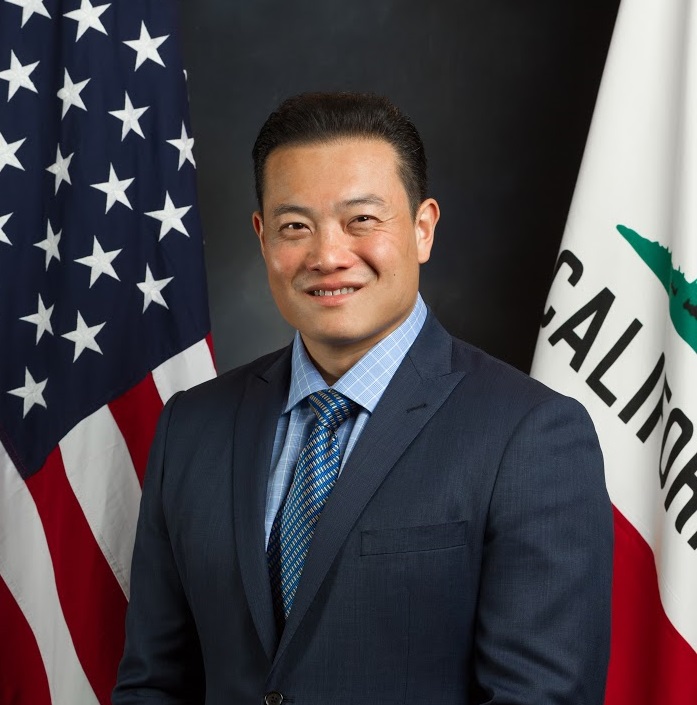
Asm. Phillip Chen
Sponsored bills
Existing law provides for the Medi-Cal program, which is administered by the State Department of Health Care Services, under which qualified low-income individuals receive health care services. The Medi-Cal program is, in part, governed and funded by federal Medicaid Program provisions. Under existing law, an individual is eligible for Medi-Cal benefits, as though the individual was pregnant, for all pregnancy-related and postpartum services for a one-year period beginning on the last day of pregnancy. Existing law also establishes the Medi-Cal Access Program, which provides health care services to a person who is pregnant or in their postpartum period and whose household income is between specific thresholds and to a child under 2 years of age who is delivered by a mother enrolled in the program, as specified. This bill would require the department, on or before July 1, 2023, to establish a health expense account program for pregnant Medi-Cal beneficiaries and pregnant subscribers of the Medi-Cal Access Program. The bill would make a Medi-Cal beneficiary who is pregnant or a pregnant subscriber of the Medi-Cal Access Program eligible for reimbursement for "out-of-pocket pregnancy-related costs," as specified, in an amount not to exceed $1,250. The bill would require the person to submit the request for reimbursement within 3 months of the end of the pregnancy in order to be reimbursed. The bill would require the department to seek to maximize federal financial participation in implementing the program. The bill would require the department, to the extent federal financial participation is unavailable, to implement the program only with state funds. The bill would require the department to contract out for purposes of implementing the health expense account program, as specified. The bill would authorize the department to implement the above-described provisions through all-county or plan letters, or similar instructions, and would require regulatory action no later than January 1, 2026.
Existing law describes search warrants and enumerates the grounds upon which a search warrant may be issued, including, without limitation, for items that have been used as the means for committing a felony, and for property that has been stolen or embezzled. This bill would allow a search warrant for stolen or embezzled property to include an order for such property to be returned to a lawful owner identified in the warrant pursuant to specified procedures including a hearing, if requested, to determine that the property was stolen or embezzled, before it is returned to its owner.
This measure would proclaim March 7, 2022, to March 11, 2022, inclusive, as School Breakfast Week and would recognize the importance of school nutrition programs and school nutrition staff in addressing the needs of the state's pupils.
This measure would proclaim the week of March 6, 2022, to March 12, 2022, inclusive, as Women in Construction Week.
The Personal Income Tax Law, in modified conformity with federal law, generally defines "gross income" as income from whatever source derived, except as specifically excluded, and provides various exclusions from gross income for purposes of computing tax liability. Existing law requires any bill authorizing a new tax expenditure to contain, among other things, specific goals, purposes, and objectives that the tax expenditure will achieve, detailed performance indicators, and data collection requirements. This bill, for taxable years beginning on or after January 1, 2022, and before January 1, 2027, would provide an exclusion from gross income for survivor benefits or payments, not to exceed $20,000 per taxable year, received on or after January 1, 2021, and before January 1, 2027, under the federal Survivor Benefit Plan. The bill would require the Franchise Tax Board to submit, on or before June 15, 2025, a report to the Legislature on the income brackets of taxpayers who claimed this exclusion, and would provide findings and declarations relating to the goals, purposes, and objectives of this exclusion. This bill would take effect immediately as a tax levy.
This measure would proclaim March 2022 as Visual and Performing Arts Education Month and urge all residents to become interested in and give full support to quality visual and performing arts education programs for children and youth.
This measure would recognize February 2022 as Black History Month, urge all citizens to join in celebrating the accomplishments of African Americans during Black History Month, and encourage the people of California to recognize the many talents of African Americans and the achievements and contributions they make to their communities to create equity and equality for education, economics, and social justice. The measure would also recognize the significance in protecting citizens' right to vote and remedying racial discrimination in voting.