

Existing law classifies certain felonies as violent felonies for purposes of various provisions of the Penal Code. Existing law imposes an additional one-year term for a sexually violent felony and a 3-year term for a violent felony for each prior separate prison term served for a violent felony. This bill would additionally define human sex trafficking as a violent felony. By increasing the sentence of a crime, this bill would impose a state-mandated local program. The California Constitution requires the state to reimburse local agencies and school districts for certain costs mandated by the state. Statutory provisions establish procedures for making that reimbursement. This bill would provide that no reimbursement is required by this act for a specified reason.
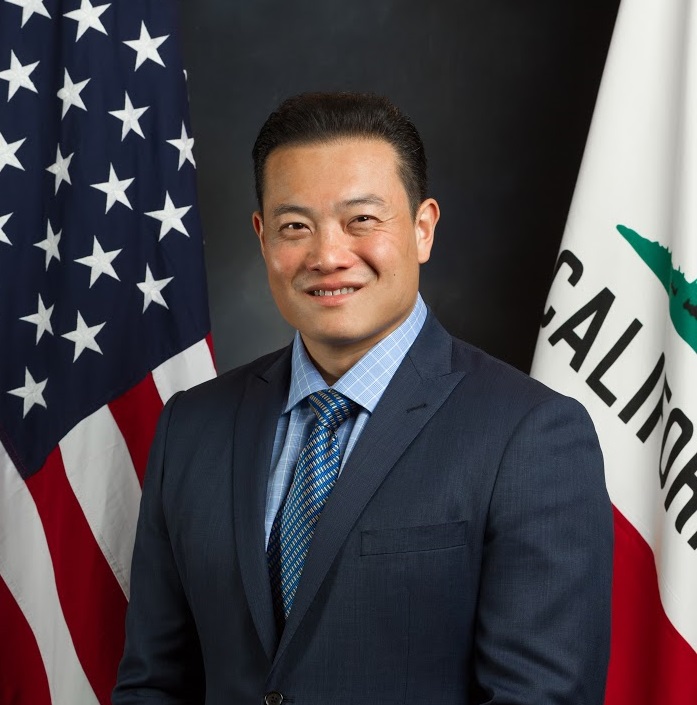
Asm. Phillip Chen
Sponsored bills
Existing law, the Planning and Zoning Law, requires a county and city to adopt a comprehensive, long-term general plan for the physical development of the county or city, and specified land outside its boundaries, that includes, among other things, a housing element. Existing law requires that the housing element include, among other things, an inventory of land suitable and available for residential development. If the inventory of sites does not identify adequate sites to accommodate the need for groups of all household income levels, as provided, existing law requires that the local government rezone sites within specified time periods. If the local government fails to adopt a housing element that the Department of Housing and Community Development has found to be in substantial compliance with specified law within 120 days of the statutory deadline for adoption of the housing element, existing law requires the local government to complete this rezoning no later than one year from the statutory deadline for adoption of the housing element. This bill would extend the above-described one-year deadline to complete this rezoning of sites, for a local government that has failed to adopt a housing element found to be in substantial compliance, to one year and 6 months for the first instance that the requirement applies.
This measure would proclaim the month of March 2022 as Bleeding Disorders Awareness Month in California.
This measure would recognize February 2022 as Black History Month, urge all citizens to join in celebrating the accomplishments of African Americans during Black History Month, and encourage the people of California to recognize the many talents of African Americans and the achievements and contributions they make to their communities to create equity and equality for education, economics, and social justice. The measure would also recognize the significance in protecting citizens' right to vote and remedying racial discrimination in voting.
This measure would declare February 17, 2022, as PTA Day, commend the National Parent Teacher Association on the occasion of its 125th anniversary, and encourage all California residents to attend and participate in the celebration of this commemorative event.
This measure would proclaim March 2022 as American Red Cross Month and would dedicate it to all those who continue to advance the noble legacy of the organization's founder. The measure would encourage all Californians to reach out, support the organization's humanitarian mission, and join in their commitment to care for people in need.
This measure would designate the week of March 13, 2022, to March 19, 2022, inclusive, as Family Physician Week.
This measure would, among other things, designate March 2022 as Irish American Heritage Month in honor of the multitude of contributions that Irish Americans have made to the country and state.
This measure would resolve that the Legislature is proud to join the Girl Scouts of the USA in recognizing their 110th Anniversary.
Existing law generally provides that everyone is responsible, not only for the result of their willful acts, but also for an injury occasioned to another by that person's want of ordinary care or skill in the management of their property or person, except as specified. This bill would exempt a nonprofit charitable organization, as defined, from civil liability for an injury occurring on its premises and resulting from the provision of services to homeless persons, unless the injury results from gross negligence or intentional misconduct.