

Existing law establishes a workers' compensation system, administered by the Administrative Director of the Division of Workers' Compensation, to compensate an employee for injuries arising out of and in the course of their employment. Existing law requires an injured employee to file a claim form with the employer. Under existing law, except for specified injuries, if liability is not rejected within 90 days after the date the claim form is filed with the employer, the injury is presumed compensable and the presumption is rebuttable only by evidence discovered subsequent to the 90-day period. For certain injuries or illnesses, including hernia, heart trouble, pneumonia, or tuberculosis, among others, sustained in the course of employment of a specified member of law enforcement or a specified first responder, this bill would reduce those time periods to 75 days. The bill would make other conforming changes. Existing law prohibits aggregate disability payments for a single injury occurring on or after January 1, 2008, causing temporary disability from extending for more than 104 compensable weeks within a period of 5 years from the date of injury, except if an employee suffers from certain injuries or conditions. This bill would, for specified firefighters and peace officers claiming illness or injury related to cancer, increase the number of compensable weeks to 240 without limitation as to time from the date of injury. Existing law requires that certain proceedings, including proceedings for the enforcement against the employer or an insurer of any liability for compensation, be instituted before the Workers' Compensation Appeals Board. Existing law authorizes the appeals board to fix and determine, in its award, the total amount of compensation to be paid and specify the manner of payment, or may fix and determine the weekly disability payment to be made and order payment during the continuance of disability. Existing law requires that when payment of compensation has been unreasonably delayed or refused, either prior to or subsequent to the issuance of an award, the amount of the unreasonably delayed or refused payment be increased up to 25% or up to $10,000, whichever is less. Existing law requires the appeals board to use its discretion to accomplish a fair balance and substantial justice between the parties. This bill would require, if liability for an injury has been unreasonably rejected for specified claims of injury or illness, including hernia, heart trouble, pneumonia, or tuberculosis, among others, sustained in the course of employment of a specified member of law enforcement or a specified first responder, the amount of the penalty to be 5 times the amount of the benefits unreasonably delayed due to the rejection of liability. The bill would limit the penalty to no more than $50,000. The bill would require the appeals board to determine the question of whether the rejection of liability is reasonable. The bill would apply this provision to all injuries, without regard to whether the injury occurs before, on, or after the operative date of the bill. Existing law requires the Administrative Director of the Division of Workers' Compensation, among other duties, to develop a workers' compensation information system in consultation with the Insurance Commissioner and the Workers' Compensation Insurance Rating Bureau, with certain data to be collected electronically. This bill would require the division, upon an appropriation by the Legislature, to identify and amend its existing data collection processes to include collection of the date on which a claimant is notified of acceptance, denial, or conditional denial of liability.
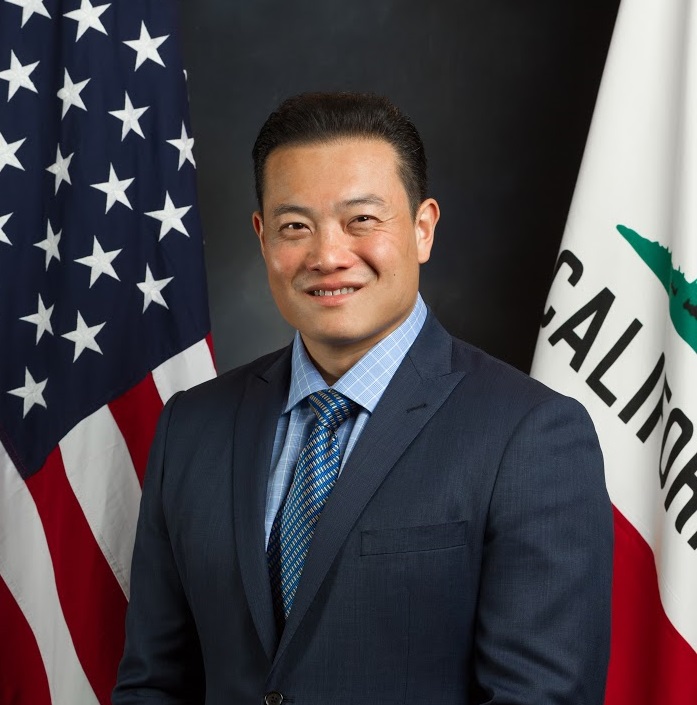
Asm. Phillip Chen
Sponsored bills
Existing law establishes in the Natural Resources Agency the California Conservation Corps and requires the corps to implement and administer the conservation corps program. Existing law requires the director of the corps to establish a forestry corps program to accomplish specified objectives related to forest health. This bill would require the director to establish and administer the California Ocean Corps Program to provide competitive grants to certified local conservation corps located in coastal counties in order to provide opportunities for young people to complete workforce preparation, training, and education programs, and, ultimately, to obtain employment, or continue education, in ocean and coastal conservation or related fields, as provided. The bill would require the director to develop and adopt program guidelines before awarding any grants, as provided. The bill would require the director to develop performance measures and accountability controls to track progress and outcomes of all grants. The bill would require the director, on or before January 1, 2026, to report these outcomes to the appropriate fiscal and policy committees of the Legislature. The bill would make these provisions contingent upon an appropriation by the Legislature in the annual Budget Act or another statute. The bill would repeal these provisions on January 1, 2027.
Existing law designates specific days as holidays in this state. Existing law requires the Governor annually to proclaim the date corresponding with the second new moon following the winter solstice, or the third new moon following the winter solstice should an intercalary month intervene, as the "Lunar New Year." Existing law entitles state employees, with specified exceptions, to elect to receive 8 hours of holiday credit for "Native American Day," in lieu of receiving 8 hours of personal holiday credit, and to elect to use 8 hours of vacation, annual leave, or compensating time off, consistent with departmental operational needs and collective bargaining agreements, for "Native American Day," as specified. This bill would repeal provisions requiring the Governor to annually proclaim the "Lunar New Year," and would instead recognize the "Lunar New Year" as a state holiday. The bill would authorize state employees, with specified exceptions, to elect to receive 8 hours of holiday credit for the "Lunar New Year" in lieu of receiving 8 hours of personal holiday credit, and to elect to use 8 hours of vacation, annual leave, or compensating time off, consistent with departmental operational needs and collective bargaining agreements, for "Lunar New Year," as specified. Existing law designates specific days designated as holidays in this state, every Saturday and the day after Thanksgiving Day as judicial holidays, except "Admission Day," "Columbus Day," and any other day appointed by the President, but not by the Governor, for a public fast, thanksgiving, or holiday. This bill would additionally exclude "Lunar New Year" from designation as a judicial holiday. This bill would incorporate additional changes to Section 135 of the Code of Civil Procedure proposed by AB 1801 to be operative only if this bill and AB 1801 are enacted and this bill is enacted last. This bill would incorporate additional changes to Sections 6700, 19853, and 19853.1 of the Government Code proposed by AB 1655 and AB 1801 to be operative only if this bill and AB 1655, AB 1801, or both are enacted and this bill is enacted last.
Existing law establishes the Department of Veterans Affairs. The department, among other services, provides veterans and their dependents and survivors with assistance in processing service-related disability claims, assistance in obtaining affordable housing, and information about health ailments associated with military service. This bill would require the department to establish a program to fund, upon appropriation by the Legislature, an academic study of mental health among women veterans in California, as specified. The bill would require the department to submit a report summarizing the findings and recommendations of the study to the Legislature no later than July 31, 2024. This bill would make these provisions inoperative on July 31, 2024, and would repeal them as of January 1, 2025.
Existing law, the Radiologic Technology Act, prohibits a person from administering or using diagnostic or therapeutic x-rays on human beings in this state, unless that person has been certified or granted a permit by the State Department of Public Health, as specified, is acting within the scope of that certification or permit, and is acting under the supervision of a healing arts licensee. Existing law requires the department to issue limited permits to persons to conduct radiologic technology limited to the performance of certain procedures or the application of x-rays to specific areas of the human body, except for mammography, and requires the department to prescribe minimum standards of training and experience for these persons and to prescribe procedures for examining applicants for limited permits. Existing administrative law defines the scope of a limited leg-podiatric radiography permit as radiography of the knee, tibia and fibula, and ankle and foot. Existing administrative law requires, as a condition of eligibility for the limited permit, an applicant to pass specified department-approved examinations and to submit an application containing a specified fee and certain information, including a copy of the limited permit x-ray technician school graduation diploma or certificate in that limited permit category. This bill would authorize the State Department of Public Health to issue to a person a limited podiatric radiography permit described above if the person has satisfied the above-described eligibility requirements, including passing examinations in radiation protection and safety, and podiatric radiologic technology, and has completed a course in radiation safety approved by the department that includes instruction in radiation protection and safety, principles of radiographic exposure, quality control, image processing, anatomy and physiology, digital radiography, positioning, and the performance of at least 50 x-ray procedures under supervision. The bill would require the course to be provided by a licensed doctor of podiatric medicine who holds a current and valid radiography supervisor and operator permit issued by the department, as specified. The bill would require the course to require a minimum of 60 hours of education, which may be online. The bill would limit the training to a maximum of one year for any one student, and one student per licensed doctor of podiatric medicine, as specified. The bill would require the department to adopt initial regulations implementing its provisions by July 1, 2023, and would exempt the regulations from the rulemaking provisions of the Administrative Procedure Act, except as prescribed. The bill would make conforming changes to related provisions.
Existing law authorizes area agencies on aging and other county agencies that provide services to older adults through an established multidisciplinary team to provide information regarding older adult clients only to other county agencies with staff designated as members of a multidisciplinary team that are, or may be, providing services to the same individuals for purposes of identifying and coordinating the treatment of individuals served by more than one agency. This bill would specifically authorize an area agency on aging or a county, or both, to establish an aging multidisciplinary personnel team, as defined, with the goal of facilitating the expedited identification, assessment, and linkage of older adults to services and to allow provider agencies and members of the personnel team to share confidential information, as specified, for the purpose of coordinating services. Under the bill, any discussion relative to the disclosure or exchange of the information or writings during a team meeting would be confidential and testimony concerning that discussion would not be admissible in any criminal, civil, or juvenile court proceeding. The bill would require the sharing of information permitted under these provisions to be governed by protocols developed by each area agency on aging or county, as specified, and would require each area agency on aging or county to provide a copy of its protocols to the California Department of Aging. The bill would require the protocols to include a requirement that, unless otherwise permitted by law, an area agency on aging or county obtain the affirmative consent of an individual or their representative before the individual's information is shared and a requirement to notify an individual, among other things, that they may opt out of sharing information at any time. This bill would authorize the aging multidisciplinary personnel team to designate qualified persons to be members of the team for a particular case and would require every member who receives information or records regarding adults and families in their capacity as a member of the team to be under the same privacy and confidentiality obligations and subject to the same confidentiality penalties as the person disclosing or providing the information or records. The bill would also require the information or records to be maintained in a manner that ensures the maximum protection of privacy and confidentiality rights. Existing constitutional provisions require that a statute that limits the right of access to the meetings of public bodies or the writings of public officials and agencies be adopted with findings demonstrating the interest protected by the limitation and the need for protecting that interest. This bill would make legislative findings to that effect. The California Constitution provides for the Right to Truth-In-Evidence, which requires a 23 vote of each house of the Legislature to exclude any relevant evidence from any criminal proceeding or any trial or hearing of a juvenile for a criminal offense, as specified. Because this bill would exclude from a criminal or juvenile court proceeding any discussion relative to the disclosure or exchange of information or writings during an aging multidisciplinary personnel team meeting, which would otherwise be admissible, it requires a 23 vote of each house of the Legislature.
Existing law requires the Department of Veterans Affairs to acquire, study, design, develop, construct, and equip a state-owned and state-operated Southern California Veterans Cemetery in the County of Orange at one of 2 possible sites, as specified. Existing law requires the department to, after completing acquisition studies on both sites, consult with the Department of General Services to determine which site to pursue based on the economic feasibility, benefits to veterans and City of Irvine residents, and availability of each location. Existing law makes honorably discharged veterans, their spouses, and dependent children eligible for interment in the cemetery, as specified. This bill would delete those site selection requirements and would instead require the department to acquire, study, design, develop, construct, and equip a state-owned and state-operated Southern California Veterans Cemetery in the County of Orange. The bill would require the department to conduct an acquisition study, in consultation with the Department of General Services, to assess the feasibility and costs of construction of the cemetery. The bill would additionally create the Southern California Veterans Cemetery Study Donation Fund, and would authorize any local governmental entity or private organization in the County of Orange to donate to the fund. The bill would authorize the department, upon receipt of sufficient moneys, to conduct a study of the feasibility of a site formally proposed by a local government in the County of Orange for the purpose of establishing a Southern California Veterans Cemetery, as specified. The bill would continuously appropriate moneys in the fund to the department for these purposes. The bill would require any excess funds to be returned to the donor if requested, and to otherwise be used for the design, development, construction, and equipment of the cemetery. This bill would declare that it is to take effect immediately as an urgency statute.
(1) Existing law establishes various public social services programs to provide for protection, care, and assistance to the people of the state in need of those services. Existing law, in this regard, and with some exceptions, requires all applications and records concerning any individual made or kept by any public officer or agency in connection with the administration of public social services for which grants-in-aid are received by this state from the federal government be kept confidential. This bill would specifically include within public social services for that confidentiality requirement protective services provided through public social services agencies. Existing law exempts from the confidentiality requirement described above, among other things, the furnishing of information to other public agencies to the extent required for verifying eligibility or for other purposes directly connected with the administration of public social services, and the furnishing of information to county superintendents of schools or superintendents of school districts only as necessary for the administration of federally assisted programs providing assistance in cash or in-kind or services directly to individuals on the basis of need. This bill would also exempt from those confidentiality provisions the disclosure of information between employees of a county's adult protective services agency and a county's child welfare agency for the purpose of multidisciplinary teamwork in the prevention, intervention, management, or treatment of child abuse or neglect or abuse or neglect of an elder or dependent adult. (2) Existing law designates certain persons as mandated reporters and requires a mandated reporter who has observed, has knowledge of, or reasonably suspects abuse, including financial abuse, or neglect, of an elder or dependent adult to report the known or suspected abuse or neglect immediately or as soon as practicable to the local ombudsperson or law enforcement agency, as provided. Existing law also authorizes a person who is not a mandated reporter, who knows, or reasonably suspects, that an elder or a dependent adult has been the victim of abuse to report that abuse to a long-term care ombudsperson program or local law enforcement agency. Under existing law, the reports are confidential and may be disclosed only to specified persons, including, among others, an investigator from an adult protective services agency and persons who are trained and qualified to serve on multidisciplinary personnel teams who disclose to one another information and records that are relevant to the prevention, identification, or treatment of abuse of elderly or dependent persons. This bill would also exempt from that confidentiality requirement, employees of a county's adult protective services agency or a county's child welfare agency who disclose information with each other for the purpose of multidisciplinary teamwork in the prevention, intervention, management, or treatment of the abuse or neglect of a child or abuse or neglect of an elder or dependent adult. (3) Under existing law, the Office of Child Abuse Prevention is established in the State Department of Social Services. The office is authorized to allocate funding for child abuse treatment and prevention projects, including multidisciplinary services. Existing law also authorizes a county to establish a child abuse multidisciplinary personnel team within that county to allow provider agencies to share confidential information in order for provider agencies to investigate reports of suspected child abuse or neglect. Existing law defines "provider agency" for these purposes to mean a governmental or other agency that has as one of its purposes the prevention, identification, management, or treatment of child abuse or neglect, and specifies the provider agencies that may share information, including entities or service agencies that provide social services, children's services, and mental health services. Under this bill, "provider agency" would also include a county's adult protective services agency, and would authorize the adult protective services agency to share information when engaged in multidisciplinary teamwork for the prevention, identification, management, or treatment of the abuse or neglect of a child. Under existing law, the terms "multidisciplinary personnel" and "child abuse multidisciplinary personnel team" mean a team of a specified number of persons trained in the prevention, identification, and treatment of child abuse and neglect cases and who are qualified to provide a broad range of services related to child abuse. Under existing law, those multidisciplinary personnel teams may include, among other persons, psychiatrists, psychologists, police officers, and social workers. This bill would add adult protective services personnel to the list of persons who may be included in those multidisciplinary personnel teams.
Existing law establishes the Mental Health Student Services Act, administered by the Mental Health Services Oversight and Accountability Commission, to award grants to county mental health or behavioral health departments to fund partnerships between educational and county mental health entities. This bill, contingent upon an appropriation in the Budget Act, would establish the Early Childhood Mental Health Services Act, administered in a similar manner by the commission, to award grants to eligible entities or partnerships to improve access to, and quality of care, services, and supports for, children from birth to 5 years of age, inclusive, and their parents, families, and caregivers, with emphasis on prevention and early intervention and disparities, as specified.
The Control, Regulate and Tax Adult Use of Marijuana Act (AUMA) , an initiative measure approved as Proposition 64 at the November 8, 2016, statewide general election, authorizes a person who obtains a state license under AUMA to engage in commercial adult-use cannabis activity pursuant to that license and applicable local ordinances. The Medicinal and Adult-Use Cannabis Regulation and Safety Act (MAUCRSA) , among other things, consolidates the licensure and regulation of commercial medicinal and adult-use cannabis activities, including retail commercial cannabis activity. Existing law places specified requirements on the packaging of cannabis and cannabis products, including authorizing cannabis beverages to be packaged in glass containers that are clear or any color. This bill would authorize cannabis beverages to be packaged in containers of any material that are clear or any color. This bill would incorporate additional changes to Section 26120 of the Business and Professions Code proposed by AB 1894 to be operative only if this bill and AB 1894 are enacted and this bill is enacted last.