

The Safe Neighborhoods and Schools Act, enacted as an initiative statute by Proposition 47, as approved by the electors at the November 4, 2014, statewide general election, made various changes relating to theft and the possession of controlled substances, including by, among other things, generally reducing the penalty for those crimes, including reducing the penalty for possession of concentrated cannabis, establishing a procedure by which individuals convicted of those crimes prior to the passage of the act may petition for resentencing under the act, and creating the crime of shoplifting. The act also requires the Director of Finance to calculate the savings accruing to the state as a result of the implementation of the act and requires the Controller to transfer that sum from the General Fund to the Safe Neighborhoods and Schools Fund, which was created by the act. The act specifies the manner of distribution of those funds and the purposes for which they may be used. This bill would repeal the changes and additions made by Proposition 47, except those related to reducing the penalty for possession of concentrated cannabis. Existing law makes it a crime for a caretaker of an elder or a dependent adult, or a person who is not a caretaker and who knows or reasonably should know that the victim is an elder or a dependent adult, to violate specified laws proscribing theft, embezzlement, forgery, fraud, or identity theft with respect to the property or personal identifying information of that elder or dependent adult. Existing law makes a violation of those provisions punishable as a misdemeanor or a felony when the moneys, labor, goods, services, or real or personal property taken or obtained is of a value exceeding $950. This bill would reduce the value threshold for a violation of those provisions to be punishable as a felony from $950 to $400. Existing law defines grand theft as the wrongful taking of money, labor, or property of a value exceeding $950, except as specified. Existing law also makes it grand theft where the money, labor, or real or personal property is taken by a servant, agent, or employee from their principal or employer and aggregates $950 or more in any consecutive 12-month period. This bill would reduce the value threshold for committing grand theft under those provisions from $950 to $400. This bill would provide that it would become effective only upon approval of the voters, and would provide for the submission of this measure to the voters for approval at the next statewide general election.
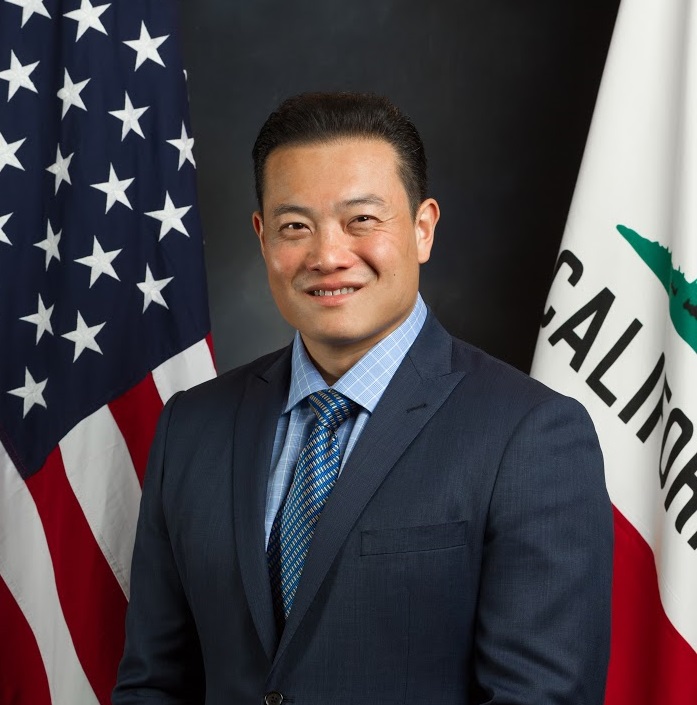
Asm. Phillip Chen
Sponsored bills
Existing law establishes the California State Library as a state government agency under the control of an executive, who is required to be a technically trained librarian and known as the "State Librarian." Existing law requires the State Librarian, among other duties, to give advisory, consultive, and technical assistance to librarians and library authorities in public libraries and to assist all other authorities, state and local, in assuming their full responsibility for library service. Existing law requires the State Librarian to establish the Reading Initiative Program with funds appropriated for that purpose and with funds received from private sources, and requires the State Librarian to administer the program, as provided. Existing law requires the State Librarian, in administering the program, to, among other things, develop a list of recommended books in consultation with various groups, including, but not limited to, teachers, librarians, parents, writers, publishers, and employees of the State Department of Education. Existing law requires the recommended books to supplement the state-recommended English/language arts curriculum framework and to include recreational reading selections for children. This bill would establish the Statewide Imagination Library Program under the administration of the State Librarian for purposes of developing, implementing, promoting, and fostering a comprehensive statewide initiative for encouraging preschool children to develop a love of reading and learning. The bill would create and continuously appropriate the Imagination Library of California Fund for purposes of the program, as provided, thereby making an appropriation. The bill would require moneys from the fund to be used to provide age-appropriate books on a monthly basis, at home, to each child registered in the program, from birth to their 5th birthday, inclusive, at no cost to families, through Dolly Parton's Imagination Library. The bill would require moneys from the fund to be allocated to qualified local entities that agree to a dollar-for-dollar match for purposes of the program, unless waived by the State Librarian, as provided. This bill would require the State Librarian to coordinate with a nonprofit entity, as specified, that is organized solely to promote and encourage reading by the children of the state, for purposes of implementing the bill's provisions, and would require the State Librarian to do certain things, including, among other things, promote the statewide development of local Dolly Parton Imagination Library programs, recruit volunteers to assist in the development, promotion, and coordination of the programs, administer the local match requirement, and coordinate the collection and remittance of local program costs for books and mailing. This bill would require the State Librarian, by January 1, 2028, and annually thereafter, to report to the Legislature on the implementation of the program, as specified. This bill would authorize the California State Library to promulgate regulations as may be needed for the administration of the program. This bill would declare that it is to take effect immediately as an urgency statute.
The California Environmental Quality Act (CEQA) requires a lead agency, as defined, to prepare, or cause to be prepared, and certify the completion of an environmental impact report on a project that it proposes to carry out or approve that may have a significant effect on the environment or to adopt a negative declaration if it finds that the project will not have that effect. CEQA also requires a lead agency to prepare a mitigated negative declaration for a project that may have a significant effect on the environment if revisions in the project would avoid or mitigate that effect and there is no substantial evidence that the project, as revised, would have a significant effect on the environment. CEQA, until January 1, 2030, exempts from its requirements bicycle transportation plans for an urbanized area for restriping of streets and highways, bicycle parking and storage, signal timing to improve street and highway intersection operations, and related signage for bicycles, pedestrians, and vehicles under certain conditions. This bill would delete the requirement that the bicycle transportation plan is for an urbanized area. The bill would extend the exemption to an active transportation plan or pedestrian plan. The bill would define "active transportation plan" and "pedestrian plan." The bill would specify that individual projects that are a part of an active transportation plan or pedestrian plan remain subject to the requirements of CEQA unless those projects are exempt by another provision of law. CEQA exempts from its requirements certain projects that are, among other things, located in an urbanized area, including transit prioritization projects, as defined, and projects for pedestrian and bicycle facilities or for the institution or increase of new bus rapid transit, bus, or light rail services on public or highway rights-of-way. For those exempted projects exceeding $100,000,000 in 2020 United States dollars, CEQA, except as provided, requires the lead agency to, among other things, complete and consider the results of a project business case and a racial equity analysis, as specified, and requires the lead agency, before exempting a project from CEQA, to hold at least 3 noticed public meetings in the project area, as provided. CEQA requires the lead agency, before granting an exemption for projects under the above provisions, to certify that those projects will be carried out by a skilled and trained workforce, except as provided. Existing law repeals the above-described exemption on January 1, 2023. This bill would extend the exemption to January 1, 2030. The bill would revise and recast the exemption to, among other things, repeal the requirement that the exempted projects are located in an urbanized area, extend the exemption by revising the definition of transit prioritization projects, and require projects for the institution or increase of bus rapid transit, bus, or light rail service, as provided, to be located on a site that is wholly within the boundaries of an urbanized area or urban cluster, as designated by the United States Census Bureau. The bill would revise the requirements for the project business case and racial equity analysis and noticed public meetings to apply to exempted projects exceeding $100,000,000 and would additionally require the lead agency to complete an analysis of residential displacement and suggest antidisplacement strategies, designs, or actions for those projects for which at least 50% of the project or projects' stops and stations are located in an area at risk of residential displacement and will have a maximum of 15-minute peak headways. The bill would require the lead agency to define or identify areas at risk of residential displacement. For projects that provide for the construction or maintenance of certain hydrogen refueling infrastructure or facilities or that exceed $50,000,000, the bill would require the lead agency to hold certain noticed meetings, as provided. The bill would require the lead agency to take an action at a public meeting of its governing board to certify that the project will be completed by a skilled and trained workforce following the granting of the exemption and would provide that the certification requirement is not required under specified circumstances. This bill would specify that the revision made by this bill to the exemption for projects for the institution or increase of bus rapid transit, bus, or light rail service may apply to projects for which a notice of exemption is filed before January 1, 2023. The bill would, for projects exempted by the above-described provisions for which a notice of exemption was filed before January 1, 2023, authorize the lead agency to either certify that the project will be completed by a skilled and trained workforce after the granting of the exemption or exempt those projects from the certification requirement if the lead agency demonstrates compliance with certain conditions.
Existing law, the Credit Services Act of 1984, defines and regulates the activities of credit services organizations. Existing law generally defines a credit services organization as a person who, for payment, performs specified credit-related services, such as improving a buyer's credit record and obtaining loans, but excludes specified persons and institutions, including an attorney licensed to practice law in this state rendering services within the course and scope of the practice of law unless the attorney is an employee of, or otherwise directly affiliated with, a credit services organization. Existing law requires credit services organizations to obtain a surety bond, as specified, before conducting business and requires that they register with the Attorney General, subject to a fee of $100. Among other things, existing law prohibits a credit services organization from receiving money before full and complete performance of the service the organization has agreed to perform and from failing to perform services agreed upon within 6 months. Existing law requires that credit services be provided pursuant to a written contract, that is required to contain specified statements, and, before the execution of a contract, a credit services organization must provide a prescribed information statement. Existing law requires the contract to contain a notice informing the buyer that the contract can be canceled within 5 days from the date the contract is signed. Existing law makes a violation of these prohibitions and requirements a misdemeanor. Existing law authorizes a buyer of services who is injured by a credit services organization's violation of the act, or its breach of contract, to bring an action for damages or injunctive relief, as specified. Existing law also authorizes any person, including a consumer credit reporting agency, to bring an action, as specified, for a violation of the act. This bill would replace the term "buyer" with the term "consumer" for purposes of describing a person utilizing the services of a credit services organization and would prescribe other definitions in this regard. The bill would require a credit services organization to provide a consumer a monthly statement detailing the services performed, and would require the organization to perform services agreed upon within 180 days of contracting for those services. Because the bill would expand the definition of a crime, it would impose a state-mandated local program. This bill would require the information statement and contract to inform the consumer that the contract can be canceled before midnight on the 5th working day after the consumer signs it. The bill would extend prohibitions on counseling a consumer to make untrue statements to other specified parties. Among other things, the bill would prohibit a credit services organization from submitting a dispute to a consumer credit reporting agency, creditor, debt collector, or debt buyer more than 180 days after the disputed account has been removed from the consumer's credit report or from failing to provide along with its first written communication to a credit reporting agency or data furnisher sufficient information to investigate a dispute of an account. The bill would also require a consumer credit reporting agency, creditor, debt collector, or debt buyer that knows that a consumer is represented by a credit services organization to communicate with the credit services organization, except as specified. Because the bill would expand the definition of a crime, it would impose a state-mandated local program. This bill would require a credit services organization to redact specified information in certain written communications. The bill would require a credit services organization to maintain certain information on file for 4 years. Because the bill would expand the definition of a crime, it would impose a state-mandated local program. The bill would revise information that must be provided before a credit services contract is executed, including a notice regarding the filing of complaints with the Attorney General. The bill would revise statements that a credit services contract must include. The California Constitution requires the state to reimburse local agencies and school districts for certain costs mandated by the state. Statutory provisions establish procedures for making that reimbursement. This bill would provide that no reimbursement is required by this act for a specified reason.
Existing law requires the governing board of any school district to give diligent care to the health and physical development of pupils and authorizes the governing board of a school district to employ properly certified persons for the work. Existing law authorizes school districts, county offices of education, and charter schools to provide emergency naloxone hydrochloride or another opioid antagonist to school nurses or trained personnel who have volunteered, and authorizes school nurses or trained personnel to use naloxone hydrochloride or another opioid antagonist to provide emergency medical aid to persons suffering, or reasonably believed to be suffering, from an opioid overdose, as provided. Existing law authorizes any pupil who is required to take, during the regular schoolday, medication to be assisted by the school nurse or other designated school personnel, as provided. This bill would, if a pupil diagnosed with seizures, a seizure disorder, or epilepsy has been prescribed an emergency anti-seizure medication by the pupil's health care provider, authorize the pupil's local educational agency, upon receipt of a request from the pupil's parent or guardian, to designate one or more volunteers at the pupil's school to receive initial and annual refresher training regarding the emergency use of anti-seizure medication. The bill would require the Superintendent of Public Instruction to establish minimum standards of training for the administration of emergency anti-seizure medication, as provided. The bill would authorize a school nurse or, if the school does not have a school nurse or the school nurse is not onsite or available, a volunteer who has been designated and received training regarding the emergency use of anti-seizure medication, to administer emergency anti-seizure medication to a pupil diagnosed with seizures, a seizure disorder, or epilepsy if the pupil is suffering from a seizure. The bill would require any local educational agency or school upon receipt of a parent or guardian's request to distribute a related notice at least once per school year to all staff. Before administering emergency anti-seizure medication or therapy prescribed to treat seizures in a pupil diagnosed with seizures, a seizure disorder, or epilepsy, the bill would require a local educational agency to obtain from the pupil's parent or guardian a seizure action plan that includes specified information. By imposing new duties on school districts, county offices of education, and charter schools, the bill would impose a state-mandated local program. The California Constitution requires the state to reimburse local agencies and school districts for certain costs mandated by the state. Statutory provisions establish procedures for making that reimbursement. This bill would provide that, if the Commission on State Mandates determines that the bill contains costs mandated by the state, reimbursement for those costs shall be made pursuant to the statutory provisions noted above.
Under existing law, a person who enters a vehicular crossing becomes liable for any tolls imposed. Existing law prescribes the means by which a toll may be collected or paid, including by the use of an electronic transponder or by means of capturing a license plate number and billing the registered owner. Existing law prohibits a person from evading, or attempting to evade, the payment of tolls on any vehicular crossing or toll highway. A violation of this prohibition is subject to civil penalties, but it is not a crime. This bill would exempt a vehicle that is registered to a veteran, displaying a specialized veteran license plate, as specified, and registered to a transponder or other electronic toll payment device from payment of a toll or related fines on a toll road, toll bridge, toll highway, vehicular crossing, or any other toll facility, except a high-occupancy toll lane. The bill would also make conforming changes. Because this bill would create a new duty by requiring locally owned and operated toll facilities to recognize and exempt eligible vehicles, this bill would impose a state-mandated local program. The California Constitution requires the state to reimburse local agencies and school districts for certain costs mandated by the state. Statutory provisions establish procedures for making that reimbursement. This bill would provide that, if the Commission on State Mandates determines that the bill contains costs mandated by the state, reimbursement for those costs shall be made pursuant to the statutory provisions noted above.
Existing law authorizes and regulates the formation and operation of a corporation, nonprofit public benefit corporation, nonprofit mutual benefit corporation, nonprofit religious corporation, or cooperative corporation. With respect to the above-described corporations, existing law authorizes meetings of shareholders to be held at any place within or without this state as may be stated in or fixed in accordance with the bylaws. However, if no other place is stated or so fixed, existing law authorizes stakeholder meetings to be held at the principal executive office of the corporation. Existing law prohibits a corporation from conducting a meeting of shareholders solely by electronic transmission by and to the corporation, electronic video screen communication, conference telephone, or other means of remote communication unless all of the shareholders consent, the board determines it is necessary or appropriate because of an emergency, as defined, or the meeting is conducted on or before June 30, 2022. This bill would authorize a corporation to conduct a meeting of shareholders solely by electronic transmission by and to the corporation, electronic video screen communication, conference telephone, or other means of remote communication if the meeting is conducted on or before December 31, 2025, as specified, and includes a live audiovisual feed for the duration of the meeting. The bill would provide that a de minimis disruption of an audio, visual, or audiovisual feed does not require a corporation to end a shareholder meeting under, or render the corporation out of compliance with, the above-described provisions. Existing law requires a corporation to implement reasonable measures when it conducts a meeting of shareholders solely by those means of remote communication, including verifying that each person participating remotely is a shareholder or proxyholder. This bill would instead require a corporation to verify that a person who has voted remotely is a shareholder or proxyholder. This bill would incorporate additional changes to Section 600 of the Corporations Code proposed by SB 1202 to be operative only if this bill and SB 1202 are enacted and this bill is enacted last.
The Lempert-Keene-Seastrand Oil Spill Prevention and Response Act generally requires the administrator for oil spill response, who is the head of the Office of Spill Prevention and Response in the Department of Fish and Wildlife, to implement activities relating to oil spill response, including drills and preparedness, and oil spill containment and cleanup. The act requires the administrator, taking into consideration the California oil spill contingency plan, to promulgate regulations regarding the adequacy of oil spill elements of area plans adopted pursuant to specified existing law. The act authorizes the administrator to offer, to a unified program agency with jurisdiction over or directly adjacent to waters of the state, a grant to complete, update, or revise an oil spill element of the area plan. The act requires each oil spill element prepared under those provisions to be consistent with the local government's local coastal program, the California oil spill contingency plan, and the National Contingency Plan. This bill would additionally require that each oil spill element prepared under those provisions be consistent with the area contingency plan.
Existing federal law provides for the federal Supplemental Nutrition Assistance Program (SNAP) , known in California as CalFresh, under which supplemental nutrition assistance benefits allocated to the state by the federal government are distributed to eligible individuals by each county. Existing federal law establishes eligibility requirements, including specified income eligibility standards, for receipt of CalFresh benefits. This bill would require the State Department of Social Services, on or before July 1, 2023, and annually thereafter, to submit a request for a federal waiver to exclude the basic allowance for housing provided to specified uniformed service members from countable income in the determination of eligibility and benefit level for purposes of receiving CalFresh benefits. The bill would, upon federal approval of the waiver, require the department, in consultation with the County Welfare Directors Association of California, advocates for CalFresh recipients, and the Military Department, to issue an all-county letter instructing counties on updated eligibility requirements and benefit calculations for uniformed service members receiving a basic allowance for housing. To the extent the bill would expand the duties of counties, the bill would impose a state-mandated local program. The California Constitution requires the state to reimburse local agencies and school districts for certain costs mandated by the state. Statutory provisions establish procedures for making that reimbursement. This bill would provide that, if the Commission on State Mandates determines that the bill contains costs mandated by the state, reimbursement for those costs shall be made pursuant to the statutory provisions noted above.
Existing law finds and declares that all individuals with exceptional needs have a right to participate in free appropriate public education and special educational instruction and services for these persons are needed in order to ensure the right to an appropriate educational opportunity to meet their unique needs. Existing law provides that it is the intent of the Legislature that education programs are provided under an approved local plan for special education, as provided. Existing law further provides that it is the intent of the Legislature that appropriate qualified staff are employed, consistent with credential requirements, to fulfill the responsibilities of the local plan. Existing law establishes in state government the Commission on Teacher Credentialing and requires it to adopt standards for the issuance of teaching credentials, as provided. This bill would require the commission, on or before January 1, 2024, to revise its administrative services credential standards and performance expectations to include and strengthen preparation for inclusion, with a focus on, among other things, universal design for learning (UDL) , as defined. The bill would require administrator preparation programs to ensure faculty are prepared in, among other things, UDL. Contingent upon an appropriation, the bill would require the State Department of Education, in consultation with the commission, on or before March 31, 2024, to develop and disseminate joint guidance clarifying the ways in which inclusive classrooms and placements may be staffed under current law, as provided. The bill would require the department, in consultation with the commission, on or before March 31, 2024, to submit a report to the Legislature on recommendations for statutory or regulatory changes necessary to eliminate barriers to the staffing of inclusive placements. Existing law establishes in state government the Instructional Quality Commission to study courses of study in the schools and make recommendations to the State Board of Education regarding the adoption of minimum standards for courses of study, as provided. This bill would require the department, on or before June 30, 2023, to train members of the commission on the principles and strategies of UDL. The bill would require the commission to assess the extent to which instructional materials submitted for state adoption use UDL principles and strategies.