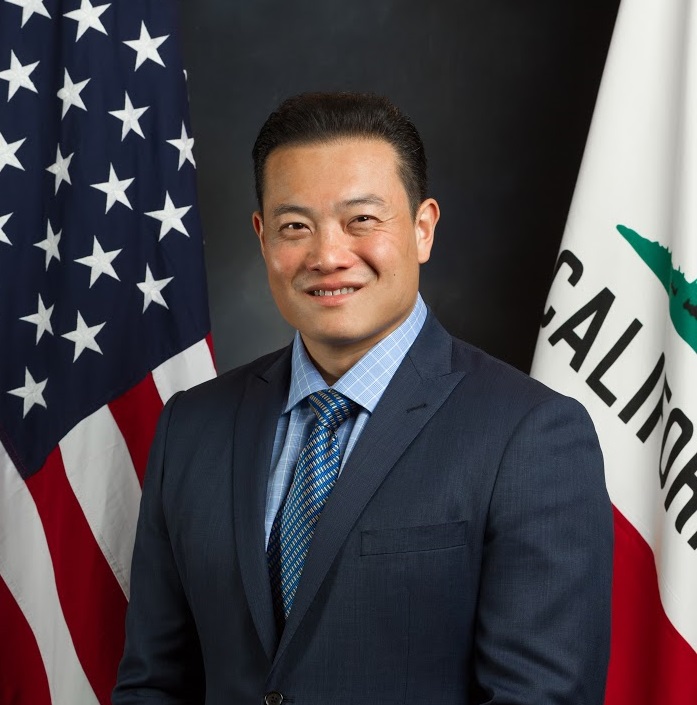
Photo of Phillip Chen
R California House · District 59 On the 2026 ballot

Rep. Phillip Chen

Compare
Total votes
21,436
all sessions
Attendance
81%
3,567 missed
Lower than 84% of chamber peers
With party
98%
of cast votes
Near the chamber average
Bipartisan score
1%
crosses aisle rarely
Near the chamber average
Sponsored
1,732
bills & resolutions
Higher than 75% of chamber peers
Committees
9
assignments
1,732 bills and resolutions

Sponsored bills

Total
1,732
Primary
225
Co-sponsor
1,507
This page
1,732
matching current filters
Co-sponsor HR 131
Passed · California House · Co-sponsor
Relative to Student Cancer Education, Detection, and Prevention Week.

Maddy summaryCalifornia Assembly Resolution 131 proclaims October 11 through 17, 2026, as Student Cancer Education, Detection, and Prevention Week. The resolution encourages middle schools, high schools, colleges, public health agencies, pediatricians, and community health providers to promote educational campaigns on cancer prevention and detection. These efforts aim to inform students about risk factors, warning signs, and the importance of timely screenings to support better health outcomes for young people in the state.

Passed Aug 13, 2026 1 co-sponsor
Co-sponsor AB 1826
Passed · California House · Co-sponsor
Cannabis: recall, embargo, and destruction of cannabis and cannabis products.

Existing law, the Medicinal and Adult-Use Cannabis Regulation and Safety Act (MAUCRSA) , governs the licensure and regulation of commercial cannabis activities. MAUCRSA prohibits engaging in certain commercial activities with cannabis or a cannabis product that is misbranded or adulterated. Among the conditions for which cannabis or a cannabis product is deemed misbranded, MAUCRSA includes packaging or labeling that does not conform to specified requirements. Among the conditions for which cannabis or a cannabis product is deemed adulterated, MAUCRSA includes instances in which concentrations differ from, or its purity or quality is below, that which it is represented to possess. This bill would revise the standards for determining whether cannabis or a cannabis product has been misbranded or adulterated by eliminating certain conditions, including the conditions described above. MAUCRSA establishes the Department of Cannabis Control for the administration and enforcement of its provisions. Existing law gives the department various enforcement powers and duties related to the recall, embargo, seizure, and destruction of cannabis and cannabis products that have been deemed misbranded or adulterated, or whose sale would otherwise be in violation of MAUCRSA. When the department has evidence that cannabis or a cannabis product has been adulterated or misbranded or when the department issues an embargo, existing law requires the department to notify the licensee. This bill would require those notifications to include certain documentation supporting the finding of adulteration or misbranding, or the finding of probable cause to issue an embargo, as specified. Existing law authorizes a licensee to conduct a voluntary recall of the affected cannabis or cannabis product and to remediate the cannabis or cannabis product, if approved by the department, otherwise, existing law requires the licensee to destroy the affected cannabis or cannabis product under the supervision of the department. This bill would authorize, rather than require, the licensee to destroy the affected cannabis or cannabis product under those circumstances. The bill would require the department, prior to a voluntary recall by the licensee, to provide the licensee with an opportunity for an informal conference on why the cannabis or cannabis product is considered adulterated or misbranded. The bill would prohibit the department from permitting destruction of the product until either the informal conference process has concluded or the licensee has declined to participate in the informal conference. Existing law authorizes the department to issue a mandatory recall if the cannabis or cannabis product creates or poses an immediate and serious threat to human life or health, as specified. Existing law requires the department to provide an opportunity for an informal proceeding on the recall within 5 days, as specified. This bill would require the department to provide the evidence supporting the mandatory recall simultaneously with the issuance of the order. The bill would require the department to provide the licensee with an opportunity for an informal conference on the recall, instead of an informal proceeding, as specified. The bill would prohibit the department from requiring destruction of cannabis or cannabis product prior to the conclusion of either the informal conference process or the licensee's decision not to participate in the informal conference. Existing law requires the department to affix an embargo tag or other appropriate marking to cannabis or cannabis product that the department finds or has probable cause to believe is in violation of MAUCRSA, as specified. Existing law prohibits the embargoed cannabis or cannabis product from being removed or disposed of by sale or otherwise until the department or a court gives permission. Existing law authorizes the licensee to request that the department remove the tag or other marking to permit correction if the adulteration or misbranding can be corrected by proper labeling or additional processing, and other requirements are met. Existing law authorizes the department to remove the tag or other marking if it finds that the embargoed cannabis or cannabis product is not in violation of MAUCRSA, as specified. This bill would require the department to provide the licensee with an opportunity for an informal conference on an embargo, as specified, and would require the department to make a final determination on the embargo order within 15 calendar days from the date of the informal conference. The bill would require the department to remove the embargo tag or other marking within 5 calendar days of finding that cannabis or a cannabis product is not in violation of MAUCRSA, as specified. Existing law authorizes the department to condemn cannabis or a cannabis product that is embargoed. Existing law also authorizes the licensee or product owner of embargoed cannabis or cannabis product to destroy or remediate the cannabis or cannabis product pursuant to a corrective action plan approved by the department and under the supervision of the department. This bill would authorize the department to initiate condemnation proceedings, as provided, if the department does not approve a corrective action plan or does not receive a response from the licensee with 7 days of the notice of the embargo. This bill would prohibit the department from requiring a licensee to conduct a voluntary recall, sign a waiver of liability, or waive any right to an informal meeting or an administrative or judicial hearing or appeal as a condition of the department taking certain actions. Those actions include approving a voluntary recall, authorizing remediation, supervising the destruction of the cannabis or cannabis product, removing an embargo tag, approving a corrective plan, and permitting the destruction of product. The bill would make failure to comply with a condemnation order a separate cause for disciplinary action against a licensee. Existing law authorizes the department to issue a citation to a licensee or unlicensed person for any act or omission that violates or has violated any provision of MAUCRSA and requires the citation to include a provision that notifies the licensee or person that a hearing may be requested to contest the finding of a violation. Existing law requires the hearing to be conducted pursuant to specified provisions of the Administrative Procedure Act that govern formal hearings. This bill would instead require the citation to include a provision that notifies the licensee that a hearing or informal conference, or both, may be requested to contest the violation, as specified. The bill would require the informal hearing to be conducted pursuant to different provisions of the Administrative Procedure Act, other than the provisions governing formal hearings, and would set forth additional specific procedures for the informal conference. The bill would require a citation issued under these provisions to be issued within 3 years after the performance of the act or omission that violates MAUCRSA.


Passed Aug 13, 2026 1 co-sponsor
Co-sponsor ACA 18
Passed · California House · Co-sponsor
A resolution to propose to the people of the State of California an amendment to the Constitution of the State, by amending Section 9 of Article IX thereof, relating to the University of California.

The California Constitution provides that the University of California constitutes a public trust, and requires the university to be administered by the Regents of the University of California, a corporation in the form of a board, with full powers of organization and government, subject to legislative control only for specified purposes. The California Constitution requires the board to consist of 7 ex officio members and 18 appointive members appointed by the Governor and approved by the Senate. The California Constitution authorizes the members of the board to appoint either a member of the faculty at a campus of the university or of another institution of higher education, or a person enrolled as a student at a campus of the university, or both, as members of the board serving for no less than one year with all rights of participation. Beginning on July 1, 2027, this measure would require, instead of authorize, the members of the board to appoint to the board for 2-year terms, 2 undergraduate students and 2 graduate students enrolled at a campus of the university for each regular academic term during their service as members of the board, as provided. The measure would require each student board member to serve as a nonvoting student regent-designate in the first year of their 2-year term, and would authorize a student member who graduates from the university on or after January 1 of the 2nd year of the student member's 2-year term to serve the remainder of their term.

Passed Aug 13, 2026 1 co-sponsor
Co-sponsor HR 112
Passed · California House · Co-sponsor
Relative to Black Music Month.

Maddy summaryThis House Resolution officially designates September as Black Music Month to honor the significant contributions of Black artists to American culture. The measure recognizes a wide range of musical genres, including jazz, blues, gospel, and hip-hop, by highlighting their historical origins and influential figures. While the text celebrates these artistic achievements, it does not impose any new legal requirements or funding mandates.

Passed Aug 13, 2026 1 co-sponsor
Primary AB 2537
Passed · California House · Lead sponsor
Cannabis Enforcement Accountability and Public Health Prioritization Act of 2026.

Existing law, the Medicinal and Adult-Use Cannabis Regulation and Safety Act (MAUCRSA) , among other things, consolidates the licensure and regulation of commercial medicinal and adult-use cannabis activities. Existing law gives the Department of Cannabis Control the power, duty, purpose, responsibility, and jurisdiction to regulate commercial cannabis activity in the state. Existing law authorizes the department to take disciplinary actions against a licensee, as provided. Existing law requires the department to prepare and disseminate, as specified, an annual report relating to the department's activities, including, among other things, the amount of funds allocated and spent by the department for cannabis licensing, enforcement, and administration, and the number of state licenses issued, renewed, denied, suspended, and revoked. This bill, the Cannabis Enforcement Accountability and Public Health Prioritization Act of 2026, would require the department, beginning January 1, 2028, to prioritize its enforcement of MAUCRSA in a manner consistent with an enforcement prioritization policy, as defined, based on specified categories, that are listed from highest to lowest priority, based on conduct or conditions, as specified, that create a risk of harm, as described. The bill would define "risk of harm" as the likelihood of, among other things, interference with enforcement of state law. Beginning January 1, 2028, the bill would require the department to adopt and publish an enforcement prioritization policy, as specified, and would require the department to include in the above-described annual report the number, geographic distribution, and, as applicable, dollar amount of specified enforcement activities in relation to the risk-based enforcement framework, as provided.

Passed Aug 13, 2026 0 co-sponsors
Primary AB 1827
Passed · California House · Lead sponsor
Small claims court: jurisdiction.

Existing law establishes a small claims division, known as a small claims court, in each superior court. Existing law provides that the small claims court has jurisdiction over actions seeking certain forms of relief, including money damages in specified amounts and claims brought by natural persons, not exceeding $12,500, except as specified. Existing law prohibits a person from filing more than 2 small claims actions in any calendar year in which the amount demanded exceeds $2,500, except as specified. This bill would increase the small claims court jurisdiction over actions brought by a natural person, except as specified, and other specified actions within the jurisdiction of the small claims court if the amount does not exceed $15,000. The bill would also allow a person to file no more than 3 small claims actions, as specified, in any calendar year.

Passed Aug 13, 2026 0 co-sponsors
Primary AB 1048
Passed · California House · Lead sponsor
Workers' compensation.

Existing law establishes a workers' compensation system, administered by the Administrative Director of the Division of Workers' Compensation, to compensate an employee for injuries sustained in the course of employment. Existing law requires an employer to provide medical, surgical, chiropractic, acupuncture, and hospital treatment that is reasonably required to cure or relieve the injured worker from the effects of the injury. Existing law requires every contracting agent, that sells, leases, assigns, transfers, or conveys its list of contract health care providers and their contracted reimbursement rates to a payor, to comply with certain requirements. Existing law also requires a payor to, among other things, provide an explanation of benefits or explanation of review that identifies the name of the network that the payor has an agreement with that entitles them to pay a preferred rate for the services rendered. This bill would require the explanation of review or explanation of benefits to include the state assigned medical provider network identification number and an email address that the rendering medical provider may use to request a copy of the underlying contract that entitles them to take the preferred rate. The bill would state that disclosure of a medical provider network does not satisfy this requirement. The bill would require the payor, upon request, to provide the rendering provider or their agent with a copy of the underlying contract once per 365-day period. Existing law requires each employer to establish a utilization review process to review and approve, modify, or deny treatment recommendations and establishes an independent medical review process to resolve disputes over a utilization review decision. Existing law requires various requirements to be met in determining whether to approve, modify, or deny requests by a physician for medical services. This bill would require a request for authorization of medical services by a physician to be signed by that physician, and would authorize a request to be sent via mail, fax, or electronic methods, as specified. The bill would make other conforming changes.

Passed Aug 13, 2026 0 co-sponsors
Co-sponsor ACR 157
Signed into law · California House · Co-sponsor
Surface Mining and Reclamation Act of 1975: 50th anniversary.

Maddy summaryThis bill serves as a commemorative resolution to mark the 50th anniversary of the Surface Mining and Reclamation Act of 1975. It does not create new laws or alter existing regulations but instead formally acknowledges the milestone achievement of the original legislation. The measure is intended to honor the history of mining and land reclamation efforts established by the 1975 act.

Signed into law Aug 12, 2026 1 co-sponsor
Co-sponsor ACR 187
Signed into law · California House · Co-sponsor
Relative to Men's Mental Health Month.

Maddy summaryThis bill designates June 2026 as Men's Mental Health Month to raise awareness about mental health issues affecting men. The measure is a formal proclamation that does not change laws or allocate funding, but rather encourages public recognition of the topic. Once passed, it serves as an official declaration without imposing new requirements on individuals or organizations.

Signed into law Aug 12, 2026 1 co-sponsor
Co-sponsor ACR 222
Signed into law · California House · Co-sponsor
Relative to Alzheimer's Disease and Brain Awareness Month.

This measure would declare the month of June 2026 as Alzheimer's Disease and Brain Awareness Month, and would urge all Californians to commemorate the month of June 2026 as Alzheimer's Disease and Brain Awareness Month.

Signed into law Aug 12, 2026 1 co-sponsor
Showing 31 to 40 of 1,732 bills
Previous 1 3 4 5 174 Next