

(1) The California Whistleblower Protection Act prohibits an employee from interfering with a person's rights to disclose improper activity and authorizes the State Auditor to conduct an investigative audit upon receiving specific information that an employee or state agency has engaged in an improper governmental activity, as defined. The California Whistleblower Protection Act applies to state agencies, as defined, and to the University of California, the California State University, and courts, as specified. Under the California Whistleblower Protection Act, a person who intentionally engages in acts of reprisal, retaliation, threats, coercion, or similar acts against a state employee or an applicant for state employment for having made a protected disclosure is subject to civil liability and criminal penalties. The California Whistleblower Protection Act defines a "protected disclosure" to mean, among other things, a good faith communication that discloses information that may evidence an improper governmental activity. This bill would expand the definition of the term "protected disclosure" to include a complaint made to a Member of the Legislature, the Legislature, or any subdivision thereof. By expanding the definition of a crime, the bill would impose a state-mandated local program. (2) Other existing law, the Whistleblower Protection Act, prohibits a state or local governmental employee from interfering with the right of a person to disclose an improper governmental activity, as defined, to an investigating committee of the Legislature. The Whistleblower Protection Act defines other terms for its purposes, including defining "employee" to mean any individual appointed by the Governor or employed or holding office in a state agency, including the California State University and the University of California, defined public entities, or any agency of local government. This bill would authorize a legislative investigative committee to investigate and report on improper governmental activities or to refer the improper governmental activity to the State Auditor for investigation pursuant to the California Whistleblower Protection Act. The bill would also authorize the committee to prepare and send copies of investigative reports to an employee's appointing power if it finds that the employee may have participated in improper governmental activities. The bill would authorize a committee to request additional information from a person submitting an allegation, as specified. The bill would prescribe various requirements for maintaining the confidentiality of people providing information in confidence and information obtained on investigation. The bill would authorize a legislative investigative committee to request assistance from a state department, agency, or employee in evaluating an allegation or conducting any investigation of an improper governmental activity and would generally require that such assistance be provided, as specified. (3) The California Constitution requires the state to reimburse local agencies and school districts for certain costs mandated by the state. Statutory provisions establish procedures for making that reimbursement. This bill would provide that no reimbursement is required by this act for a specified reason. (4) Existing constitutional provisions require that a statute that limits the right of access to the meetings of public bodies or the writings of public officials and agencies be adopted with findings demonstrating the interest protected by the limitation and the need for protecting that interest. This bill would make legislative findings to that effect.
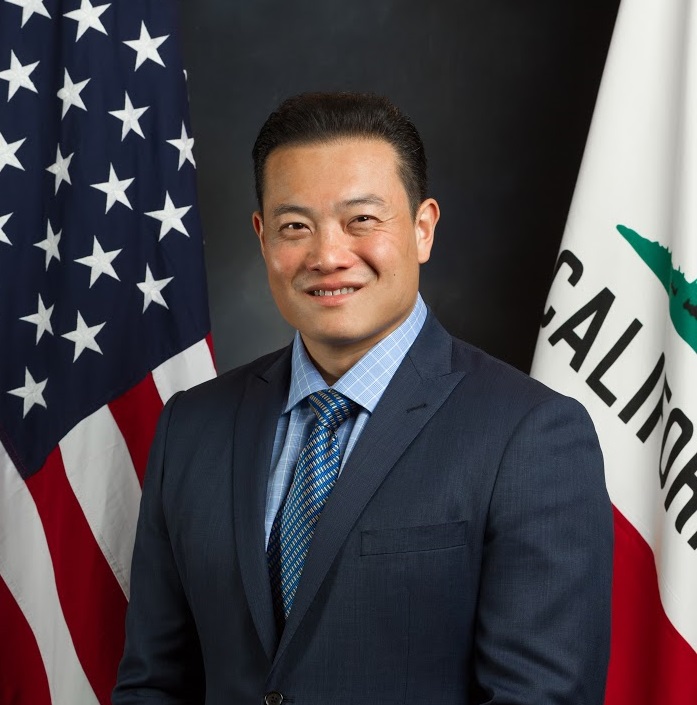
Asm. Phillip Chen
Sponsored bills
Existing law, the Lanterman-Petris-Short Act, provides for the involuntary commitment and treatment of a person who is a danger to themself or others or who is gravely disabled. Existing law also provides for a conservator of the person or estate to be appointed for a person who is gravely disabled. Existing law, for the purposes of involuntary commitment and conservatorship, defines "gravely disabled," among other things, as a condition in which a person, as a result of a mental health disorder, is unable to provide for the basic personal needs of food, clothing, or shelter. This bill would change the definition of "gravely disabled" for these purposes to read, in part, a condition in which a person, as a result of a mental health disorder, is incapable of making informed decisions about, or providing for, the person's own basic personal needs for food, clothing, shelter, or medical care without significant supervision and assistance from another person and, as a result of being incapable of making these informed decisions, the person is at risk of substantial bodily harm, dangerous worsening of a concomitant serious physical illness, significant psychiatric deterioration, or mismanagement of essential needs that could result in bodily harm. By increasing the level of service required of county mental health departments, this bill would impose a state-mandated local program. This bill, until January 1, 2025, would appropriate $20,000,000 to the State Department of Health Care Services to establish a 4-year grant program to assist local jurisdictions to maintain appropriate caseloads for individuals who manage conservatorship cases. The bill would require the department, in consultation with the Mental Health Services Oversight and Accountability Commission, the California State Association of Public Administrators, Public Guardians, and Public Conservators, and the California Behavioral Health Directors Association, to establish guidelines for appropriate caseloads for case managers in public guardian and public conservator offices. The bill would specify requirements for applying for grants, including establishing a 4-year plan to meet and maintain the appropriate caseload goals. The bill would require the department to submit a report, as specified, on or before September 30, 2021, and each following year, to the Governor and the Legislature, as specified. The California Constitution requires the state to reimburse local agencies and school districts for certain costs mandated by the state. Statutory provisions establish procedures for making that reimbursement. This bill would provide that, if the Commission on State Mandates determines that the bill contains costs mandated by the state, reimbursement for those costs shall be made pursuant to the statutory provisions noted above.
Existing law requires the Department of Transportation to place and maintain, or cause to be placed and maintained, for highways under its jurisdiction, appropriate signs, signals, and other traffic control devices, as required, and authorizes the department to place and maintain, or cause to be placed and maintained, such appropriate signs, signals, or other traffic control devices as may be authorized, or as may be necessary to properly indicate and carry out specified provisions, or to warn or guide traffic upon the highways. Existing law authorizes the duly authorized representative of the Department of Transportation or local authorities, including persons contracting to perform construction, maintenance, or repair of a highway, with the approval of the department or local authority and while performing that work, to restrict the use of, and regulate the movement of traffic through or around, the affected area if the traffic would endanger worker safety or interfere with or endanger the movement of traffic through the area. Existing law authorizes traffic to be regulated by warning signs, lights, appropriate control devices, or by a person or persons controlling and directing the flow of traffic. This bill would prohibit the Department of Transportation or persons contracting with the department for the construction, maintenance, or repair of a highway from using flares as a traffic control device, as defined. The bill would exclude the Department of the California Highway Patrol's use of flares from this prohibition when it cooperates with the Department of Transportation in the enforcement of the closing, or restriction of use, of any state highway.
Existing law provides for the issuance and renewal of driver's licenses and identification cards by the Department of Motor Vehicles. Existing law requires, if a person's driver's license is lost, destroyed or mutilated, or if a new true full name is acquired, that the person obtain a duplicate driver's license. This bill would require the department to establish a procedure to enable the department to issue, and a person to obtain, a duplicate driver's license or identification card, as defined, without requiring the person to apply for the duplicate driver's license or identification card in person at a department office. The bill would require these procedures to prohibit the department from issuing a duplicate driver's license or identification card if there has been a material change in any information listed on the driver's license or identification card since its prior issuance.
Existing law, the Mitigation Fee Act, prohibits a local agency that imposes fees or charges on a residential development for the construction of public improvements or facilities from requiring the payment of those fees or charges until the date of the final inspection or the date the certificate of occupancy is issued, whichever occurs first, except that the payment may be required sooner when the fees or charges are to reimburse the local agency for previously made expenditures, or when the local agency determines that an account has been established, funds have been appropriated for the public improvements or facilities, and the local agency has adopted a proposed construction schedule or plan prior to final inspection or issuance of the certificate of occupancy. This bill would delete the above-described authorization for a local agency to require payment of fees or charges prior to the date of final inspection or issuance of the certificate of occupancy, whichever occurs first.
Existing law, the Lanterman-Petris-Short Act, provides for the involuntary commitment and treatment of a person who is a danger to themselves or others or who is gravely disabled. Existing law also provides for a conservator of the person or estate to be appointed for a person who is gravely disabled. Existing law, for the purposes of involuntary commitment and conservatorship, defines "gravely disabled," among other things, as a condition in which a person, as a result of a mental health disorder, is unable to provide for the person's basic personal needs for food, clothing, or shelter. This bill would authorize a county to instead use a definition of "gravely disabled" for these purposes that would read, in part, a condition in which a person, as a result of a mental health disorder, is incapable of making informed decisions about, or providing for, the person's own basic personal needs for food, clothing, or shelter without significant supervision and assistance from another person and, as a result of being incapable of making these informed decisions, the person is at risk of substantial bodily harm, dangerous worsening of a concomitant serious physical illness, significant psychiatric deterioration, or mismanagement of the person's essential needs that could result in bodily harm. The bill would authorize this condition to be demonstrated by the person's treatment history and recent acts or omissions.
(1) Existing law establishes a system of public elementary and secondary schools in this state and authorizes local educational agencies throughout the state to operate schools and provide instruction to pupils in kindergarten and grades 1 to 12, inclusive. Existing law also establishes a system of postsecondary education in this state that includes the California Community Colleges, the California State University, the University of California, and independent institutions of higher education. This bill would establish the iSTEAM Pilot Program as a 3-year pilot program, commencing with the 2020–21 fiscal year, administered by the Anaheim Union High School District in coordination with the North Orange Community College District, the Coast Community College District, the Rancho Santiago Community College District, and the University of California, Irvine. The program, upon the enactment of an appropriation for its purposes, would invest $300,000 each fiscal year, for a total investment of $900,000 during the program, to fund up to 100 students who will serve as interns at community colleges or 4-year institutions of higher education. The bill would require these students to have completed career technical education pathways as high school pupils. The bill would require the Anaheim Union High School District to select the students who receive internships under the program in accordance with procedures and criteria it develops in consultation with the participating institutions of higher education, as specified. The bill would require the Anaheim Union High School District to submit, on or before November 30, 2022, a report relating to the effectiveness of the program to the chairpersons of the education policy committees of the Assembly and the Senate. The operation of these provisions would be contingent upon the enactment, in the Budget Act or in another statute, of an appropriation to the State Department of Education for allocation to the Anaheim Union High School District for purposes of the pilot program. To the extent that this bill would impose new duties on the Anaheim Union High School District and the affected community college districts, it would constitute a state-mandated local program. (2) The California Constitution requires the state to reimburse local agencies and school districts for certain costs mandated by the state. Statutory provisions establish procedures for making that reimbursement. This bill would provide that, if the Commission on State Mandates determines that the bill contains costs mandated by the state, reimbursement for those costs shall be made pursuant to the statutory provisions noted above.
Existing law provides that the Department of Transportation has full possession and control of the state highway system and associated property. Existing law vests various powers in the department including, among others, the planning, designing, constructing, maintaining, and operating of transportation systems under its jurisdiction. This bill would require the department to update the Highway Design Manual to incorporate the use of k-rails, weed mats, or other fire proofing devices in fire prone areas.
Existing law establishes fees for the registration of vehicles to be collected by the Department of Motor Vehicles (DMV) , and requires that a penalty be assessed for delinquent payment of vehicle registration, as specified. This bill would require the department to permit the payment of registration renewal fees in installments, as specified. The bill would subject a registered owner who fails to pay the registration renewal fees in full by the due date to the delinquent payment penalties described above.
Existing law states the intent of the Legislature that the Department of Motor Vehicles implement procedures to ensure, to the fullest extent permitted by the resources made available to it, that a person who is requesting certain services will not be required under normal circumstances to wait in any one line for service longer than 12 hour during the department's published or posted hours of operation. This bill would instead require the department to implement those procedures. The bill would also require every office of the department to post information relating to wait times and would require the department to make that wait time information available on the department's Internet Web site and by telephone.