

Mental health services: gravely disabled.
Summary
Existing law, the Lanterman-Petris-Short Act, provides for the involuntary commitment and treatment of a person who is a danger to themself or others or who is gravely disabled. Existing law also provides for a conservator of the person or estate to be appointed for a person who is gravely disabled. Existing law, for the purposes of involuntary commitment and conservatorship, defines "gravely disabled," among other things, as a condition in which a person, as a result of a mental health disorder, is unable to provide for the basic personal needs of food, clothing, or shelter. This bill would change the definition of "gravely disabled" for these purposes to read, in part, a condition in which a person, as a result of a mental health disorder, is incapable of making informed decisions about, or providing for, the person's own basic personal needs for food, clothing, shelter, or medical care without significant supervision and assistance from another person and, as a result of being incapable of making these informed decisions, the person is at risk of substantial bodily harm, dangerous worsening of a concomitant serious physical illness, significant psychiatric deterioration, or mismanagement of essential needs that could result in bodily harm. By increasing the level of service required of county mental health departments, this bill would impose a state-mandated local program. This bill, until January 1, 2025, would appropriate $20,000,000 to the State Department of Health Care Services to establish a 4-year grant program to assist local jurisdictions to maintain appropriate caseloads for individuals who manage conservatorship cases. The bill would require the department, in consultation with the Mental Health Services Oversight and Accountability Commission, the California State Association of Public Administrators, Public Guardians, and Public Conservators, and the California Behavioral Health Directors Association, to establish guidelines for appropriate caseloads for case managers in public guardian and public conservator offices. The bill would specify requirements for applying for grants, including establishing a 4-year plan to meet and maintain the appropriate caseload goals. The bill would require the department to submit a report, as specified, on or before September 30, 2021, and each following year, to the Governor and the Legislature, as specified. The California Constitution requires the state to reimburse local agencies and school districts for certain costs mandated by the state. Statutory provisions establish procedures for making that reimbursement. This bill would provide that, if the Commission on State Mandates determines that the bill contains costs mandated by the state, reimbursement for those costs shall be made pursuant to the statutory provisions noted above.
Bill status
failed
1 of 4 stages cleared
Introduction
Feb 2019
Committee Review
Floor Vote
Governor
Introduced Feb 22, 2019
Last action Feb 3, 2020
Floor votes
How they voted
No floor votes recorded yet.
Full legislative history
Actions timeline
Total actions
8
Key actions
3
Committee
4
Apr 9, 2019
Lower · Passed
In committee: Set, second hearing. Hearing canceled at the request of author.
lower
Apr 2, 2019
Lower · Passed
In committee: Set, first hearing. Hearing canceled at the request of author.
lower
Mar 14, 2019
Committee
Referred to Coms. on HEALTH and JUD.
lower
Feb 23, 2019
Lower · Passed
From printer. May be heard in committee March 25.
lower
Feb 22, 2019
Introduced
Introduced. To print.
lower
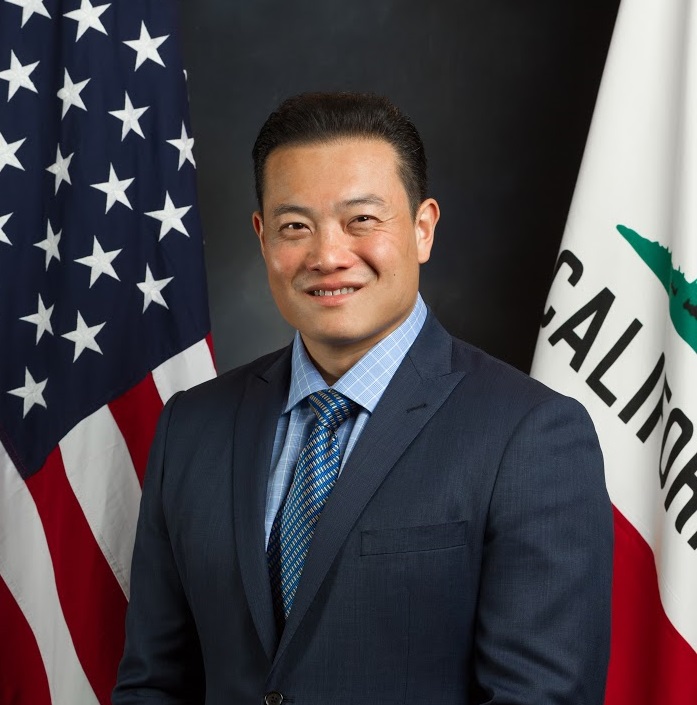
1 primary · 1 co-sponsor
Sponsors
Ask Maddy
·
AI policy assistant
Ask Maddy about AB 1572
Scope: CA
Hi! I can help you understand AB 1572. What would you like to know?
Try one of these
i
Maddy answers using official bill text and legislative records. Always verify before sharing.
Sources cited inline