

Existing law creates the Public Employees' Retirement System (PERS) , which offers a defined benefit pension and other benefits to its members based on age at retirement, service credit, and final compensation, subject to certain variations. Existing law generally provides that state employees become members of PERS upon employment. Existing law authorizes the Department of Personnel Administration to create a tax-deferred savings plan, which has been named Savings Plus, that permits state employees to build a retirement savings account using payroll deductions. The bill would state the intent of the Legislature to enact legislation that would create a hybrid retirement benefit, consisting of a defined benefit pension and a defined contribution program, within the Public Employees' Retirement System, that state employees would have the option of electing.
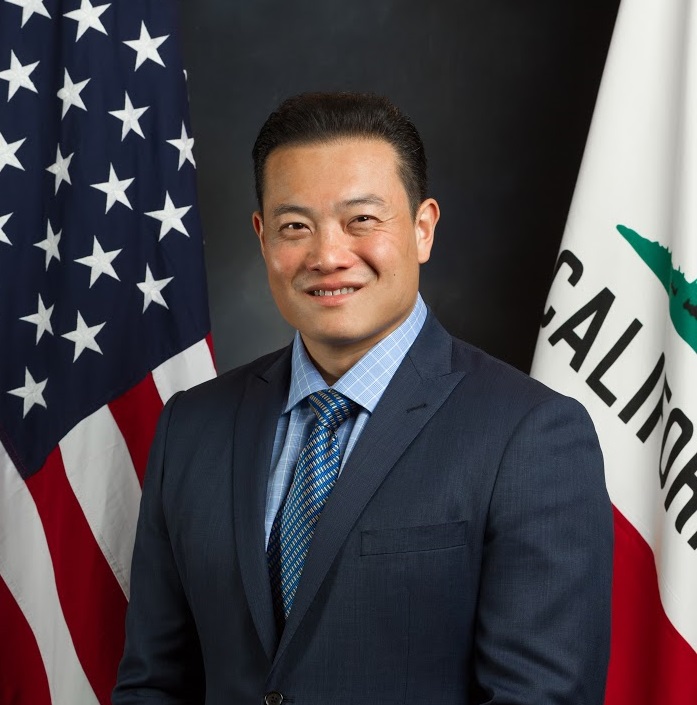
Asm. Phillip Chen
Sponsored bills
Existing law, the California Tourism and Marketing Act, establishes a nonprofit mutual benefit corporation named the California Travel and Tourism Commission under the direction of a board of commissioners composed of 37 members, including the Director of the Governor's Office of Business and Economic Development. This bill, the California Tourism Recovery Act, would require the commission to, upon a determination by the State Department of Public Health that it is safe to resume travel in California, implement a strategic media and jobs recovery campaign known as the "Calling All Californians" program for the purpose of reversing the impact of the COVID-19 pandemic on the travel and tourism industry in California, as specified. The bill would require the commission to report to the Legislature, on or before January 1, 2024, regarding the cost of the program and the impact of the program on the tourism industry in California. The bill would require, only upon appropriation by the Legislature, the Controller to transfer $45,000,000 to the commission for the purpose of implementing the "Calling All Californians" program.
Existing law establishes property rights and provides that ownership of a thing is the right of one or more persons to possess and use it to the exclusion of others. This bill would make a nonsubstantive change to those provisions.
Existing law regulates the business of cemeteries and defines key terminology used in the cemetery business. This bill would make a technical, nonsubstantive change to those provisions.
Existing law permits the legislative body of an incorporated city, in the exercise of its police power, to license any kind of business not prohibited by law that is transacted and carried on within its jurisdiction and to fix the rates of the license fee, as specified. This bill would make nonsubstantive changes to those provisions.
Existing law authorizes the Employment Development Department (department) to administer the federal-state unemployment insurance program and provides for the payment of unemployment compensation benefits to eligible individuals who are unemployed through no fault of their own. Existing law establishes procedures for the filing, determination, and payment of benefit claims, and those benefits are payable from the Unemployment Fund. Existing law requires the department to promptly pay benefits if it finds the claimant is eligible and to promptly deny benefits if it finds the claimant is ineligible for benefits. Existing law requires the department to consider facts submitted by an employer in making this determination and also provides for the department to audit claims, as specified. Existing law provides a procedure for a claimant or a base employer to challenge a determination of the computation or recomputation of the benefits. This bill would require the department to provide a claimant with a notification of the computation used to determine their benefits within 30 days of the receipt of the claim and to respond to a challenge by the claimant or the base employer based on the computation or recomputation of benefits within 15 days of the receipt of the protest, except as specified. This bill would also make technical changes to these provisions. This bill would declare that it is to take effect immediately as an urgency statute.
The Personal Income Tax Law and the Corporation Tax Law, in conformity with federal income tax law, generally defines "gross income" as income from whatever source derived, except as specifically excluded, and provide various exclusions from gross income. Existing law, in conformity with the federal CARES Act, and its subsequent amendments in the Paycheck Protection Program and Health Care Enhancement Act and the Paycheck Protection Program Flexibility Act of 2020, among other things, excludes any amounts of covered loans forgiven under the CARES Act from gross income for purposes of the Personal Income Tax Law and the Corporation Tax Law. Existing law reduces the amount of any credit or deduction otherwise allowed under the Personal Income Tax and the Corporation Tax Law for any amount paid or incurred by the taxpayer upon which this exclusion is based by the amount of the exclusion allowed. Existing federal law, the Consolidated Appropriations Act, 2021, prohibits reductions in tax deductions, denials of basis adjustments, and reductions in tax attributes for federal income tax purposes based on the exclusion from gross income provided in the federal CARES Act and its subsequent amendments. This bill would adopt the provisions of the Consolidated Appropriations Act, 2021, prohibiting any reduction in tax deductions, denials of basis adjustments, and reductions in tax attributes based on the exclusion from gross income provided for any loan amount forgiven in conformity with the federal CARES Act and its subsequent amendments. Existing law requires any bill authorizing a new tax expenditure to contain, among other things, specific goals, purposes, and objectives the tax expenditure will achieve, detailed performance indicators, and data collection requirements. This bill would provide findings to comply with the additional information requirement for any bill authorizing a new tax expenditure. This bill would also make findings and declarations related to a gift of public funds. This bill would declare that it is to take effect immediately as an urgency statute.
The Personal Income Tax Law, in modified conformity with federal law, generally defines "gross income" as income from whatever source derived, except as specifically excluded, and provides various exclusions from gross income for purposes of computing tax liability. Existing law requires any bill authorizing a new tax expenditure to contain, among other things, specific goals, purposes, and objectives that the tax expenditure will achieve, detailed performance indicators, and data collection requirements. This bill, for taxable years beginning on or after January 1, 2021, and before January 1, 2026, would provide an exclusion from gross income for all survivor benefits or payments received on or after January 1, 2021, and before January 1, 2026, under the federal Survivor Benefit Plan. The bill would require the Franchise Tax Board to submit, on or before December 1, 2025, a report to the Legislature on the income brackets of taxpayers who claimed this exclusion, and would provide findings and declarations relating to the goals, purposes, and objectives of this exclusion. This bill would take effect immediately as a tax levy.
Existing law requires the Office of Emergency Services to enter into a joint powers agreement pursuant to the Joint Exercise of Powers Act with the Department of Forestry and Fire Protection to develop and administer a comprehensive wildfire mitigation program to, among other things, encourage cost-effective structure hardening and retrofitting to create fire-resistant homes, businesses, and public buildings. Existing law requires the State Fire Marshal, in consultation with specified state officials, to identify building retrofits and structure hardening measures, and the department to identify defensible space, vegetation management, and fuel modification activities, that are eligible for financial assistance under the program. Existing law specifies the types of designated wildfire hazard areas eligible for funding under the program. Existing authorizes the joint powers authority administering the program to accept federal funds for the purposes of the program. Existing law makes the operation of the program contingent upon an appropriation by the Legislature and would repeal the program's provisions on July 1, 2025. This bill would authorize the joint powers authority implementing the above-described program to accept voluntary contributions and would require the contributions be deposited in the California Wildfire Mitigation Financial Assistance Fund, which the bill would establish in the State Treasury. The bill would provide that moneys in the fund are available, upon appropriation by the Legislature for purpose of the program. Under existing law, the Public Utilities Commission has regulatory authority over public utilities, including electrical corporations, while local publicly owned electric utilities, are under the direction of their governing boards. This bill would require the commission to require electrical corporations to include as a part of their billing statement to their customers a line item allowing the customers to designate a voluntary contribution, in excess of the amount due and owing to the electrical corporation for electrical service, in support of the above-described program. The bill would require that the electrical corporations to remit, on a monthly basis, the collected contribution to the state for deposit into the California Wildfire Mitigation Financial Assistance Fund. The bill would impose similar requirements on local publicly owned electric utilities, thereby imposing a state-mandated local program. The bill would authorize the commission to conduct audits on the electrical corporations regarding the voluntary contributions. The bill would authorize the State Energy Resources Conservation and Development Commission to conduct audits on the local publicly owned electric utilities regarding the voluntary contributions. The bill would repeal these provisions on July 1, 2025. Under existing law, a violation of any order, decision, rule, direction, demand, or requirement of the Public Utilities Commission is a crime. Because a violation of an order or decision of the commission implementing requirements of the bill with respect to an electrical corporation would be a crime, the bill would impose a state-mandated local program. The California Constitution requires the state to reimburse local agencies and school districts for certain costs mandated by the state. Statutory provisions establish procedures for making that reimbursement. This bill would provide that no reimbursement is required by this act for specified reasons.
Existing law establishes the Medi-Cal program, which is administered by the State Department of Health Care Services and under which qualified low-income individuals receive health care services, including emergency medical transportation services. The Medi-Cal program is, in part, governed and funded by federal Medicaid program provisions. Existing law authorizes a Medi-Cal provider of ground emergency medical transportation services that is owned or operated by specified entities, including a fire protection district or a federally recognized Indian tribe, to receive supplemental Medi-Cal reimbursement in addition to the rate of payment the eligible provider would otherwise receive for those services. Existing law requires the department to develop a modified supplemental reimbursement program that would seek to increase the reimbursement to those eligible providers, and requires the nonfederal share of any supplemental reimbursement provided under the modified program to be derived from voluntary intergovernmental transfers of local funds. Existing law requires the department to implement, no sooner than July 1, 2021, the Public Provider Intergovernmental Transfer Program (program) , for the duration of any Medi-Cal managed care rating period, and authorizes the department to continue conducting any administrative duties related to the above-specified supplemental Medi-Cal reimbursement. Existing law requires an eligible provider, defined, in part, as a provider of emergency medical transport, to receive an add-on increase to the associated Medi-Cal fee-for-service payment schedule, and requires the department to develop the add-on increase pursuant to specified standards, including an eligible provider's average cost directly associated with providing a Medi-Cal emergency medical transport under the Medi-Cal program. Existing law, the Medi-Cal Emergency Medical Transportation Reimbursement Act, imposes a quality assurance fee for each emergency medical transport provided by an emergency medical transport provider subject to the fee in accordance with a prescribed methodology. Existing law exempts an eligible provider from the quality assurance fee and add-on increase for the duration of any Medi-Cal managed care rating during which the program is implemented. Existing law requires each applicable Medi-Cal managed care health plan to satisfy a specified obligation for emergency medical transports and to provide payment to noncontract emergency medical transport providers, and provides that this provision does not apply to an eligible provider who provides noncontract emergency medical transports to an enrollee of a Medi-Cal managed care plan during any Medi-Cal managed care rating period that the program is implemented. The bill would provide that during the entirety of any Medi-Cal managed care rating period for which the program is implemented an eligible provider shall not be an emergency medical transport provider, as defined, who is subject to a quality assurance fee or eligible for the add-on increase, and would provide that the program's provisions do not affect the application of the specified add-on to any payment to a nonpublic emergency medical transport provider. The bill would redefine "emergency medical transport provider" to mean any provider of emergency medical transports, except during the entirety of any Medi-Cal managed care rating period for which the program is implemented, in whole or in part, that excludes any public provider of emergency medical transports, including any provider who meets prescribed requirements. With respect to the quality assurance fee, commencing in the 2022–23 state fiscal year, and for each state fiscal year thereafter, the bill would require the Director of Health Care Services to comply with specified requirements, including calculating the annual quality assurance fee applicable to a specified program period at least 150 days before the start of the state fiscal year, and would make conforming changes. The bill would delete the above-specified limitation on the provision relating to Medi-Cal managed care health plans and their obligation to provide emergency medical transports and payment to noncontract providers.