

Passed Feb 18, 2022
1 co-sponsor
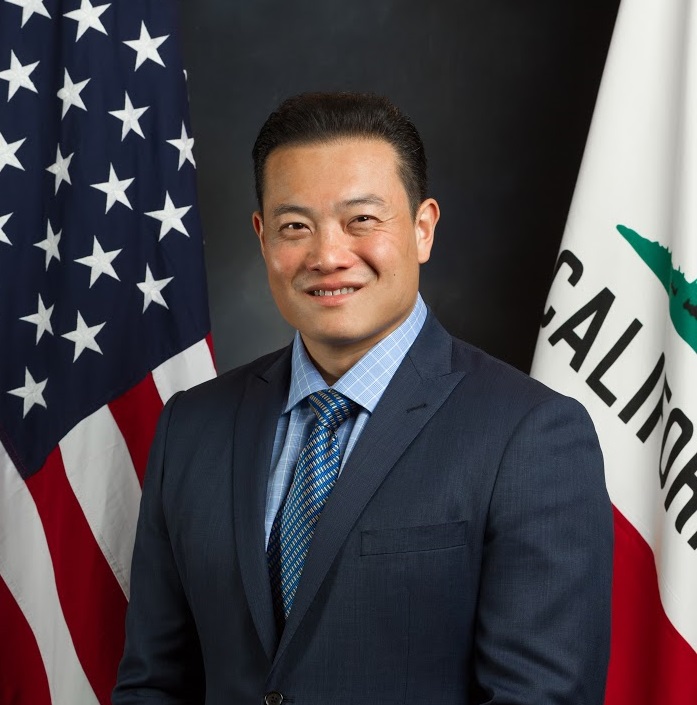
Asm. Phillip Chen
Total votes
21,436
all sessions
Attendance
81%
3,567 missed
Lower than 97% of chamber peers
With party
98%
of cast votes
Lower than 78% of chamber peers
Bipartisan score
1%
crosses aisle rarely
Higher than 76% of chamber peers
Sponsored
1,732
bills & resolutions
Lower than 91% of chamber peers
Committees
9
assignments
1,732 bills and resolutions
Sponsored bills
Total
1,732
Primary
225
Co-sponsor
1,507
This page
1,732
matching current filters
Fish and wildlife: poaching: penalties: probation period.
Existing law prescribes certain penalties for the illegal sale or purchase of abalone taken by a person required to be licensed, as specified. Existing law prescribes certain penalties for the illegal take, possession, import, export, sale, purchase, barter, trade, or exchange of a bird, fish, mammal, reptile, amphibian, or part of any of those animals, or the illegal take or possession in the field of more than 3 times the daily bag limit, or the illegal possession of more than 3 times the legal possession limit, of those animals. Existing law prescribes certain penalties for the knowing violation and conviction of certain provisions involving trophy deer, elk, antelope, bighorn sheep, or wild turkey. This bill would prohibit, if the court grants probation to a person punished pursuant to the above provisions, the period of probation from exceeding 3 years. Because this bill would extend the maximum period of probation that may be granted pursuant to these provisions, and thereby would increase the penalty for a crime, this bill would impose a state-mandated local program. The California Constitution requires the state to reimburse local agencies and school districts for certain costs mandated by the state. Statutory provisions establish procedures for making that reimbursement. This bill would provide that no reimbursement is required by this act for a specified reason.
In committee Feb 10, 2022
1 co-sponsor
Debt Collection Licensing Act: collection agencies.
Existing law, the Debt Collection Licensing Act, provides for the licensure, regulation, and oversight of debt collectors by the Commissioner of Business Oversight. The act prohibits a person from engaging in the business of debt collecting in this state without a license and requires a licensee to comply with reporting, examination, and other oversight by the commissioner. Existing law defines a collection agency as a business entity through which a debt collector or an association of debt collectors engage in debt collection. Existing law requires a person applying for a license to, among other things, pay an application fee, sign the application under penalty of perjury, and submit to a criminal background check by the Department of Justice. This bill would revise the definition of a collection agency to additionally include a business entity that acts as a broker, forwarder, intermediary, or middleman that sends or refers repossession assignments or repossession orders to repossession agencies or repossession agents in California. By expanding the pool of applicants required to apply for a license under the act, this bill would expand the scope of the crime of perjury, thereby imposing a state-mandated local program. The bill would also make nonsubstantive changes to the act. The California Constitution requires the state to reimburse local agencies and school districts for certain costs mandated by the state. Statutory provisions establish procedures for making that reimbursement. This bill would provide that no reimbursement is required by this act for a specified reason.
In committee Feb 10, 2022
0 co-sponsors
Passed Feb 10, 2022
1 co-sponsor
California Environmental Quality Act: water conveyance or storage projects: judicial review.
The California Environmental Quality Act (CEQA) requires a lead agency, as defined, to prepare, or cause to be prepared, and certify the completion of an environmental impact report (EIR) on a project that the lead agency proposes to carry out or approve that may have a significant effect on the environment or to adopt a negative declaration if it finds that the project will not have that effect. CEQA also requires a lead agency to prepare a mitigated negative declaration for a project that may have a significant effect on the environment if revisions in the project would avoid or mitigate that effect and there is no substantial evidence that the project, as revised, would have a significant effect on the environment. CEQA establishes a procedure by which a person may seek judicial review of the decision of the lead agency made pursuant to CEQA. This bill would require the Judicial Council to adopt rules of court applicable to actions or proceedings brought to attack, review, set aside, void, or annul the certification or adoption of an environmental impact report for water conveyance or storage projects, as defined, or the granting of project approvals, including any appeals to the court of appeal or the Supreme Court, to be resolved, to the extent feasible, within 270 days of the filing of the certified record of proceedings with the court to an action or proceeding seeking judicial review of the lead agency's action related to those projects. The bill would require the lead agency to prepare the record of proceedings for a water conveyance or storage project, as provided, and to include a specified notice in the draft EIR and final EIR for the water conveyance or storage project. By imposing additional duties on lead agencies, the bill would impose a state-mandated local program. The California Constitution requires the state to reimburse local agencies and school districts for certain costs mandated by the state. Statutory provisions establish procedures for making that reimbursement. This bill would provide that no reimbursement is required by this act for a specified reason.
In committee Feb 10, 2022
1 co-sponsor
Trespass.
Existing law makes it a misdemeanor to willfully commit a trespass by engaging in specified acts, including driving a vehicle upon real property belonging to, or lawfully occupied by, another and known not to be open to the general public, without the consent of the owner, the owner's agent, or the person in lawful possession, except as specified, including making a lawful service of process, as prescribed. This bill would provide that the above-specified trespass provision does not apply to a repossession agency and its employees when they are on private property searching for collateral or repossessing collateral, and, upon completing that search or repossession, leave the private property immediately.
Vetoed Feb 7, 2022
0 co-sponsors
Passed Feb 3, 2022
1 co-sponsor
Passed Feb 3, 2022
1 co-sponsor
Employment relations: cheerleaders.
Existing law provides that a cheerleader, as defined, who is utilized by a California-based professional sports team, as defined, directly or through a labor contractor during its exhibitions, events, or games, is deemed to be an employee, subject to the provisions of the Unemployment Insurance Code and the California Fair Employment and Housing Act. This bill would make a nonsubstantive change to those provisions.
died Feb 1, 2022
0 co-sponsors
State Board of Education.
Existing law establishes the State Board of Education to consist of 10 members appointed by the Governor with the advice and consent of 23 of the Senate. This bill would make a nonsubstantive change to that provision.
died Feb 1, 2022
0 co-sponsors
Ask Maddy
·
AI policy assistant
Ask Maddy about Phillip Chen
Scope: CA
Hi! I can help you understand Phillip Chen's legislative record. What would you like to know?
Try one of these
i
Maddy answers using official bill text and legislative records. Always verify before sharing.
Sources cited inline