

Existing law generally prohibits discrimination in the provision of privileges and services on the basis of sex, race, color, religion, ancestry, national origin, disability, medical condition, genetic information, marital status, sexual orientation, citizenship, primary language, and immigration status. Existing law provides a cause of action against any person who denies, aids or incites a denial, or makes any discrimination or distinction on the bases listed, as specified, and permits the recovery of attorney's fees. Existing law establishes the Civil Rights Department (department) and makes it responsible for, among other things, investigating and prosecuting complaints alleging a violation of these provisions. Existing law establishes the Civil Rights Enforcement and Litigation Fund (fund) , to be administered by the department. This fund consists of attorney's fees and costs awarded by a court to the department when the department is the prevailing party in a civil action brought under specified law. Existing law authorizes moneys in the fund, upon appropriation by the Legislature in the annual Budget Act, to be used to offset the costs of the department. This bill would, commencing on March 1, 2025, and annually thereafter, require a covered entity, defined as a venture capital company that meets specified criteria, to report to the department specified information about their funding determinations, including, at an aggregate level, specified demographic information for the founding teams of all of the businesses in which the covered entity made a venture capital investment in the prior calendar year to the extent the information was provided pursuant to a survey the bill would require a covered entity to provide to each founding team member of a business that has received funding from a venture capital company to which the covered entity has acted as an investment adviser, as specified. The bill would require this information to be collected and reported in a manner that does not associate the survey response data with an individual founding team member. The bill would require the department to charge and collect fees to administer these provisions, as specified. The bill would require the department to notify the covered entity that the covered entity must submit the report within 60 days of the notification. If the covered entity has not submitted the report after those 60 days have elapsed, the bill would authorize the department to commence prescribed proceedings seeking specified relief, including a penalty, as specified. The bill would require moneys collected pursuant to these provisions to be deposited in the fund, and would express the intent of the Legislature that these moneys be appropriated in the Budget Act to the department for administration of these provisions. The bill would define various terms for these purposes.
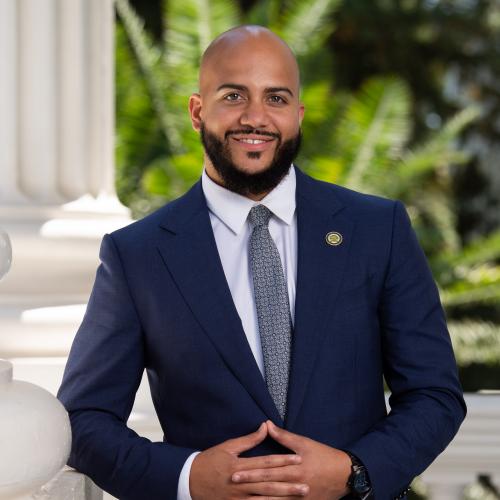
Asm. Isaac Bryan
Sponsored bills
The California Global Warming Solutions Act of 2006 requires the State Air Resources Board to adopt regulations to require the reporting and verification of statewide greenhouse gas emissions and to monitor and enforce compliance with the act. The act requires the state board to make available, and update at least annually, on its internet website the emissions of greenhouse gases, criteria pollutants, and toxic air contaminants for each facility that reports to the state board, as provided. This bill would require the state board, on or before January 1, 2025, to develop and adopt regulations requiring specified partnerships, corporations, limited liability companies, and other business entities with total annual revenues in excess of $1,000,000,000 and that do business in California, defined as "reporting entities," to publicly disclose to the emissions reporting organization, as defined, and obtain an assurance engagement on, starting in 2026 on a date to be determined by the state board, and annually thereafter, their scope 1 and scope 2 greenhouse gas emissions, as defined, and, starting in 2027 and annually thereafter, their scope 3 greenhouse gas emissions, as defined, from the reporting entity's prior fiscal year, as provided. The bill would require the state board to review during 2029, and update as necessary on or before January 1, 2030, these deadlines to evaluate trends in scope 3 emissions reporting and to consider changes to the deadlines, as provided. The bill would require a reporting entity to obtain an assurance engagement, performed by an independent third-party assurance provider, of the entity's public disclosure as provided. The bill would require the state board, in developing these regulations, to consult with the Attorney General, other government stakeholders, investors, stakeholders representing consumer and environmental justice interests, and reporting entities that have demonstrated leadership in full-scope greenhouse gas emissions accounting and public disclosure and greenhouse gas emissions reductions. The bill would also require the state board to ensure that the assurance process minimizes the need for reporting entities to engage multiple assurance providers and ensures sufficient assurance provider capacity, as well as timely reporting implementation, as required. The bill would further require the state board to contract with an emissions reporting organization to develop a reporting program to receive and make publicly available the required disclosures. The bill would authorize the state board, starting in 2033 and every 5 years thereafter, to assess the global greenhouse gas accounting and reporting standards and to adopt an alternative standard if it determines that using the alternative standard would more effectively further the goals of the bill. This bill would require the state board, on or before July 1, 2027, to contract with the University of California, the California State University, a national laboratory, or another equivalent academic institution to prepare a report on the public disclosures made by reporting entities to the emissions reporting organization. The bill would require, in preparing the report, consideration to be given to, at a minimum, greenhouse gas emissions from reporting entities in the context of state greenhouse gas emissions reduction and climate goals. The bill would require the state board to provide the report to the emissions reporting organization to post on a digital platform that would be required to be created by the emissions reporting organization, and publicly accessible, to house the state board's report and the reporting entities' public disclosures. The bill would require the emissions reporting organization to provide the state board's report to the relevant policy committees of the Legislature. This bill would require a reporting entity, upon filing its disclosure, to pay to the state board an annual fee set by the state board, as provided. The bill would create the Climate Accountability and Emissions Disclosure Fund, require the proceeds of the fees to be deposited in the fund, and continuously appropriate the moneys in the fund to the state board for purposes of the bill. By creating a continuously appropriated fund, the bill would create an appropriation. The bill would require the state board to adopt regulations that authorize it to seek administrative penalties for violations of these provisions, as specified.
Existing law requires counties, general law and charter cities, and special districts that elect their governing boards using district-based elections to adopt, in a prescribed manner, new district boundaries following each federal decennial census. Existing law also requires county boards of education, and the governing boards of school districts and community college districts in which trustee areas have been established, to adopt new boundaries for their trustee areas following each federal decennial census. This bill would revise and recast these provisions. The bill would require counties, county boards of education, cities, school districts, community college districts, and special districts, if the governing body of these local jurisdictions is elected by districts, to comply with uniform requirements related to redistricting. The bill would require local jurisdictions to adopt district boundaries, using specified criteria, following the decision to establish district-based elections and following each federal decennial census. This bill would define the term "districting body," as specified, and clarify requirements applicable to advisory or hybrid redistricting commissions. This bill would require an advisory or hybrid redistricting commission to comply with specified requirements when recommending changes to the legislative body's district boundaries. The bill would require a local jurisdiction, before adopting new district boundaries, to hold at least one public workshop and at least 5 public hearings, except as specified. This bill would require all public hearings held by an advisory or hybrid redistricting commission to comply with the same requirements applicable to hearings held by the districting body. This bill would impose requirements relating to workshops and public hearings upon local jurisdictions, districting bodies, and advisory and hybrid redistricting commissions, as specified. The bill would require the local jurisdiction to adopt a redistricting public education and outreach plan before holding a hearing or workshop, as specified. If a local jurisdiction establishes a hybrid redistricting commission to recommend changes to the legislative body's district boundaries, this bill would require the local jurisdiction, not the hybrid redistricting commission, to adopt the public education and outreach plan, as specified. The bill would also require the local jurisdiction to establish and maintain an accessible internet web page dedicated to redistricting to provide specified information to the public. The bill would require a local jurisdiction to make available on its redistricting web page, within specified time frames, both of the following: (1) recordings or written summaries of oral public comments made at workshops or public hearings, and (2) written comments and draft maps. The bill would require the Secretary of State to develop templates for such web pages and to provide a redistricting training for local jurisdictions. This bill would also require the Secretary of State to make available to the public a free electronic mapping tool, as specified. For redistricting occurring in 2031 and thereafter, the bill would require district boundaries to be adopted no later than 204 days before the local jurisdiction's next regular election occurring after January 1 in each year ending in the number 2. If the responsible body misses that deadline, the bill would require the body to immediately petition a superior court in a county in which the local jurisdiction is located for an order adopting election district boundaries, and if the body does not petition a superior court, a resident of the local jurisdiction would be permitted to file that petition. If the court grants a petition, the bill would permit the court to appoint a special master to assist with adopting district boundaries. Under existing law, county boards of supervisors and city councils that have adopted district-based elections are prohibited from adopting new district boundaries until after the next federal decennial census, except under certain circumstances. This bill would authorize the adoption of new district boundaries before the next federal decennial census if the number of supervisors or city council members elected by districts changes or if an independent redistricting commission is established to adopt new districts before the next census. The bill would provide that a member of the governing body of a local jurisdiction continues to represent the constituents residing in the district boundaries from which the member was elected for the duration of that term of office. The bill would specify that a local jurisdiction may assign a public official, as specified, to provide constituent services to residents of an area that is temporarily not represented by a member of the governing body of the local jurisdiction due to redistricting. This bill would incorporate additional changes to Section 23003 of the Elections Code proposed by Assembly Bill 1248 to be operative only if this bill and Assembly Bill 1248 are enacted and this bill is enacted last. By increasing the duties of local officials with respect to redistricting, the bill would create a state-mandated local program. The California Constitution requires the state to reimburse local agencies and school districts for certain costs mandated by the state. Statutory provisions establish procedures for making that reimbursement. This bill would provide that, if the Commission on State Mandates determines that the bill contains costs mandated by the state, reimbursement for those costs shall be made pursuant to the statutory provisions noted above.
Existing law, the Ralph C. Dills Act (Dills Act) , governs collective bargaining between the state and recognized state public employee organizations. Existing law excludes certain employees from coverage under the Dills Act, including, among others, managerial employees, supervisory employees, and confidential employees, as defined. Existing law creates the Public Employment Relations Board and authorizes it, among other things, to determine appropriate state employee bargaining units, as specified. This bill would enact the Legislature Employer-Employee Relations Act, to provide employees of the Legislature, except certain specified categories of excluded employees, the right to form, join, and participate in the activities of employee organizations of their own choosing for the purpose of representation on all matters of employer-employee relations. The bill would prescribe rights, duties, and prohibitions in this context that parallel those in the Dills Act. For the purposes of bargaining or meeting and conferring in good faith, the bill would define "employer" to mean the Assembly Committee on Rules or the Senate Committee on Rules. The bill would require the employer to meet and confer with representatives of recognized employee organizations regarding matters within the scope of representation. The bill would exclude certain matters from the scope of representation, as specified. The bill would grant exclusive jurisdiction to the Public Employment Relations Board to make an initial determination as to whether charges of unfair practices are justified, and, if so, the necessary remedy, as specified. However, the bill would prohibit the board from issuing a decision or order that intrudes upon or interferes with the Legislature's core function of efficient and effective lawmaking or the essential operation of the Legislature. The bill would require the board to determine appropriate bargaining units, and would prohibit the board from including employees in a bargaining unit that includes employees other than those of the employer. The bill would prohibit the board from including within a bargaining unit employees from both the Assembly and Senate. This bill would make it a misdemeanor for any person to willfully resist, prevent, impede, or interfere with any member of the board, or any of its agents, in the performance of duties pursuant to its provisions. By expanding the definition of a crime, this bill would impose a state-mandated local program. The bill would provide that the provisions of the Legislature Employer-Employee Relations Act are severable. The bill would become operative on July 1, 2026. The California Constitution requires the state to reimburse local agencies and school districts for certain costs mandated by the state. Statutory provisions establish procedures for making that reimbursement. This bill would provide that no reimbursement is required by this act for a specified reason. This bill would additionally exempt from public inspection records related to activities governed by the Legislature Employer-Employee Relations Act that reveal the employer's deliberative processes, impressions, evaluations, opinions, recommendations, meeting minutes, research, work product, theories, or strategy, or that provide instruction, advice, or training to employees who do not have full collective bargaining and representation rights under the Legislature Employer-Employee Relations Act. Existing constitutional provisions require that a statute that limits the right of access to the meetings of public bodies or the writings of public officials and agencies be adopted with findings demonstrating the interest protected by the limitation and the need for protecting that interest. This bill would make legislative findings to that effect.
Existing law, the Healthy Workplaces, Healthy Families Act of 2014 (act) , establishes requirements relating to paid sick days and paid sick leave, as described. The act excludes specified employees from its provisions, including an employee covered by a valid collective bargaining agreement, as described (CBA employees) . This bill would exclude railroad carrier employers and their employees from the act's provisions. Existing law, with certain exceptions, entitles an employee to paid sick days for certain purposes if the employee works in California for the same employer for 30 or more days within a year from the commencement of employment. Existing law imposes procedural requirements on employers regarding the use of paid sick days, including by prohibiting retaliation for using paid sick days, by prohibiting the imposition of certain conditions on the use of paid sick days, and by requiring the use of paid sick days for specified health care and situations. Existing law requires the leave to be accrued at a rate of no less than one hour for every 30 hours worked, and to be available for use beginning on the 90th day of employment. This bill would extend the above-described procedural requirements on the use of paid sick days to CBA employees. Existing law authorizes an employer to use a different accrual method as long as an employee has no less than 24 hours of accrued sick leave or paid time off by the 120th calendar day of employment or each calendar year, or in each 12-month period. Existing law also provides that an employer may satisfy the accrual requirements by providing not less than 24 hours or 3 days of paid sick leave that is available to the employee to use by the completion of the employee's 120th calendar day of employment. This bill would modify the employer's alternate sick leave accrual method to additionally require that an employee have no less than 40 hours of accrued sick leave or paid time off by the 200th calendar day of employment or each calendar year, or in each 12-month period. The bill would modify that satisfaction provision to authorize an employer to satisfy accrual requirements by providing, in addition to the existing criteria for satisfaction above, not less than 40 hours or 5 days of paid sick leave that is available to the employee to use by the completion of the employee's 200th calendar day of employment. Existing law requires accrued paid sick days to carry over to the following year of employment. Existing law, however, authorizes an employer to limit an employee's use of accrued paid sick days to 24 hours or 3 days in each year of employment, calendar year, or 12-month period. Under existing law, this provision is satisfied and no accrual or carryover is required if the full amount of leave is received at the beginning of each year of employment, calendar year, or 12-month period. Existing law defines "full amount of leave" for these purposes to mean 3 days or 24 hours. This bill would raise the employer's authorized limitation on the use of carryover sick leave to 40 hours or 5 days in each year of employment. The bill would redefine "full amount of leave" to mean 5 days or 40 hours. Existing law also entitles individual providers of in-home supportive services and waiver personal care services, as defined, to paid sick days in specified amounts in accordance with minimum wage increases, up to a maximum of 24 hours or 3 days each year of employment when the minimum wage has reached $15 per hour. Existing law authorizes the State Department of Social Services to implement and interpret these provisions. This bill would increase the sick leave accrual rate for these providers to 40 hours or 5 days in each year of employment, beginning January 1, 2024. Under existing law, an employer is not required to provide additional paid sick days pursuant to these provisions if the employer has a paid leave or paid time off policy, makes an amount of leave available to employees that may be used for the same purposes and under the same conditions as these provisions, and the policy satisfies one of specified conditions. Under that law, one of those conditions requires the employer to have provided paid sick leave or paid time off in a manner that results in an employee's eligibility to earn at least 3 days or 24 hours of sick leave or paid time off within 9 months of employment. This bill would change that condition so that the employee must be eligible to earn at least 5 days or 40 hours of sick leave or paid time off within 6 months of employment. Under existing law, an employer has no obligation under these provisions to allow an employee's total accrual of paid sick leave to exceed 48 hours or 6 days, provided that an employee's rights to accrue and use paid sick leave are not otherwise limited, as specified. This bill would increase those accrual thresholds for paid sick leave to 80 hours or 10 days. Existing paid sick days law sets forth provisions on, among other things, compensation for accrued, unused paid sick days upon specified employment events, the lending of paid sick days to employees, written notice requirements, the calculation of paid sick leave, reasonable advance notification requirements, and payment of sick leave taken. This bill would provide that these provisions shall preempt any local ordinance to the contrary. The bill would include findings that changes proposed by this bill address a matter of statewide concern rather than a municipal affair and, therefore, apply to all cities, including charter cities.
Existing law authorizes an individual to contribute amounts in excess of personal income tax liability for the support of specified funds, including, for specified taxable years beginning on or after January 1, 2008, and before January 1, 2013, an ALS/Lou Gehrig's Disease Research Fund to provide research grants to develop and advance the understanding, techniques, and modalities effective in the prevention, treatment, and cure of ALS. Existing law specifies general administrative provisions applicable to these voluntary contributions, which, among other things, provide for the disbursement of contributions following the repeal of the fund provisions and require undesignated funds to be transferred to the General Fund. Existing law requires any new or extended voluntary contribution to include the words "voluntary tax contribution" in the name of the fund, to require the administering agency to include specified information about the fund on its internet website, to continuously appropriate from the fund the contributions made to the administering agency, and to set a minimum contribution amount for the continuation of any voluntary tax contribution fund provisions on the tax return form and a generally applicable repeal date for voluntary tax contribution provisions. This bill would allow an individual to designate on their tax return that a specified amount in excess of the taxpayer's personal income tax liability be transferred to the California ALS Research Network Voluntary Tax Contribution Fund. The bill would continuously appropriate the fund to the Franchise Tax Board, the Controller, and the State Department of Public Health for administrative costs and to the State Department of Public Health for disbursement to the Amyotrophic Lateral Sclerosis Association Golden West Chapter to support the work of their California ALS Research Network in an effort to develop and advance the understanding, techniques, and modalities effective in the prevention, treatment, and cure of ALS. The bill would repeal these provisions on December 1, 2031, or on December 1 of the year that the minimum contribution amount of $250,000 is not met, as specified. By continuously appropriating these funds, the bill would make an appropriation.
Existing law, the California Uniform Controlled Substances Act, classifies controlled substances into 5 schedules and places the greatest restrictions and penalties on the use of those substances placed in Schedule I. Existing law restricts the prescription, furnishing, possession, sale, and use of controlled substances and makes a violation of those laws a crime, except as specified. Existing law, if one of specified changes in federal law regarding the controlled substance cannabidiol occurs, deems a physician, pharmacist, or other healing arts licensee who prescribes, furnishes, or dispenses a product composed of cannabidiol, in accordance with federal law, to be in compliance with state law governing those acts and provides that, upon the effective date of one of those changes in federal law, the prescription, furnishing, dispensing, transfer, transportation, possession, or use of that product in accordance with federal law is for a legitimate medical purpose and is authorized pursuant to state law. This bill, if one of specified changes in federal law regarding controlled substances occurs, would deem a physician, pharmacist, or other authorized healing arts licensee who prescribes, furnishes, or dispenses a product composed of one of these substances, in accordance with federal law, to be in compliance with state law governing those acts. The bill would also provide that upon the effective date of one of those changes in federal law regarding these substances, the prescription, furnishing, dispensing, transfer, transportation, possession, or use of that product in accordance with federal law is for a legitimate medical purpose and is authorized pursuant to state law.
Existing law, the Ortiz-Pacheco-Poochigian-Vasconcellos Cal Grant Program (Cal Grant Program) , establishes the Cal Grant A and B Entitlement Awards, the California Community College Expanded Entitlement Awards, the California Community College Transfer Entitlement Awards, the Competitive Cal Grant A and B Awards, the Cal Grant C Awards, and the Cal Grant T Awards under the administration of the Student Aid Commission, and establishes the eligibility requirements for awards under these programs for participating students attending qualifying institutions. Existing law governing the taxation of insurers, the Personal Income Tax Law and the Corporation Tax Law, allow various credits against the taxes imposed by those laws, including a credit, for taxable years beginning on or after January 1, 2017, and before January 1, 2023, equal to 50% of a contribution to the College Access Tax Credit Fund, as provided. Existing law provides that moneys in the College Access Tax Credit Fund shall be allocated first to the General Fund, then, upon appropriation, to specified agencies for administrative costs related to this credit, and lastly continuously appropriated to the commission for awarding Cal Grants, as provided. This bill would instead require the College Access Tax Credit Fund moneys continuously appropriated to the commission to be used for awards for qualifying community college student transfers to regionally accredited Historically Black Colleges and Universities that have associate degree for transfer memoranda of understanding on file with the office of the Chancellor of the California Community Colleges. The bill would make an appropriation by changing the purposes for which moneys are used in a continuously appropriated fund.
Existing law declares another state's law authorizing a civil action against a person or entity that receives or seeks, performs or induces, or aids or abets the performance of an abortion, or who attempts or intends to engage in those actions, to be contrary to the public policy of this state, and prohibits the application of that law to a controversy in state court and the enforcement or satisfaction of a civil judgment received under that law. This bill would specifically include within these provisions, in addition to abortion performers, abortion providers. Existing law, the Knox-Keene Health Care Service Plan Act of 1975, provides for the licensure and regulation of health care service plans by the Department of Managed Health Care and makes a willful violation of the act a crime. Existing law also provides for the regulation of health insurers by the Department of Insurance. The bill would also prohibit a contract issued, amended, or renewed on or after January 1, 2024, between a health care service plan or health insurer and a health care services provider from containing any term that would result in termination or nonrenewal of the contract or otherwise penalize the provider based on a civil judgment, criminal conviction, or another professional disciplinary action in another state if the judgment, conviction, or professional disciplinary action is solely based on the application of another state's law that interferes with a person's right to receive care that would be lawful if provided in California. The bill would also prohibit a health care service plan or health insurer from discriminating against a licensed provider solely on the basis of a civil judgment, criminal conviction, or another professional disciplinary action in another state if the judgment, conviction, or professional disciplinary action is solely based on the application of another state's law that interferes with a person's right to receive care that would be lawful if provided in California. Because a willful violation of these provisions by a health care service plan would be a crime, the bill would impose a state-mandated local program. Existing law requires that the State Department of Public Health automatically suspend as a Medi-Cal provider any individual or entity that has a license, certificate, or other approval to provide health care that is revoked or suspended by a federal, California, or another state's licensing, certification, or approval authority, has otherwise lost that license, certificate, or approval, or has surrendered that license, certificate, or approval while a disciplinary hearing was pending. The bill would also authorize the department, subject to obtaining necessary federal approvals and the availability of federal financial participation under Medi-Cal, to elect to not suspend an individual or entity as a provider in the Medi-Cal program if the revocation, suspension, or loss of the individual or entity's license, certification, or approval authority in another state or the pending disciplinary hearing during which the individual or entity surrendered the license, certification, or approval authority in another state is based solely on conduct that is not deemed to be unprofessional conduct under California law. The bill would also require the department to seek any necessary federal approvals to implement these provisions. Under existing law, the Director of Health Care Services is authorized, for purposes of administering the Medi-Cal program, to suspend a provider of service from further participation under the program for specified reasons, including conviction of any felony or any misdemeanor involving fraud, abuse of the Medi-Cal program or any patient, or otherwise substantially related to the qualifications, functions, or duties of a provider of service. Existing law requires the director, upon receipt of written notification from the Secretary of the United States Department of Health and Human Services that a physician or other individual practitioner has been suspended from participation in the Medicare or Medicaid programs, to promptly suspend the practitioner from participation in the Medi-Cal program. Existing law also requires the Director of Health Care Services to notify the administrative director of a suspension of a physician from participation in the Medi-Cal program imposed pursuant to provisions authorizing the director to suspend a provider of service from participation. This bill would authorize the director, subject to obtaining necessary federal approvals and the availability of federal financial participation under Medi-Cal, to request a waiver under federal law, as permitted, if the provider's suspension from participating in the Medicare or Medicaid program was based solely on conduct that is not deemed to be unprofessional conduct under California law. The bill would also require the department to seek any necessary federal approvals to implement these provisions. The California Constitution requires the state to reimburse local agencies and school districts for certain costs mandated by the state. Statutory provisions establish procedures for making that reimbursement. This bill would provide that no reimbursement is required by this act for a specified reason.
Existing law establishes various boards within the Department of Consumer Affairs to license and regulate various health professionals. Existing law prohibits the Medical Board of California, the Osteopathic Medical Board of California, the Board of Registered Nursing, and the Physician Assistant Board from denying an application for licensure or suspending, revoking, or otherwise imposing discipline upon a licensee because the person was disciplined in another state in which they are licensed solely for performing an abortion in that state or because the person was convicted in another state for an offense related solely to performing an abortion in that state. Existing law provides for the licensure of clinics and health facilities by the Licensing and Certification Division of the State Department of Public Health. Existing law makes a violation of these provisions punishable as a misdemeanor, except as specified. This bill would prohibit a healing arts board under the Department of Consumer Affairs from denying an application for a license or imposing discipline upon a licensee or health care practitioner on the basis of a civil judgment, criminal conviction, or disciplinary action in another state that is based on the application of another state's law that interferes with a person's right to receive sensitive services, as defined, that would be lawful in this state, regardless of the patient's location. The bill would similarly prohibit a health facility from denying staff privileges to, removing from medical staff, or restricting the staff privileges of a licensed health professional on the basis of such a civil judgment, criminal conviction, or disciplinary action imposed by another state. The bill also would also prohibit the denial, suspension, revocation, or limitation of a clinic or health facility license on the basis of those types of civil judgments, criminal convictions, or disciplinary actions imposed by another state. The bill would exempt from the above-specified provisions a civil judgment, criminal conviction, or disciplinary action imposed by another state based upon conduct in another state that would subject an applicant, licensee, or health care practitioner to a similar claim, charge, or action under the laws of this state. By imposing new prohibitions under the provisions related to clinics and health facilities, the violation of which is a crime, this bill would impose a state-mandated local program. The California Constitution requires the state to reimburse local agencies and school districts for certain costs mandated by the state. Statutory provisions establish procedures for making that reimbursement. This bill would provide that no reimbursement is required by this act for a specified reason.