

Existing law authorizes the Department of Corrections and Rehabilitation to maintain canteens at its facilities, as specified. Existing law requires the sale prices of the articles offered for sale to be fixed by the Director of Corrections at the amounts that will, as far as possible, render each canteen self-supporting. This bill would instead require the department to maintain a canteen at its active facilities, as specified. The bill would, until January 1, 2028, prohibit the sale prices of the articles offered for sale from exceeding a 35% markup above the price of the articles paid to the vendors. The bill would, commencing on January 1, 2028, require the sale amounts of the articles to be offered for sale to be fixed by the secretary at amounts that will render each canteen self-supporting.
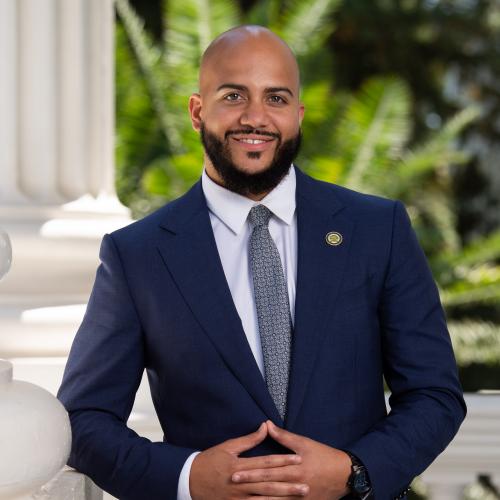
Asm. Isaac Bryan
Sponsored bills
Existing law, the Cal Grant Program, establishes the Cal Grant A and B Entitlement Awards, the California Community College Expanded Entitlement Awards, the California Community College Transfer Entitlement Awards, the Competitive Cal Grant A and B Awards, the Cal Grant C Awards, and the Cal Grant T Awards under the administration of the Student Aid Commission. Existing law establishes eligibility requirements for awards under these programs for participating students attending qualifying institutions. For a student to qualify for a Cal Grant award, existing law requires that the student, among other things, make satisfactory academic progress at a qualifying institution. Existing law defines "satisfactory academic progress" as those criteria required by applicable federal standards published in Title 34 of the Code of Federal Regulations. Existing law authorizes the commission to adopt regulations defining "satisfactory academic progress" in a manner that is consistent with the federal standards. This bill would require, as part of the criteria to be a qualifying institution under the Cal Grant Program, an institution, by the start of the 2024–25 academic year, to comply with various requirements regarding "satisfactory academic progress" standards used to determine if a student qualifies for a Cal Grant and to develop and implement policies defining "satisfactory academic progress" in a manner that is consistent with the federal standards. The bill would delete the commission's authorization to adopt regulations defining "satisfactory academic progress."
Existing law, the Veterinary Medicine Practice Act, establishes the Veterinary Medical Board within the Department of Consumer Affairs for the licensure and regulation of veterinarians and the practice of veterinary medicine. Existing law specifies that a violation of the act is a crime. The act prohibits any person from practicing veterinary medicine, as defined, without a license. The act authorizes the board to deny, revoke, or suspend a license or registration or assess a fine for, among other things, violation of a regulation adopted by the board and unprofessional conduct, as specified. A regulation adopted by the board makes it unprofessional conduct to provide specified treatment of an animal without having first established a veterinarian-client-patient relationship, as specified. That regulation also prohibits a person from practicing veterinary medicine in this state outside the context of a veterinarian-client-patient relationship or as otherwise permitted by law. This bill similarly would prohibit the practice of veterinary medicine outside the context of a veterinarian-client-patient relationship, as defined, except as specified. Existing administrative law requires telemedicine to be conducted within an existing veterinarian-client-patient relationship, with the exception for advice given in an emergency, as specified, and defines "telemedicine" to mean the mode of delivering animal health care services via communication technologies to facilitate consultation, treatment, and care management of the patient. This bill similarly would authorize a licensee to practice veterinary medicine via telehealth, as prescribed. The bill would require a veterinarian who practices veterinary medicine via telehealth, among other things, to employ sound professional judgment to determine whether using telehealth is an appropriate method for delivering medical advice or treatment to the animal patient and providing quality of care consistent with prevailing veterinary medical practice, be familiar with available medical resources, be able to provide the client with a list of nearby veterinarians who may be able to see the animal patient in person upon the request of the client, keep, maintain, and make an animal patient record summary available, provide the client with information about the veterinarian, and secure an alternative means of contacting the client if the electronic means is interrupted, as specified. The bill would also define the term "client" for purposes of the act and make other conforming changes. Existing law requires all veterinary premises to be registered with the board. Existing law defines "premises" for these purposes as inclusive of mobile units or vehicles, but exempts them from independent registration with the board if they are operated from a building or facility that is the licensee manager's principal place of business, the building is registered with the board, and the registration identifies and declares the use of the mobile unit or vehicle. Existing law specifies that the registration of veterinary premises is nontransferable and requires that, in the event of change of an owner or operator of the premises, the premises registration holder notify the board within 30 days after the change. This bill would exempt the location where a veterinarian practices telehealth from the requirement that it be registered if specified conditions are met, including, among other things, that the veterinarian does not perform any in-person examination or treatment of animal patients at that location. Because the bill would impose new requirements and prohibitions under the Veterinary Medicine Practice Act, the violation of which is a crime, this bill would impose a state-mandated local program. The California Constitution requires the state to reimburse local agencies and school districts for certain costs mandated by the state. Statutory provisions establish procedures for making that reimbursement. This bill would provide that no reimbursement is required by this act for a specified reason.
Existing law authorizes, when a defendant has been committed to the state prison or to a county jail for the commission of a felony, the court to recall the sentence and either reduce a defendant's term by modifying the sentence, or vacate the conviction and impose judgment on any necessarily included lesser offense or lesser related offense and, with the agreement of the district attorney or attorney general, resentence the defendant to a reduced term. Existing law authorizes a defendant to be resentenced pursuant to these provisions upon the court's own motion within 120 days of the date of commitment, or upon the recommendation of specified individuals, including, among others, the district attorney of the county in which the defendant was sentenced. Existing law authorizes the court to consider postconviction factors, including evidence that reflects that circumstances have changed since the original sentencing so that continued incarceration is no longer in the interest of justice. Existing law establishes a presumption favoring recall and resentencing of the defendant that can only be overcome if a court finds the defendant is an unreasonable risk of danger to public safety. This bill would additionally authorize the court to recall a sentence, on its own motion, at any time if the applicable sentencing laws at the time of original sentencing are subsequently changed due to new statutory or case law authority. The bill would specify that recall and resentencing under these provisions may be initiated by the original sentencing judge, a judge designated by the presiding judge, or any judge with jurisdiction in the case. The bill would eliminate the requirement that the district attorney or Attorney General concur with the resentencing court's decision to vacate the defendant's conviction and resentence the defendant to a reduced term of imprisonment. The bill would prohibit a court that has recalled the sentence on its own motion from imposing a judgment on a necessarily included lesser offense or lesser related offense without the concurrence of both the defendant and the prosecutor if the conviction was the result of a plea bargain. The bill would require the court to consider postconviction factors and would specify that evidence that the defendant's incarceration is no longer in the interest of justice includes, but is not limited to, evidence that the defendant's constitutional rights were violated in the proceedings related to the conviction or sentence at issue. The bill would require the presumption favoring recall and resentencing to be overcome if a court finds that the defendant currently poses an unreasonable risk of danger to public safety. The bill would require the court, after ruling on a referral brought pursuant to these provisions, to advise the defendant of their right to appeal and the necessary steps and time for taking an appeal. This bill would incorporate additional changes to Section 1172.1 of the Penal Code proposed by AB 88 to be operative only if this bill and AB 88 are enacted and this bill is enacted last.
(1) Existing law specifies the content of a certificate of death and sets forth the persons responsible for completing the certificate of death. Existing law requires certain medical and health content on the certificate. This bill would prohibit "excited delirium," as defined, from being recognized as a valid medical diagnosis or cause of death in this state. The bill would prohibit a coroner, medical examiner, physician, or physician assistant from stating on the certificate of death or in any report that the cause of death was excited delirium. (2) Existing law designates specified employees and appointees of certain public entities to be peace officers. Existing law grants certain powers to peace officers and prescribes certain requirements and responsibilities for peace officers and their employing or appointing entities. The bill would prohibit a peace officer from using the term "excited delirium" to describe an individual in an incident report, but would not prohibit the peace officer from describing an individual's behavior, as specified. (3) Existing law governs the rules of evidence in every action before the Supreme Court or a court of appeal or superior court, including rules relating to judicial notice, evidentiary burdens, witnesses, opinion testimony and scientific evidence, privileges, evidence affected or excluded by extrinsic policies, hearsay evidence, and writings. This bill would deem evidence that a person experienced or suffered an excited delirium inadmissible in a civil action, but would not prohibit a party or witness from testifying as to the factual circumstances surrounding the case, including a person's demeanor, conduct, and physical and mental condition, provided it is not attributed to excited delirium.
Existing law establishes the jurisdiction of the juvenile court, which may adjudge children to be dependents of the court under certain circumstances, including when the child suffered or there is a substantial risk that the child will suffer serious physical harm, or a parent fails to provide the child with adequate food, clothing, shelter, or medical treatment. Existing law authorizes a court to make reasonable orders for the care, supervision, and support of a dependent child, as specified. Existing law establishes the grounds for removal of a dependent child from the custody of the child's parents or guardian, and requires the court to order the social worker to provide designated child welfare services, including family reunification services, as prescribed. Existing law also requires family maintenance services to be provided or arranged for by county welfare department staff in order to maintain a child in their own home, and requires the services to be available without regard to income to specified families, including families in which the child is in the care of a previously noncustodial parent under the supervision of the juvenile court. This bill would require a court to inquire whether a parent or guardian can afford court-ordered services when making reasonable orders for a dependent child. The bill would prohibit a court from declaring at specified review hearings that a parent or guardian is noncompliant with a court-ordered case plan when the court finds that the parent or guardian is unable to pay for a service or that payment for a service would create an undue financial hardship for them, and the social worker did not provide a comparable free service that was accessible and available to them, as specified.
Existing law establishes specified rights for victims and witnesses of crimes, including to be notified or informed regarding specified court proceedings and inmate placement or parole eligibility. Existing law requires the Attorney General to, by June 1, 2025, create and distribute a "Victim Protections and Resources" card, which contains information about victim rights and resources, as specified. This bill would give a victim the right to be notified of the availability of community-based restorative justice programs and processes available to them, including programs serving their community, county, county jails, juvenile detention facilities, and the Department of Corrections and Rehabilitation, as specified. The bill would additionally require the Attorney General to include this information in the "Victim Protections and Resources" card, as specified. Existing law establishes the jurisdiction of the juvenile court, which may adjudge a minor or nonminor to be a dependent or ward of the court under certain circumstances. Existing law requires the probation officer to inform the victim of a crime in a juvenile proceeding of the final disposition of the case and of any victim-offender conferencing program or victim impact class available in the county. This bill would remove the requirement that the victim be notified of a victim-offender conferencing program, but would require the victim to be notified of the availability of community-based restorative justice programs and processes available to them. By increasing the duties of probation officers, this bill would impose a state-mandated local program. The California Constitution requires the state to reimburse local agencies and school districts for certain costs mandated by the state. Statutory provisions establish procedures for making that reimbursement. This bill would provide that, if the Commission on State Mandates determines that the bill contains costs mandated by the state, reimbursement for those costs shall be made pursuant to the statutory provisions noted above.
Existing law, until January 1, 2028, and to the extent funds are made available for these purposes, requires the State Department of Public Health to collect data on the incidence of neurodegenerative disease in California, and requires a hospital, facility, physician and surgeon, or other health care provider diagnosing or providing treatment to a patient for a neurodegenerative disease to report each case of a neurodegenerative disease to the department, as prescribed. Existing law specifies that for this purpose, "neurodegenerative disease" may include, but need not be limited to, amyotrophic lateral sclerosis (ALS) , among other diseases. This bill would require the term "neurodegenerative disease" to include, but not be limited to, ALS.
Existing law generally provides for the compensation of victims and derivative victims of specified types of crimes by the California Victim Compensation Board from the Restitution Fund, a continuously appropriated fund, for specified losses suffered as a result of those crimes, including emotional injuries where the crime was a violation of specified provisions. This bill would expand eligibility for compensation to include emotional injuries from felony violations of, among other things, attempted murder, rape and sexual assault, mayhem, and stalking. By expanding the authorization for the use of moneys in the continuously appropriated Restitution Fund, this bill would make an appropriation.
Existing law, the California Retail Food Code, provides for the regulation of health and sanitation standards for retail food facilities by the State Department of Public Health. Existing law, with specified exceptions, requires a food handler to obtain a food handler card within 30 days of their date of hire and to maintain a valid food handler card for the duration of their employment as a food handler. Under existing law, a food handler card is issued only upon successful completion of a food handler training course and examination that meets certain requirements. Existing law requires that at least one food handler training course and examination cost no more than $15, including a food handler card. A violation of the California Retail Food Code is generally a misdemeanor. This bill would require an employer to consider the time that it takes for the employee to complete the training and the examination as compensable "hours worked," for which the employer would pay, and to pay the employee for any necessary expenditures or losses associated with the employee obtaining a food handler card. The bill would require the employer to relieve an employee of all other work duties while the employee is taking the training course and examination. The bill would prohibit an employer from conditioning employment on the applicant or employee having an existing food handler card. Under existing law, the provisions relating to a food handler card do not apply to a food handler subject to an existing local food handler program that took effect before January 1, 2009. This bill would make the new provisions described above also applicable to a food handler who is subject to one of those existing programs. The bill would require the department, by January 1, 2025, to post on its internet website a link to the internet website of certain accredited food handler training programs. The bill would require a local public health department to provide a link to that web page on its own internet website. By increasing the scope of a crime and creating new duties for local public health departments, the bill would impose a state-mandated local program. The California Constitution requires the state to reimburse local agencies and school districts for certain costs mandated by the state. Statutory provisions establish procedures for making that reimbursement. This bill would provide that with regard to certain mandates no reimbursement is required by this act for a specified reason. With regard to any other mandates, this bill would provide that, if the Commission on State Mandates determines that the bill contains costs so mandated by the state, reimbursement for those costs shall be made pursuant to the statutory provisions noted above.