

Existing law generally regulates the operation of bicycles, including prohibiting a person from leaving a bicycle lying on its side on a sidewalk or parking a bicycle on a sidewalk in any other position, so that there is not an adequate path for pedestrian traffic. Existing law also authorizes a local authority to adopt rules and regulations by ordinance or resolution regarding the operation of bicycles on public sidewalks. A violation of the Vehicle Code is punishable as an infraction. This bill would, until January 1, 2031, and except as specified, prohibit a local authority from prohibiting the operation of a bicycle on a sidewalk adjacent to a highway or corridor that does not include a Class I, Class II, or Class IV bikeway, as defined, and would require the Commissioner of the California Highway Patrol to submit a report to the Legislature regarding the effects of that prohibition. This bill would incorporate additional changes to Section 21100 of the Vehicle Code proposed by SB 50 and AB 436 to be operative only if this bill and SB 50, this bill and AB 436, or this bill, SB 50, and AB 436 are enacted and this bill is enacted last.
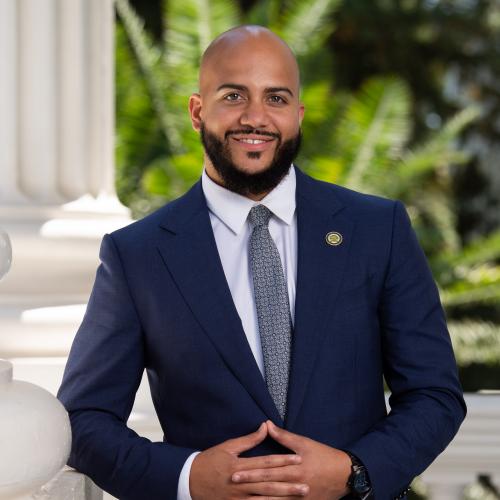
Asm. Isaac Bryan
Sponsored bills
Existing law generally requires county boards of supervisors, city councils, and the governing boards of school districts, community college districts, and other special districts, if those bodies are elected using district-based elections, to adopt new boundaries for the districts following each federal decennial census. Notwithstanding that requirement, existing law authorizes a local jurisdiction other than a charter city to establish an independent redistricting commission to adopt new boundaries for the local jurisdiction's districts. This bill would require a county, general law city, charter city, or charter city and county that contains over 300,000 residents, and a school district or community college district that contains over 500,000 residents, to establish an independent redistricting commission to adopt district boundaries after each federal decennial census. The bill would require a county, general law city, charter city, or charter city or county with over 300,000 residents, and a school district or community college district with over 500,000 residents, that does not enact an ordinance, resolution, or charter amendment establishing an independent redistricting commission by January 1, 2030, and January 1 of every subsequent year ending in 0, to establish a 14-member independent redistricting commission according to specified procedures, including procedures for the random selection of the members of the commission from among applicants meeting certain qualifications. By requiring certain local jurisdictions to establish independent redistricting commissions to adopt district boundaries, the bill would impose a state-mandated local program. The bill would prohibit a member of an independent redistricting commission from communicating with any individual or organization regarding redistricting matters, except as provided. The bill would require the State Auditor to provide the contact information of any applicant to serve on the Citizens Redistricting Commission, which is responsible for adjusting the boundary lines of the congressional, legislative, and State Board of Equalization districts, to any city or county that has established an independent or hybrid redistricting commission, provided that the applicant has consented to share this information and the city or county has requested to receive this information, and to inform those applicants of opportunities to serve on an independent or hybrid redistricting commission. The bill would require the State Auditor to establish a database and create and advertise a process for this exchange of information. Under existing law, independent redistricting commissions have been established for the Counties of Los Angeles, San Diego, Riverside, Fresno, and Kern. The bill would exempt the Counties of Los Angeles, San Diego, Riverside, Fresno, and Kern from the bill's provisions requiring a county with over 300,000 residents to establish an independent redistricting commission, unless the existing law provisions establishing independent redistricting commissions for those counties are repealed or invalidated. The bill also would exempt a charter city with a population of at least 2,500,000 people from the bill's provisions if specified conditions are met, including if both this bill and Senate Bill 52 are enacted and if the city complies with certain provisions in Senate Bill 52 that require such cities to establish independent redistricting commissions. This bill would incorporate additional changes to Section 23003 of the Elections Code proposed by Assembly Bill 764 to be operative only if this bill and Assembly Bill 764 are enacted and this bill is enacted last. The bill would include findings that changes proposed by this bill address a matter of statewide concern rather than a municipal affair and, therefore, apply to all cities, including charter cities. The California Constitution requires the state to reimburse local agencies and school districts for certain costs mandated by the state. Statutory provisions establish procedures for making that reimbursement. This bill would provide that, if the Commission on State Mandates determines that the bill contains costs mandated by the state, reimbursement for those costs shall be made pursuant to the statutory provisions noted above.
Existing law provides for the out-of-home placement, including foster care placement, of children who are unable to remain in the custody and care of their parents. Existing law, the federal Social Security Act, provides for benefits for eligible beneficiaries, including survivorship and disability benefits and supplemental security income (SSI) benefits for, among others, blind and disabled children. Existing law requires every youth who is in foster care and nearing emancipation to be screened by the county for potential eligibility for federal Supplemental Security Income and requires that screening to occur when the foster youth is at least 16 years and 6 months of age and not older than 17 years and 6 months of age. This bill, among other things, would require a placing agency to act in accordance with specified guidelines and pursuant to certain requirements when acting as the representative payee or in any other fiduciary capacity for a child or youth, including, among other requirements, ensuring that the child's benefits are not used to pay for, or to reimburse, the placing agency for any costs of the child's care and supervision, as defined. The bill would make these requirements operative January 1, 2024, or 30 days after the department issues the necessary all-county letters and informing materials to county placing agencies, whichever is later. By increasing county duties with respect to foster youth, the bill would impose a state-mandated local program. Existing law requires the State Department of Social Services to convene a workgroup to develop best practice guidelines for county welfare departments to assist eligible children who are in the state's or a county's custody and are qualified in obtaining federal social security and supplemental security income benefits. Existing law requires that workgroup to make recommendations to the department, by December 31, 2006, regarding the feasibility and cost-effectiveness of reserving a designated amount of foster children's social security and SSI/SSP benefits in lieu of reimbursing the county and the state for care and maintenance, and, in making those recommendations, to consider that the reserved benefits would be for the purpose of assisting the foster child in the transfer to self-sufficient living in a manner consistent with federal law. This bill would repeal the requirement for that workgroup to make the above-described recommendations regarding feasibility and cost-effectiveness. The California Constitution requires the state to reimburse local agencies and school districts for certain costs mandated by the state. Statutory provisions establish procedures for making that reimbursement. This bill would provide that no reimbursement is required by this act for a specified reason.
Existing law, the California Values Act, prohibits a California law enforcement agency, defined as including both state and local agencies but excluding the Department of Corrections and Rehabilitation, from providing a person's release date or responding to a request for notification of a release date, unless that information is available to the public. The bill would prohibit the Department of Corrections and Rehabilitation from detaining on the basis of a hold request, providing an immigration authority with release date information, or responding to a notification request, transferring to an immigration authority, or facilitating or assisting with a transfer request any individual who is eligible for release pursuant to specified provisions, including, among others, youth offender, elderly, and medical parole releases. Existing law requires the Department of Corrections and Rehabilitation to cooperate with the United States Department of Homeland Security by providing the use of prison facilities, transportation, and general support, as needed, for the purposes of conducting and expediting deportation hearings and subsequent placement of deportation holds on undocumented immigrants who are incarcerated in state prison. Existing law requires the department to identify inmates serving terms in state prison who are undocumented aliens subject to deportation. Existing law would require the department, upon the enactment of any federal law requiring these persons to be incarcerated in federal prison, to provide this information to the federal government, as specified. This bill would repeal these provisions.
Existing law requires the State Department of Social Services to establish and supervise a county- or county consortia-administered program to provide cash assistance for aged, blind, or disabled legal immigrants who are not citizens who, due to their immigration status, are not eligible for the Supplemental Security Income/State Supplementary Program for the Aged, Blind, and Disabled, also known as SSI/SSP benefits. Under existing law, an individual is eligible for this program if their immigration status meets SSI/SSP eligibility criteria but they are not eligible for those benefits solely due to their immigration status, as specified. Existing law also requires any person who is found to be eligible by the department for federally funded SSI to apply for SSI benefits. This bill would expand eligibility for that program to aged, blind, and disabled individuals regardless of immigration status if the individual meets the eligibility criteria for the program and is not eligible solely due to their immigration status. This bill would exempt individuals who are not qualified immigrants, as specified, from having to apply for SSI in order to receive benefits. The bill would also delete several inoperative provisions. The bill would make the implementation of these substantive changes contingent upon an appropriation for its express purposes. By expanding county duties under the program, this bill would impose a state-mandated local program. The California Constitution requires the state to reimburse local agencies and school districts for certain costs mandated by the state. Statutory provisions establish procedures for making that reimbursement. This bill would provide that, if the Commission on State Mandates determines that the bill contains costs mandated by the state, reimbursement for those costs shall be made pursuant to the statutory provisions noted above.
(1) Existing law requires a county social worker to investigate the circumstances of each child taken into temporary custody by a peace officer under specified circumstances. Existing law requires the social worker to conduct an investigation, within 30 days of the child's removal, to identify and locate adult relatives of the child, as specified, and to provide them with a notification that the child has been removed from the custody of the child's parents, guardians, or Indian custodian, and an explanation of the various options to participate in the care and placement of the child. This bill would require the social worker to conduct the investigation to identify and locate adult relatives, immediately, and no later than 30 days, after the child has been taken into temporary custody. (2) Existing law establishes procedures for an initial petition hearing by the juvenile court if a child is being taken into temporary custody. Existing law requires a social worker to report to the court the reasons the child was removed from the parent's, guardian's, or Indian custodian's physical custody and the need, if any, for continued detention, available services, and if there are any relatives who are willing and able to take temporary physical custody of the child. This bill would additionally require the social worker to report to the court what efforts, and in the case of an Indian child, the active efforts, as defined, and findings the social worker has made to locate any relatives or kin who could provide family support or possible placement of the child or nonminor dependent and the names of those relatives or kin. (3) Existing law provides that a child may be adjudged to be a dependent of the juvenile court because of abuse or neglect, and that after this determination, the court is required to hear evidence on the question of the proper disposition to be made of the child. Existing law requires that before determining the appropriate disposition, the court receive in evidence, among other things, the social study of the child made by the social worker and evaluation made by a child advocate appointed by the court. Existing law further prescribes the information that is required to be included in that social study or evaluation, including the appropriateness of any relative placement. Existing law requires the court to review the status of every dependent child in foster care no less frequently than once every 6 months and requires a supplemental report to be filed as part of that review. This bill would additionally require the social study, and any supplemental report, to include the efforts, and in the case of an Indian child, the active efforts, as defined, and findings that the social worker has made to locate any relatives or kin who could provide family support or possible placement of the child or nonminor dependent and the name of those relatives or kin. The bill would also require the court, in conducting the periodic status review, to additionally determine whether the social worker has continued efforts, and in the case of an Indian child, the active efforts, as defined, to locate any relatives or kin who could provide family support or possible placement of the child and the names of those relatives or kin. (4) Existing law requires a probation officer, upon delivery of a minor who has been taken into temporary custody, to immediately investigate the circumstances of the minor and the facts surrounding the minor being taken into custody and to immediately release the minor to the custody of their parent, legal guardian, or responsible relative, including a grandparent, adult sibling, or other relative, unless evidence before the court demonstrates that continuance in the home is contrary to the child's welfare, as specified. This bill would additionally require that the probation officer, if it is known or there is reason to know the child is an Indian child, to search additionally for an extended family member, as defined, to whom the child may be released. The bill would define for the purpose of these provisions "sibling" as a person related to the child by blood, adoption, or affinity through common legal or biological parent. The bill would require the probation officer to document their efforts, and in the case of an Indian child, the active efforts, as defined, to locate any relatives or kin who could provide family support or possible placement for the child or nonminor dependent and the names of those relatives or kin. (5) By imposing additional duties on county officials, the bill would impose a state-mandate local program. (6) This bill would incorporate additional changes to Section 319 of the Welfare and Institutions Code proposed by AB 81 and SB 578 to be operative only if this bill and AB 81, this bill and SB 578, or all 3 bills are enacted and this bill is enacted last. (7) The California Constitution requires the state to reimburse local agencies and school districts for certain costs mandated by the state. Statutory provisions establish procedures for making that reimbursement. This bill would provide that with regard to certain mandates no reimbursement is required by this act for a specified reason. With regard to any other mandates, this bill would provide that, if the Commission on State Mandates determines that the bill contains costs so mandated by the state, reimbursement for those costs shall be made pursuant to the statutory provisions noted above.
Existing law requires the collection of specified fees for certified copies of a birth certificate, marriage record, or marriage dissolution record. Existing law imposes fees upon the application for an original class C or M driver's license or a renewal of a driver's license or for a license to operate a different class of vehicle, as described. This bill would instead exempt persons who are recipients of specified assistance programs from payment of a fee for certified copies of a birth certificate, marriage record, or marriage dissolution record. The bill would, beginning July 1, 2027, also exempt a person who can verify their status as a homeless person or homeless child or youth from payment of a fee upon the application for an original or renewal of a driver's license. The bill would require the verification of homeless status to be subject to regulations adopted by the Department of Motor Vehicles and may be made by a homeless services provider, as defined. By establishing an exemption as to fees paid for receipt of certified copies of vital records, this bill would create a state-mandated local program. The bill would make all these provisions operative only to the extent that funding is provided by express reference for these purposes. The California Constitution requires the state to reimburse local agencies and school districts for certain costs mandated by the state. Statutory provisions establish procedures for making that reimbursement. This bill would provide that, if the Commission on State Mandates determines that the bill contains costs mandated by the state, reimbursement for those costs shall be made pursuant to the statutory provisions noted above.
Existing law provides for the California Work Opportunity and Responsibility to Kids (CalWORKs) program under which each county provides cash assistance and other benefits to qualified low-income families. Under existing law, certain types of payments received by recipients of aid under the CalWORKs program, including income from a college work-study program, as specified, are exempt from consideration as income for purposes of determining eligibility and aid amount. This bill would, commencing January 1, 2025, or on the date that the State Department of Social Services notifies the Legislature that the California Statewide Automated Welfare System can perform the necessary automation to implement this change, additionally exempt income up to 200% of the federal poverty level that is received by an apprentice or preapprentice for performing work as part of a specified apprenticeship program or preapprenticeship program from consideration as income for purposes of determining eligibility or calculating grant amounts under the CalWORKs program. The bill would require the State Department of Social Services to implement these provisions through an all-county letter or similar instruction until regulations are adopted. By expanding the scope of eligibility for CalWORKs, the bill would impose a state-mandated local program. Existing law continuously appropriates moneys from the General Fund to defray a portion of county costs under the CalWORKs program. This bill would instead provide that the continuous appropriation would not be made for purposes of implementing the above provisions. This bill would incorporate additional changes to Section 11157 of the Welfare and Institutions Code proposed by AB 274 to be operative only if this bill and AB 274 are enacted and this bill is enacted last. The California Constitution requires the state to reimburse local agencies and school districts for certain costs mandated by the state. Statutory provisions establish procedures for making that reimbursement. This bill would provide that, if the Commission on State Mandates determines that the bill contains costs mandated by the state, reimbursement for those costs shall be made pursuant to the statutory provisions noted above.
(1) Existing law categorizes certain drugs and other substances as controlled substances and prohibits various actions related to those substances, including their manufacture, transportation, sale, possession, and ingestion. This bill would, on and after January 1, 2025, make lawful the possession, preparation, obtaining, or transportation of, specified quantities of psilocybin, psilocyn, dimethyltryptamine (DMT) , and mescaline, for personal use, as defined, by and with persons 21 years of age or older. The bill would provide penalties for possession of these substances on school grounds, or possession by, or transferring to, persons under 21 years of age. The bill would require the California Health and Human Services Agency to convene a workgroup to study and make recommendations on the establishment of a framework governing the therapeutic use, including facilitated or supported use, of those substances. The bill would require that workgroup to send a report to the Legislature containing those recommendations on or before January 1, 2025. (2) Existing law prohibits the cultivation, transfer, or transportation, as specified, of any spores or mycelium capable of producing mushrooms or other materials that contain psilocybin or psilocyn. This bill would, on and after January 1, 2025, make lawful the cultivation or transportation of specified quantities of spores or mycelium capable of producing mushrooms or other materials that contain psilocybin or psilocyn for personal use, as defined, by and with persons 21 years of age or older. (3) Existing law prohibits the possession of drug paraphernalia, as defined. This bill would exempt from this prohibition, paraphernalia related, as specified, to these specific substances. The bill would also exempt from the prohibition items used for the testing and analysis of controlled substances. (4) Existing law states the intent of the Legislature that the messages and information provided by various state drug and alcohol programs promote no unlawful use of any drugs or alcohol. This bill would repeal those provisions. (5) By eliminating and changing the elements of existing crimes and creating new offenses, and by requiring new duties of local prosecutors, this bill would impose a state-mandated local program. The California Constitution requires the state to reimburse local agencies and school districts for certain costs mandated by the state. Statutory provisions establish procedures for making that reimbursement. This bill would provide that with regard to certain mandates no reimbursement is required by this act for a specified reason. With regard to any other mandates, this bill would provide that, if the Commission on State Mandates determines that the bill contains costs so mandated by the state, reimbursement for those costs shall be made pursuant to the statutory provisions noted above. (6) This bill would state that its provisions are severable.
Existing law establishes the jurisdiction of the juvenile court, which may adjudge a child to be a dependent of the court under certain circumstances, including when the child suffered, or there is a substantial risk that the child will suffer, serious physical harm or illness as a result of the failure or inability of their parent or guardian to adequately supervise or protect the child. Existing law requires the court to review the status of every dependent child in foster care periodically, but no less frequently than once every 6 months. Existing law subjects a minor between 12 and 17 years of age, inclusive, who violates any federal, state, or local law or ordinance to, and a minor under 12 years of age who is alleged to have committed specified serious offenses to, the jurisdiction of the juvenile court, which may adjudge the minor to be a ward of the court. Existing law generally provides for the placement of foster youth in various placement settings and governs the provision of child welfare services, as specified. Existing law requires county child welfare agencies and probation departments to develop and implement specific protocols to expeditiously locate any child or nonminor dependent missing from foster care, including, but not limited to, the timeframe for reporting missing youth and the individuals or entities entitled to notice that a youth is missing, and requires the social worker or probation officer to determine the primary factors that contributed to the child or nonminor dependent running away or otherwise being absent from care, among other things. This bill, the Luke Madrigal Act, would, among other things, additionally require the social worker or probation officer, when they receive information that a child receiving child welfare services is absent from foster care to, among other things, engage in ongoing and intensive due diligence efforts, as defined, to locate, place, and stabilize the child, request that the juvenile court schedule a hearing to review the placement and the ongoing and intensive due diligence efforts to locate and return the child, notify specified individuals whose whereabouts are known about the hearing, and prepare, submit, and serve a report at the hearing and any subsequent hearings describing their ongoing and intensive due diligence efforts to locate, place, and stabilize the child. The bill would require the court to consider the safety of the child receiving child welfare services who is absent from foster care to determine the extent of the activities and compliance of the county with the case plan in making ongoing and intensive due diligence efforts to locate and return the child to a safe placement, and to continue to periodically review their case at least every 30 calendars days, as specified. The bill would define "absent from foster care" to mean when the whereabouts of a child receiving child welfare services is unknown to the county child welfare agency or probation department or when the county child welfare agency or probation department has located the child receiving child welfare services in a location not approved by the court that may pose a risk to the child. The bill would also define "child receiving child welfare services" to include a child or nonminor dependent placed in a specified foster care placement or in the home of an emergency caregiver, and dependents, nonminor dependents, wards, and minors who have been taken into temporary custody pursuant to specified provisions and who are in foster care. By increasing the duties of county child welfare agencies and probation departments, this bill would create a state-mandated local program. The California Constitution requires the state to reimburse local agencies and school districts for certain costs mandated by the state. Statutory provisions establish procedures for making that reimbursement. This bill would provide that no reimbursement is required by this act for a specified reason.